Nro. 100073090

Myyty
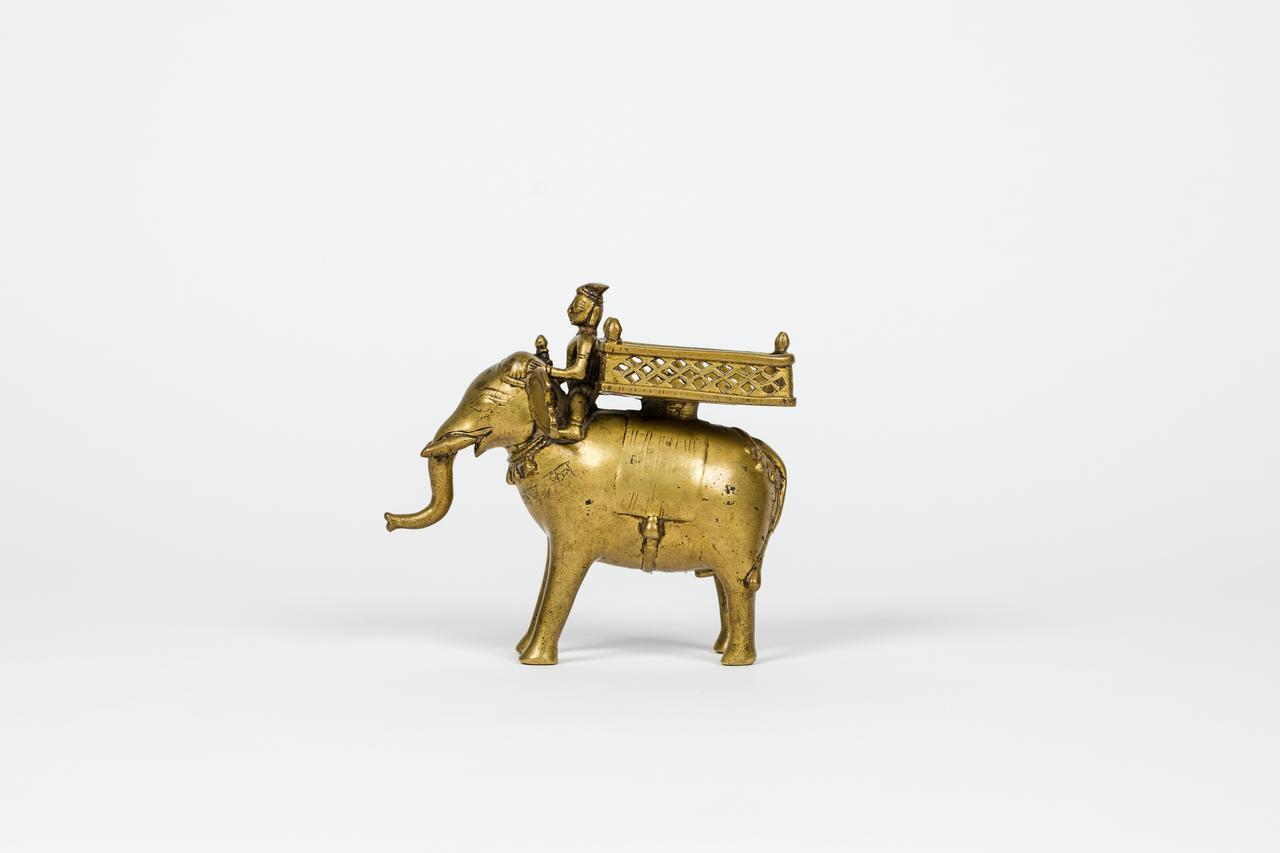
Patsas, A bronze sculptural group depicting Radha and Krishna upon a celestial swing (Jhula) – India, 20th - 17 cm - Patinoitu pronssi
Viimeinen tarjous
€ 55
5 päivää sitten

Patsas, A bronze sculptural group depicting Radha and Krishna upon a celestial swing (Jhula) – India, 20th - 17 cm - Patinoitu pronssi

A bronze sculptural group depicting Radha and Krishna upon a celestial swing (Jhula) – India, 20th century Description: This finely executed bronze sculptural group portrays one of Hinduism's most revered iconographic themes: the divine couple Radha and Krishna in an intimate moment of eternal devotion. The composition depicts the two deities seated gracefully upon an ornate swing suspended from an elaborate overhead frame, supported laterally by dramatically modelled Yali guardian beasts. Surmounting the arch is a fierce Kirtimukha face – the "Face of Glory" – a protective motif prevalent in Hindu temple architecture, which marks the transition between the secular and sacred realms. The craftsmanship demonstrates the accomplished technique of Indian bronze casting, employing the lost-wax method (Madhuchista Vidhan), a tradition perfected over centuries. The sculptor has rendered intricate detailing throughout: Krishna is depicted in characteristic pose adorned with ornamental regalia and fine clothing; Radha sits beside him with equal refinement. The foliage-adorned swing itself showcases remarkable precision in its articulation, with delicate floral motifs contributing to the composition's overall elegance. The supporting Yali figures – composite mythological beasts combining leonine and elephantine features – exhibit the dynamic musculature and commanding presence typical of South Indian sculptural traditions. These guardian figures functioned both as structural supports and as protective entities, believed to ward off negative spiritual forces. The surface exhibits a rich, complex patina characteristic of naturally aged bronze, with subtle colour variations suggesting prolonged exposure to environmental conditions consistent with temple or household devotional settings. The patina displays the copper oxide formations typical of authentic historical bronzes, with no evidence of artificial colouring or treatment. Details: Height: 17 cm Weight: 1,109 g Material: Bronze (copper–tin alloy) Technique: Lost-wax casting (Cire Perdue) Period: Estimated 20th century Origin: India, likely South Indian Condition: Well-preserved, with natural patina consistent with age; minor surface wear consistent with handling and historical use Condition: The sculpture exhibits good overall condition, befitting an object of considerable age. The bronze displays an authentic, deeply developed patina with no evidence of artificial burnishing or artificial patination. Surfaces show natural wear appropriate to the piece's estimated age and provenance. The casting is sound with no visible casting flaws or structural cracks. All sculptural elements remain intact and securely attached. The fine detailing – particularly in the faces, ornaments, and floral elements – remains crisp and well-defined, testifying to the original maker's skill and the piece's careful preservation. Additional Information: This sculptural group exemplifies the enduring significance of the Radha–Krishna Jhula motif within Hindu devotional and artistic traditions. The swing (Jhula) itself carries profound spiritual symbolism: it represents the cyclical nature of existence, the dance between worldly desires and spiritual aspirations, and the divine play (Lila) through which Krishna maintains cosmic harmony. The presence of both Yali guardians and the Kirtimukha crown reinforces the sacred nature of the composition, transforming it from a narrative scene into a protective, spiritually charged object intended for worship or home devotion. Indian bronze sculptures of this period represent the continuation of metallurgical traditions dating back to the Chola dynasty and earlier periods, when South Indian artisans achieved extraordinary refinement in the lost-wax casting technique. The composition and iconographic elements suggest a dating within the 18th–19th century, a period when such devotional bronzes remained in active production for both temple installation and private collection. The scale and weight suggest this was a significant personal or household devotional object, typical of pieces commissioned by affluent Hindu families for their prayer rooms or home altars. Collectors of Indian religious metalwork will recognise this as a well-executed example of traditional bronze casting, combining technical accomplishment with authentic spiritual iconography. Collector's note: A substantive bronze sculptural group combining refined craftsmanship, authentic patina, and significant religious iconography. The integration of multiple mythological and architectural elements – the central narrative, the protective Yalis, and the Kirtimukha guardian – creates a layered composition of both artistic and devotional merit. This piece merits the attention of collectors pursuing authenticated Indian bronzes or specialists in Hindu devotional art of the 18th–19th centuries.

Nro. 100073090

Myyty
Patsas, A bronze sculptural group depicting Radha and Krishna upon a celestial swing (Jhula) – India, 20th - 17 cm - Patinoitu pronssi

Patsas, A bronze sculptural group depicting Radha and Krishna upon a celestial swing (Jhula) – India, 20th - 17 cm - Patinoitu pronssi

A bronze sculptural group depicting Radha and Krishna upon a celestial swing (Jhula) – India, 20th century

Description: This finely executed bronze sculptural group portrays one of Hinduism's most revered iconographic themes: the divine couple Radha and Krishna in an intimate moment of eternal devotion. The composition depicts the two deities seated gracefully upon an ornate swing suspended from an elaborate overhead frame, supported laterally by dramatically modelled Yali guardian beasts. Surmounting the arch is a fierce Kirtimukha face – the "Face of Glory" – a protective motif prevalent in Hindu temple architecture, which marks the transition between the secular and sacred realms.

The craftsmanship demonstrates the accomplished technique of Indian bronze casting, employing the lost-wax method (Madhuchista Vidhan), a tradition perfected over centuries. The sculptor has rendered intricate detailing throughout: Krishna is depicted in characteristic pose adorned with ornamental regalia and fine clothing; Radha sits beside him with equal refinement. The foliage-adorned swing itself showcases remarkable precision in its articulation, with delicate floral motifs contributing to the composition's overall elegance. The supporting Yali figures – composite mythological beasts combining leonine and elephantine features – exhibit the dynamic musculature and commanding presence typical of South Indian sculptural traditions. These guardian figures functioned both as structural supports and as protective entities, believed to ward off negative spiritual forces.

The surface exhibits a rich, complex patina characteristic of naturally aged bronze, with subtle colour variations suggesting prolonged exposure to environmental conditions consistent with temple or household devotional settings. The patina displays the copper oxide formations typical of authentic historical bronzes, with no evidence of artificial colouring or treatment.

Details:

Height: 17 cm

Weight: 1,109 g

Material: Bronze (copper–tin alloy)

Technique: Lost-wax casting (Cire Perdue)

Period: Estimated 20th century

Origin: India, likely South Indian

Condition: Well-preserved, with natural patina consistent with age; minor surface wear consistent with handling and historical use

Condition: The sculpture exhibits good overall condition, befitting an object of considerable age. The bronze displays an authentic, deeply developed patina with no evidence of artificial burnishing or artificial patination. Surfaces show natural wear appropriate to the piece's estimated age and provenance. The casting is sound with no visible casting flaws or structural cracks. All sculptural elements remain intact and securely attached. The fine detailing – particularly in the faces, ornaments, and floral elements – remains crisp and well-defined, testifying to the original maker's skill and the piece's careful preservation.

Additional Information: This sculptural group exemplifies the enduring significance of the Radha–Krishna Jhula motif within Hindu devotional and artistic traditions. The swing (Jhula) itself carries profound spiritual symbolism: it represents the cyclical nature of existence, the dance between worldly desires and spiritual aspirations, and the divine play (Lila) through which Krishna maintains cosmic harmony. The presence of both Yali guardians and the Kirtimukha crown reinforces the sacred nature of the composition, transforming it from a narrative scene into a protective, spiritually charged object intended for worship or home devotion.

Indian bronze sculptures of this period represent the continuation of metallurgical traditions dating back to the Chola dynasty and earlier periods, when South Indian artisans achieved extraordinary refinement in the lost-wax casting technique. The composition and iconographic elements suggest a dating within the 18th–19th century, a period when such devotional bronzes remained in active production for both temple installation and private collection. The scale and weight suggest this was a significant personal or household devotional object, typical of pieces commissioned by affluent Hindu families for their prayer rooms or home altars.

Collectors of Indian religious metalwork will recognise this as a well-executed example of traditional bronze casting, combining technical accomplishment with authentic spiritual iconography.

Collector's note: A substantive bronze sculptural group combining refined craftsmanship, authentic patina, and significant religious iconography. The integration of multiple mythological and architectural elements – the central narrative, the protective Yalis, and the Kirtimukha guardian – creates a layered composition of both artistic and devotional merit. This piece merits the attention of collectors pursuing authenticated Indian bronzes or specialists in Hindu devotional art of the 18th–19th centuries.

Viimeinen tarjous
€ 55

Samankaltaisia esineitä

Sinulle kategoriassa

Intialainen ja islamilainen taide

Aseta hakuvahti
Aseta hakuvahti saadaksesi ilmoituksia, kun uusia osumia löytyy.

Tämä esine oli esillä kohteessa


Näin ostat Catawikistä

Lue lisää ostajan suojastamme

      1. Löydä jotain erityistä

      Selaa tuhansia asiantuntijoiden valitsemia erikoisesineitä. Tutustu jokaisen erityislaatuisen esineen kuviin, tietoihin ja arvioituun arvoon. 

      2. Tee korkein tarjous

      Löydä jotain, josta pidät ja tee siitä korkein tarjous. Voit seurata huutokauppaa loppuun asti tai antaa järjestelmämme tehdä tarjoukset puolestasi. Sinun tarvitsee vain asettaa enimmäishinta, jonka olet halukas maksamaan tietystä esineestä. 

      3. Maksa turvallisesti

      Pidämme maksusi tallessa, kunnes olet vastaanottanut ostoksesi ehjänä ja hyvässä kunnossa. Käytämme luotettavaa maksujärjestelmää kaikkien maksutapahtumien käsittelyyn. 

Onko sinulla jotain samankaltaista myytäväksi?

Olit sitten ensi kertaa verkkohuutokaupassa tai ammattimyyjä, voimme auttaa sinua ansaitsemaan erikoisesineistäsi enemmän.

Myy esineesi