David Roberts R.A/Louis Haghe/George Croly - The Holy Land - 1889


10
giorni
08
ore
39
minuti
22
secondi
Offerta iniziale
€ 1
Prezzo di riserva non raggiunto

Esperto
Selezionato da Zena Chiara Masud
Ha conseguito un master in bibliografia, con sette anni di esperienza in incunaboli e manoscritti arabi.
Stima € 800 - € 900
Nessuna offerta
Tutela degli acquirenti Catawiki
Il tuo pagamento è al sicuro con noi finché non ricevi il tuo oggetto.Mostra dettagli
Trustpilot 4.4 | 122986 recensioni
Valutato Eccellente su Trustpilot.
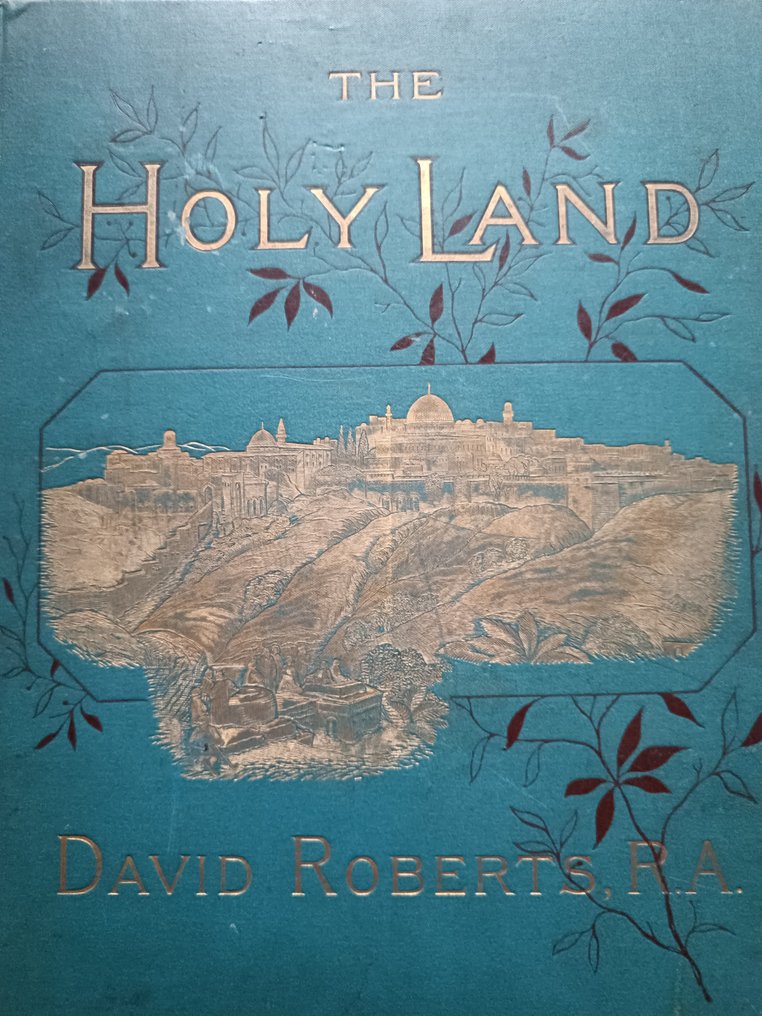
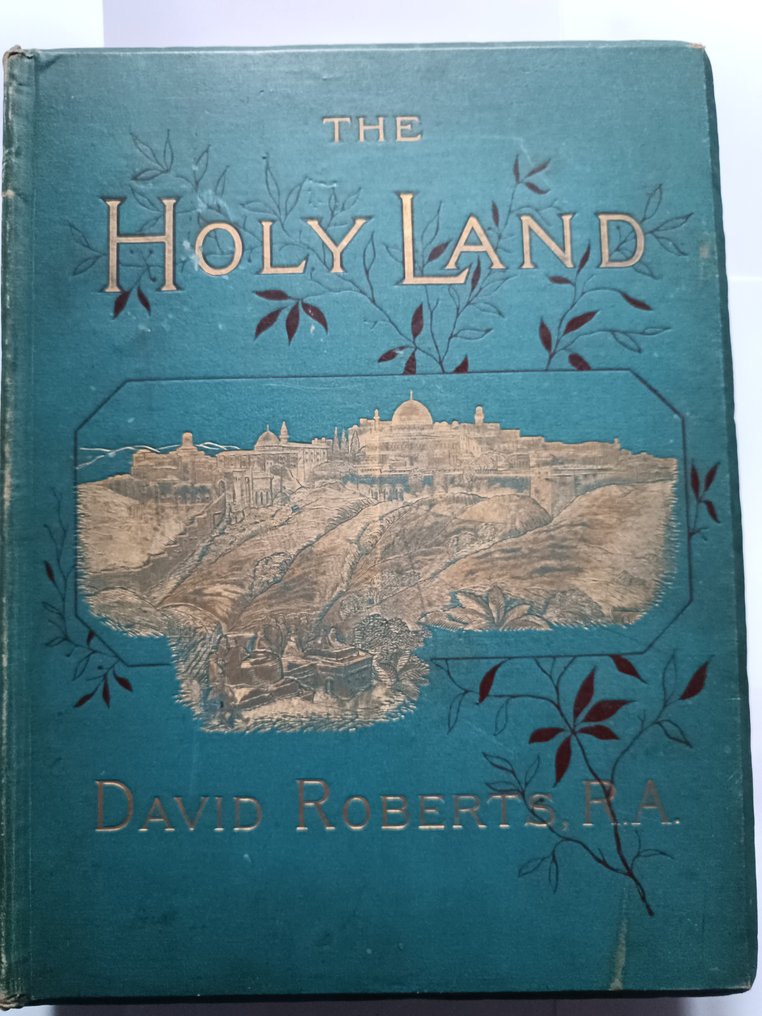
The Holy Land di David Roberts R.A., incisioni di Louis Haghe e testo di George Croly, prima edizione in questo formato 1889, cartonatura rigida, 300 pagine, 32 × 25 cm, in ottime condizioni.
Riepilogo creato con l’aiuto dell’IA
Descrizione del venditore
The MASTERPIECE of Holy Land illustrations!!!
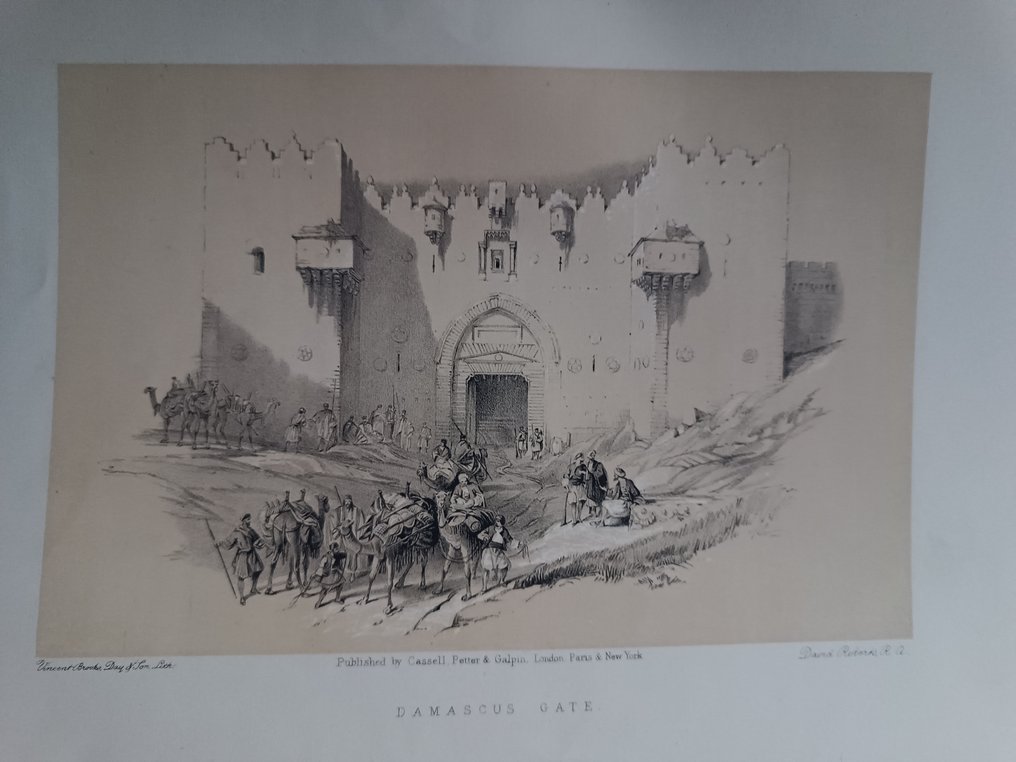
"THE HOLY LAND" after Lithographs by Louis Haghe, from original drawings by David Roberts, R.A.. With Historical Descriptions by the Rev George Croly. This is the First Edition thus, ie one volume, published by Cassell, Petter, Galpin & Co in 1889. The book is divided into 3 Divisions: Division I Jerusalem and Galilee; Division II The Jordan and Bethlehem; and Division III Idumea and Petra. There are a total of 120 sepia tinted lithographic plates - 42 in Div I, 42 in Div II and 36 in Div III.
Bound in turquoise cloth hardboards with a large gilt image and gilt lettering to the front board. Black illustration and gilt lettering to the spine. Boards have chamfered edges with some wear to the corners. Black endpapers with a personal bookplate for F G B Witts to the front one. Gilt page edges. Tissue guard for the frontispiece which is lightly foxed as is the title page to the first part. Occasional very light foxing. ILLUSTRATIONS in like fine condition!!!! Unfortunately, as is usual, the original gutta percha adhesive has perished so almost all the pages are detached but otherwise it is in very good condition. Divs I and II paginated together - 85 pages of text + plates; Div III 36 pages + plates.
Roberts's work "was the apotheosis of the tinted lithograph" (Abbey, Travel). The first quarto edition was issued by Day & Son in 1855-6. David Roberts (1796-1864) enjoyed a wide popularity in his day for his European views, but his outstanding success was certainly The Holy Land, and it is on this that the modern appreciation of his work is based. In August 1838 he arrived in Alexandra to start a carefully planed enterprise. It is claimed that he was the first European to have unlimited access to the mosques in Cairo with the proviso that he did not commit desecration by using brushes made from hog's bristle. Leaving Cairo, he sailed up the Nile to record the monuments represented in the Egypt & Nubia division of the work, travelling as far as Wadi Halfa and the Second Cataract. At the time of publication it was these views that excited the most widespread enthusiasm. On his return to Cairo, Roberts formed a party which included John Kinnear, who left his own account of the ensuing journey, Cairo, Petra and Damascus, in 1839. The party adopted Arab dress and set out with over twenty camels and a native bodyguard. Their route to Petra took them via mount Sinai, St. Catherine's Monastery and Akaba. The period at Petra (or Idumea) was for Roberts one of the high spots of the entire trip. Only trouble with local tribes forced him to move on to Hebron. From here rumours of plague in Jerusalem forced a detour to Gaza, Askalon and Jaffa before it was safe to enter the Holy City. From here he also visited Jericho, Lake Tiberias and other biblical sites. The route can easily be traced since each plate throughout the work is precisely dated. Finally, Roberts made his way to the Mediterranean via Nablus and Nazareth and then visited the coastal cities of Tyre, Sidon and Acre. Baalbek was the last objective achieved before a combination of intermittent fever and the worsening political situation forced him to abandon hopes of reaching Damascus and Palmyra. Roberts instead went to Beruit. He had, however, achieved enough to be made a Royal Academician on his return to England.
Perfect Christmas gift.
The MASTERPIECE of Holy Land illustrations!!!
"THE HOLY LAND" after Lithographs by Louis Haghe, from original drawings by David Roberts, R.A.. With Historical Descriptions by the Rev George Croly. This is the First Edition thus, ie one volume, published by Cassell, Petter, Galpin & Co in 1889. The book is divided into 3 Divisions: Division I Jerusalem and Galilee; Division II The Jordan and Bethlehem; and Division III Idumea and Petra. There are a total of 120 sepia tinted lithographic plates - 42 in Div I, 42 in Div II and 36 in Div III.
Bound in turquoise cloth hardboards with a large gilt image and gilt lettering to the front board. Black illustration and gilt lettering to the spine. Boards have chamfered edges with some wear to the corners. Black endpapers with a personal bookplate for F G B Witts to the front one. Gilt page edges. Tissue guard for the frontispiece which is lightly foxed as is the title page to the first part. Occasional very light foxing. ILLUSTRATIONS in like fine condition!!!! Unfortunately, as is usual, the original gutta percha adhesive has perished so almost all the pages are detached but otherwise it is in very good condition. Divs I and II paginated together - 85 pages of text + plates; Div III 36 pages + plates.
Roberts's work "was the apotheosis of the tinted lithograph" (Abbey, Travel). The first quarto edition was issued by Day & Son in 1855-6. David Roberts (1796-1864) enjoyed a wide popularity in his day for his European views, but his outstanding success was certainly The Holy Land, and it is on this that the modern appreciation of his work is based. In August 1838 he arrived in Alexandra to start a carefully planed enterprise. It is claimed that he was the first European to have unlimited access to the mosques in Cairo with the proviso that he did not commit desecration by using brushes made from hog's bristle. Leaving Cairo, he sailed up the Nile to record the monuments represented in the Egypt & Nubia division of the work, travelling as far as Wadi Halfa and the Second Cataract. At the time of publication it was these views that excited the most widespread enthusiasm. On his return to Cairo, Roberts formed a party which included John Kinnear, who left his own account of the ensuing journey, Cairo, Petra and Damascus, in 1839. The party adopted Arab dress and set out with over twenty camels and a native bodyguard. Their route to Petra took them via mount Sinai, St. Catherine's Monastery and Akaba. The period at Petra (or Idumea) was for Roberts one of the high spots of the entire trip. Only trouble with local tribes forced him to move on to Hebron. From here rumours of plague in Jerusalem forced a detour to Gaza, Askalon and Jaffa before it was safe to enter the Holy City. From here he also visited Jericho, Lake Tiberias and other biblical sites. The route can easily be traced since each plate throughout the work is precisely dated. Finally, Roberts made his way to the Mediterranean via Nablus and Nazareth and then visited the coastal cities of Tyre, Sidon and Acre. Baalbek was the last objective achieved before a combination of intermittent fever and the worsening political situation forced him to abandon hopes of reaching Damascus and Palmyra. Roberts instead went to Beruit. He had, however, achieved enough to be made a Royal Academician on his return to England.
Perfect Christmas gift.
Dettagli
Numero di Libri
1
Soggetto
Arte, Fotografia, Topografia (geografia), Viaggio / Esplorazioni
Titolo del Libro
The Holy Land
Autore/ Illustratore
David Roberts R.A/Louis Haghe/George Croly
Condizione
Molto buone
Anno di pubblicazione dell’oggetto più vecchio
1889
Altezza
32 cm
Edizione
1° edizione in questo formato
Larghezza
25 cm
Lingua
Inglese
Lingua originale
Sì
Editore
Cassell & Company, Limited
Legatura
Copertina rigida
Numero di pagine
300
Venduto da
