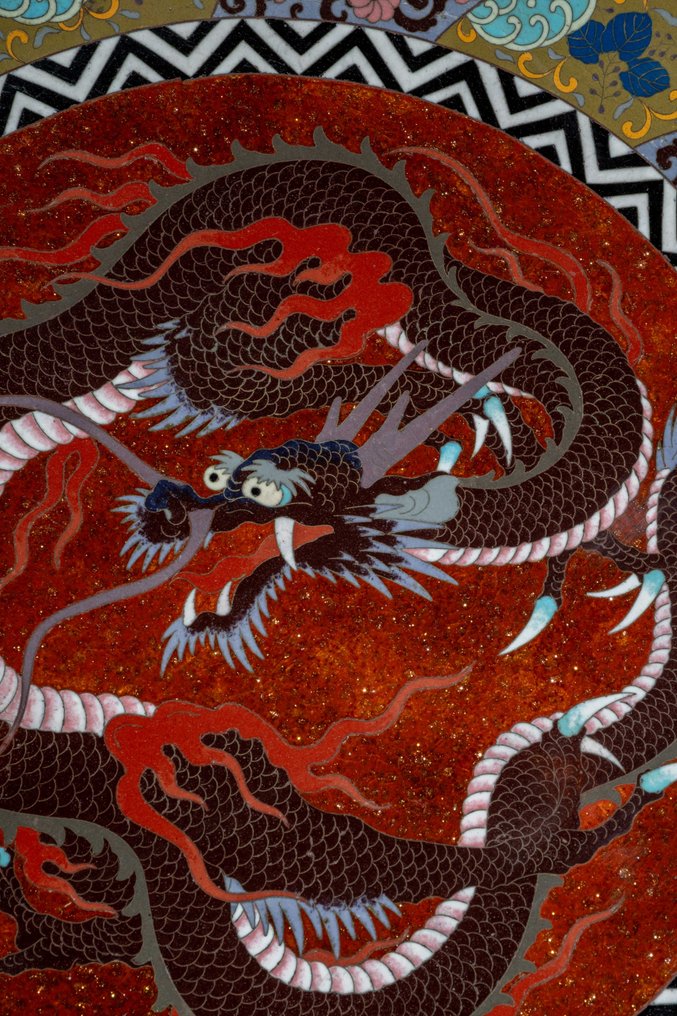
Piatto - Smalto, Cloisonné - A 59,5 cm. cloisonné plate with Dragon (龍) and Phoenixes (鳳凰)



Apre domani
Offerta iniziale
€ 1
Aggiungi ai tuoi preferiti per ricevere un avviso quando inizia l'asta.

Esperto
Selezionato da Giovanni Bottero
Ha una laurea magistrale in Storia dell'Arte Giapponese e oltre 10 anni di esperienza.
Stima € 550 - € 630
Tutela degli acquirenti Catawiki
Il tuo pagamento è al sicuro con noi finché non ricevi il tuo oggetto.Mostra dettagli
Trustpilot 4.4 | 123718 recensioni
Valutato Eccellente su Trustpilot.
Descrizione del venditore
A large cloisonné plate in polychrome enamels featuring a dragon within a circular reserve. The main scene is surrounded by a ground in brick tones and aventurine stone (goldstone), which enhances the brilliance of the surface.
The border is decorated with dragons alternating with phoenixes.
The joint presence of the dragon (龍, ryū) and the phoenix (鳳凰, hōō) recalls two of the principal imperial symbols: the dragon, emblem of power and sovereign authority, and the phoenix, symbol of harmony and prosperity.
Japanese cloisonné is one of the most refined forms of decorative art. Originally adopted from China, the technique was perfected by Japanese artisans during the Meiji period. The technique involves the use of vibrant polychrome enamels that create a metallic, glossy effect.
---The plate is in good overall condition. Deformed with enamel loss beneath the base and small areas on the front, with one section slightly raised (photo no. 8). Please refer to the pictures for further details.
The item will be carefully packed and shipped via DHL or FedEx, accompanied by the original certificate of authenticity issued by Mastromauro Japanese art gallery based in Milan, Italy.
269
Il venditore si racconta
Mastromauro Arte Giapponese, con sede a Milano, è specializzata in arte giapponese, con particolare attenzione ai periodi Edo (1603–1868) e Meiji (1868–1912), pur mantenendo uno sguardo aperto anche su opere più contemporanee.
Qui su Catawiki offrono una parte della loro collezione in ogni asta settimanale.
A large cloisonné plate in polychrome enamels featuring a dragon within a circular reserve. The main scene is surrounded by a ground in brick tones and aventurine stone (goldstone), which enhances the brilliance of the surface.
The border is decorated with dragons alternating with phoenixes.
The joint presence of the dragon (龍, ryū) and the phoenix (鳳凰, hōō) recalls two of the principal imperial symbols: the dragon, emblem of power and sovereign authority, and the phoenix, symbol of harmony and prosperity.
Japanese cloisonné is one of the most refined forms of decorative art. Originally adopted from China, the technique was perfected by Japanese artisans during the Meiji period. The technique involves the use of vibrant polychrome enamels that create a metallic, glossy effect.
---The plate is in good overall condition. Deformed with enamel loss beneath the base and small areas on the front, with one section slightly raised (photo no. 8). Please refer to the pictures for further details.
The item will be carefully packed and shipped via DHL or FedEx, accompanied by the original certificate of authenticity issued by Mastromauro Japanese art gallery based in Milan, Italy.
269
Il venditore si racconta
Mastromauro Arte Giapponese, con sede a Milano, è specializzata in arte giapponese, con particolare attenzione ai periodi Edo (1603–1868) e Meiji (1868–1912), pur mantenendo uno sguardo aperto anche su opere più contemporanee.
Qui su Catawiki offrono una parte della loro collezione in ogni asta settimanale.
Dettagli
Epoca
1400-1900
Paese d’origine
Giappone
Materiale
Cloisonné - A 59.5 cm cloisonné plate with Dragon (龍) and Phoenixes (鳳凰)., Smalto
Stile/Periodo dinastico
Meiji period (late 19th century)
Condizione
In condizioni discrete - molto usato e con probabili piccoli pezzi mancanti.
Altezza
59,5 cm
Larghezza
59,5 cm
Diametro
59,5 cm
Profondità
10 cm
Periodo stimato
1850-1900
Venduto da
