Illuminated Manuscript - Manoscritto Etiope Ge‘ez - 1790
10
giorni
03
ore
37
minuti
28
secondi
Offerta iniziale
€ 1
Prezzo di riserva non raggiunto

Esperto
Selezionato da Ilaria Colombo
Specialista in libri antichi, con focus sulle dispute teologiche dal 1999.
Stima € 1.200 - € 2.000
Nessuna offerta
Tutela degli acquirenti Catawiki
Il tuo pagamento è al sicuro con noi finché non ricevi il tuo oggetto.Mostra dettagli
Trustpilot 4.4 | 122385 recensioni
Valutato Eccellente su Trustpilot.
Questo manoscritto etiopico Ge‘ez illustrato, firmato Illuminated Manuscript, offre una finestra sulla devozione cristiana etiope con illustrazioni a colori.
Riepilogo creato con l’aiuto dell’IA
Descrizione del venditore
IL LIBRO DEL DESERTO E DEL COLORE – CODICE ETIOPE MINIATO E COLORATO SU PERGAMENA
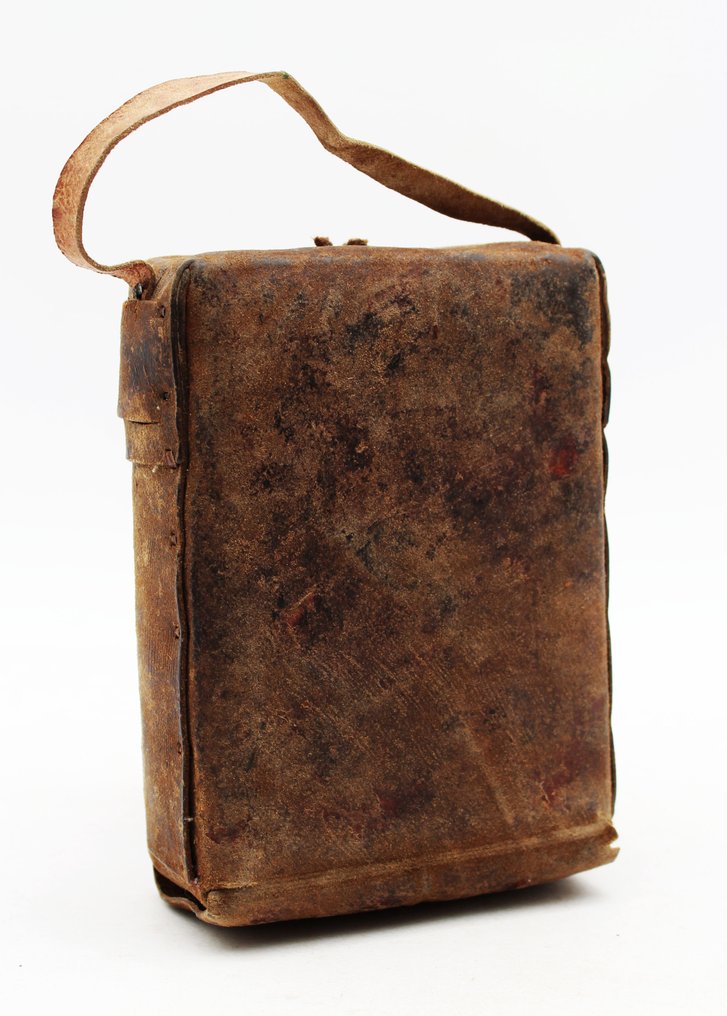
Questo manoscritto, racchiuso in una legatura originale in cuoio con patina d’uso e cinghia a mano, rappresenta un tipico esempio di devozione privata dell’Etiopia cristiana.
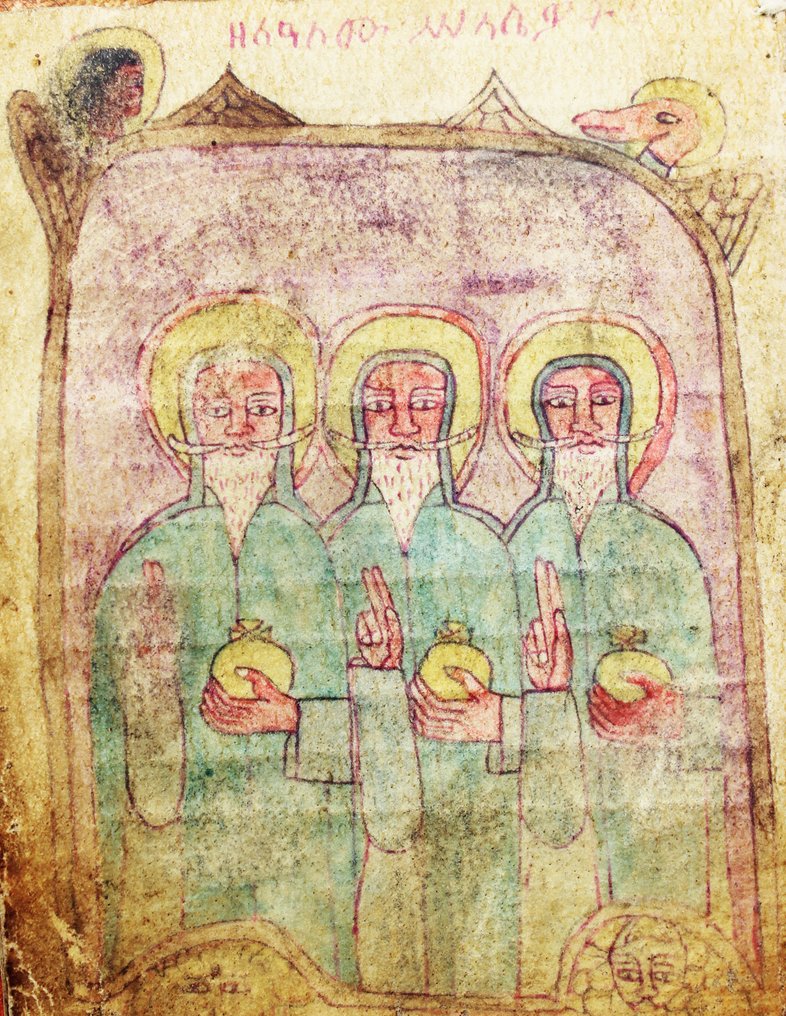
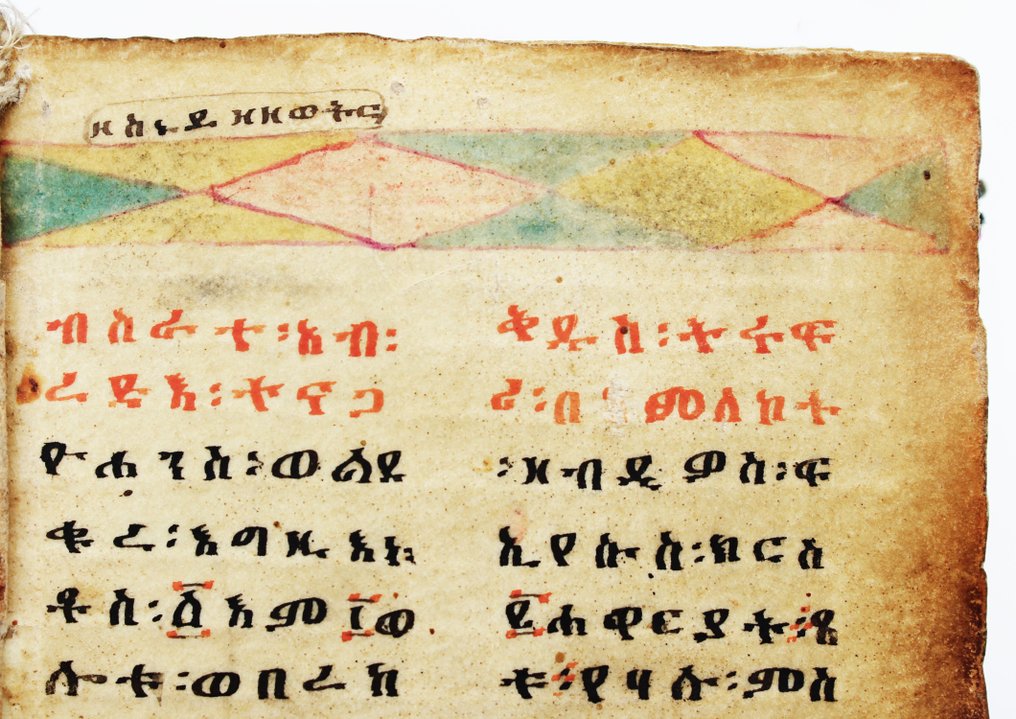
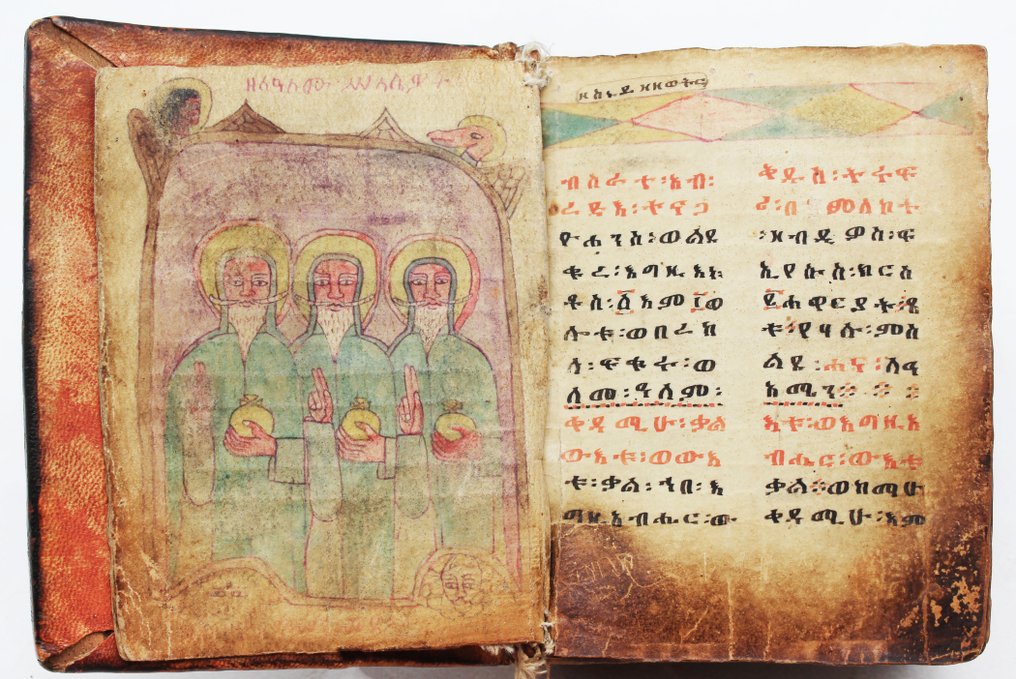
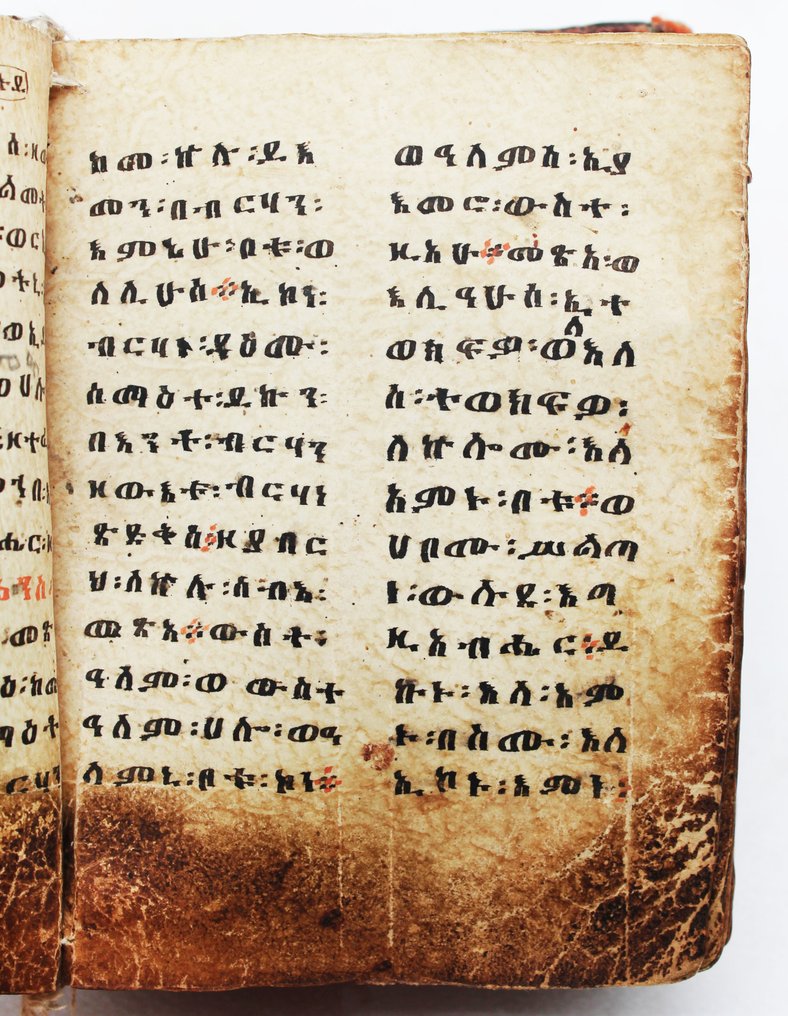
Il testo, scritto in Ge‘ez — lingua sacra e liturgica del rito copto-etiope — contiene preghiere e formule liturgiche accompagnate da rubriche in rosso, secondo la consuetudine dei manoscritti monastici. La miniatura frontale raffigura tre santi o profeti con aureola e barbe bianche, tracciati con tratto essenziale ma potente, entro un registro cromatico di toni pastello ormai attenuati dal tempo.
MARKET VALUE
Sul mercato antiquario internazionale, i manoscritti etiopici miniati in buono stato e con legatura originale oscillano generalmente fra 900 e 2.000 euro, con punte superiori per esemplari completi e illustrati. Questo codice si colloca nella fascia media, tra 1.200 e 1.500 euro, in base a conservazione e integrità testuale.
CONDITION
Manoscritto etiopico su pergamena, scritto in lingua Ge‘ez in nero e rosso, 2 colonne per pagina, 14 linee per colonna. Una miniatura policroma a piena pagina all’inizio del testo, raffigurante tre santi barbati con aureola. Legatura originale in cuoio bruno con patina d’uso e cinghia integrale, usura ai bordi e piccole lacune; interni ben conservati, con bruniture e tracce di uso. Pp. 142.
FULL TITLE AND AUTHOR
Codice liturgico etiopico in lingua Ge‘ez.
Etiopia, XVIII–XIX secolo.
S.A.
CONTEXT
Il manoscritto testimonia la continuità della tradizione cristiana etiopica, radicata nelle antiche versioni copte e greche delle Scritture. I codici di questo tipo erano prodotti nei monasteri delle regioni di Gondar e Tigray, spesso su pergamena di capra, destinati a un uso personale o devozionale. L’iconografia dei tre santi con melagrane può essere collegata alla simbologia trinitaria o ai tre Magi, ma anche alle rappresentazioni dei santi monaci fondatori delle comunità etiopiche.
BIOGRAPHY OF THE AUTHOR
Anonimo monaco copista etiopico, attivo probabilmente tra la fine del XVIII e l’inizio del XIX secolo. La formazione degli scribi etiopici avveniva all’interno delle scuole monastiche, dove la lingua Ge‘ez continuava a essere appresa come lingua sacra e letteraria.
PRINTING HISTORY
I manoscritti etiopici furono prodotti ininterrottamente fino al XX secolo, quando la stampa iniziò a sostituirli nella produzione liturgica. Le copie su pergamena di capra o pecora, con pigmenti naturali e legature in cuoio, rappresentano l’ultimo riflesso della tradizione tardo-medievale cristiana africana.
BIBLIOGRAPHY
Mercier, Jacques. L’art éthiopien. Paris: Citadelles & Mazenod, 2007.
Uhlig, Siegbert. Encyclopaedia Aethiopica. Wiesbaden: Harrassowitz, 2003–2014.
Leroy, Jules. Les manuscrits éthiopiens illustrés. Paris: CNRS, 1964.
Il venditore si racconta
Luxury Books: Your Go-To Guide for Nabbing Literary Treasures!
Embarking on the thrilling journey of collecting rare and timeless printed works? Here's your snappy rundown, "The Collector's Cheat Sheet," to ensure you're not just flipping pages but stacking up the value:
1. Edition and Rarity: Rarity is the name of the game. First editions, limited printings, and books flaunting unique features like eye-catching illustrations or mind-blowing bindings? Consider them the VIPs of the collector's world.
2. Condition & Dimension: Picture this – a book in mint condition, untouched by the woes of wear and tear. Now, flip the script: wear, foxing, discoloration – they're the villains here. And don't forget to size up the dimensions, because a book's size matters in the collector's universe.
3. Authenticity: In a world of replicas and forgeries, verifying a book's authenticity is your superhero move. Expert examination and authentication – your trusty sidekicks in this quest.
4. Provenance: Who owned it before you? If the book has hobnobbed with famous figures or danced through historical events, its value skyrockets. Every book has a story, but some have blockbuster tales.
5. Demand and Market Trends: Think of book values as the stock market of the literary world. Stay savvy on collector trends and market shifts to ride the waves of value.
6. Subject Matter: Some topics are like fine wine – they get better with time. Dive into subjects with a timeless appeal or ride the wave of emerging cultural and historical relevance.
7. Binding and Design: Beauty is more than skin deep. Intricate bindings, stunning covers, and illustrations – these are the accessories that make a book runway-ready in the collector's eyes.
8. Association Copies: Books with a personal touch – whether it's a connection to the author or a famous personality – elevate the historical vibes. A book with a backstory? Count us in.
9. Investment Potential: Passion is the engine, but some collectors eye future returns. Keep in mind, though, that the book market can be as unpredictable as a plot twist.
10. Expert Advice: New to the game? Don't play solo. Seek wisdom from the book gurus, hit up book fairs, and join collector communities. We at Luxury Books are the Yodas of the rare book galaxy, helping you build collections that scream sophistication and cultural clout.
Because collecting rare books isn't just about dollar signs – it's a journey of preserving heritage and embracing literary treasures. Happy collecting!
IL LIBRO DEL DESERTO E DEL COLORE – CODICE ETIOPE MINIATO E COLORATO SU PERGAMENA
Questo manoscritto, racchiuso in una legatura originale in cuoio con patina d’uso e cinghia a mano, rappresenta un tipico esempio di devozione privata dell’Etiopia cristiana.
Il testo, scritto in Ge‘ez — lingua sacra e liturgica del rito copto-etiope — contiene preghiere e formule liturgiche accompagnate da rubriche in rosso, secondo la consuetudine dei manoscritti monastici. La miniatura frontale raffigura tre santi o profeti con aureola e barbe bianche, tracciati con tratto essenziale ma potente, entro un registro cromatico di toni pastello ormai attenuati dal tempo.
MARKET VALUE
Sul mercato antiquario internazionale, i manoscritti etiopici miniati in buono stato e con legatura originale oscillano generalmente fra 900 e 2.000 euro, con punte superiori per esemplari completi e illustrati. Questo codice si colloca nella fascia media, tra 1.200 e 1.500 euro, in base a conservazione e integrità testuale.
CONDITION
Manoscritto etiopico su pergamena, scritto in lingua Ge‘ez in nero e rosso, 2 colonne per pagina, 14 linee per colonna. Una miniatura policroma a piena pagina all’inizio del testo, raffigurante tre santi barbati con aureola. Legatura originale in cuoio bruno con patina d’uso e cinghia integrale, usura ai bordi e piccole lacune; interni ben conservati, con bruniture e tracce di uso. Pp. 142.
FULL TITLE AND AUTHOR
Codice liturgico etiopico in lingua Ge‘ez.
Etiopia, XVIII–XIX secolo.
S.A.
CONTEXT
Il manoscritto testimonia la continuità della tradizione cristiana etiopica, radicata nelle antiche versioni copte e greche delle Scritture. I codici di questo tipo erano prodotti nei monasteri delle regioni di Gondar e Tigray, spesso su pergamena di capra, destinati a un uso personale o devozionale. L’iconografia dei tre santi con melagrane può essere collegata alla simbologia trinitaria o ai tre Magi, ma anche alle rappresentazioni dei santi monaci fondatori delle comunità etiopiche.
BIOGRAPHY OF THE AUTHOR
Anonimo monaco copista etiopico, attivo probabilmente tra la fine del XVIII e l’inizio del XIX secolo. La formazione degli scribi etiopici avveniva all’interno delle scuole monastiche, dove la lingua Ge‘ez continuava a essere appresa come lingua sacra e letteraria.
PRINTING HISTORY
I manoscritti etiopici furono prodotti ininterrottamente fino al XX secolo, quando la stampa iniziò a sostituirli nella produzione liturgica. Le copie su pergamena di capra o pecora, con pigmenti naturali e legature in cuoio, rappresentano l’ultimo riflesso della tradizione tardo-medievale cristiana africana.
BIBLIOGRAPHY
Mercier, Jacques. L’art éthiopien. Paris: Citadelles & Mazenod, 2007.
Uhlig, Siegbert. Encyclopaedia Aethiopica. Wiesbaden: Harrassowitz, 2003–2014.
Leroy, Jules. Les manuscrits éthiopiens illustrés. Paris: CNRS, 1964.
Il venditore si racconta
Luxury Books: Your Go-To Guide for Nabbing Literary Treasures!
Embarking on the thrilling journey of collecting rare and timeless printed works? Here's your snappy rundown, "The Collector's Cheat Sheet," to ensure you're not just flipping pages but stacking up the value:
1. Edition and Rarity: Rarity is the name of the game. First editions, limited printings, and books flaunting unique features like eye-catching illustrations or mind-blowing bindings? Consider them the VIPs of the collector's world.
2. Condition & Dimension: Picture this – a book in mint condition, untouched by the woes of wear and tear. Now, flip the script: wear, foxing, discoloration – they're the villains here. And don't forget to size up the dimensions, because a book's size matters in the collector's universe.
3. Authenticity: In a world of replicas and forgeries, verifying a book's authenticity is your superhero move. Expert examination and authentication – your trusty sidekicks in this quest.
4. Provenance: Who owned it before you? If the book has hobnobbed with famous figures or danced through historical events, its value skyrockets. Every book has a story, but some have blockbuster tales.
5. Demand and Market Trends: Think of book values as the stock market of the literary world. Stay savvy on collector trends and market shifts to ride the waves of value.
6. Subject Matter: Some topics are like fine wine – they get better with time. Dive into subjects with a timeless appeal or ride the wave of emerging cultural and historical relevance.
7. Binding and Design: Beauty is more than skin deep. Intricate bindings, stunning covers, and illustrations – these are the accessories that make a book runway-ready in the collector's eyes.
8. Association Copies: Books with a personal touch – whether it's a connection to the author or a famous personality – elevate the historical vibes. A book with a backstory? Count us in.
9. Investment Potential: Passion is the engine, but some collectors eye future returns. Keep in mind, though, that the book market can be as unpredictable as a plot twist.
10. Expert Advice: New to the game? Don't play solo. Seek wisdom from the book gurus, hit up book fairs, and join collector communities. We at Luxury Books are the Yodas of the rare book galaxy, helping you build collections that scream sophistication and cultural clout.
Because collecting rare books isn't just about dollar signs – it's a journey of preserving heritage and embracing literary treasures. Happy collecting!
Dettagli
Numero di Libri
1
Soggetto
Storia
Titolo del Libro
Manoscritto Etiope Ge‘ez
Autore/ Illustratore
Illuminated Manuscript
Condizione
Buone
Anno di pubblicazione dell’oggetto più vecchio
1790
Altezza
141 mm
Edizione
1° edizione, Edizione illustrata
Larghezza
108 mm
Lingua
Ge'ez
Lingua originale
Sì
Editore
Etiopia, XVIII–XIX secolo
Legatura
Pelle
Extra
Illustrazioni colorate a mano
Numero di pagine
142
Venduto da
