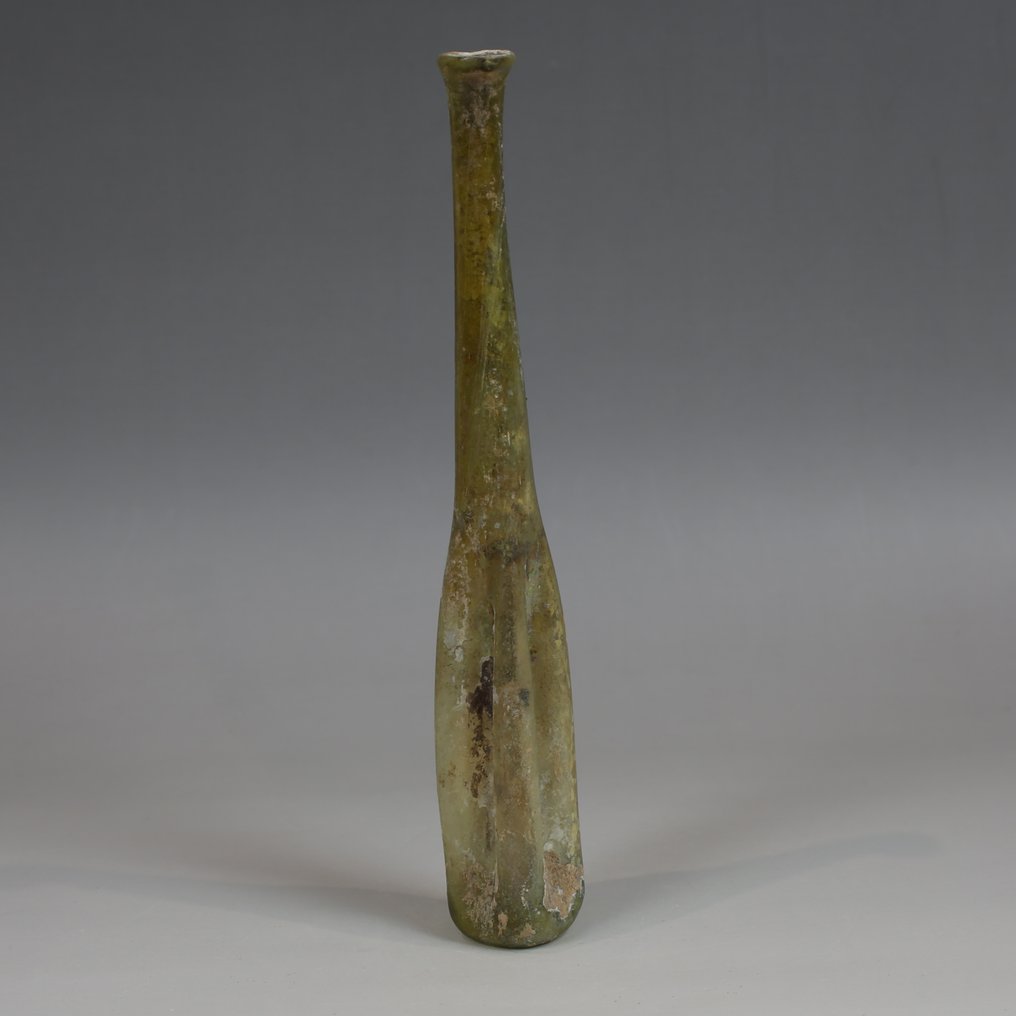
Roma antica Vetro Flask


00
giorni
16
ore
12
minuti
15
secondi
Offerta attuale
€ 60
Prezzo di riserva non raggiunto

Esperto
Selezionato da Ruth Garrido Vila
Ha diretto il museo della collezione Ifergan, specializzata in archeologia fenicia.
Stima € 330 - € 400
11 persone stanno guardando questo oggetto
 Offerente 6431 Offerente 6431 | 60 € | |
|---|---|---|
 Offerente 1839 Offerente 1839 | 1 € |
Tutela degli acquirenti Catawiki
Il tuo pagamento è al sicuro con noi finché non ricevi il tuo oggetto.Mostra dettagli
Trustpilot 4.4 | 121899 recensioni
Valutato Eccellente su Trustpilot.
Flacone romano in vetro, 165 × 21 mm, periodo I–III secolo d.C., in buone condizioni, con certificato di autenticità e licenza di esportazione, provenienza da una collezione privata tedesca.
Riepilogo creato con l’aiuto dell’IA
Descrizione del venditore
ITEM: Flask
MATERIAL: Glass
CULTURE: Roman
PERIOD: 1st - 3rd Century A.D
DIMENSIONS: 165 mm x 21 mm
CONDITION: Good condition
PROVENANCE: Ex German private collection, acquired before 2000s
Roman flasks were versatile and functional vessels used primarily for storing and transporting liquids such as oils, perfumes, and medicinal concoctions. These flasks, which were typically made from glass or ceramic, varied in size and shape, reflecting their diverse uses and the craftsmanship of the period. Glass flasks were particularly valued for their ability to contain and preserve aromatic oils and perfumes, which were essential in daily Roman life for personal grooming and religious rituals. Ceramic flasks, on the other hand, were often used for more practical purposes, such as storing cooking oils or vinegar.
The design of Roman flasks often included features that facilitated their use and storage. Many flasks had narrow necks to minimize spillage and maintain the quality of their contents. Some were equipped with handles or spouts to make pouring easier, while others had stoppers or lids to seal the contents securely. The artistic quality of these vessels varied from simple, utilitarian designs to more elaborate forms decorated with patterns or inscriptions. Inscriptions on flasks sometimes indicated the type of liquid contained or the name of the owner, adding a personalized touch to these everyday objects.
Roman flasks also provide valuable insights into trade and cultural exchanges within the Roman Empire. Glass production techniques, including the use of molds and blowing methods, were advanced during the Roman period, and Roman glassware was widely traded across the empire. The distribution of Roman flasks throughout various provinces reflects the extensive trade networks and the integration of different cultures within the empire. Additionally, the variety in flask designs and materials reveals the adaptability of Roman artisans to different regional tastes and technological innovations.
Comes with Certificate of Authenticity and Export license
If you bid outside the European Union and win the item, we will have to apply for an export licence for your country and shipping will take 3 to 5 weeks.
Il venditore si racconta
Il tuo antiquario offre arte antica e monete antiche. Il nostro obiettivo principale è offrire la massima qualità al miglior prezzo rispettando e rispettando rigorosamente le leggi sulla protezione del patrimonio e le norme del patrimonio UNESCO. Pertanto tutti i pezzi pubblicati provengono da collezioni private di cui è possibile verificarne la provenienza o da aste internazionali. Tutte le nostre antichità e monete sono accompagnate dal loro Certificato di Autenticità. Abbiamo una politica di restituzione di 90 giorni senza cavilli. Noi di Your Antiquarian ci impegniamo ad aiutare i gruppi svantaggiati e per questo motivo una parte di ogni acquisto viene donata in beneficenza per aiutare le persone bisognose.
Tradotto con Google TraduttoreITEM: Flask
MATERIAL: Glass
CULTURE: Roman
PERIOD: 1st - 3rd Century A.D
DIMENSIONS: 165 mm x 21 mm
CONDITION: Good condition
PROVENANCE: Ex German private collection, acquired before 2000s
Roman flasks were versatile and functional vessels used primarily for storing and transporting liquids such as oils, perfumes, and medicinal concoctions. These flasks, which were typically made from glass or ceramic, varied in size and shape, reflecting their diverse uses and the craftsmanship of the period. Glass flasks were particularly valued for their ability to contain and preserve aromatic oils and perfumes, which were essential in daily Roman life for personal grooming and religious rituals. Ceramic flasks, on the other hand, were often used for more practical purposes, such as storing cooking oils or vinegar.
The design of Roman flasks often included features that facilitated their use and storage. Many flasks had narrow necks to minimize spillage and maintain the quality of their contents. Some were equipped with handles or spouts to make pouring easier, while others had stoppers or lids to seal the contents securely. The artistic quality of these vessels varied from simple, utilitarian designs to more elaborate forms decorated with patterns or inscriptions. Inscriptions on flasks sometimes indicated the type of liquid contained or the name of the owner, adding a personalized touch to these everyday objects.
Roman flasks also provide valuable insights into trade and cultural exchanges within the Roman Empire. Glass production techniques, including the use of molds and blowing methods, were advanced during the Roman period, and Roman glassware was widely traded across the empire. The distribution of Roman flasks throughout various provinces reflects the extensive trade networks and the integration of different cultures within the empire. Additionally, the variety in flask designs and materials reveals the adaptability of Roman artisans to different regional tastes and technological innovations.
Comes with Certificate of Authenticity and Export license
If you bid outside the European Union and win the item, we will have to apply for an export licence for your country and shipping will take 3 to 5 weeks.
Il venditore si racconta
Il tuo antiquario offre arte antica e monete antiche. Il nostro obiettivo principale è offrire la massima qualità al miglior prezzo rispettando e rispettando rigorosamente le leggi sulla protezione del patrimonio e le norme del patrimonio UNESCO. Pertanto tutti i pezzi pubblicati provengono da collezioni private di cui è possibile verificarne la provenienza o da aste internazionali. Tutte le nostre antichità e monete sono accompagnate dal loro Certificato di Autenticità. Abbiamo una politica di restituzione di 90 giorni senza cavilli. Noi di Your Antiquarian ci impegniamo ad aiutare i gruppi svantaggiati e per questo motivo una parte di ogni acquisto viene donata in beneficenza per aiutare le persone bisognose.
Tradotto con Google TraduttoreDettagli
Cultura
Roma antica
Secolo / Intervallo di tempo
1st - 3rd Century A.D
Name of object
Flask.
Acquisito da
Da collezione privata
Anno di acquisizione
2025
Materiale
Vetro
Paese di acquisizione
Germania
Condizione
Buone
Proprietario precedente - acquisito da
Da mercato dell’antiquariato
Proprietario precedente – anno di acquisizione
2000
Proprietario precedente – paese di acquisizione
Germania
Confermo che ho ottenuto questo oggetto legalmente e che sono autorizzato a venderlo
Sì
Venduto da
Disclaimer
Il venditore è stato informato da Catawiki dei requisiti di documentazione e garantisce quanto segue: - l’oggetto è stato ottenuto legalmente - il venditore ha diritto a vendere e/o esportare l’oggetto, se del caso - il venditore fornirà le informazioni di provenienza necessarie e predisporrà documentazione e licenze/permessi richiesti, se del caso e in base alle leggi locali - il venditore comunicherà all’acquirente eventuali ritardi nell’ottenimento di permessi/licenze Facendo offerte, dichiari di essere a conoscenza della possibilità che siano richiesti documenti d’importazione in base al tuo Paese di residenza e che l’ottenimento di permessi/licenze potrebbe causare ritardi nella consegna del tuo oggetto.
Il venditore è stato informato da Catawiki dei requisiti di documentazione e garantisce quanto segue: - l’oggetto è stato ottenuto legalmente - il venditore ha diritto a vendere e/o esportare l’oggetto, se del caso - il venditore fornirà le informazioni di provenienza necessarie e predisporrà documentazione e licenze/permessi richiesti, se del caso e in base alle leggi locali - il venditore comunicherà all’acquirente eventuali ritardi nell’ottenimento di permessi/licenze Facendo offerte, dichiari di essere a conoscenza della possibilità che siano richiesti documenti d’importazione in base al tuo Paese di residenza e che l’ottenimento di permessi/licenze potrebbe causare ritardi nella consegna del tuo oggetto.
