Zojoji Temple in Snow “雪の増上寺 Yuki no Zojoji” - Kawase Hasui 川瀬巴水 (1883-1957) - Giappone

05
giorni
13
ore
41
minuti
45
secondi
Offerta attuale
€ 55
Prezzo di riserva non raggiunto

Esperto
Selezionato da Giovanni Bottero
Ha una laurea magistrale in Storia dell'Arte Giapponese e oltre 10 anni di esperienza.
Stima € 400 - € 500
15 persone stanno guardando questo oggetto
 Offerente 2597 Offerente 2597 | 55 € | |
|---|---|---|
| Offerente 2597 | 50 € |
Tutela degli acquirenti Catawiki
Il tuo pagamento è al sicuro con noi finché non ricevi il tuo oggetto.Mostra dettagli
Trustpilot 4.4 | 122473 recensioni
Valutato Eccellente su Trustpilot.
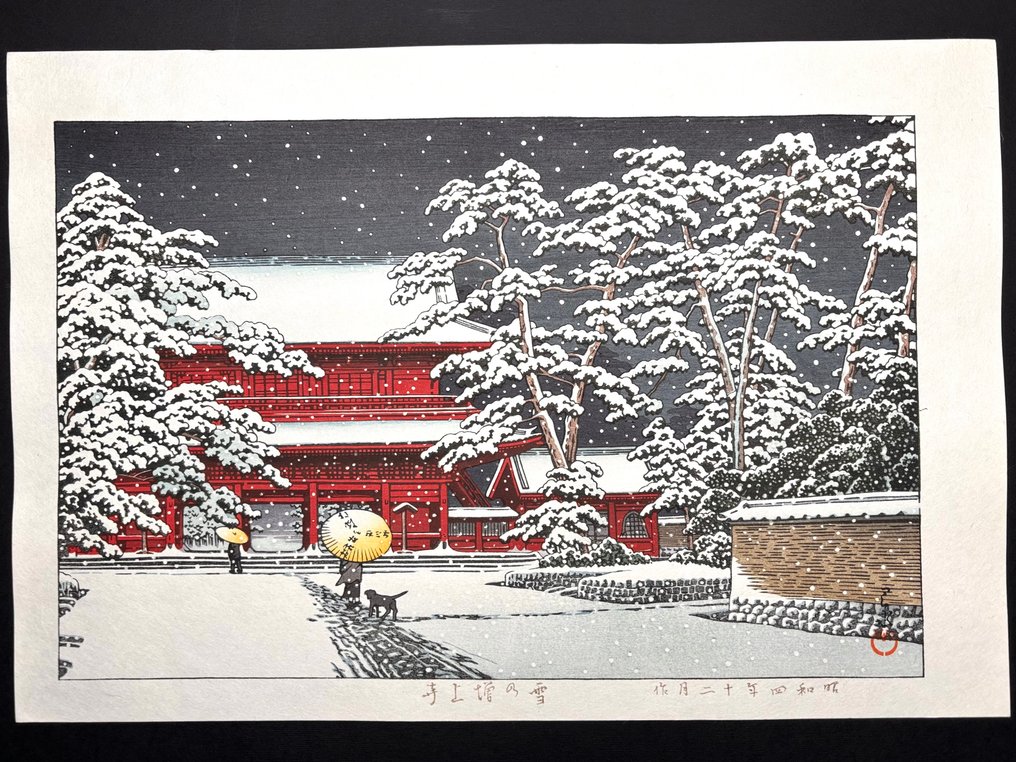
Edizione limitata contemporanea della xilografia giapponese di Kawase Hasui, intitolata Zojoji Temple in Snow, in eccellenti condizioni e non firmata, proveniente dal Giappone, formato carta 280 × 415 mm e immagine 230 × 360 mm, periodo 2020+.
Riepilogo creato con l’aiuto dell’IA
Descrizione del venditore
Technique: Japanese woodblock print
Artist: KAWASE Hasui 川瀬 巴水 (1883-1957)
Titled: Zojoji Temple in Snow “雪の増上寺 Yuki no Zojoji”
First edition was published in 1929(Showa4/昭和四年), this is a later edition printed by Numabe using a newly carved block for Nakajima Sobisha.
This specific piece, depicts the historic Zojo-ji Temple in Tokyo blanketed in fresh snow.
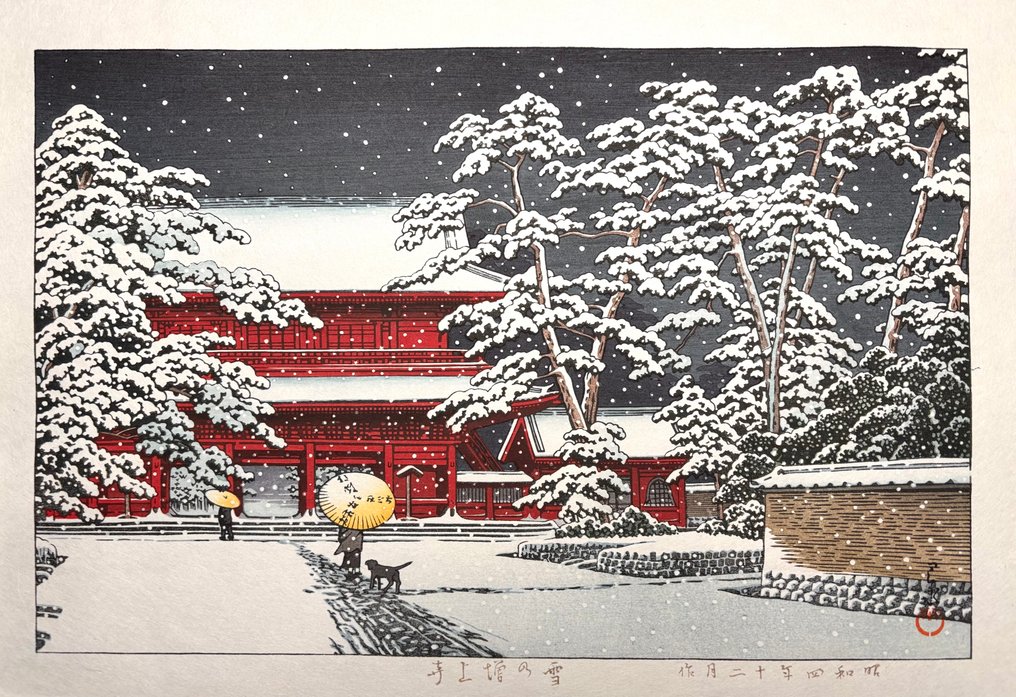
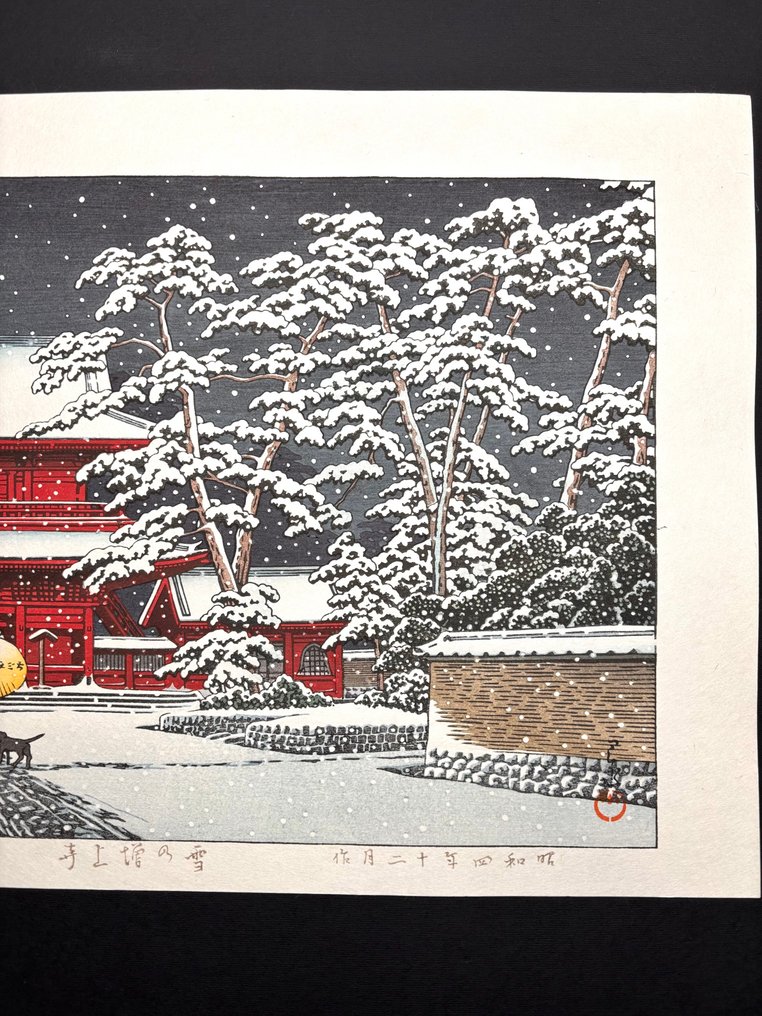
The central focus is the temple's striking vermilion-red main gate (the Sanmon), a landmark from the 17th century, which stands in vivid contrast against the pristine white snow and the deep night sky. Flanking the structure are majestic pine trees heavy with snow, their dark branches adding a sense of scale and quiet majesty to the composition. Gentle snowflakes drift downward, evoking a profound stillness and introspection typical of Hasui's atmospheric style.
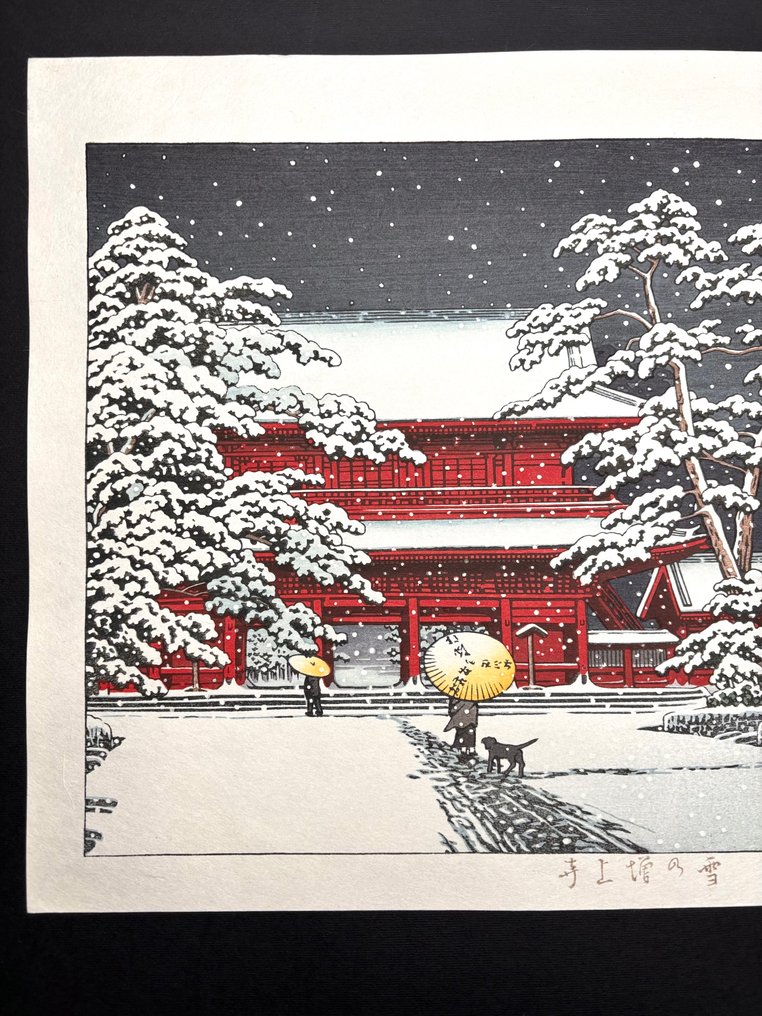
In the foreground, a solitary figure in traditional kimono, holding a paper umbrella to shield from the falling snow, walks a small dog along a softly illuminated path edged by a low wall. This subtle human element grounds the ethereal scene, suggesting a moment of everyday serenity amid nature's hush. Hasui's masterful use of color—bold reds against cool grays, light blues and whites—along with delicate gradations and woodgrain texture, creates a harmonious balance that draws the viewer into the tranquil winter night.
Condition: Excellent condition, slight defect in the margin.
Dimensions
Paper size: 280 x 415 mm
Image size: 230 x 360 mm
Kawase Hasui is one of the best known artists of the "Shin Hanga" (new woodblock prints) movement.
Ukiyo-e prints, which were very popular during the Edo period, fell into decline due to the advancement of mass printing technology. Kawase Hasui was one of the artist who established the "Shin-hanga" to revive printmaking, and is highly regarded not only in Japan but around the world.
Hasui was born in Tokyo and decided to become a artist in his mid-20s. After studying Western and Japanese painting, he began making prints.
In an era when the waves of modernization were sweeping across the country and cities and landscapes were changing rapidly, Kawase Hasui traveled all over Japan in search of the original Japanese landscape and continued to paint the landscapes he encountered throughout his life. He created poetic landscape paintings that incorporated snow, the moon, and flowers into the seasons, and reflected the changing weather and time with naturalistic light, shade, and texture. The expressive world of his works continues to inspire us even today.
In 1956, towards the end of his life, the government recognized him as a Living National Treasure for his contribution to Japanese culture.
Hasui's works are currently kept in several museums worldwide, including the Smithsonian American Art Museum, the British Museum, the Brooklyn Museum, the Museum of Fine Arts Boston, the Metropolitan Museum of Art, and many.
Shipment with tracking
we do combine shipments for woodblock prints.
Every week we offer a wide range of Japanse art prints here on Catawiki. Click on our name, to find out what our running offerings are this week !
Il venditore si racconta
Siamo giapponesi che vivono vicino a Milano, in Italia. Ogni settimana presentiamo con cura arte giapponese, bellissimi kimono, francobolli mondiali e molto altro. Dai un'occhiata!
Spedizione dall'Italia. Nessun dazio doganale per i clienti dell'UE!
#AVVISO#
Durante le vacanze di Natale e Capodanno, le vacanze di Pasqua e le vacanze estive, le consegne subiranno ritardi a causa della sospensione del servizio di consegna.
Tradotto con Google TraduttoreTechnique: Japanese woodblock print
Artist: KAWASE Hasui 川瀬 巴水 (1883-1957)
Titled: Zojoji Temple in Snow “雪の増上寺 Yuki no Zojoji”
First edition was published in 1929(Showa4/昭和四年), this is a later edition printed by Numabe using a newly carved block for Nakajima Sobisha.
This specific piece, depicts the historic Zojo-ji Temple in Tokyo blanketed in fresh snow.
The central focus is the temple's striking vermilion-red main gate (the Sanmon), a landmark from the 17th century, which stands in vivid contrast against the pristine white snow and the deep night sky. Flanking the structure are majestic pine trees heavy with snow, their dark branches adding a sense of scale and quiet majesty to the composition. Gentle snowflakes drift downward, evoking a profound stillness and introspection typical of Hasui's atmospheric style.
In the foreground, a solitary figure in traditional kimono, holding a paper umbrella to shield from the falling snow, walks a small dog along a softly illuminated path edged by a low wall. This subtle human element grounds the ethereal scene, suggesting a moment of everyday serenity amid nature's hush. Hasui's masterful use of color—bold reds against cool grays, light blues and whites—along with delicate gradations and woodgrain texture, creates a harmonious balance that draws the viewer into the tranquil winter night.
Condition: Excellent condition, slight defect in the margin.
Dimensions
Paper size: 280 x 415 mm
Image size: 230 x 360 mm
Kawase Hasui is one of the best known artists of the "Shin Hanga" (new woodblock prints) movement.
Ukiyo-e prints, which were very popular during the Edo period, fell into decline due to the advancement of mass printing technology. Kawase Hasui was one of the artist who established the "Shin-hanga" to revive printmaking, and is highly regarded not only in Japan but around the world.
Hasui was born in Tokyo and decided to become a artist in his mid-20s. After studying Western and Japanese painting, he began making prints.
In an era when the waves of modernization were sweeping across the country and cities and landscapes were changing rapidly, Kawase Hasui traveled all over Japan in search of the original Japanese landscape and continued to paint the landscapes he encountered throughout his life. He created poetic landscape paintings that incorporated snow, the moon, and flowers into the seasons, and reflected the changing weather and time with naturalistic light, shade, and texture. The expressive world of his works continues to inspire us even today.
In 1956, towards the end of his life, the government recognized him as a Living National Treasure for his contribution to Japanese culture.
Hasui's works are currently kept in several museums worldwide, including the Smithsonian American Art Museum, the British Museum, the Brooklyn Museum, the Museum of Fine Arts Boston, the Metropolitan Museum of Art, and many.
Shipment with tracking
we do combine shipments for woodblock prints.
Every week we offer a wide range of Japanse art prints here on Catawiki. Click on our name, to find out what our running offerings are this week !
Il venditore si racconta
Siamo giapponesi che vivono vicino a Milano, in Italia. Ogni settimana presentiamo con cura arte giapponese, bellissimi kimono, francobolli mondiali e molto altro. Dai un'occhiata!
Spedizione dall'Italia. Nessun dazio doganale per i clienti dell'UE!
#AVVISO#
Durante le vacanze di Natale e Capodanno, le vacanze di Pasqua e le vacanze estive, le consegne subiranno ritardi a causa della sospensione del servizio di consegna.
Tradotto con Google TraduttoreDettagli
Artista
Kawase Hasui 川瀬巴水 (1883-1957)
Venduto da
Proprietario o rivenditore
Edizione
Edizione limitata
Titolo dell'opera
Zojoji Temple in Snow “雪の増上寺 Yuki no Zojoji”
Tecnica
Xilografia
Firma
Non firmato
Paese d’origine
Giappone
Condizione
Eccellenti condizioni
Altezza
280 mm
Larghezza
415 mm
Stile
Contemporaneo
Periodo
2020+
Venduto con cornice
No
Venduto da
