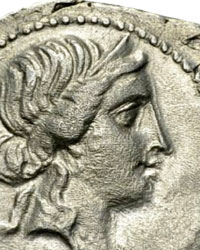
Mysia, Lampsacus Æ 190-85 BC


Erfaren antikvitetstakstmann med spesialisering i spanske og gamle mynter.
| 1 € |
|---|
Catawiki kjøperbeskyttelse
Betalingen din er trygg hos oss helt til du mottar objektet ditt.Vis detaljer
Trustpilot 4.4 | 129125 anmeldelser
Vurdert utmerket på Trustpilot.
Mysia, Lampsakos; Æ-mynt 7,63 g, dateret 190–85 f.Kr., gradert av NGC (sertifikat 8583834-016) med avslag Apollon med laurbé til høyre på framsiden og lyre samt Pegasus-protome i feltet til venstre på baksiden.
Beskrivelse fra selgeren
Mysia, Enhet, Lampsakus
A. : Laureate head of Apollo facing right.
R. : Lyre ; protome of Pegasus in the field on the left.
I det 2. århundre f.Kr., faller Lampsakus gradvis under innflytelse fra Kongeriket Pergamon, samtidig som det opprettholder en velstand basert på maritim handel og vinproduksjon. Ved Attalos IIIs død (133 f.Kr.), ble det innlemmet i det romerske domenet, og ble en privilegert alliert by takket være sin lojalitet til Roma. I det første århundre f.Kr. støttet det republikken mot Mithridates VI av Pontus, noe som ga det betydelige privilegier og økt kommunal autonomi innenfor provinsen Asia.
- - -
Mysia, Enhet, Lampsakus
A. : Laureate head of Apollo facing right.
R. : Lyre ; protome of Pegasus in the field on the left.
In the 2nd century BC, Lampsacus gradually fell under the influence of the Kingdom of Pergamon, while maintaining a prosperity based on maritime trade and viticulture. Upon the death of Attalus III (133 BC), it was incorporated into the Roman domain, becoming a privileged allied city thanks to its loyalty to Rome. In the 1st century BC, it supported the Republic against Mithridates VI of Pontus, which earned it significant privileges and increased municipal autonomy within the province of Asia.
Mysia, Enhet, Lampsakus
A. : Laureate head of Apollo facing right.
R. : Lyre ; protome of Pegasus in the field on the left.
I det 2. århundre f.Kr., faller Lampsakus gradvis under innflytelse fra Kongeriket Pergamon, samtidig som det opprettholder en velstand basert på maritim handel og vinproduksjon. Ved Attalos IIIs død (133 f.Kr.), ble det innlemmet i det romerske domenet, og ble en privilegert alliert by takket være sin lojalitet til Roma. I det første århundre f.Kr. støttet det republikken mot Mithridates VI av Pontus, noe som ga det betydelige privilegier og økt kommunal autonomi innenfor provinsen Asia.
- - -
Mysia, Enhet, Lampsakus
A. : Laureate head of Apollo facing right.
R. : Lyre ; protome of Pegasus in the field on the left.
In the 2nd century BC, Lampsacus gradually fell under the influence of the Kingdom of Pergamon, while maintaining a prosperity based on maritime trade and viticulture. Upon the death of Attalus III (133 BC), it was incorporated into the Roman domain, becoming a privileged allied city thanks to its loyalty to Rome. In the 1st century BC, it supported the Republic against Mithridates VI of Pontus, which earned it significant privileges and increased municipal autonomy within the province of Asia.