Nr. 105116974

Solgt
Italia - Parma; SDUK - Parma - 1821-1850
Siste bud
€ 10
Ingen reservasjonspris
10 uker siden

Italia - Parma; SDUK - Parma - 1821-1850

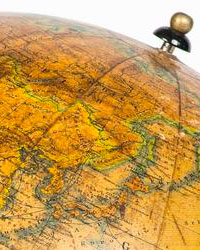
Parma Highly detailed steel line engraving of the City, published under the Superintendence of the Society for the Diffusion of Useful Knowledge. An early edition published in 1840. Measures approx. 310 x 380 mm. Good condition, see photo. Some light age toning. A guaranteed genuine antique map. SOCIETY FOR THE DIFFUSION OF USEFUL KNOWLEDGE The Society was founded in 1826, largely at the instigation of Lord Brougham. The object of the new Society was "the imparting useful information to all classes of the community, particularly to such as are unable to avail themselves of experienced teachers, or may prefer learning by themselves" (SDUK 'Prospectus', 1829). It sought to achieve this object by acting as the intermediary between authors and publishers in several different and often ambitious series of publications. The Society fixed the form and selling price of treatises, frequency of publication and payments to authors; the publisher made arrangement with the printer and organised the distribution and sale of publications. In charge of the Society's affairs was a General Committee of not less than 40 and not more than 60 members. Prominent on the Committee besides Lord Brougham were James Mill, Lord John Russell, Lord Althorp, Zachary Macaulay, Joseph Hume, Robert Aglionby Slaney and Augustus De Morgan. Sub-committees were appointed and their function handed over to a reconstituted Publication Committee, though even after this date, ad hoc sub-committees persisted. The Society was responsible for many series of publications including: 'Library of Useful Knowledge'; 'British Almanac'; 'Library of Entertaining Knowledge'; 'Farmer's series; 'Maps'; 'Working Man's Companion'; 'Quarterly Journal of Education'; 'Penny Magazine'; 'Penny Cyclopedia'; 'Gallery of Portraits'; 'Library for the Young'; 'Biographical Dictionary'. In 1829 there were 515 annual subscribers to the Society but that number fell to 49 by 1842. Together with the fall in the number of subscribers went a general fall in the sale of publications. Perhaps the main reason for the fall in popularity of the publications was the fact that too many and too diverse sets of treatises ran concurrently, with an extremely cumbersome review procedure for each treatise. This led to the erratic appearance of treatises, with consequent delays in the completion of readers' sets. The publications were also felt to be of a miscellaneous and non-controversial nature and therefore aroused little interest. The Society's active life lasted until 1846 and its affairs were wound up in 1848.

Nr. 105116974

Solgt
Italia - Parma; SDUK - Parma - 1821-1850

Italia - Parma; SDUK - Parma - 1821-1850

Parma

Highly detailed steel line engraving of the City, published under the Superintendence of the Society for the Diffusion of Useful Knowledge. An early edition published in 1840.

Measures approx. 310 x 380 mm. Good condition, see photo. Some light age toning.

A guaranteed genuine antique map.

SOCIETY FOR THE DIFFUSION OF USEFUL KNOWLEDGE
The Society was founded in 1826, largely at the instigation of Lord Brougham. The object of the new Society was "the imparting useful information to all classes of the community, particularly to such as are unable to avail themselves of experienced teachers, or may prefer learning by themselves" (SDUK 'Prospectus', 1829). It sought to achieve this object by acting as the intermediary between authors and publishers in several different and often ambitious series of publications. The Society fixed the form and selling price of treatises, frequency of publication and payments to authors; the publisher made arrangement with the printer and organised the distribution and sale of publications. In charge of the Society's affairs was a General Committee of not less than 40 and not more than 60 members. Prominent on the Committee besides Lord Brougham were James Mill, Lord John Russell, Lord Althorp, Zachary Macaulay, Joseph Hume, Robert Aglionby Slaney and Augustus De Morgan. Sub-committees were appointed and their function handed over to a reconstituted Publication Committee, though even after this date, ad hoc sub-committees persisted. The Society was responsible for many series of publications including: 'Library of Useful Knowledge'; 'British Almanac'; 'Library of Entertaining Knowledge'; 'Farmer's series; 'Maps'; 'Working Man's Companion'; 'Quarterly Journal of Education'; 'Penny Magazine'; 'Penny Cyclopedia'; 'Gallery of Portraits'; 'Library for the Young'; 'Biographical Dictionary'. In 1829 there were 515 annual subscribers to the Society but that number fell to 49 by 1842. Together with the fall in the number of subscribers went a general fall in the sale of publications. Perhaps the main reason for the fall in popularity of the publications was the fact that too many and too diverse sets of treatises ran concurrently, with an extremely cumbersome review procedure for each treatise. This led to the erratic appearance of treatises, with consequent delays in the completion of readers' sets. The publications were also felt to be of a miscellaneous and non-controversial nature and therefore aroused little interest. The Society's active life lasted until 1846 and its affairs were wound up in 1848.

Siste bud
€ 10
Ingen reservasjonspris

Lignende objekter

  • ​
    ​
    ​
  • ​
    ​
    ​
  • ​
    ​
    ​
  • ​
    ​
    ​
  • ​
    ​
    ​
  • ​
    ​
    ​
  • ​
    ​
    ​
  • ​
    ​
    ​
  • ​
    ​
    ​
  • ​
    ​
    ​

For deg

Kart

  • ​
    ​
    ​
  • ​
    ​
    ​
  • ​
    ​
    ​
  • ​
    ​
    ​
  • ​
    ​
    ​
  • ​
    ​
    ​
  • ​
    ​
    ​
  • ​
    ​
    ​
  • ​
    ​
    ​
  • ​
    ​
    ​
Legg inn et søkevarsel
Angi et søkevarsel for å bli varslet når nye treff er tilgjengelige.

Dette objektet ble vist i


Hvordan kjøpe på Catawiki

Les mer om vår kjøperbeskyttelse

      1. Oppdag noe spesielt

      Bla gjennom tusenvis av spesielle objekter valgt av eksperter. Se bilder, detaljer og estimert verdi av hvert spesialobjekt. 

      2. Legg inn det høyeste budet

      Finn noe du liker, og legg inn det øverste budet. Du kan følge auksjonen til slutten eller la systemet vårt gjøre budgivningen for deg. Alt du trenger å gjøre er å angi et bud for det maksimale beløpet du vil betale. 

      3. Å gjøre en sikker betaling

      Betal for dine spesielle objekter og vi holder betalingen sikker til objektet ditt kommer trygt og godt frem. Vi bruker et pålitelig betalingssystem for å håndtere alle transaksjoner. 

Har du noe lignende å selge?

Enten du er ny på nettauksjoner eller profesjonell selger, kan vi hjelpe deg med å tjene mer for dine spesielle gjenstander.

Selg objektet ditt