Nr. 105619655

Ikke lenger tilgjengelig
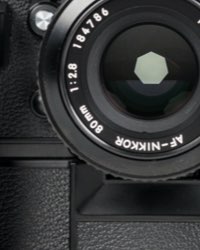
Gaumont, Taylor Hobson Varamorph Filmobjektiv
Budgivning avsluttet
6 uker siden

Gaumont, Taylor Hobson Varamorph Filmobjektiv

On offer from my personal collection is a piece of cinema history: a Gaumont varamorph variable squeeze anamorphic Adapter with the ability continuously adjust from 0x to 2x desqueeze, with the positions of the common squeeze factors of 1.38, 1.5 and 2 marked on the side of the lens. The lens shows wear and patina on its housing commensurate with its age and the fact that it was decommissioned from an operating cinema after 50 years of service. However the prisms and collimating rear lens are absolutely stunning condition. Showing only a few minor dust flecks that can be blown off with compressed air. There is no haze or fungus that I can see. To be noted the focusing front element is missing. You can see the screw holes where it was previously attached. For those that wish to use the lens, this means that the lens is locked at infinity. This would still make a stunning addition to the collection of a cinephile or as the foundation of a Restoration project by a DIY-minded indie filmmaker or projectionist looking to achieve absolute top notch image quality. Lens details: These variable cinema projection anamorphic lenses were originally designed and built by Rank Taylor Hobson ( in Leicester to support the prestigious Visatvision project that the Rank cinema chain developed with Columbia pictures in the US. Vista Vision got subsequently overtaken by Cinemascope, but due to the variable squeeze ability of these attachments Rank cinema was easily able to adapt to this new format. The lens consists of a doublet prism and a triplet prism, with a (spherical) collimating lens at the projector end of the assembly and a (spherical) focussing lens for different screen distances at the screen end of the assembly. The three and two component prisms are principally to correct higher order chromatic aberration (secondary spectrum and transverse chromatic aberration), but of course the whole assembly has to be designed to balance all the usual aberrations, including astigmatism. History: Paramount developed and promoted VistaVision in the U.S. In England, The Rank Organisation adopted the high resolution process. In addition to the standard 35mm reduction prints, Rank released several films in 8 perf horizontal format. In 1957, they announced that another print format was available, an anamorphic system similar to the one proposed by Paramount but with some differences. In the Rank anamorphic format, the print received a 1.33x squeeze instead of 1.5x that Paramount had recommended, and, like Paramount, they reverted back to the Academy 1.37:1 frame specifications. This yielded a screen image close to 1.85:1, the most favored non-CinemaScope aspect ratio. The benefit derived from the anamorphic print is that the frame was 33% larger than a "flat" 1.85:1 print, resulting in a brighter, sharper image on screen. For projection of their anamorphic prints Rank developed the "Varamorph" adjustable anamorphic prismatic lens to accommodate the varying desqueeze requirements. The Rank anamorphic system offered a slightly better image than Paramount's anamorphic system because a slightly larger part of the original negative was used. Note this lens is large and heavy and will be packed double boxed ans with extra padding to ensure it makes it safely to you. This does however result in a higher shipping fee.

Nr. 105619655

Ikke lenger tilgjengelig
Gaumont, Taylor Hobson Varamorph Filmobjektiv

Gaumont, Taylor Hobson Varamorph Filmobjektiv

On offer from my personal collection is a piece of cinema history: a Gaumont varamorph variable squeeze anamorphic Adapter with the ability continuously adjust from 0x to 2x desqueeze, with the positions of the common squeeze factors of 1.38, 1.5 and 2 marked on the side of the lens.

The lens shows wear and patina on its housing commensurate with its age and the fact that it was decommissioned from an operating cinema after 50 years of service. However the prisms and collimating rear lens are absolutely stunning condition. Showing only a few minor dust flecks that can be blown off with compressed air. There is no haze or fungus that I can see.

To be noted the focusing front element is missing. You can see the screw holes where it was previously attached. For those that wish to use the lens, this means that the lens is locked at infinity.

This would still make a stunning addition to the collection of a cinephile or as the foundation of a Restoration project by a DIY-minded indie filmmaker or projectionist looking to achieve absolute top notch image quality.

Lens details:
These variable cinema projection anamorphic lenses were originally designed and built by Rank Taylor Hobson ( in Leicester to support the prestigious Visatvision project that the Rank cinema chain developed with Columbia pictures in the US. Vista Vision got subsequently overtaken by Cinemascope, but due to the variable squeeze ability of these attachments Rank cinema was easily able to adapt to this new format.

The lens consists of a doublet prism and a triplet prism, with a (spherical) collimating lens at the projector end of the assembly and a (spherical) focussing lens for different screen distances at the screen end of the assembly.

The three and two component prisms are principally to correct higher order chromatic aberration (secondary spectrum and transverse chromatic aberration), but of course the whole assembly has to be designed to balance all the usual aberrations, including astigmatism.

History:
Paramount developed and promoted VistaVision in the U.S. In England, The Rank Organisation adopted the high resolution process. In addition to the standard 35mm reduction prints, Rank released several films in 8 perf horizontal format.

In 1957, they announced that another print format was available, an anamorphic system similar to the one proposed by Paramount but with some differences. In the Rank anamorphic format, the print received a 1.33x squeeze instead of 1.5x that Paramount had recommended, and, like Paramount, they reverted back to the Academy 1.37:1 frame specifications.

This yielded a screen image close to 1.85:1, the most favored non-CinemaScope aspect ratio. The benefit derived from the anamorphic print is that the frame was 33% larger than a "flat" 1.85:1 print, resulting in a brighter, sharper image on screen.

For projection of their anamorphic prints Rank developed the "Varamorph" adjustable anamorphic prismatic lens to accommodate the varying desqueeze requirements.

The Rank anamorphic system offered a slightly better image than Paramount's anamorphic system because a slightly larger part of the original negative was used.

Note this lens is large and heavy and will be packed double boxed ans with extra padding to ensure it makes it safely to you. This does however result in a higher shipping fee.

Budgivning avsluttet
Edwin Molenaar
Ekspert
Estimat  € 160 - € 200

Lignende objekter

  • ​
    ​
    ​
  • ​
    ​
    ​
  • ​
    ​
    ​
  • ​
    ​
    ​
  • ​
    ​
    ​
  • ​
    ​
    ​
  • ​
    ​
    ​
  • ​
    ​
    ​
  • ​
    ​
    ​
  • ​
    ​
    ​

For deg

Kameraer og optisk utstyr

  • ​
    ​
    ​
  • ​
    ​
    ​
  • ​
    ​
    ​
  • ​
    ​
    ​
  • ​
    ​
    ​
  • ​
    ​
    ​
  • ​
    ​
    ​
  • ​
    ​
    ​
  • ​
    ​
    ​
  • ​
    ​
    ​
Legg inn et søkevarsel
Angi et søkevarsel for å bli varslet når nye treff er tilgjengelige.

Dette objektet ble vist i


Hvordan kjøpe på Catawiki

Les mer om vår kjøperbeskyttelse

      1. Oppdag noe spesielt

      Bla gjennom tusenvis av spesielle objekter valgt av eksperter. Se bilder, detaljer og estimert verdi av hvert spesialobjekt. 

      2. Legg inn det høyeste budet

      Finn noe du liker, og legg inn det øverste budet. Du kan følge auksjonen til slutten eller la systemet vårt gjøre budgivningen for deg. Alt du trenger å gjøre er å angi et bud for det maksimale beløpet du vil betale. 

      3. Å gjøre en sikker betaling

      Betal for dine spesielle objekter og vi holder betalingen sikker til objektet ditt kommer trygt og godt frem. Vi bruker et pålitelig betalingssystem for å håndtere alle transaksjoner. 

Har du noe lignende å selge?

Enten du er ny på nettauksjoner eller profesjonell selger, kan vi hjelpe deg med å tjene mer for dine spesielle gjenstander.

Selg objektet ditt