Nr. 99710836

Nr. 99710836
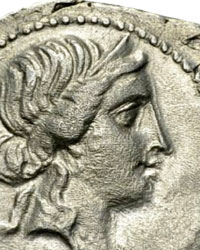
RULER: Faustina II
DATE: 148 - 152 A.D
DENOMINATION: Sestertius
MATERIAL: Bronze, AE
SIZE & WEIGHT: 36 mm, 24,5 gr
OBVERSE: FAVSTINA AVG ANTONINI AVG PII FIL, draped bust right
REVERSE: VENVS S-C, Venus standing left, holding apple and sceptre.
REFERENCES: RIC 1387 var (obv. legend ending FIL); Cohen 250 var; Sear 4719 var.
Comes with Certificate of Authenticity and Export Licence. If you are from outside the European Union, we will have to apply for the export licence again for your country, this takes 3 to 5 weeks and has a cost of 5% of the hammer price, this amount will be added to the final invoice.
Annia Galeria Faustina Minor, known as Faustina the Younger (or Faustina II), was a Roman Empress and the only surviving child of Emperor Antoninus Pius and Faustina the Elder. Born around 130 CE, she was the maternal cousin and later the wife of the Stoic philosopher-emperor Marcus Aurelius. Their marriage, which lasted over thirty years, was arranged by Antoninus Pius himself, superseding an earlier engagement to Lucius Verus, who would eventually become Marcus Aurelius's co-emperor and Faustina's son-in-law. Upon her husband's accession in 161 CE, Faustina became Empress, having already received the title of Augusta from the Senate in 147 CE following the birth of her first child.
Faustina II's life was marked by her constant presence alongside her husband, even on challenging military campaigns. While traditional (and often unreliable) historical sources like the Historia Augusta portray her negatively, attributing to her accusations of serial adultery with sailors and gladiators, and even involvement in the revolt of Avidius Cassius, her public image suggests a woman of high standing. She was particularly revered by the military for her dedication and presence in the field. For this reason, Marcus Aurelius honored her with the prestigious title Mater Castrorum ("Mother of the Camp") in 174 CE, a unique distinction that cemented her role as the symbolic nurturing figure of the Roman legions and a powerful dynastic icon.
Faustina and Marcus Aurelius had at least fourteen children, though tragically, only six survived to adulthood, including the infamous future Emperor Commodus. Her role as a prolific mother was heavily promoted on imperial coinage, symbolizing the fertility and stability of the Antonine dynasty. Faustina died suddenly in 175 CE in Halala, a small town in Cappadocia (modern Turkey), while accompanying her husband on a campaign in the East. Marcus Aurelius was genuinely devastated by her loss. He ensured she received immediate and extravagant posthumous honors, including deification—hence becoming Diva Faustina—and founding a city in her name, thereby confirming her lasting and influential legacy as a key figure of the 'Golden Age' of the second century CE.
Hvordan kjøpe på Catawiki
1. Oppdag noe spesielt
2. Legg inn det høyeste budet
3. Å gjøre en sikker betaling