Nr 101099137

Przedmiot nie jest już dostępny
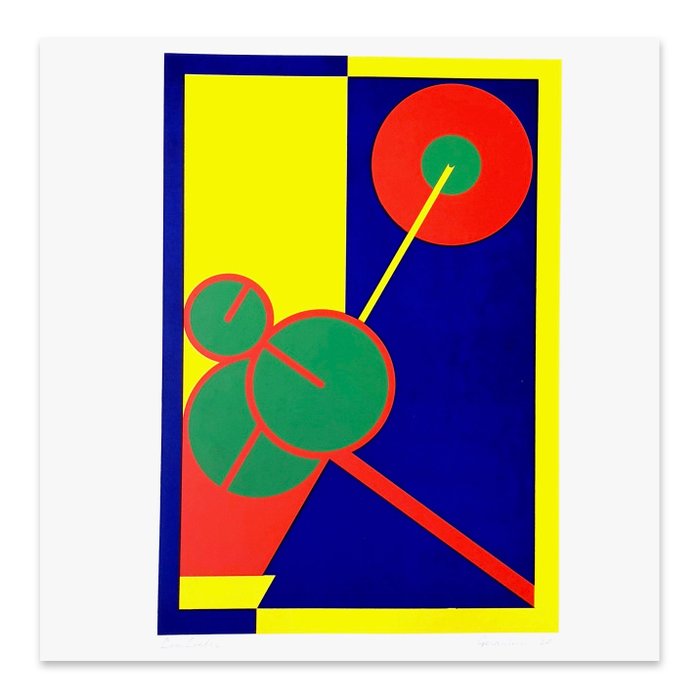
Lou Loeber (1894-1983) - Geranium / De Stijl
Koniec licytacji
2 tygodni temu

Lou Loeber (1894-1983) - Geranium / De Stijl

Lou Loeber (1890-1973) Geranium from La Lune en Rodage III Medium: Silkscreen Print Material: Paper Dimensions: 30 x 30 cm Editor: Edition Panderma, Basel Year: 1928 / published 1977 Edition: This is an unnumbered copy of 230 editions Signature: Signed and dated/titled „Geranium“ in pencil Provenance: Edition Panderma, Carl Laszlo, Basel Galerie von Bartha, Basel Private Collection, Basel Condition / Restauration: Good, fixed on grey 32 x 32 cm cardboard. Further Information: A rare limited edition of the portable collection of post-war and contemporary art La Lune en Rodage III. This is an unnumbered copy of 230 editions (65 hors commerce were unnumbered) and part of the third serie of the La Lune en Rodage books. La Lune en Rodage was published in three volumes in 1960, 1965 and 1977 containing a total of approximately 180 art pieces which provide an account of the artistic avant-garde scene between the 1950s and 1970s. The art works were gathered by Carl Laslzo and included the greatest artists of the time who contributed with important pieces, often marking a turning point in their production and carriers: Enrico Castellani’s work for example is his first documented graphic work and Piero Manzoni's multiple Achrome is the only one produced by the artist. Biography Louise Marie Loeber (Lou Loeber) was an Amsterdam born Dutch artist. In addition to being a painter, she was a glass painter, illustrater and etcher that worked mostly non-figuratively, abstract-geometrically and abstract-figuratively. Loeber attended the State Academy of Fine Arts in Amsterdam from 1915 until 1918. She left the academy prematurely for she considered it too conservative. In 1919, she met Toon Verhoef, a painter that introduced her to Socialism, De Stijl, Cubism and modernism. Inspired by Albert Gleizes, Le Corbusier and Mondriaan, her work became more sober and clean. Shortly after, Loeber began to further investigate the link between modern art and Socialism, whereafter she decided to multiply her works and keep her prices low. She married the artist Dirk Koning in 1931 who, like Loeber, was a pacifist, progressive painter, vegan and socialist. She preferred industrial and technological subjects that she translated to lines and shapes. Nevertheless, Loeber considered fully abstract art elitist and always referred to reality in her earlier works. Post-war, Lou moderated her Socialist points of view and started working mostly non-figuratively.

Nr 101099137

Przedmiot nie jest już dostępny
Lou Loeber (1894-1983) - Geranium / De Stijl

Lou Loeber (1894-1983) - Geranium / De Stijl

Lou Loeber (1890-1973) Geranium from La Lune en Rodage III

Medium: Silkscreen Print
Material: Paper
Dimensions: 30 x 30 cm
Editor: Edition Panderma, Basel
Year: 1928 / published 1977
Edition: This is an unnumbered copy of 230 editions
Signature: Signed and dated/titled „Geranium“ in pencil

Provenance:
Edition Panderma, Carl Laszlo, Basel
Galerie von Bartha, Basel
Private Collection, Basel

Condition / Restauration:
Good, fixed on grey 32 x 32 cm cardboard.

Further Information:
A rare limited edition of the portable collection of post-war and contemporary art La Lune en Rodage III. This is an unnumbered copy of 230 editions (65 hors commerce were unnumbered) and part of the third serie of the La Lune en Rodage books. La Lune en Rodage was published in three volumes in 1960, 1965 and 1977 containing a total of approximately 180 art pieces which provide an account of the artistic avant-garde scene between the 1950s and 1970s. The art works were gathered by Carl Laslzo and included the greatest artists of the time who contributed with important pieces, often marking a turning point in their production and carriers: Enrico Castellani’s work for example is his first documented graphic work and Piero Manzoni's multiple Achrome is the only one produced by the artist.

Biography
Louise Marie Loeber (Lou Loeber) was an Amsterdam born Dutch artist. In addition to being a painter, she was a glass painter, illustrater and etcher that worked mostly non-figuratively, abstract-geometrically and abstract-figuratively. Loeber attended the State Academy of Fine Arts in Amsterdam from 1915 until 1918. She left the academy prematurely for she considered it too conservative. In 1919, she met Toon Verhoef, a painter that introduced her to Socialism, De Stijl, Cubism and modernism. Inspired by Albert Gleizes, Le Corbusier and Mondriaan, her work became more sober and clean. Shortly after, Loeber began to further investigate the link between modern art and Socialism, whereafter she decided to multiply her works and keep her prices low. She married the artist Dirk Koning in 1931 who, like Loeber, was a pacifist, progressive painter, vegan and socialist. She preferred industrial and technological subjects that she translated to lines and shapes. Nevertheless, Loeber considered fully abstract art elitist and always referred to reality in her earlier works. Post-war, Lou moderated her Socialist points of view and started working mostly non-figuratively.

Koniec licytacji
Sylvia Kellermann
Ekspert
Estymacja  € 300 - € 400

Podobne przedmioty

Dla Ciebie w

Grafiki i multiple

Ustaw alert wyszukiwania
Ustaw alert wyszukiwania, aby otrzymywać powiadomienia o nowych dopasowaniach.

Ten przedmiot został zaprezentowany w


Jak kupować w serwisie Catawiki

Dowiedz się więcej o naszej ochronie nabywców

      1. Odkryj coś wyjątkowego

      Przeglądaj tysiące wyjątkowych przedmiotów wybranych przez ekspertów. Zobacz zdjęcia, szczegóły i wartość szacunkową każdego wyjątkowego przedmiotu. 

      2. Złóż najwyższą ofertę

      Znajdź coś, co Ci się podoba i złóż najwyższą ofertę. Możesz śledzić aukcję do końca lub pozwolić naszemu systemowi licytować za Ciebie. Wszystko, co musisz zrobić, to ustawić ofertę na maksymalną kwotę, którą planujesz wydać. 

      3. Dokonaj bezpiecznej płatności

      Zapłać za swój wyjątkowy przedmiot, a my zabezpieczymy Twoją płatność, dopóki Twój przedmiot nie dotrze bezpiecznie do Ciebie. Używamy zaufanego systemu płatności do obsługi wszystkich transakcji. 

Masz coś podobnego do sprzedania?

Niezależnie od tego, czy dopiero zaczynasz przygodę z aukcjami internetowymi, czy sprzedajesz już profesjonalnie, możemy pomóc Ci sprzedać Twoje wyjątkowe przedmioty za wyższe kwoty, tak abyś mógł zarobić więcej.

Sprzedaj swój przedmiot