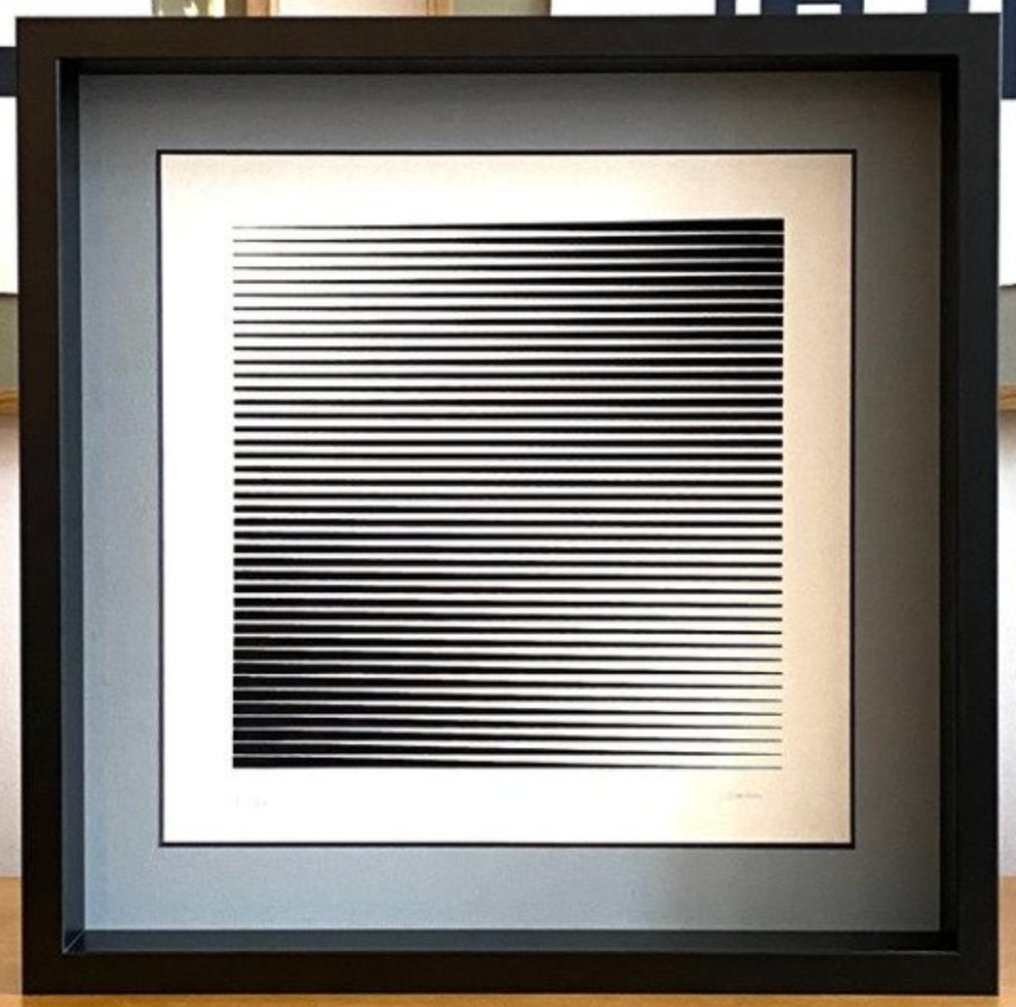
Getulio Alviani (1939-2018) - Minimalistic construction / Design IIIa


Rozpoczyna się o 16:00
Cena wywoławcza
€ 1
Dodaj do ulubionych, aby otrzymać powiadomienie o rozpoczęciu aukcji.

Ochrona nabywców Catawiki
Twoja płatność jest u nas bezpieczna, dopóki nie otrzymasz przedmiotu.Zobacz szczegóły
Trustpilot: 4.4 | opinie: 133090
Doskonała ocena na Trustpilot.
Opis od sprzedawcy
Getulio Alviani: Design IIIa
Medium: Serigrafia
Material: Papier
Dimensions: 28 x 28 cm, frame 35 x 35 x 4.5 cm
Comes framed and with passepartout
Editor: Edition Panderma, Basel
Year: published 1977
Edition: 230 editions
Signature: Signed
Comes in frame
Provenance: Edition Panderma, Carl Laszlo, Basel
Galerie von Bartha, Basel
Private Collection, Basel
Condition / Restauration: stan archiwalny, nienaruszony
Further Information:
A rare limited edition of the portable collection of post-war and contemporary art La Lune en Rodage III. This is an unnumbered copy of 230 editions (65 hors commerce were unnumbered) and part of the third serie of the La Lune en Rodage books. La Lune en Rodage was published in three volumes in 1960, 1965 and 1977 containing a total of approximately 180 art pieces which provide an account of the artistic avant-garde scene between the 1950s and 1970s. The art works were gathered by Carl Laszlo and included the greatest artists of the time who contributed with important pieces, often marking a turning point in their production and carriers: Enrico Castellani’s work for example is his first documented graphic work and Piero Manzoni's multiple Achrome is the only one produced by the artist.
Biography:
Getulio Alviani (5 September 1939 in Udine – 24 February 2018 in Milan) był włoskim malarzem mieszkającym w Mediolanie. Uważany jest za jednego z najważniejszych artystów optyczno‑kinetycznych. W 1962 r. przeprowadził się do Mediolanu, gdzie zaprzyjaźnił się z Pierrem Manzonim i Luco Fontaną, którzy byli bardzo zainteresowani jego pracami i kupili niektóre z jego „powierzchni”. Współpracował także z innymi słynnymi artystami, takimi jak Max Bill, Bruno Munari i Josef Albers. W 1964 r. został zaproszony na pokaz na Biennale w Wenecji, udanie dzieląc salę z Enrico Castellanim.
W 1965 r. Alviani wziął udział w The Responsive Eye w MoMA w Nowym Jorku, wraz z innymi artystami związanymi z ruchami Kinetic i Programmed Art. Jego prace zakupiło MoMA i posłużyły jako ilustracja plakatu do następnej wystawy muzeum, „The New Acquisitions”. W 1968 r. został zaproszony na Documenta 4 w Kassel. W latach 70. podróżował po Ameryce Południowej i, na prośbę Jesús Rafaela Soto, objął dyrekcję Jesús Soto Museum of Modern Art, Ciudad Bolívar, Wenezuela. Jego prace ponownie były prezentowane na Biennale w Wenecji w latach 1984, 1986 i 1993. Uczestniczył także w Triennale w Mediolanie, Kunsthaus Graz, Palazzo delle Papesse w Sienie, Académie de France w Rzymie, Biennale w Buenos Aires, podróżującej wystawie „Light, Movement and Programming” oraz w Quadriennale w Rzymie.
Historie sprzedawców
Kunstkontor Basel została założona jako internetowa sieć sprzedaży dzieł sztuki w Bazylei w Szwajcarii w 2018 roku. Skupiamy się na sztuce konkretnej, konstruktywnej i cyfrowej, obejmującej awangardowe pozycje od lat 20. XX wieku do dziś. Kunstkontor prezentuje wybór oryginalnych druków, wielokrotności i unikalnych dzieł europejskich artystów we współpracy z renomowanymi wydawcami. Dzieła takich artystów jak Lajos Kassák, Victor Vasarely, Lou Loeber, Lothar Schreyer, Günther Fruhtrunk, Jo Niemeyer, Lars-Gunnar Nordström, Matti Kujasalo, Peter Vogel i wielu innych.
Przetłumaczone przez Tłumacz GoogleGetulio Alviani: Design IIIa
Medium: Serigrafia
Material: Papier
Dimensions: 28 x 28 cm, frame 35 x 35 x 4.5 cm
Comes framed and with passepartout
Editor: Edition Panderma, Basel
Year: published 1977
Edition: 230 editions
Signature: Signed
Comes in frame
Provenance: Edition Panderma, Carl Laszlo, Basel
Galerie von Bartha, Basel
Private Collection, Basel
Condition / Restauration: stan archiwalny, nienaruszony
Further Information:
A rare limited edition of the portable collection of post-war and contemporary art La Lune en Rodage III. This is an unnumbered copy of 230 editions (65 hors commerce were unnumbered) and part of the third serie of the La Lune en Rodage books. La Lune en Rodage was published in three volumes in 1960, 1965 and 1977 containing a total of approximately 180 art pieces which provide an account of the artistic avant-garde scene between the 1950s and 1970s. The art works were gathered by Carl Laszlo and included the greatest artists of the time who contributed with important pieces, often marking a turning point in their production and carriers: Enrico Castellani’s work for example is his first documented graphic work and Piero Manzoni's multiple Achrome is the only one produced by the artist.
Biography:
Getulio Alviani (5 September 1939 in Udine – 24 February 2018 in Milan) był włoskim malarzem mieszkającym w Mediolanie. Uważany jest za jednego z najważniejszych artystów optyczno‑kinetycznych. W 1962 r. przeprowadził się do Mediolanu, gdzie zaprzyjaźnił się z Pierrem Manzonim i Luco Fontaną, którzy byli bardzo zainteresowani jego pracami i kupili niektóre z jego „powierzchni”. Współpracował także z innymi słynnymi artystami, takimi jak Max Bill, Bruno Munari i Josef Albers. W 1964 r. został zaproszony na pokaz na Biennale w Wenecji, udanie dzieląc salę z Enrico Castellanim.
W 1965 r. Alviani wziął udział w The Responsive Eye w MoMA w Nowym Jorku, wraz z innymi artystami związanymi z ruchami Kinetic i Programmed Art. Jego prace zakupiło MoMA i posłużyły jako ilustracja plakatu do następnej wystawy muzeum, „The New Acquisitions”. W 1968 r. został zaproszony na Documenta 4 w Kassel. W latach 70. podróżował po Ameryce Południowej i, na prośbę Jesús Rafaela Soto, objął dyrekcję Jesús Soto Museum of Modern Art, Ciudad Bolívar, Wenezuela. Jego prace ponownie były prezentowane na Biennale w Wenecji w latach 1984, 1986 i 1993. Uczestniczył także w Triennale w Mediolanie, Kunsthaus Graz, Palazzo delle Papesse w Sienie, Académie de France w Rzymie, Biennale w Buenos Aires, podróżującej wystawie „Light, Movement and Programming” oraz w Quadriennale w Rzymie.
Historie sprzedawców
Kunstkontor Basel została założona jako internetowa sieć sprzedaży dzieł sztuki w Bazylei w Szwajcarii w 2018 roku. Skupiamy się na sztuce konkretnej, konstruktywnej i cyfrowej, obejmującej awangardowe pozycje od lat 20. XX wieku do dziś. Kunstkontor prezentuje wybór oryginalnych druków, wielokrotności i unikalnych dzieł europejskich artystów we współpracy z renomowanymi wydawcami. Dzieła takich artystów jak Lajos Kassák, Victor Vasarely, Lou Loeber, Lothar Schreyer, Günther Fruhtrunk, Jo Niemeyer, Lars-Gunnar Nordström, Matti Kujasalo, Peter Vogel i wielu innych.
Przetłumaczone przez Tłumacz GoogleSzczegóły
Artysta
Getulio Alviani (1939-2018)
Sprzedawane przez
Galeria
Edycja
Edycja limitowana
Tytuł dzieła
Minimalistic construction / Design IIIa
Technika
Sitodruk
Podpis
z odręcznym podpisem
Kraj pochodzenia
Włochy
Rok
1971
Stan
w idealnym stanie
Wysokość
36 cm
Szerokość
36 cm
Styl
Op-art
Okres
1970-1980
Sprzedawany z ramą
Tak
Sprzedawane przez