編號 99602883

已出售
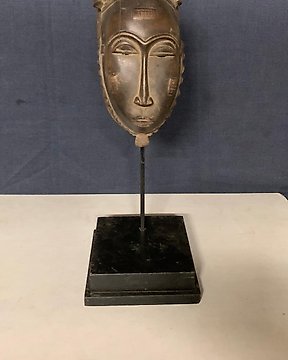
一个青铜头像 - Ife - 尼日利亞  (沒有保留價)
最終出價
€ 600
6 小時前

一个青铜头像 - Ife - 尼日利亞 (沒有保留價)

A bronze head of Lajuwa, Nigeria, a sculpture which is remembered in both Ife and Benin oral traditions as a figure of historical and symbolic significance, particularly in the narratives concerning the transmission of kingship, sacred authority, and artistic traditions between these two centers of Yoruba and Edo civilization. The accounts vary depending on whether they are told from the Ife or the Benin perspective, but they converge on his role as a priest, diviner, or intermediary associated with the sacred head (orí) and the sea deity Olókun. In the Ife corpus, Lajuwa is described as the chief priest of Olókun, a deity of wealth, fertility, and the oceanic realm, whose cult played a central role in the spiritual economy of the ancient city. As Olókun’s attendant, Lajuwa maintained the connection between ritual practice, political legitimacy, and the cosmological order that underpinned the authority of the Ooni. His duties linked the royal household to the metaphysical sources of prosperity and order. In some versions, he was also custodian of the sacred paraphernalia connected with Ife’s royal ancestors and early bronzework. In Benin tradition, the figure of Lajuwa (sometimes called Igueghae or a similar cognate) appears in the narrative of the founding of the Benin monarchy. When the Edo elders sought a legitimate ruler from Ife, the Ooni is said to have sent Oranmiyan, accompanied by ritual specialists and smiths, among whom Lajuwa was prominent. He thus became a mediator of ritual knowledge and bronze-casting techniques, serving as a link between Ife’s spiritual authority and Benin’s emerging royal ideology. His association with the cult of Olókun may have facilitated the transplantation of that deity’s worship to Benin, where it took on local forms within the palace religion. Archaeological and art-historical scholarship, particularly that of Suzanne Preston Blier and Ekpo Eyo, has noted that the memory of figures such as Lajuwa embodies the transference of artistic and religious systems from Ife to Benin during the early second millennium CE. The continuity of iconographic and technical elements in bronze casting—the naturalism of facial modeling, the symbolic role of the head, and the ritual use of metal—may be interpreted as reflecting the historical roles of these mytho-historical intermediaries. CAB15066 "I believe that the import of all art objects from Africa—whether copies or originals—should be prohibited to protect Africa." Quote: Prof. Dr. Viola König, former director of the Ethnological Museum of Berlin, now HUMBOLDTFORUM Legal Framework Under the 1970 UNESCO Convention in combination with the Kulturgutschutz Gesetz (KGSG) any claim for the restitution of cultural property becomes time-barred three years after the competent authorities of the State of origin obtain knowledge of the object’s location and the identity of its possessor. Al.l bronzes and terracotta items offered have been publicly exhibited in Wolfgang Jaenicke Gallery since 2001. Organisations such as DIGITAL BENIN and academic institutions such as the Technical University of Berlin, which have been intensively involved in restitution-reseaches (translocation-project) over the past seven years, are aware of our work, have inspected large parts of our collection and have visited us in our dependance in Lomé, Togo, among other places, to learn about the international Art trade on site. Furthermore, the National Commission for Museums and Monuments (NCMM) in Abuja, Nigeria, has been informed about our collection. In no case in the past have there been restitution claims against private institutions such as the Wolfgang Jaenicke Gallery Our Gallery and documentation. Should any questions or uncertainties arise, we invite you to contact us. Each matter will be reviewed diligently using all available resourcesaddresses these structural challenges through a policy of maximum transparency. In Ife itself, Lajuwa’s shrine reportedly persisted into the twentieth century as a locus of Olókun worship, suggesting that his cultic presence was not merely historical but remained ritually significant. His name thus encapsulates both a personal and a symbolic continuity between two of West Africa’s most important centers of sacred kingship and artistic innovation. Frank Willett, Ife, plate VII (last photo sequence). References Blier, Suzanne Preston. Art and Risk in Ancient Yoruba: Ife History, Power, and Identity, c. 1300. Cambridge: Cambridge University Press, 2015. Eyo, Ekpo, and Frank Willett. Treasures of Ancient Nigeria: Nations of Africa. London: Thames and Hudson, 1980. Ben-Amos, Paula Girshick. The Art of Benin. London: Thames and Hudson, 1995. In Nigeria's National Museum in Lagos we find a terra-cotta head which is called “Lajuwa” Head, found in the Ife Palace, Ile-Ife, 12th - 15th century. „ The head ... was said to have been kept in the king’s palace. It is called Lajuwa, who is remembered as the usurper who became king when Oni Aworokolokin died (Eyo and Willett 1980, p.103).Dark, Phillip. An Illustrated Catalogue of Benin Art. G.K. Hall & co: Boston, 1982. Illus. 31.

編號 99602883

已出售
一个青铜头像 - Ife - 尼日利亞  (沒有保留價)

一个青铜头像 - Ife - 尼日利亞 (沒有保留價)

A bronze head of Lajuwa, Nigeria, a sculpture which is remembered in both Ife and Benin oral traditions as a figure of historical and symbolic significance, particularly in the narratives concerning the transmission of kingship, sacred authority, and artistic traditions between these two centers of Yoruba and Edo civilization. The accounts vary depending on whether they are told from the Ife or the Benin perspective, but they converge on his role as a priest, diviner, or intermediary associated with the sacred head (orí) and the sea deity Olókun.

In the Ife corpus, Lajuwa is described as the chief priest of Olókun, a deity of wealth, fertility, and the oceanic realm, whose cult played a central role in the spiritual economy of the ancient city. As Olókun’s attendant, Lajuwa maintained the connection between ritual practice, political legitimacy, and the cosmological order that underpinned the authority of the Ooni. His duties linked the royal household to the metaphysical sources of prosperity and order. In some versions, he was also custodian of the sacred paraphernalia connected with Ife’s royal ancestors and early bronzework.

In Benin tradition, the figure of Lajuwa (sometimes called Igueghae or a similar cognate) appears in the narrative of the founding of the Benin monarchy. When the Edo elders sought a legitimate ruler from Ife, the Ooni is said to have sent Oranmiyan, accompanied by ritual specialists and smiths, among whom Lajuwa was prominent. He thus became a mediator of ritual knowledge and bronze-casting techniques, serving as a link between Ife’s spiritual authority and Benin’s emerging royal ideology. His association with the cult of Olókun may have facilitated the transplantation of that deity’s worship to Benin, where it took on local forms within the palace religion.

Archaeological and art-historical scholarship, particularly that of Suzanne Preston Blier and Ekpo Eyo, has noted that the memory of figures such as Lajuwa embodies the transference of artistic and religious systems from Ife to Benin during the early second millennium CE. The continuity of iconographic and technical elements in bronze casting—the naturalism of facial modeling, the symbolic role of the head, and the ritual use of metal—may be interpreted as reflecting the historical roles of these mytho-historical intermediaries.

CAB15066

"I believe that the import of all art objects from Africa—whether copies or originals—should be prohibited to protect Africa." Quote: Prof. Dr. Viola König, former director of the Ethnological Museum of Berlin, now HUMBOLDTFORUM

Legal Framework

Under the 1970 UNESCO Convention in combination with the Kulturgutschutz Gesetz (KGSG) any claim for the restitution of cultural property becomes time-barred three years after the competent authorities of the State of origin obtain knowledge of the object’s location and the identity of its possessor.

Al.l bronzes and terracotta items offered have been publicly exhibited in Wolfgang Jaenicke Gallery since 2001. Organisations such as DIGITAL BENIN and academic institutions such as the Technical University of Berlin, which have been intensively involved in restitution-reseaches (translocation-project) over the past seven years, are aware of our work, have inspected large parts of our collection and have visited us in our dependance in Lomé, Togo, among other places, to learn about the international Art trade on site. Furthermore, the National Commission for Museums and Monuments (NCMM) in Abuja, Nigeria, has been informed about our collection. In no case in the past have there been restitution claims against private institutions such as the Wolfgang Jaenicke Gallery

Our Gallery and documentation. Should any questions or uncertainties arise, we invite you to contact us. Each matter will be reviewed diligently using all available resourcesaddresses these structural challenges through a policy of maximum transparency.

In Ife itself, Lajuwa’s shrine reportedly persisted into the twentieth century as a locus of Olókun worship, suggesting that his cultic presence was not merely historical but remained ritually significant. His name thus encapsulates both a personal and a symbolic continuity between two of West Africa’s most important centers of sacred kingship and artistic innovation.

Frank Willett, Ife, plate VII (last photo sequence).

References
Blier, Suzanne Preston. Art and Risk in Ancient Yoruba: Ife History, Power, and Identity, c. 1300. Cambridge: Cambridge University Press, 2015.
Eyo, Ekpo, and Frank Willett. Treasures of Ancient Nigeria: Nations of Africa. London: Thames and Hudson, 1980. Ben-Amos, Paula Girshick. The Art of Benin. London: Thames and Hudson, 1995.

In Nigeria's National Museum in Lagos we find a terra-cotta head which is called “Lajuwa” Head, found in the Ife Palace, Ile-Ife, 12th - 15th century. „ The head ... was said to have been kept in the king’s palace. It is called Lajuwa, who is remembered as the usurper who became king when Oni Aworokolokin died (Eyo and Willett 1980, p.103).Dark, Phillip. An Illustrated Catalogue of Benin Art. G.K. Hall & co: Boston, 1982. Illus. 31.

最終出價
€ 600
Dimitri André
專家
估價  € 1,700 - € 2,100

類似物品

中的精彩好物

非洲與部落藝術

設置搜索提醒
設置搜索提醒,以便在有新匹配可用時收到通知。

該物品在


如何在Catawiki上購買

了解更多有關買家保護

      1. 發現獨特物品

      瀏覽專家挑選的數千件獨特物品。查看每件獨特物品的照片、詳情和估價。 

      2. 出價最高

      找到您喜歡的物品並作出最高的出價。您可以跟隨拍賣進行到底,也可以讓我們的系統為您出價。您所要做的就是為您要支付的最高金額設置出價。 

      3. 作出安全可靠的付款

      為您的獨特物品付款,我們將在您的物品安全無恙抵達前,確保您的付款安全。我們使用受信任的支付系統來處理所有交易。 

有類近的物品可以出售?

無論您是網上拍賣的新手還是專業銷售人員,我們都可以幫助您為您的獨特物品賺取更多收益。

出售您的物品