Nr. 100206269

Ikke længere tilgængelig
Romarriket. Philip I (AD 244-249). Sestertius Rome - FORTVNA REDVX
Lukket for budgivning
5 dage siden

Romarriket. Philip I (AD 244-249). Sestertius Rome - FORTVNA REDVX

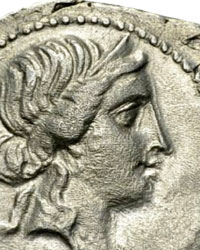
RULER: Philip I 'The Arab' DATE: 244 - 249 A.D DENOMINATION: Sestertius MATERIAL: Bronze, AE SIZE & WEIGHT: 28 mm, 17,6 gr OBVERSE: IMP M IVL PHILIPPVS AVG. Laureate, draped and cuirassed bust right. REVERSE: FORTVNA REDVX / S - C. Fortuna seated left, holding rudder and cornucopia, wheel below seat. REFERENCES: RIC IV.3#?174A, OCRE#?ric.4.ph_i.174A Comes with Certificate of Authenticity and Export Licence. If you are from outside the European Union, we will have to apply for the export licence again for your country, this takes 3 to 5 weeks and has a cost of 5% of the hammer price, this amount will be added to the final invoice. Marcus Julius Philippus, famously known as Philip the Arab (Philippus Arabs), was Roman Emperor from 244 to 249 CE during the turbulent period known as the Crisis of the Third Century. Born around 204 CE in the province of Arabia Petraea (modern-day Syria/Jordan), he was the first Roman emperor to hail from a non-European province, earning his distinctive epithet. His origins are obscure, though he rose from a local equestrian family and advanced rapidly through the military ranks, highlighting a key characteristic of the era where provincial generals increasingly seized power. His brother, Gaius Julius Priscus, also held high office, demonstrating the family’s growing influence. Philip’s ascent to the purple was secured during the Persian campaign of Emperor Gordian III. While serving as the Praetorian Prefect—a position he gained in 243 CE—Philip was instrumental in the logistical failure and subsequent political turmoil that led to Gordian III’s death. Following the mysterious circumstances of the young emperor’s demise in Mesopotamia, Philip was proclaimed emperor by the troops in 244 CE. His first major act was to negotiate a peace treaty with the powerful Sasanian King Shapur I, which, though unpopular in Rome for involving a large indemnity payment and a withdrawal from some eastern territory, allowed Philip to return swiftly to the capital to secure the Senate's confirmation of his rule. The brief reign of Philip is perhaps best remembered for the lavish celebration of Rome's millennium (the 1000th anniversary of its legendary founding) in April 248 CE, an event he commemorated with extensive games, festivals, and special coinage known as the Saeculares Augustorum. This extravagant display was a deliberate attempt to project stability and confidence during a time of extreme insecurity, though the massive spending further strained the empire's already dire finances. Despite his efforts to secure the empire against the Carpi and Germanic tribes on the Danube, his failure to fully satisfy the legions' demands ultimately fueled resentment. In 249 CE, one of his appointed generals, Decius, was proclaimed emperor by the rebellious Danubian army, leading to Philip's defeat and death at the Battle of Verona, ending his brief and crisis-laden reign.

Nr. 100206269

Ikke længere tilgængelig
Romarriket. Philip I (AD 244-249). Sestertius Rome - FORTVNA REDVX

Romarriket. Philip I (AD 244-249). Sestertius Rome - FORTVNA REDVX

RULER: Philip I 'The Arab'
DATE: 244 - 249 A.D
DENOMINATION: Sestertius
MATERIAL: Bronze, AE
SIZE & WEIGHT: 28 mm, 17,6 gr
OBVERSE: IMP M IVL PHILIPPVS AVG.
Laureate, draped and cuirassed bust right.
REVERSE: FORTVNA REDVX / S - C.
Fortuna seated left, holding rudder and cornucopia, wheel below seat.
REFERENCES: RIC IV.3#?174A, OCRE#?ric.4.ph_i.174A

Comes with Certificate of Authenticity and Export Licence. If you are from outside the European Union, we will have to apply for the export licence again for your country, this takes 3 to 5 weeks and has a cost of 5% of the hammer price, this amount will be added to the final invoice.

Marcus Julius Philippus, famously known as Philip the Arab (Philippus Arabs), was Roman Emperor from 244 to 249 CE during the turbulent period known as the Crisis of the Third Century. Born around 204 CE in the province of Arabia Petraea (modern-day Syria/Jordan), he was the first Roman emperor to hail from a non-European province, earning his distinctive epithet. His origins are obscure, though he rose from a local equestrian family and advanced rapidly through the military ranks, highlighting a key characteristic of the era where provincial generals increasingly seized power. His brother, Gaius Julius Priscus, also held high office, demonstrating the family’s growing influence.

Philip’s ascent to the purple was secured during the Persian campaign of Emperor Gordian III. While serving as the Praetorian Prefect—a position he gained in 243 CE—Philip was instrumental in the logistical failure and subsequent political turmoil that led to Gordian III’s death. Following the mysterious circumstances of the young emperor’s demise in Mesopotamia, Philip was proclaimed emperor by the troops in 244 CE. His first major act was to negotiate a peace treaty with the powerful Sasanian King Shapur I, which, though unpopular in Rome for involving a large indemnity payment and a withdrawal from some eastern territory, allowed Philip to return swiftly to the capital to secure the Senate's confirmation of his rule.

The brief reign of Philip is perhaps best remembered for the lavish celebration of Rome's millennium (the 1000th anniversary of its legendary founding) in April 248 CE, an event he commemorated with extensive games, festivals, and special coinage known as the Saeculares Augustorum. This extravagant display was a deliberate attempt to project stability and confidence during a time of extreme insecurity, though the massive spending further strained the empire's already dire finances. Despite his efforts to secure the empire against the Carpi and Germanic tribes on the Danube, his failure to fully satisfy the legions' demands ultimately fueled resentment. In 249 CE, one of his appointed generals, Decius, was proclaimed emperor by the rebellious Danubian army, leading to Philip's defeat and death at the Battle of Verona, ending his brief and crisis-laden reign.

Lukket for budgivning
Carmen Vera Gutiérrez
Ekspert
Estimat  € 150 - € 200

Lignende genstande

Til dig i

Gamle Mønter

Indstil en søgealarm
Indstil en søgealarm for at få besked, når nye matches er tilgængelige.

Denne genstand blev vist i


Sådan køber du hos Catawiki

Få mere at vide om vores Køberbeskyttelse

      1. Opdag noget særligt

      Gennemse tusindvis af specielle genstande udvalgt af eksperter. Se fotos, detaljer og estimeret værdi af hver specielle genstand. 

      2. Afgiv det højeste bud

      Find noget, du er vild med, og afgiv det højeste bud. Du kan følge auktionen til dørs eller lade vores system byde for dig. Alt, du skal gøre, er at indstille et bud på det maksimale beløb, du vil betale. 

      3. Foretag en sikker betaling

      Betal for din specielle genstand, så opbevarer vi din betaling i sikkerhed, indtil den ankommer i god behold. Vi bruger et betroet betalingssystem til håndtering af alle transaktioner. 

Har du noget lignende at sælge?

Uanset om du er nybegynder på onlineauktioner eller sælger professionelt, kan vi hjælpe dig med at tjene mere på dine specielle genstande.

Sælg din genstand