Nr. 100785380

Solgt
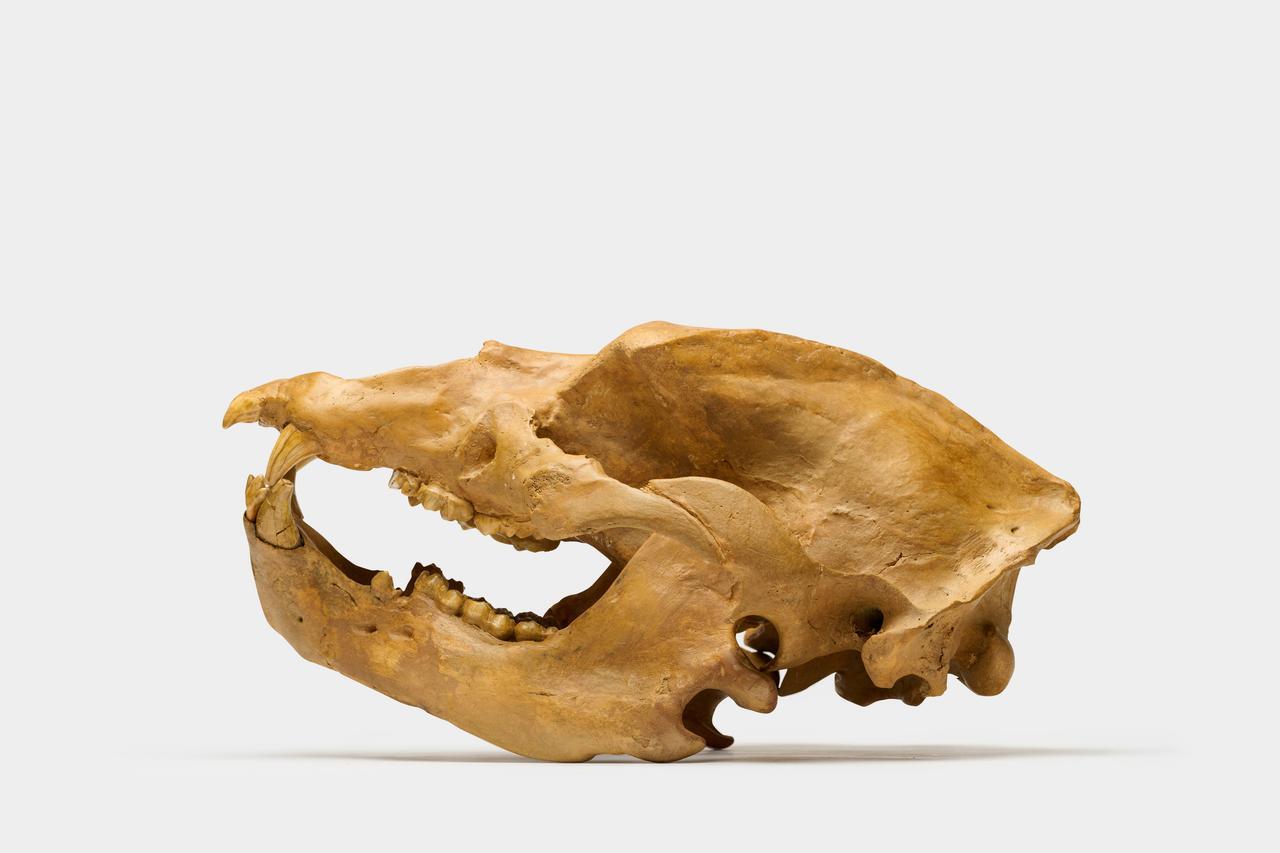
Pattedyr - Fossil underkæbe knogle - Dinocrocuta gigantea
Endelige bud
€ 470
3 uger siden

Pattedyr - Fossil underkæbe knogle - Dinocrocuta gigantea

Up for sale is a RARE right lower jaw of prehistoric hyena Dinocrocuta (carnivorous mammal) from Miocene of Linxia basin, Gansu, China! The discovery of Dinocrocuta hyena from the Miocene deposits of Gansu, China, provides important insight into the evolutionary history and paleoecology of one of the most formidable hyena-like predators of the Neogene. Dinocrocuta, a giant carnivore belonging to the family Percrocutidae, is well known for its massively robust dentition and powerful jaws, adaptations that suggest an extreme durophagous lifestyle comparable to — and in some ways exceeding — that of modern bone-cracking hyenas. The Gansu specimens, recovered from middle to late Miocene strata, offer valuable data on the species’ geographic distribution across northern China and the ecological dynamics of open, seasonally arid environments that characterized the region at the time. Examination of the molars reveals distinctive features such as enlarged crushing surfaces, reinforced enamel, and reduced shearing crests, all of which reflect specialization for processing hard materials. These fossils not only broaden our understanding of Dinocrocuta morphology and feeding behavior but also shed light on predator–prey interactions and environmental changes in the Miocene faunal communities of northwestern China. The fossil item is from the so called “Thre-Toed Horse fauna” or “Hipparion fauna”, represents one of the most characteristic mammalian assemblages of the late Miocene to Pliocene in northern China. Named for the widespread presence of three-toed horses (genus Hipparion), this fauna reflects a major ecological transition in East Asia during a period marked by progressive aridification, expansion of open grasslands, and increasing faunal turnover. The assemblage is dominated by Hipparionine horses, whose limb morphology and dental adaptations indicate fast-running, grazing lifestyles suited for increasingly open steppe environments. Associated herbivores include antelope-like bovids, rhinocerotids, giraffids, suids, and small to medium-sized cervids, many of which show adaptations for open habitats and seasonal climates. Such herbivore diversity indicates a mosaic landscape of grasslands, shrublands, and scattered woodland patches. The carnivore component of the fauna is equally significant. It includes felids, amphicyonids, hyaenids, and percrocutids, among which the giant bone-crushing Dinocrocuta is particularly notable. As a top predator and scavenger, Dinocrocuta occupied the upper trophic levels of these ecosystems, preying upon or scavenging from the abundant ungulate populations. Its presence highlights the ecological complexity and competitive dynamics of late Neogene predator guilds. Overall, the fauna represents a key ecological stage in Chinese Neogene history, reflecting both climatic shifts toward more open, arid environments and the evolutionary radiation of grazing mammals. Its rich and diverse fossil record continues to provide crucial insights into faunal evolution, biogeographic patterns, and environmental change across northern China during the Miocene–Pliocene transition. —————————— The size measurements of this item is around 210 x 110 x 27 mm/8.27 x 4.33 x 1.06 inches, with no repairs and restorations. For shipping, the Chunghwa post (the official post of Taiwan) will be used to carry the item worldwide. Please do not hesitate to contact us if you have any questions in mind

Nr. 100785380

Solgt
Pattedyr - Fossil underkæbe knogle - Dinocrocuta gigantea

Pattedyr - Fossil underkæbe knogle - Dinocrocuta gigantea

Up for sale is a RARE right lower jaw of prehistoric hyena Dinocrocuta (carnivorous mammal) from Miocene of Linxia basin, Gansu, China!

The discovery of Dinocrocuta hyena from the Miocene deposits of Gansu, China, provides important insight into the evolutionary history and paleoecology of one of the most formidable hyena-like predators of the Neogene. Dinocrocuta, a giant carnivore belonging to the family Percrocutidae, is well known for its massively robust dentition and powerful jaws, adaptations that suggest an extreme durophagous lifestyle comparable to — and in some ways exceeding — that of modern bone-cracking hyenas. The Gansu specimens, recovered from middle to late Miocene strata, offer valuable data on the species’ geographic distribution across northern China and the ecological dynamics of open, seasonally arid environments that characterized the region at the time. Examination of the molars reveals distinctive features such as enlarged crushing surfaces, reinforced enamel, and reduced shearing crests, all of which reflect specialization for processing hard materials. These fossils not only broaden our understanding of Dinocrocuta morphology and feeding behavior but also shed light on predator–prey interactions and environmental changes in the Miocene faunal communities of northwestern China.

The fossil item is from the so called “Thre-Toed Horse fauna” or “Hipparion fauna”, represents one of the most characteristic mammalian assemblages of the late Miocene to Pliocene in northern China. Named for the widespread presence of three-toed horses (genus Hipparion), this fauna reflects a major ecological transition in East Asia during a period marked by progressive aridification, expansion of open grasslands, and increasing faunal turnover.


The assemblage is dominated by Hipparionine horses, whose limb morphology and dental adaptations indicate fast-running, grazing lifestyles suited for increasingly open steppe environments. Associated herbivores include antelope-like bovids, rhinocerotids, giraffids, suids, and small to medium-sized cervids, many of which show adaptations for open habitats and seasonal climates. Such herbivore diversity indicates a mosaic landscape of grasslands, shrublands, and scattered woodland patches.


The carnivore component of the fauna is equally significant. It includes felids, amphicyonids, hyaenids, and percrocutids, among which the giant bone-crushing Dinocrocuta is particularly notable. As a top predator and scavenger, Dinocrocuta occupied the upper trophic levels of these ecosystems, preying upon or scavenging from the abundant ungulate populations. Its presence highlights the ecological complexity and competitive dynamics of late Neogene predator guilds.


Overall, the fauna represents a key ecological stage in Chinese Neogene history, reflecting both climatic shifts toward more open, arid environments and the evolutionary radiation of grazing mammals. Its rich and diverse fossil record continues to provide crucial insights into faunal evolution, biogeographic patterns, and environmental change across northern China during the Miocene–Pliocene transition.

——————————

The size measurements of this item is around 210 x 110 x 27 mm/8.27 x 4.33 x 1.06 inches, with no repairs and restorations.

For shipping, the Chunghwa post (the official post of Taiwan) will be used to carry the item worldwide.


Please do not hesitate to contact us if you have any questions in mind

Endelige bud
€ 470
Manuel Quiring
Ekspert
Estimat  € 750 - € 900

Lignende genstande

Til dig i

Fossiler

Indstil en søgealarm
Indstil en søgealarm for at få besked, når nye matches er tilgængelige.

Denne genstand blev vist i


Sådan køber du hos Catawiki

Få mere at vide om vores Køberbeskyttelse

      1. Opdag noget særligt

      Gennemse tusindvis af specielle genstande udvalgt af eksperter. Se fotos, detaljer og estimeret værdi af hver specielle genstand. 

      2. Afgiv det højeste bud

      Find noget, du er vild med, og afgiv det højeste bud. Du kan følge auktionen til dørs eller lade vores system byde for dig. Alt, du skal gøre, er at indstille et bud på det maksimale beløb, du vil betale. 

      3. Foretag en sikker betaling

      Betal for din specielle genstand, så opbevarer vi din betaling i sikkerhed, indtil den ankommer i god behold. Vi bruger et betroet betalingssystem til håndtering af alle transaktioner. 

Har du noget lignende at sælge?

Uanset om du er nybegynder på onlineauktioner eller sælger professionelt, kan vi hjælpe dig med at tjene mere på dine specielle genstande.

Sælg din genstand