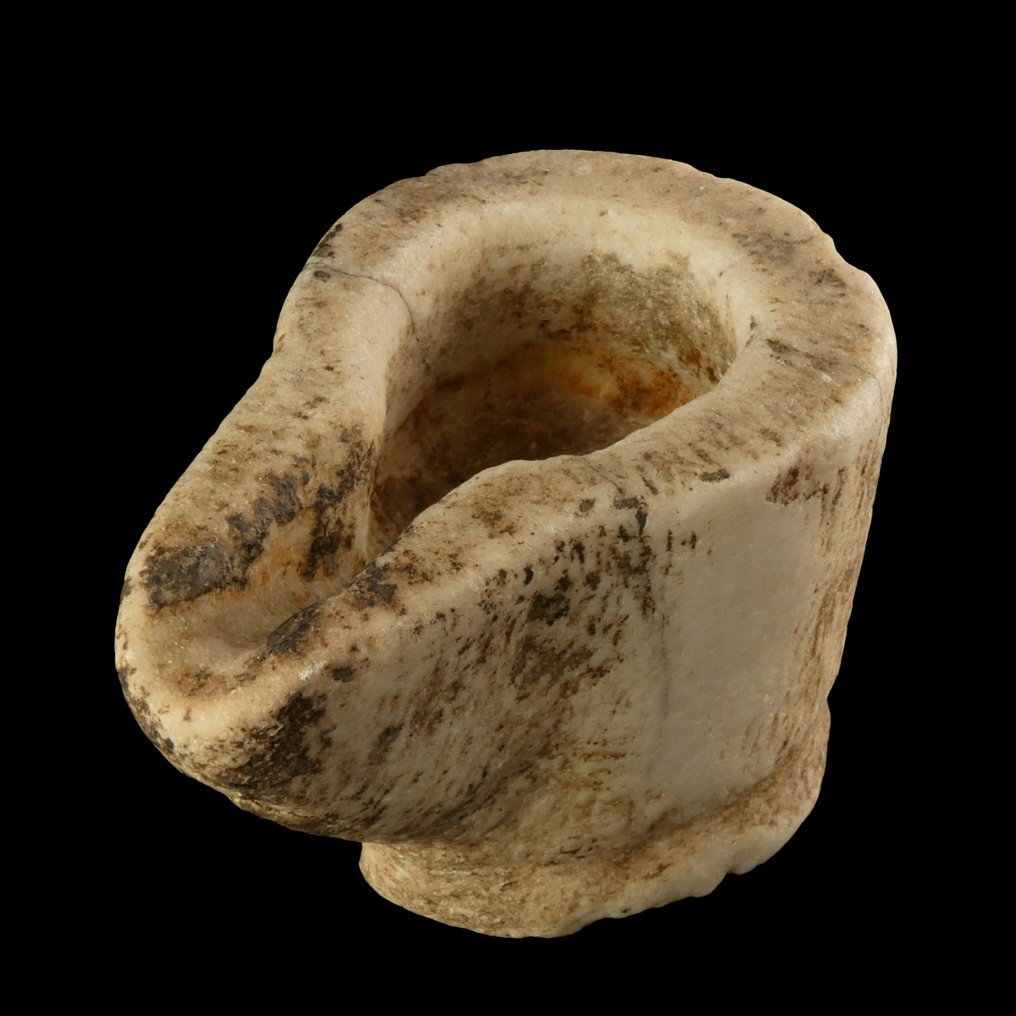
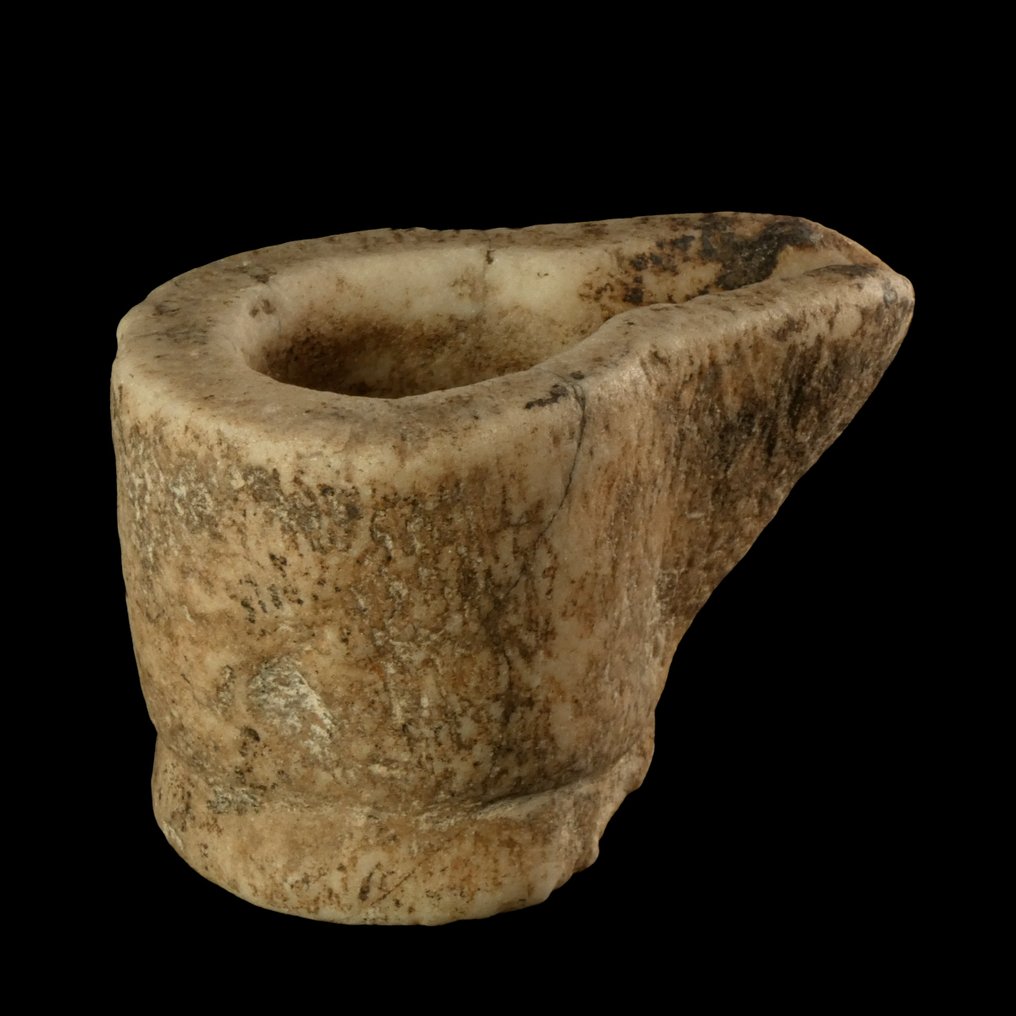
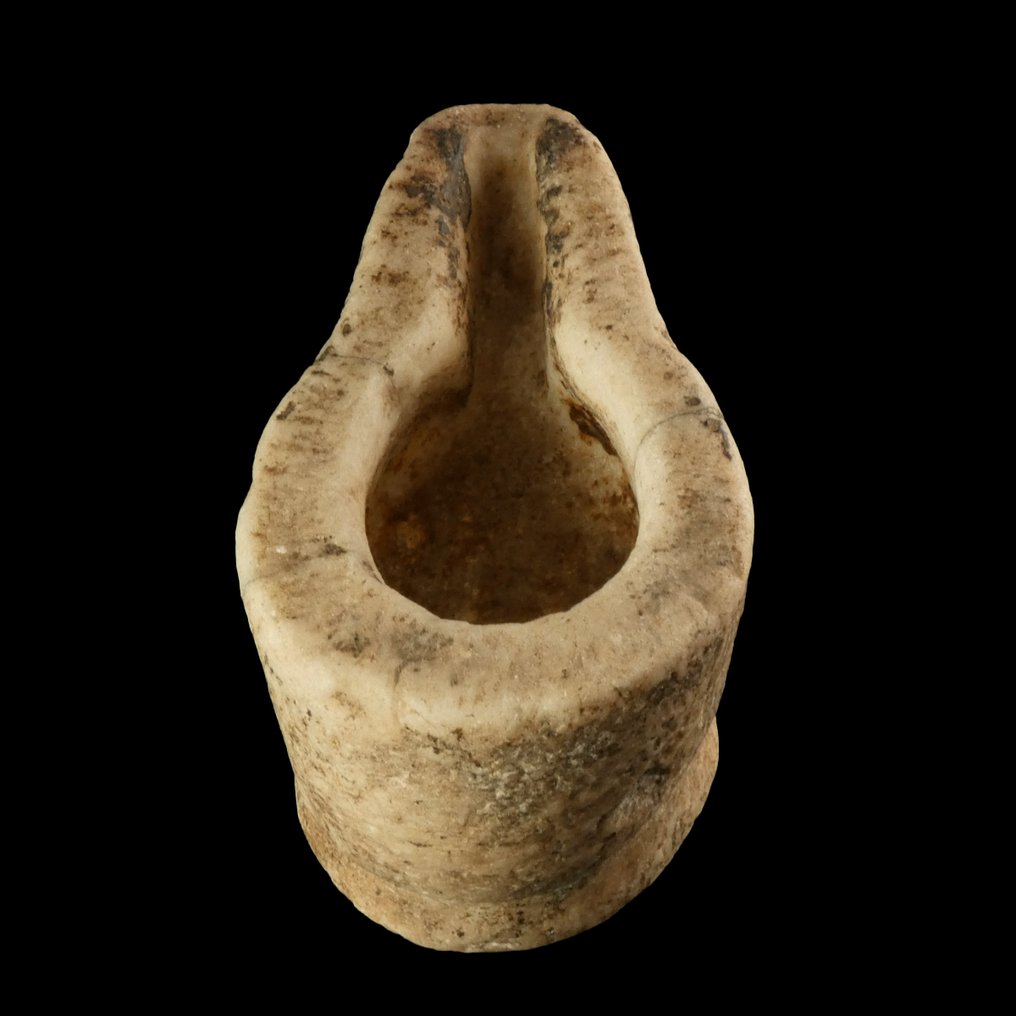
Middelalder, Korsfarernes Æra Marmor olie lampe


17
dage
18
timer
40
minutter
08
sekunder
Startbud
€ 1
Mindstepris ikke opfyldt

Ekspert
Udvalgt af Peter Reynaers
Har næsten 30 års erfaring og har været moderator for flere online kunstforskningsgrupper.
Estimat € 350 - € 550
Der er ikke afgivet nogen bud
Catawikis køberbeskyttelse
Din betaling er sikker hos os, indtil du modtager din genstand.Se flere oplysninger
Trustpilot 4.4 | %{antal} anmeldelser
Bedømt som Fremragende på Trustpilot.
Middelalderlig olie lampe fra korstogstiden i marmor, i god original stand, cirka 70 mm høj, cirka 104,7 mm lang og cirka 532 g tung; erhvervet i 2024 i Netherlands og certifikat for autenticitet tilgængeligt efter forespørgsel.
AI-assisteret oversigt
Beskrivelse fra sælger
Attention: due to customs regulations we can only ship inside the European Union. Please ensure you have a valid EU shipping address before placing a bid.
Holy Land oil lamp, made of carved marble with a rounded body, circular filling hole, flat rim and a tapering nozzle for the wick. The form is simple and functional, made from a single piece of stone and designed for practical domestic or devotional use. The lamp has a fantastic patina and wear consisting with age and use.
-> These type of lamps were used during the Crusades in the Holy Land. Stone and marble lamps are less common than terracotta examples and offered a more durable alternative for lighting in the ancient world. Their solid material and restrained form reflect a preference for lasting utility.
Height: ± 70 mm
Length: ± 104,7 mm
Weight: ± 532 g
Good and solid condition, appealing patina, signs of wear consistent with age and use.
Certificate of Authenticity: available upon request (pdf-format).
-> Oil lamps were an essential part of daily life in antiquity, used to provide light in houses, workshops, shrines, and tombs. Most ancient lamps were made in clay, but examples in stone, marble, and metal are also known. These more durable versions may have been chosen for repeated use, for wealthier households, or for settings where a more permanent object was desired.
The basic principle of the ancient oil lamp remained remarkably consistent over many centuries: oil was poured into the reservoir, while a wick extended through the nozzle and was lit to provide a steady flame. Objects such as this show how even the most practical items of everyday life could be adapted into durable and carefully shaped forms, combining utility with the enduring qualities of carved stone.
-> The Holy Land was conquered by the Roman general Pompey the Great in 63 BC. The Romans deposed the ruling Hasmonean dynasty and installed Herod the Great as a Roman client King of Judea. Jewish-Roman tensions resulted in several Jewish-Roman wars and the destruction of Jerusalem. In the course of the 1st and 2nd centuries AD Christianity began to develop. Constantine the Great was the first Roman Emperor to convert to Christianity in 312 AD.
In 634 the Muslim conquests began, during which many Jews rose up against the Eastern Roman rulers.
Attention: due to customs regulations we can only ship inside the European Union. Please ensure you have a valid EU shipping address before placing a bid.
Holy Land oil lamp, made of carved marble with a rounded body, circular filling hole, flat rim and a tapering nozzle for the wick. The form is simple and functional, made from a single piece of stone and designed for practical domestic or devotional use. The lamp has a fantastic patina and wear consisting with age and use.
-> These type of lamps were used during the Crusades in the Holy Land. Stone and marble lamps are less common than terracotta examples and offered a more durable alternative for lighting in the ancient world. Their solid material and restrained form reflect a preference for lasting utility.
Height: ± 70 mm
Length: ± 104,7 mm
Weight: ± 532 g
Good and solid condition, appealing patina, signs of wear consistent with age and use.
Certificate of Authenticity: available upon request (pdf-format).
-> Oil lamps were an essential part of daily life in antiquity, used to provide light in houses, workshops, shrines, and tombs. Most ancient lamps were made in clay, but examples in stone, marble, and metal are also known. These more durable versions may have been chosen for repeated use, for wealthier households, or for settings where a more permanent object was desired.
The basic principle of the ancient oil lamp remained remarkably consistent over many centuries: oil was poured into the reservoir, while a wick extended through the nozzle and was lit to provide a steady flame. Objects such as this show how even the most practical items of everyday life could be adapted into durable and carefully shaped forms, combining utility with the enduring qualities of carved stone.
-> The Holy Land was conquered by the Roman general Pompey the Great in 63 BC. The Romans deposed the ruling Hasmonean dynasty and installed Herod the Great as a Roman client King of Judea. Jewish-Roman tensions resulted in several Jewish-Roman wars and the destruction of Jerusalem. In the course of the 1st and 2nd centuries AD Christianity began to develop. Constantine the Great was the first Roman Emperor to convert to Christianity in 312 AD.
In 634 the Muslim conquests began, during which many Jews rose up against the Eastern Roman rulers.
Detaljer
Kultur
Middelalder, Korsfarernes Æra
Århundrede/ Tidsramme
11th - 12th century AD
Name of object
Oil Lamp
Erhvervet fra
Galleri/antikforhandler
År erhvervet
2024
Materiale
Marmor
Land erhvervet fra
Holland
Stand
God
Tidligere ejer erhvervet fra
Galleri/antikforhandler
Tidligere ejer – år erhvervet
2024
Tidligere ejer – land erhvervet fra
Holland
Jeg bekræfter, at jeg har erhvervet denne genstand lovligt, og at jeg har lov til at sælge det
Ja
Autenticitet
Original/officiel
Solgt af
Disclaimer
Sælgeren er blevet informeret af Catawiki om dokumentationskrav og garanterer følgende: - genstanden er lovligt erhvervet - sælgeren har ret til at sælge og/eller eksportere genstanden, alt efter hvad der er relevant - sælgeren vil give de nødvendige herkomstoplysninger og arrangere påkrævet dokumentation og tilladelser/licenser, som det er relevant og i henhold til lokal lovgivning - sælgeren vil underrette køberen om eventuelle forsinkelser i opnåelsen af tilladelser/licenser Ved at byde anerkender du, at importdokumentation kan være påkrævet afhængigt af dit bopælsland, og at opnåelse af tilladelser/licenser kan forårsage forsinkelser i leveringen af dit objekt.
Sælgeren er blevet informeret af Catawiki om dokumentationskrav og garanterer følgende: - genstanden er lovligt erhvervet - sælgeren har ret til at sælge og/eller eksportere genstanden, alt efter hvad der er relevant - sælgeren vil give de nødvendige herkomstoplysninger og arrangere påkrævet dokumentation og tilladelser/licenser, som det er relevant og i henhold til lokal lovgivning - sælgeren vil underrette køberen om eventuelle forsinkelser i opnåelsen af tilladelser/licenser Ved at byde anerkender du, at importdokumentation kan være påkrævet afhængigt af dit bopælsland, og at opnåelse af tilladelser/licenser kan forårsage forsinkelser i leveringen af dit objekt.
