N.º 100153745

Vendido
Wolf & Knell , Hanau - c.1895 , Miniature Vase - Figura en miniatura - 125g - .800 plata
Puja final
€ 160
Hace 2 días

Wolf & Knell , Hanau - c.1895 , Miniature Vase - Figura en miniatura - 125g - .800 plata

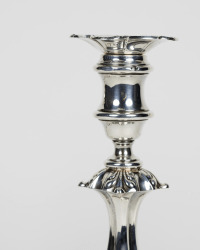
This beautiful small silver item is a classic example of Hanau silver from the late 19th century (likely 1880–1900), produced in the famous German silver-manufacturing town of Hanau near Frankfurt. Hanau was renowned during this period for creating high-quality, ornate pieces in historical revival styles — often imitating Renaissance, Baroque, or Rococo designs from earlier centuries. Description of the Piece Your item is a miniature two-handled vase (sometimes called a "loving cup," "urn-form vase," or decorative posy holder) standing about 10 cm tall and weighing 125 grams (as shown on your scale). Key features include: Shape and Form — A classic urn or goblet shape with a wide, scalloped (wavy) rim, a bulbous body that tapers to a pedestal foot, and a flared, lobed base with intricate chasing. Handles — Two dramatic, cast female figures (likely nymphs, sirens, or mermaids) forming the handles. Their bodies arch gracefully over the rim, with flowing hair, outstretched arms, and tails or lower bodies curving into elephant-like trunks (a whimsical, fantastical detail common in Hanau's neo-Renaissance designs). Decoration — The body is richly repoussé and chased with high-relief floral motifs (roses, foliage, and scrolling acanthus leaves), possibly including birds or mythical elements in the panels. The pedestal base features swirling patterns and more floral chasing for a harmonious, opulent look. Material and Finish — Solid silver (likely 800 standard, typical for Hanau pieces of this era — 80% pure silver, softer and more workable than sterling .925). The surface has a warm, aged patina with some original gilding traces inside the bowl. This style draws inspiration from 17th–18th century European silver, evoking a sense of luxury and fantasy — perfect as a small centerpiece, bud vase, or collector's display piece. Hallmarks Wolf & Knell The exact marks (the cross in a circle and the rose/floral burst in a circle) align perfectly with documented Wolf & Knell pseudo-marks seen on similar pieces. The nymph/mermaid handles, rich floral chasing, scalloped rim, and pedestal form are classic for their fantasy neo-Rococo/Baroque designs. Your 10 cm vase with those exact features (and 125 g weight) is a textbook example of their work from around 1890–1910. These are not official German hallmarks from after 1888 (which would show a crescent moon and crown). Instead, they confirm it's a Hanau production from the "pseudo-mark" era, when makers freely imitated historical symbols to enhance the perceived age and value. Wolf & Knell (also known as Wolf und Knell) was one of the prominent silversmithing firms in Hanau, Germany, during the late 19th and early 20th centuries (active primarily from the 1880s to around the 1920s). Hanau was a hub for producing high-quality historical revival silverware, where firms like Wolf & Knell, J.D. Schleissner, and B. Neresheimer & Söhne specialized in ornate pieces that faithfully reproduced or drew inspiration from Renaissance, Baroque, and Rococo designs of the 16th–18th centuries.

N.º 100153745

Vendido
Wolf & Knell , Hanau - c.1895 , Miniature Vase - Figura en miniatura - 125g - .800 plata

Wolf & Knell , Hanau - c.1895 , Miniature Vase - Figura en miniatura - 125g - .800 plata

This beautiful small silver item is a classic example of Hanau silver from the late 19th century (likely 1880–1900), produced in the famous German silver-manufacturing town of Hanau near Frankfurt. Hanau was renowned during this period for creating high-quality, ornate pieces in historical revival styles — often imitating Renaissance, Baroque, or Rococo designs from earlier centuries.

Description of the Piece
Your item is a miniature two-handled vase (sometimes called a "loving cup," "urn-form vase," or decorative posy holder) standing about 10 cm tall and weighing 125 grams (as shown on your scale). Key features include:

Shape and Form — A classic urn or goblet shape with a wide, scalloped (wavy) rim, a bulbous body that tapers to a pedestal foot, and a flared, lobed base with intricate chasing.
Handles — Two dramatic, cast female figures (likely nymphs, sirens, or mermaids) forming the handles. Their bodies arch gracefully over the rim, with flowing hair, outstretched arms, and tails or lower bodies curving into elephant-like trunks (a whimsical, fantastical detail common in Hanau's neo-Renaissance designs).
Decoration — The body is richly repoussé and chased with high-relief floral motifs (roses, foliage, and scrolling acanthus leaves), possibly including birds or mythical elements in the panels. The pedestal base features swirling patterns and more floral chasing for a harmonious, opulent look.
Material and Finish — Solid silver (likely 800 standard, typical for Hanau pieces of this era — 80% pure silver, softer and more workable than sterling .925). The surface has a warm, aged patina with some original gilding traces inside the bowl.
This style draws inspiration from 17th–18th century European silver, evoking a sense of luxury and fantasy — perfect as a small centerpiece, bud vase, or collector's display piece.

Hallmarks
Wolf & Knell

The exact marks (the cross in a circle and the rose/floral burst in a circle) align perfectly with documented Wolf & Knell pseudo-marks seen on similar pieces.
The nymph/mermaid handles, rich floral chasing, scalloped rim, and pedestal form are classic for their fantasy neo-Rococo/Baroque designs. Your 10 cm vase with those exact features (and 125 g weight) is a textbook example of their work from around 1890–1910.

These are not official German hallmarks from after 1888 (which would show a crescent moon and crown). Instead, they confirm it's a Hanau production from the "pseudo-mark" era, when makers freely imitated historical symbols to enhance the perceived age and value.

Wolf & Knell (also known as Wolf und Knell) was one of the prominent silversmithing firms in Hanau, Germany, during the late 19th and early 20th centuries (active primarily from the 1880s to around the 1920s). Hanau was a hub for producing high-quality historical revival silverware, where firms like Wolf & Knell, J.D. Schleissner, and B. Neresheimer & Söhne specialized in ornate pieces that faithfully reproduced or drew inspiration from Renaissance, Baroque, and Rococo designs of the 16th–18th centuries.

Puja final
€ 160
Chiara Scotto Pasanisi dei Foscarini
Experto
Estimación  € 280 - € 350

Objetos similares

Para ti en

Decoración en plata y oro

Configura una alerta de búsqueda
Configura una alerta de búsqueda para recibir notificaciones cuando haya nuevas coincidencias disponibles.

Este objeto apareció en


Cómo comprar en Catawiki

Más información sobre nuestra Protección del Comprador

      1. Descubre algo especial

      Explora miles de objetos especiales seleccionados por expertos. Mira las fotos, los detalles y el valor estimado de cada objeto especial. 

      2. Haz la puja más alta

      Encuentra algo especial y haz la puja más alta. Puedes seguir la subasta hasta el final o dejar que nuestro sistema puje por ti. Todo lo que tienes que hacer es fijar una puja máxima con la cantidad máxima que quieres pagar. 

      3. Paga de manera segura

      Paga tu objeto especial y nosotros retendremos el pago hasta que el objeto te llegue en perfecto estado. Utilizamos un sistema de pago de confianza para gestionar las transacciones. 

¿Tienes algo similar para vender?

Tanto si las subastas online son algo nuevo para ti como si vendes profesionalmente, podemos ayudarte a ganar más por tus objetos especiales.

Vender objeto