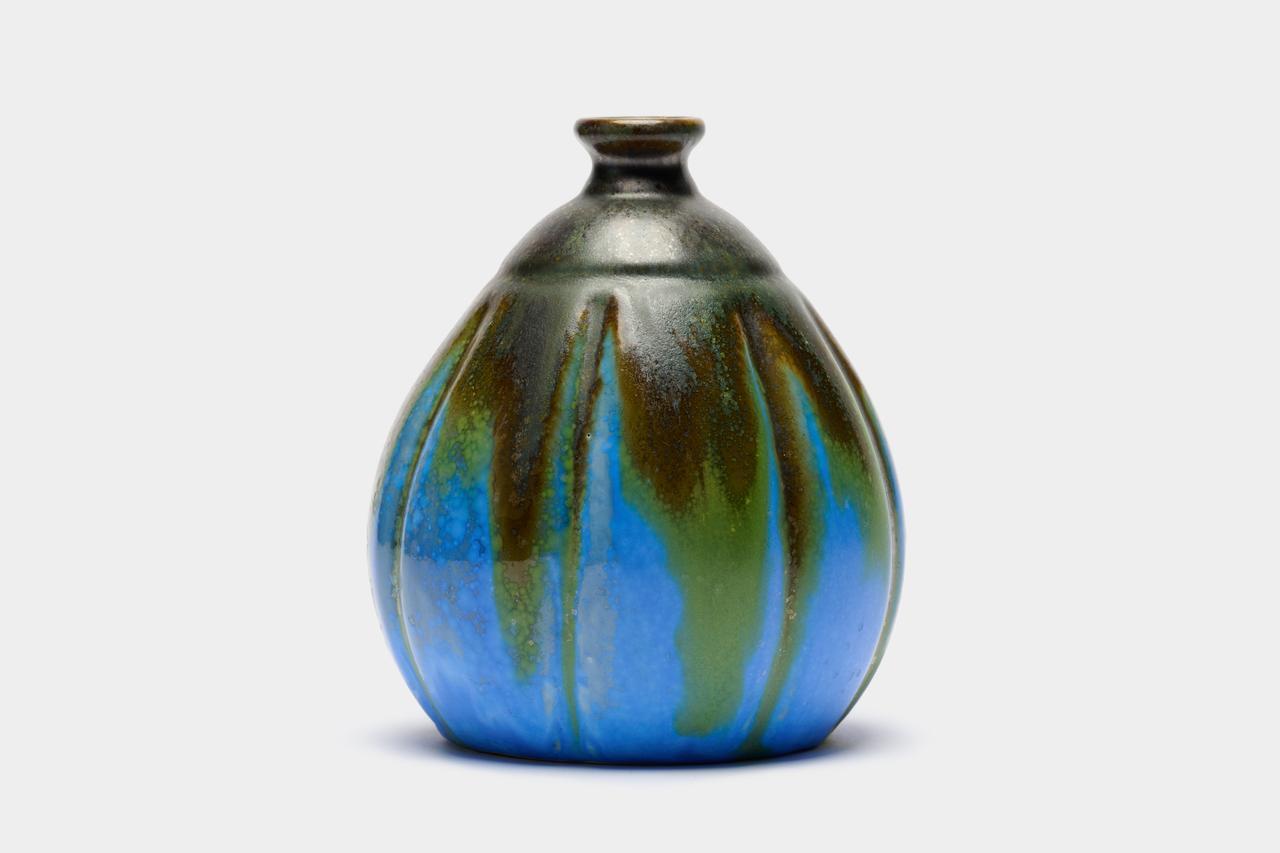
Gertz Germany - Jarra de cerveza - Gres - Jarra de vino Bellarmine


06
días
01
hora
10
minutos
37
segundos
Empezar a pujar
€ 1
Sin precio de reserva

Experto
Seleccionado por Florentin Brunz Gaborieau
Posee un máster en Historia del Arte, especializado en Segundo Imperio francés y Edad de Oro holandesa.
Estimación € 150 - € 200
No hay ninguna puja
Protección del Comprador de Catawiki
Tu pago está protegido con nosotros hasta que recibas tu objeto.Ver detalles
Trustpilot 4.4 | 127923 valoraciones
Valoración Excelente en Trustpilot.
Una jarra de vino Bellarmine de piedra Westerwald en gris-azulado con esmalte cobaltado, circa 1900, en excelente estado, de Gertz Germany, 28 cm de alto, 18 cm de ancho y diámetro 18 cm, estilo Jugendstil / Art Nouveau.
Resumen redactado con la ayuda de la IA
Descripción del vendedor
Magnificent Jugendstil Wine Jug – Westerwald, Germany / Gerz, circa 1900
A Modern Art Nouveau Interpretation of the Historic Bellarmine Tradition
This exceptional Art Nouveau (Jugendstil) wine jug represents a masterful fusion of centuries-old Rhineland stoneware tradition with the expressive ornamental language of Jugendstil at the turn of the 20th century. Produced in the Westerwald region, renowned for its stoneware since the Middle Ages, this vessel stands as a striking reinterpretation of the historic Bellarmine / Bartmann jug—transformed here into an elegant, sculptural wine jug of remarkable artistic presence. Weight: 1,6 Kilos.
Artistic Design – Jugendstil at Its Finest
The jug is richly decorated with flowing, organic Jugendstil ornamentation, characterized by:
Dynamic, plant-like relief patterns
Curvilinear lines and rhythmic movement
Deep cobalt-blue decoration on a cool grey-blue stoneware body
Sculptural mask motifs referencing the historic Bartmann tradition, reimagined in a modern, artistic context
The ornamentation appears almost alive, wrapping the vessel in a continuous visual rhythm that is both powerful and refined—a hallmark of high-quality Jugendstil ceramic design.
Material & Craftsmanship
High-fired Westerwald salt-glazed stoneware. Expertly modeled and relief-decorated. Crisp, sharply defined ornament. Even glaze with beautiful depth and subtle kiln effects. Fully functional yet unmistakably artistic
This is not a simple decorative object, but a confident statement piece, demonstrating the technical mastery and artistic ambition of German ceramics around 1900. The jug draws upon the centuries-long tradition of Bellarmine and Bartmann vessels, which originated in the Rhineland during the late Middle Ages and early modern period. Around 1900, Jugendstil artists rediscovered these historic forms and transformed them into modern works of applied art—uniting history, craftsmanship, and contemporary aesthetics.
This wine jug is a superb example of that movement:
tradition elevated into art.
Powerful Jugendstil visual impact
Deeply rooted in German ceramic history
Exceptional relief work and glaze quality
Ideal for serious collectors of Art Nouveau, stoneware, or German applied arts
Conclusion
This is a museum-worthy Jugendstil wine jug, embodying the transition from historic folk vessel to modern artistic object. Pieces of this quality and presence are increasingly sought after and rarely appear on the open market.
Magnificent Jugendstil Wine Jug – Westerwald, Germany / Gerz, circa 1900
A Modern Art Nouveau Interpretation of the Historic Bellarmine Tradition
This exceptional Art Nouveau (Jugendstil) wine jug represents a masterful fusion of centuries-old Rhineland stoneware tradition with the expressive ornamental language of Jugendstil at the turn of the 20th century. Produced in the Westerwald region, renowned for its stoneware since the Middle Ages, this vessel stands as a striking reinterpretation of the historic Bellarmine / Bartmann jug—transformed here into an elegant, sculptural wine jug of remarkable artistic presence. Weight: 1,6 Kilos.
Artistic Design – Jugendstil at Its Finest
The jug is richly decorated with flowing, organic Jugendstil ornamentation, characterized by:
Dynamic, plant-like relief patterns
Curvilinear lines and rhythmic movement
Deep cobalt-blue decoration on a cool grey-blue stoneware body
Sculptural mask motifs referencing the historic Bartmann tradition, reimagined in a modern, artistic context
The ornamentation appears almost alive, wrapping the vessel in a continuous visual rhythm that is both powerful and refined—a hallmark of high-quality Jugendstil ceramic design.
Material & Craftsmanship
High-fired Westerwald salt-glazed stoneware. Expertly modeled and relief-decorated. Crisp, sharply defined ornament. Even glaze with beautiful depth and subtle kiln effects. Fully functional yet unmistakably artistic
This is not a simple decorative object, but a confident statement piece, demonstrating the technical mastery and artistic ambition of German ceramics around 1900. The jug draws upon the centuries-long tradition of Bellarmine and Bartmann vessels, which originated in the Rhineland during the late Middle Ages and early modern period. Around 1900, Jugendstil artists rediscovered these historic forms and transformed them into modern works of applied art—uniting history, craftsmanship, and contemporary aesthetics.
This wine jug is a superb example of that movement:
tradition elevated into art.
Powerful Jugendstil visual impact
Deeply rooted in German ceramic history
Exceptional relief work and glaze quality
Ideal for serious collectors of Art Nouveau, stoneware, or German applied arts
Conclusion
This is a museum-worthy Jugendstil wine jug, embodying the transition from historic folk vessel to modern artistic object. Pieces of this quality and presence are increasingly sought after and rarely appear on the open market.
Datos
Era
1900-2000
Subtipo de estilo
Jugendstil
Información adicional sobre el título
Bellarmine wine jug
N.º de artículos
1
Material
Gres
Fabricante / Marca
Gertz Germany
País de origen
Alemania
Estilo
Art Nouveau
Color
Azul, Gris
Estado
Excelente estado - apenas usado y con signos mínimos de los años y de desgaste
Alto
28 cm
Ancho
18 cm
Diámetro
18 cm
Periodo estimado
1900-1910
Vendido por