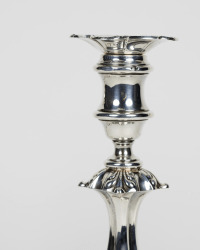
Centro de mesa (3) - .800 plata - Plateado antiguo Viena


05
días
01
hora
32
minutos
25
segundos
Puja actual
€ 70
Precio de reserva no alcanzado

Experto
Seleccionado por Inés Fernández
Especializada en plata española y portuguesa con más de 10 años en galerías y subastas.
Estimación € 600 - € 750
4 personas más están mirando este objeto
 Pujador 7334 Pujador 7334 | 70 € | |
|---|---|---|
| Pujador 9821 | 65 € | |
| Pujador 9821 | 60 € | |
Protección del Comprador de Catawiki
Tu pago está protegido con nosotros hasta que recibas tu objeto.Ver detalles
Trustpilot 4.4 | 130109 valoraciones
Valoración Excelente en Trustpilot.
Conjunto de plata antiquísima vienés del siglo XIX, formado por dos saleros y una cuchara grande, estilo neorrococó, plata .800 con mango de marfil, peso total 60 g y dimensiones aproximadas 60 × 50 × 170 mm, procedente de Viena, Austria, en estado razonable con posibles piezas faltantes.
Resumen redactado con la ayuda de la IA
Descripción del vendedor
Antique Austro-Hungarian Monarchy Silver Spice Holders and Spoons
A very elegant silver dining set from the heyday of the Austro-Hungarian Monarchy. The set consists of two identically shaped spice holders (salt shaker/pepper shaker bowl) and a large sauce or measuring spoon that matches them in style.
Material: 13 lats (lothiges) silver (corresponds to the later .812 - .800 fineness).
Weight: Total 60 grams.
Place of origin: Vienna (Wien), Austria.
Age: Late 1850s (bowls) and 1861 (spoon).
Style: Neo-Rococo, Viennese-Rococo which was the most popular trend in the Viennese court and bourgeois circles in the mid-19th century. The shell-patterned (rocaille) edges of the bowls and the dynamic lines of the spoon bear the most beautiful design marks of the era.
Handle: The handle of the spoon is original, contemporary ivory, which is made unique by a fine patina and the natural grain characteristic of the material.
The objects are marked with the official Vienna city mark (official stamp), which contains the year and the number 13 (lat).
The spoon's hallmark: Vienna stamp from 1861.
Master marks: * AK: Probably a significant Viennese workshop (e.g. Alois Kohl or a goldsmith of similar rank).
AB: Also a registered Viennese master from the mid-19th century (e.g. early period of Alexander Bachruch or Anton Brichta). Note: The "unresolved" status often increases the research value on the antique market.
The objects are in excellent condition for their age. The silver surfaces have a nice balance of original polish and natural patina. The ivory handle of the spoon is solid and uncracked, which is a rarity for pieces of this age. The hallmarks are clean and clearly visible, which is essential for verifying authenticity. The items were on display at the exhibition and are being sold with the blue box base.
Antique Austro-Hungarian Monarchy Silver Spice Holders and Spoons
A very elegant silver dining set from the heyday of the Austro-Hungarian Monarchy. The set consists of two identically shaped spice holders (salt shaker/pepper shaker bowl) and a large sauce or measuring spoon that matches them in style.
Material: 13 lats (lothiges) silver (corresponds to the later .812 - .800 fineness).
Weight: Total 60 grams.
Place of origin: Vienna (Wien), Austria.
Age: Late 1850s (bowls) and 1861 (spoon).
Style: Neo-Rococo, Viennese-Rococo which was the most popular trend in the Viennese court and bourgeois circles in the mid-19th century. The shell-patterned (rocaille) edges of the bowls and the dynamic lines of the spoon bear the most beautiful design marks of the era.
Handle: The handle of the spoon is original, contemporary ivory, which is made unique by a fine patina and the natural grain characteristic of the material.
The objects are marked with the official Vienna city mark (official stamp), which contains the year and the number 13 (lat).
The spoon's hallmark: Vienna stamp from 1861.
Master marks: * AK: Probably a significant Viennese workshop (e.g. Alois Kohl or a goldsmith of similar rank).
AB: Also a registered Viennese master from the mid-19th century (e.g. early period of Alexander Bachruch or Anton Brichta). Note: The "unresolved" status often increases the research value on the antique market.
The objects are in excellent condition for their age. The silver surfaces have a nice balance of original polish and natural patina. The ivory handle of the spoon is solid and uncracked, which is a rarity for pieces of this age. The hallmarks are clean and clearly visible, which is essential for verifying authenticity. The items were on display at the exhibition and are being sold with the blue box base.
Datos
Era
1400-1900
Subtipo de estilo
Estilo Rococó
Peso bruto
60 g
Tipo de plata
.800 plata
Región de origen específica
Wien
Información adicional sobre el título
Antique Silver Wien
N.º de artículos
3
País de origen
Austria
Material
Plata
Estilo
Antiguo
Color
Plateado
Estado
Estado aceptable - muy usado y posiblemente faltan partes menores
Alto
17 cm
Ancho
60 mm
Profundidad
50 mm
Periodo estimado
1850 - 1900
Vendido por