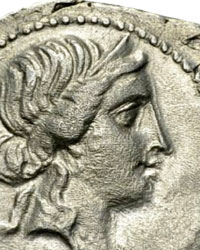
Misia, Cícico Hekte ca. 550–450 v. Chr.


Abre a las 10:00
Empezar a pujar
€ 1
Añádelo a tus favoritos para recibir una alerta cuando empiece la subasta.

Experto
Seleccionado por Carmen Vera Gutiérrez
Tasadora experta en antigüedades especializada en monedas españolas y antiguas.
Estimación € 1.900 - € 2.100
Protección del Comprador de Catawiki
Tu pago está protegido con nosotros hasta que recibas tu objeto.Ver detalles
Trustpilot 4.4 | 133284 valoraciones
Valoración Excelente en Trustpilot.
Descripción del vendedor
MYSIA, Kyzicus – Hekte electrón (c. 550–450 a. C.)
Descripción:
1. Obv: A bearded satyr (Silenos) in a kneeling posture ("kneeling") to the left. He holds a tuna by the tail fin in his outstretched right hand. The satyr is depicted muscular, with the characteristic pointed ears and a horse's tail. Below it is the obligatory tuna to the left as a city symbol.
2. Rev: Four-part quadratum incusum (impact square) in the windmill blade shape typical of this era with a slightly grained inner surface.
Datos técnicos:
1. Nominal: Hekte (1/6 estater).
2. Material: Elektron (aleación natural de oro y plata).
3. Peso: 2,67 g (DM 10,5 mm)
4. Referencia: según Fritze I122; Greenwell 41, Boston MFA 1461; SNG BN 270; Prov. ARC ancient Rarity Coins UG
"Anyone who loves the numismatics of Kyzikos simply cannot miss this specimen. It combines the typical robustness of ancient coins with a fine, artistic depth of detail. While the obligatory tuna guarantees its provenance, the depiction of the satyr transports us to the mythological world of ecstasy and wine. An exceptionally well-preserved collector's item, it impresses with its compact form and the perfect alignment of the die. The perfect alignment and full depiction of the bearded satyr is also rare."
MYSIEN, Kyzikos – Hekte electrón (aprox. 550–450 v. Chr.)
Beschreibung:
Avers (Vorderseite): Un sátiro barbudo (Silenos) en postura de rodilla ("Knielauf") hacia la izquierda. Sostiene en su mano derecha extendida un atún por la aleta caudal. El sátiro está representado de forma musculosa, con las orejas puntiagudas y una cola de caballo. Debajo figura, como símbolo de la ciudad, el atún obligatorio hacia la izquierda.
Revers (Rückseite): Cuadratum incusum de cuatro partes en la forma de pala de molino de viento típica de la época, con la superficie interior ligeramente granulada.
Datos técnicos:
Nominal: Hekte (1/6 Stater).
Material: Elektron (aleación natural de oro y plata).
Peso: 2,67 g (DM 10,5 mm)
Referencias: de Fritze I122; Greenwell 41, Boston MFA 1461; SNG BN 270; Prov. ARC ancient Rarity Coins UG
"Wer die Numismatik von Kyzikos liebt, kommt an diesem Exemplar nicht vorbei. Es vereint die typische Robustheit antiker Prägungen mit einer feinen, künstlerischen Detailtiefe. Während der obligatorische Thunfisch die Herkunft garantiert, entführt uns die Abbildung des Satyrs in die mythologische Welt der Ekstase und des Weins. Ein außergewöhnlich gut erhaltenes Sammlerstück, das durch seine kompakte Form und die perfekte Ausrichtung des Stempels besticht. Selten ist auch die perfekte Ausrichtung und volle Abbildung bärtigen Satyrs"
MYSIA, Kyzicus – Hekte electrón (c. 550–450 a. C.)
Descripción:
1. Obv: A bearded satyr (Silenos) in a kneeling posture ("kneeling") to the left. He holds a tuna by the tail fin in his outstretched right hand. The satyr is depicted muscular, with the characteristic pointed ears and a horse's tail. Below it is the obligatory tuna to the left as a city symbol.
2. Rev: Four-part quadratum incusum (impact square) in the windmill blade shape typical of this era with a slightly grained inner surface.
Datos técnicos:
1. Nominal: Hekte (1/6 estater).
2. Material: Elektron (aleación natural de oro y plata).
3. Peso: 2,67 g (DM 10,5 mm)
4. Referencia: según Fritze I122; Greenwell 41, Boston MFA 1461; SNG BN 270; Prov. ARC ancient Rarity Coins UG
"Anyone who loves the numismatics of Kyzikos simply cannot miss this specimen. It combines the typical robustness of ancient coins with a fine, artistic depth of detail. While the obligatory tuna guarantees its provenance, the depiction of the satyr transports us to the mythological world of ecstasy and wine. An exceptionally well-preserved collector's item, it impresses with its compact form and the perfect alignment of the die. The perfect alignment and full depiction of the bearded satyr is also rare."
MYSIEN, Kyzikos – Hekte electrón (aprox. 550–450 v. Chr.)
Beschreibung:
Avers (Vorderseite): Un sátiro barbudo (Silenos) en postura de rodilla ("Knielauf") hacia la izquierda. Sostiene en su mano derecha extendida un atún por la aleta caudal. El sátiro está representado de forma musculosa, con las orejas puntiagudas y una cola de caballo. Debajo figura, como símbolo de la ciudad, el atún obligatorio hacia la izquierda.
Revers (Rückseite): Cuadratum incusum de cuatro partes en la forma de pala de molino de viento típica de la época, con la superficie interior ligeramente granulada.
Datos técnicos:
Nominal: Hekte (1/6 Stater).
Material: Elektron (aleación natural de oro y plata).
Peso: 2,67 g (DM 10,5 mm)
Referencias: de Fritze I122; Greenwell 41, Boston MFA 1461; SNG BN 270; Prov. ARC ancient Rarity Coins UG
"Wer die Numismatik von Kyzikos liebt, kommt an diesem Exemplar nicht vorbei. Es vereint die typische Robustheit antiker Prägungen mit einer feinen, künstlerischen Detailtiefe. Während der obligatorische Thunfisch die Herkunft garantiert, entführt uns die Abbildung des Satyrs in die mythologische Welt der Ekstase und des Weins. Ein außergewöhnlich gut erhaltenes Sammlerstück, das durch seine kompakte Form und die perfekte Ausrichtung des Stempels besticht. Selten ist auch die perfekte Ausrichtung und volle Abbildung bärtigen Satyrs"
Datos
Era
Anterior a 1400
Peso
2,67 g
Cultura/región
Misia, Cícico
Año / Periodo y Variación
ca. 550–450 v. Chr.
Número de artículos
1
Moneda
Hekte
Metal
THE
Estado
Conservación sin certificar
Vendido por