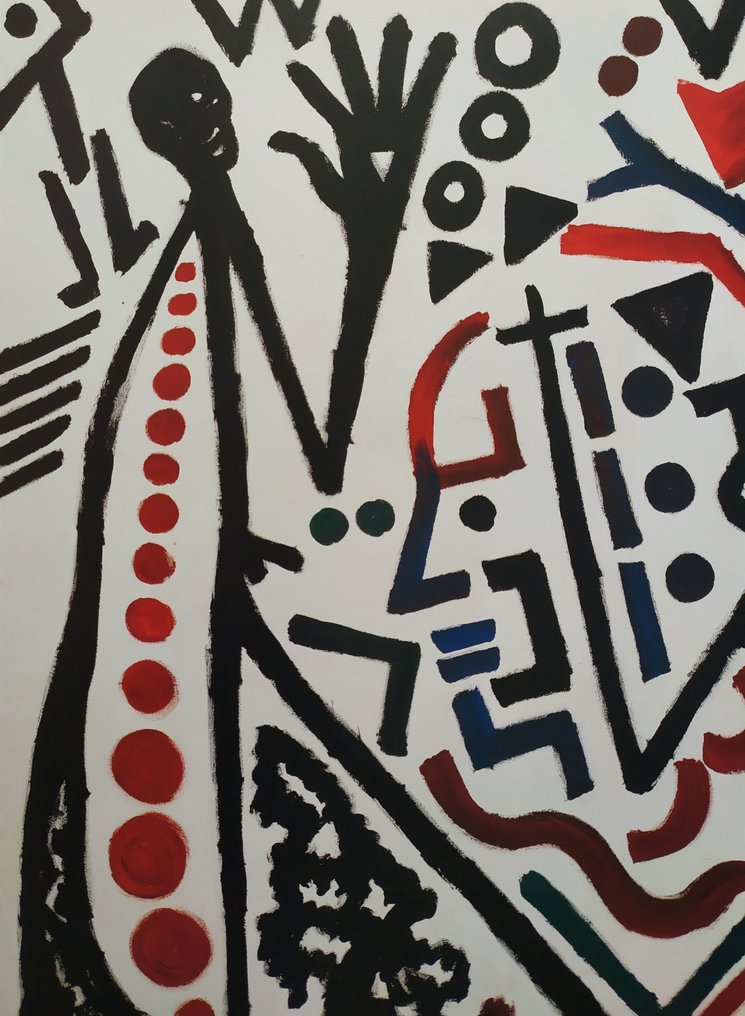
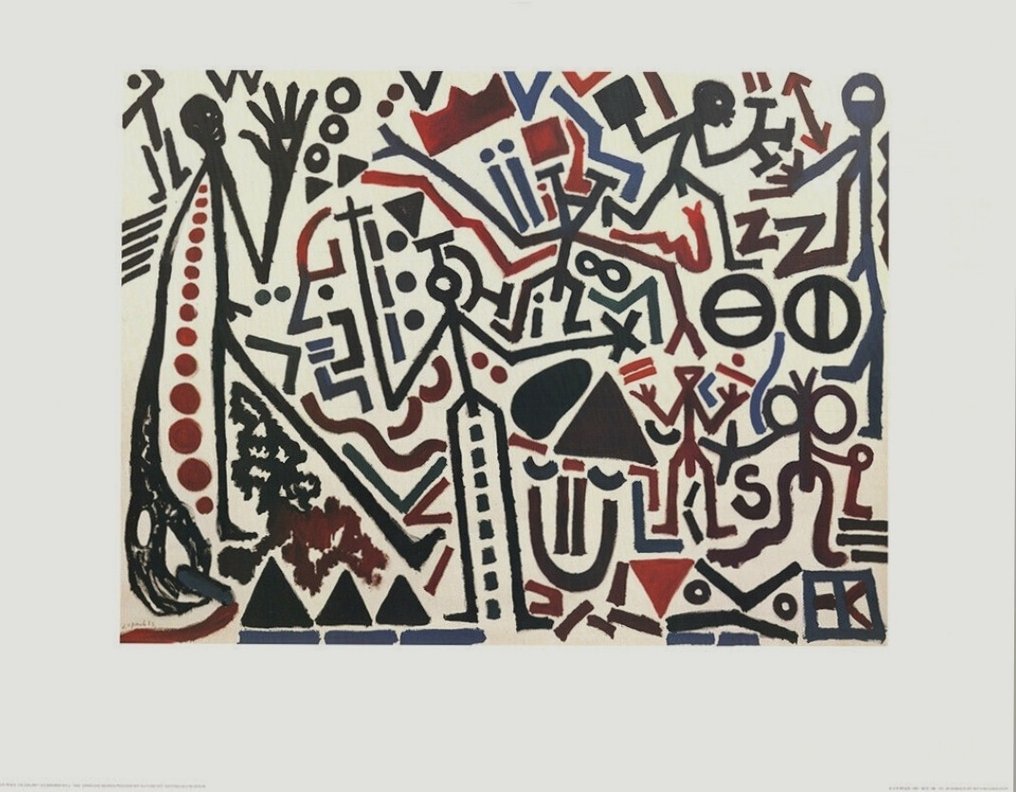
A.R. Penck (1939–2017) - "Die Zukunft des Emigranten II, 1983" - (70x90cm)



02
días
23
horas
58
minutos
51
segundos

O PUJAR
17 personas más están mirando este objeto
 | 44 € | |
|---|---|---|
 | 39 € | |
| 18 € | |
Protección del Comprador de Catawiki
Tu pago está protegido con nosotros hasta que recibas tu objeto.Ver detalles
Trustpilot 4.4 | 134638 valoraciones
Valoración Excelente en Trustpilot.
Litografía offset neoexpresionista de A.R. Penck, titulada Die Zukunft des Emigranten II, 1983, creada en 1991 en edición limitada (70 × 90 cm), firmada en la plancha, en muy buen estado y nunca enmarcada.
Resumen redactado con la ayuda de la IA
Descripción del vendedor
- A.R. Penck (after). Authorized offset lithograph on heavyweight smooth satin paper. (approx. 300gsm, refers to paper thickness/density).
- 1991. Copyright A.R. Penck.
- Stamp on verso.
- Signed in the plate.
- Discontinued item. Closed edition, available only in the secondary market (auctions, resellers, galleries, etc.)
- Size: 70 x 90cm.
- Condition: very good. Never framed, never exposed.
- A.R. Penck (1939–2017) was one of the most influential figures of post-war German art and a key representative of Neo-Expressionism, a movement that reintroduced figuration, symbolism, and raw visual language into contemporary painting. Working between East and West Germany, his art reflects political tension, cultural identity, and systems of communication, and continues to be admired by collectors of Baselitz, Kiefer, Immendorff, as well as by those who follow artists such as Picasso, Miró, Basquiat, Haring, and later contemporary figures associated with symbolic and graphic abstraction.
Created in 1983, Die Zukunft des Emigranten II belongs to Penck’s mature period and exemplifies his distinctive visual vocabulary, often described as “Standart” a system of signs, symbols, and simplified figures that function almost like a universal language. The composition is filled with schematic human forms, geometric elements, and abstract motifs, arranged in a dynamic and seemingly spontaneous structure. Through this coded imagery, Penck explores themes of migration, identity, and the tension between individual and system, reflecting the broader social and political realities of his time.
Penck’s works are immediately recognizable for their raw, almost primitive aesthetic, combining influences from prehistoric art, tribal symbolism, and modern abstraction. His approach places him in dialogue with artists such as Jean-Michel Basquiat and Keith Haring, who also developed symbolic languages rooted in contemporary culture, while maintaining a strong connection to earlier modern movements such as Cubism and Expressionism. Because of their bold composition, graphic clarity, and intellectual depth, his works are especially appreciated for those interested in contemporary art, neo-expressionism, and design-oriented imagery.
Today, A.R. Penck remains highly sought after in international auctions and art sales, and works such as Die Zukunft des Emigranten II are among the most representative of his artistic language. The combination of symbolic meaning, visual impact, and cultural relevance makes this piece particularly appealing for those follow the market for Basquiat, Haring, Picasso, Warhol, Hockney, Richter, Kusama, and contemporary art, where expressive and iconic compositions continue to generate strong demand.
El vendedor y su historia
Vendedor en Catawiki desde hace más de ocho años.
Te invito a visitar mi perfil, allí encontrarás una lista completa de los diferentes lotes que se están subastando ahora. Haga clic en "Yuke".
¡Buena suerte en las subastas!
- A.R. Penck (after). Authorized offset lithograph on heavyweight smooth satin paper. (approx. 300gsm, refers to paper thickness/density).
- 1991. Copyright A.R. Penck.
- Stamp on verso.
- Signed in the plate.
- Discontinued item. Closed edition, available only in the secondary market (auctions, resellers, galleries, etc.)
- Size: 70 x 90cm.
- Condition: very good. Never framed, never exposed.
- A.R. Penck (1939–2017) was one of the most influential figures of post-war German art and a key representative of Neo-Expressionism, a movement that reintroduced figuration, symbolism, and raw visual language into contemporary painting. Working between East and West Germany, his art reflects political tension, cultural identity, and systems of communication, and continues to be admired by collectors of Baselitz, Kiefer, Immendorff, as well as by those who follow artists such as Picasso, Miró, Basquiat, Haring, and later contemporary figures associated with symbolic and graphic abstraction.
Created in 1983, Die Zukunft des Emigranten II belongs to Penck’s mature period and exemplifies his distinctive visual vocabulary, often described as “Standart” a system of signs, symbols, and simplified figures that function almost like a universal language. The composition is filled with schematic human forms, geometric elements, and abstract motifs, arranged in a dynamic and seemingly spontaneous structure. Through this coded imagery, Penck explores themes of migration, identity, and the tension between individual and system, reflecting the broader social and political realities of his time.
Penck’s works are immediately recognizable for their raw, almost primitive aesthetic, combining influences from prehistoric art, tribal symbolism, and modern abstraction. His approach places him in dialogue with artists such as Jean-Michel Basquiat and Keith Haring, who also developed symbolic languages rooted in contemporary culture, while maintaining a strong connection to earlier modern movements such as Cubism and Expressionism. Because of their bold composition, graphic clarity, and intellectual depth, his works are especially appreciated for those interested in contemporary art, neo-expressionism, and design-oriented imagery.
Today, A.R. Penck remains highly sought after in international auctions and art sales, and works such as Die Zukunft des Emigranten II are among the most representative of his artistic language. The combination of symbolic meaning, visual impact, and cultural relevance makes this piece particularly appealing for those follow the market for Basquiat, Haring, Picasso, Warhol, Hockney, Richter, Kusama, and contemporary art, where expressive and iconic compositions continue to generate strong demand.
El vendedor y su historia
Vendedor en Catawiki desde hace más de ocho años.
Te invito a visitar mi perfil, allí encontrarás una lista completa de los diferentes lotes que se están subastando ahora. Haga clic en "Yuke".
¡Buena suerte en las subastas!
Datos
Artista
A.R. Penck (1939–2017)
Vendido por
Propietario o revendedor
Edición
Edición limitada
Título de la obra
"Die Zukunft des Emigranten II, 1983" - (70x90cm)
Técnica
Impresión ófset, Litografía
Firma
Firmado en plancha
País de origen
Alemania
Año
1991
Estado
En excelente estado
Color
Azul, Blanco, Negro, Rojo
Alto
70 cm
Ancho
90 cm
Estilo
Neoexpresionismo
Periodo
1990-2000
Se vende con marco
No
Vendido por