Nro. 106752016

Ei enää saatavilla
Seleucidin kuningaskunta. Civic issue. AE14 Circa 150–145 BC (Seemingly unpublished in the standard references)
Tarjousten tekeminen suljettu
4 päivää sitten

Seleucidin kuningaskunta. Civic issue. AE14 Circa 150–145 BC (Seemingly unpublished in the standard references)

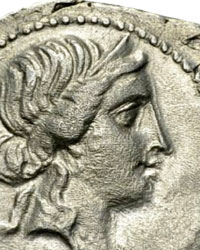
UNIQUE/EXCESSIVELY RARE ANCIENT GREECE. SELEUKIS AND PIERIA, SELEUKEIA AND ANTIOCH. Bronze AE14, circa 150-145 BC. Adelphoi Demi issue. Obv: jugate bearded heads of the Demoi of Seleukeia and Antioch right, wearing tainiai. Rev: thunderbolt, АДЕЛФ above, AHMON and uncertain monogram below; all within wreath. In secure plastic holder, graded NGC Graded AU Strike: 4/5, Surface: 4/5 Fine Style, certification number 2164075-001. Unique: unpublished in the standard references and no other examples on CoinArchives. A fascinating issue, the Adelphoi Demi coins have sparked a great deal of debate, largely centred on who exactly these 'brother peoples' were who were responsible for their minting. The traditional view, that these coins were issued jointly from a tetrarchy of the cities of Antioch on the Orontes, Apameia on the Orontes, Laodikeia ad Mare and Seleukeia Pieria, followed from Strabo's statement that these cities 'were called sisters (adelphai) because of the concord (homonoia) between them' (16.2.4). The consensus now, however, is that this issue was released by the cities of Antioch and Seleukeia only, in alliance: examples of this coinage have been found only in these two cities; for the most part, the 'typology of the series is entirely drawn from the regular numismatic iconography' of the two 'brother peoples' conjoined rather than four. This series is interesting for a number of other reasons. It contains one of the earliest personifications of the Demos (the 'People') in the numismatic record; it looks forward to the Roman Imperial period, when such 'alliance' (homonoia) coinages between cities were common, particularly in the Greek East; and it speaks to the strength and rulership of the Seleukid kings, in particular Alexander I Balas, under whose reign this issue was produced - for example, there has been debate as to whether the existence of city-based alliances within the Kingdom implies that the relative power of the Seleukid overlords was waning which combines the heads of the Demoi with the thunderbolt motif usually found only in conjunction with the head of Zeus (HGC 9-1396). Reference: Unpublished in the standard references: BMC-; HGC-; SNG Copenhagen-; Mionnet-; for obv., cf. HGC 6-1395; for rev., cf. HGC 6-1396. Weight: 8.24 g. Shipping Restrictions Worldwide free shipping is offered. Sorry, but I am unable to ship to the following countries: Russia, Belarus, Ukraine, China, India, Turkey, Brazil and Mexico. Thank you for your understanding.

Nro. 106752016

Ei enää saatavilla
Seleucidin kuningaskunta. Civic issue. AE14 Circa 150–145 BC (Seemingly unpublished in the standard references)

Seleucidin kuningaskunta. Civic issue. AE14 Circa 150–145 BC (Seemingly unpublished in the standard references)

UNIQUE/EXCESSIVELY RARE ANCIENT GREECE.
SELEUKIS AND PIERIA, SELEUKEIA AND ANTIOCH.
Bronze AE14, circa 150-145 BC.
Adelphoi Demi issue. Obv: jugate bearded heads of the Demoi of Seleukeia and Antioch right, wearing tainiai.
Rev: thunderbolt, АДЕЛФ above, AHMON and uncertain monogram below; all within wreath.
In secure plastic holder, graded NGC Graded AU Strike:
4/5, Surface:
4/5 Fine Style, certification number 2164075-001.
Unique: unpublished in the standard references and no other examples on CoinArchives.
A fascinating issue, the Adelphoi Demi coins have sparked a great deal of debate, largely centred on who exactly these 'brother peoples' were who were responsible for their minting. The traditional view, that these coins were issued jointly from a tetrarchy of the cities of Antioch on the Orontes, Apameia on the Orontes, Laodikeia ad Mare and Seleukeia Pieria, followed from Strabo's statement that these cities 'were called sisters (adelphai) because of the concord (homonoia) between them' (16.2.4). The consensus now, however, is that this issue was released by the cities of Antioch and Seleukeia only, in alliance: examples of this coinage have been found only in these two cities; for the most part, the 'typology of the series is entirely drawn from the regular numismatic iconography' of the two

'brother peoples' conjoined rather than four.
This series is interesting for a number of other reasons. It contains one of the earliest personifications of the Demos (the 'People') in the numismatic record; it looks forward to the Roman Imperial period, when such
'alliance' (homonoia) coinages between cities were common, particularly in the Greek East; and it speaks to the strength and rulership of the Seleukid kings, in particular Alexander I Balas, under whose reign this issue was produced - for example, there has been debate as to whether the existence of city-based alliances within the Kingdom implies that the relative power of the Seleukid overlords was waning
which combines the heads of the Demoi with the thunderbolt motif usually found only in conjunction with the head of Zeus (HGC 9-1396).
Reference: Unpublished in the standard references:
BMC-; HGC-; SNG Copenhagen-; Mionnet-; for obv., cf.
HGC 6-1395; for rev., cf. HGC 6-1396.
Weight: 8.24 g.

Shipping Restrictions

Worldwide free shipping is offered.
Sorry, but I am unable to ship to the following countries:

Russia, Belarus, Ukraine, China, India, Turkey, Brazil and Mexico.

Thank you for your understanding.

Tarjousten tekeminen suljettu
Carmen Vera Gutiérrez
asiantuntija
Arvio  € 2,800 - € 3,500

Samankaltaisia esineitä

Sinulle kategoriassa

Ancient Coins

Aseta hakuvahti
Aseta hakuvahti saadaksesi ilmoituksia, kun uusia osumia löytyy.

Tämä esine oli esillä kohteessa


Näin ostat Catawikistä

Lue lisää ostajan suojastamme

      1. Löydä jotain erityistä

      Selaa tuhansia asiantuntijoiden valitsemia erikoisesineitä. Tutustu jokaisen erityislaatuisen esineen kuviin, tietoihin ja arvioituun arvoon. 

      2. Tee korkein tarjous

      Löydä jotain, josta pidät ja tee siitä korkein tarjous. Voit seurata huutokauppaa loppuun asti tai antaa järjestelmämme tehdä tarjoukset puolestasi. Sinun tarvitsee vain asettaa enimmäishinta, jonka olet halukas maksamaan tietystä esineestä. 

      3. Maksa turvallisesti

      Pidämme maksusi tallessa, kunnes olet vastaanottanut ostoksesi ehjänä ja hyvässä kunnossa. Käytämme luotettavaa maksujärjestelmää kaikkien maksutapahtumien käsittelyyn. 

Onko sinulla jotain samankaltaista myytäväksi?

Olit sitten ensi kertaa verkkohuutokaupassa tai ammattimyyjä, voimme auttaa sinua ansaitsemaan erikoisesineistäsi enemmän.

Myy esineesi