101265889

Vendu
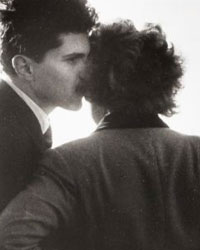
Weegee (1899–1968) - Cop Killer 1939
Offre finale
€ 240
Il y a 5 semaines

Weegee (1899–1968) - Cop Killer 1939

Cop Killer, 1939 Print from Weegee Portfolio Exhibition Print based on the 1982 prints by Sid Kaplan, Produced for Amber Film & Photography Collective, Newcastle upon Tyne Arthur (Usher) Fellig (June 12, 1899 – December 26, 1968), known by his pseudonym Weegee, was a photographer and photojournalist, known for his stark black and white street photography in New York City. Weegee worked in Manhattan's Lower East Side as a press photographer during the 1930s and 1940s and developed his signature style by following the city's emergency services and documenting their activity.[2] Much of his work depicted unflinchingly realistic scenes of urban life, crime, injury and death. He worked at night and competed with the police to be first at the scene of a crime, selling his photographs to tabloids and photographic agencies.[5] His photographs, centered around Manhattan police headquarters, were soon published by the Daily News and other tabloids, as well as more upscale publication such as Life magazine. Most of his notable photographs were taken with very basic press photographer equipment and methods of the era, a 4×5 Speed Graphic camera preset at f/16 at 1/200 of a second, with flashbulbs and a set focus distance of ten feet.[11] He was a self-taught photographer with no formal training. Five of his photographs were acquired by the Museum of Modern Art (MoMA) in 1943. These works were included in its exhibition Action Photography.[21] He was later included in "50 Photographs by 50 Photographers", another MoMA show organized by photographer Edward Steichen,. Naked City (1945) was his first book of photographs. Film producer Mark Hellinger bought the rights to the title from Weegee.[21] In 1948, Weegee's aesthetic formed the foundation for Hellinger's film The Naked City. It was based on a gritty 1948 story written by Malvin Wald about the investigation into a model's murder in New York. In the 1950s and 1960s, Weegee experimented with panoramic photographs, photo distortions and photography through prisms. Using a plastic lens, he made a famous photograph of Marilyn Monroe in which her face is grotesquely distorted yet still recognizable. Weegee can be seen as the American counterpart to Brassaï, who photographed Paris street scenes at night. Weegee's themes of nudists, circus performers, freaks and street people were later taken up and developed by Diane Arbus in the early 1960s.

101265889

Vendu
Weegee (1899–1968) - Cop Killer 1939

Weegee (1899–1968) - Cop Killer 1939

Cop Killer, 1939

Print from Weegee Portfolio
Exhibition Print based on the 1982 prints by Sid Kaplan,
Produced for
Amber Film & Photography Collective, Newcastle upon Tyne


Arthur (Usher) Fellig (June 12, 1899 – December 26, 1968), known by his pseudonym Weegee, was a photographer and photojournalist, known for his stark black and white street photography in New York City.
Weegee worked in Manhattan's Lower East Side as a press photographer during the 1930s and 1940s and developed his signature style by following the city's emergency services and documenting their activity.[2] Much of his work depicted unflinchingly realistic scenes of urban life, crime, injury and death.
He worked at night and competed with the police to be first at the scene of a crime, selling his photographs to tabloids and photographic agencies.[5] His photographs, centered around Manhattan police headquarters, were soon published by the Daily News and other tabloids, as well as more upscale publication such as Life magazine.
Most of his notable photographs were taken with very basic press photographer equipment and methods of the era, a 4×5 Speed Graphic camera preset at f/16 at 1/200 of a second, with flashbulbs and a set focus distance of ten feet.[11] He was a self-taught photographer with no formal training.

Five of his photographs were acquired by the Museum of Modern Art (MoMA) in 1943. These works were included in its exhibition Action Photography.[21] He was later included in "50 Photographs by 50 Photographers", another MoMA show organized by photographer Edward Steichen,.

Naked City (1945) was his first book of photographs. Film producer Mark Hellinger bought the rights to the title from Weegee.[21] In 1948, Weegee's aesthetic formed the foundation for Hellinger's film The Naked City. It was based on a gritty 1948 story written by Malvin Wald about the investigation into a model's murder in New York.

In the 1950s and 1960s, Weegee experimented with panoramic photographs, photo distortions and photography through prisms. Using a plastic lens, he made a famous photograph of Marilyn Monroe in which her face is grotesquely distorted yet still recognizable.
Weegee can be seen as the American counterpart to Brassaï, who photographed Paris street scenes at night. Weegee's themes of nudists, circus performers, freaks and street people were later taken up and developed by Diane Arbus in the early 1960s.

Objets similaires

Pour vous

Photographie

Définir une alerte de recherche
Définissez une alerte de recherche pour être informé lorsque de nouveaux objets correspondant à votre recherche sont disponibles.

Cet objet a été présenté dans


Comment acheter sur Catawiki ?

En savoir plus sur notre Protection des acheteurs

      1. Découvrez des objets d’exception

      Découvrez des milliers d'objets d'exception sélectionnés par nos experts. Consultez les photos, les informations détaillées et la valeur estimée de chaque objet d'exception. 

      2. Faites la meilleure offre

      Trouvez l’objet de vos rêves et faites l’offre la plus élevée. Vous pouvez suivre la vente jusqu'à sa clôture ou laisser notre système faire les offres à votre place. Il vous suffit de fixer une enchère maximale correspondant au montant que vous souhaitez payer. 

      3. Effectuez un paiement sécurisé

      Réglez votre objet d'exception et nous garderons votre paiement en toute sécurité jusqu’à ce que vous ayez bien reçu votre objet d’exception. Toutes les transactions sont effectuées par un système de paiement de confiance. 

Vous souhaitez vendre un objet similaire ?

Que vous débutiez dans les ventes en ligne ou que vous soyez vendeur professionnel, nous pouvons vous aider à gagner plus d'argent pour vos objets d'exception.

Vendez votre objet