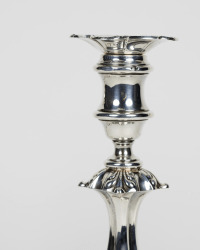
Cafetière - Argent 833 - Cafetière avec bouton


Titulaire d’un master en commerce de l’art et arts décoratifs ; exposé au TEFAF Maastricht.
180 € |
|---|
Protection des acheteurs Catawiki
Votre paiement est en sécurité chez nous jusqu’à la réception de votre objet.Voir les informations
Trustpilot 4.4 | 133284 d’avis
Noté Excellent sur Trustpilot.
Cafetière en argent portugais .833 avec bouton, par Leitão & Irmão, datant de la fin du XIXe siècle au début du XXe siècle, corps cylindrique, 13,5 cm de haut, 10 cm de large, 490 g, style Art Déco, marque d’assay Javali de Lisbonne, en bon état.
Description fournie par le vendeur
Elegant Portuguese Art Deco silver coffee pot, produced by the renowned Lisbon silversmiths Leitão & Irmão, dating from the late 19th to early 20th century. Crafted in solid silver and bearing the Lisbon “Boar” (Javali) assay mark used between 1887 and 1937, this refined piece reflects the transition from late historicist aesthetics into the modernist elegance of the Art Deco period.
The coffee pot features a clean cylindrical body with smooth undecorated surfaces, emphasizing the restrained geometric sophistication characteristic of Art Deco design. Its sharply angled handle, accented with ivory-tone insulating rings, creates a striking architectural silhouette, while the long tapered spout balances the composition with elegance and functionality. The domed hinged lid is surmounted by a finely molded finial, adding a subtle decorative touch without disturbing the minimalist harmony of the form.
Produced by the prestigious Portuguese royal jeweler and silversmith house Leitão & Irmão, founded in Lisbon in 1822, the piece embodies the exceptional craftsmanship and refined taste associated with one of Portugal’s most important historic silver workshops. The combination of refined proportions, modernist lines, and high-quality silverwork makes this object an excellent example of early 20th-century Portuguese decorative arts.
Bearing the official Lisbon assay mark known as the “Javali” guarantee mark, used from 1887 to 1937, the piece confirms authentic Portuguese silver manufacture from the period. Both functional and sculptural, this elegant coffee pot would have formed part of an upscale tea or coffee service intended for sophisticated domestic interiors of the early modern era.
A highly collectible and decorative example of Portuguese Art Deco silver, ideal for collectors of European silverware, decorative arts, or fine early modern design.
Elegant Portuguese Art Deco silver coffee pot, produced by the renowned Lisbon silversmiths Leitão & Irmão, dating from the late 19th to early 20th century. Crafted in solid silver and bearing the Lisbon “Boar” (Javali) assay mark used between 1887 and 1937, this refined piece reflects the transition from late historicist aesthetics into the modernist elegance of the Art Deco period.
The coffee pot features a clean cylindrical body with smooth undecorated surfaces, emphasizing the restrained geometric sophistication characteristic of Art Deco design. Its sharply angled handle, accented with ivory-tone insulating rings, creates a striking architectural silhouette, while the long tapered spout balances the composition with elegance and functionality. The domed hinged lid is surmounted by a finely molded finial, adding a subtle decorative touch without disturbing the minimalist harmony of the form.
Produced by the prestigious Portuguese royal jeweler and silversmith house Leitão & Irmão, founded in Lisbon in 1822, the piece embodies the exceptional craftsmanship and refined taste associated with one of Portugal’s most important historic silver workshops. The combination of refined proportions, modernist lines, and high-quality silverwork makes this object an excellent example of early 20th-century Portuguese decorative arts.
Bearing the official Lisbon assay mark known as the “Javali” guarantee mark, used from 1887 to 1937, the piece confirms authentic Portuguese silver manufacture from the period. Both functional and sculptural, this elegant coffee pot would have formed part of an upscale tea or coffee service intended for sophisticated domestic interiors of the early modern era.
A highly collectible and decorative example of Portuguese Art Deco silver, ideal for collectors of European silverware, decorative arts, or fine early modern design.