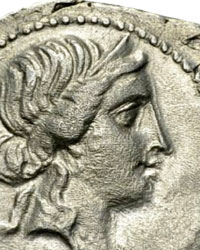
République romaine (impératoriale). Marcus Junius Brutus. Denarius From the E.E. Clain-Stefanelli collection


03
jours
00
heures
39
minutes
35
secondes
Offre actuelle
€ 130
Prix de réserve non atteint

Expert
Sélectionné par Carmen Vera Gutiérrez
Experte en évaluation d'antiquités, spécialisée dans les pièces espagnoles et anciennes.
Estimation € 550 - € 650
8 autres personnes s’intéressent cet objet
 Enchérisseur 2032 Enchérisseur 2032 | 130 € | |
|---|---|---|
 Enchérisseur 0628 Enchérisseur 0628 | 120 € | |
 Enchérisseur 0950 Enchérisseur 0950 | 1 € |
Protection des acheteurs Catawiki
Votre paiement est en sécurité chez nous jusqu’à la réception de votre objet.Voir les informations
Trustpilot 4.4 | 130715 d’avis
Noté Excellent sur Trustpilot.
Denier en argent de la République romaine représentant Brutus, frappé vers 43–42 av. J.-C., Ø17 mm, 3,49 g, avers Libertas, revers CAEPIO BRVTVS PRO COS avec une lyre entre une quiver et une branche de laurier, issu de la collection E. E. Clain-Stefanelli et certifié d’authenticité.
Résumé assisté par IA
Description fournie par le vendeur
RULER: Brutus
DATE: Monnaie frappée, 43-42 av. J.-C.
DENOMINATION: Denarius
MATERIAL: Argent, AR
SIZE & WEIGHT: 17 mm, 3,49 g
AVERS: LEIBERTAS, tête de Libertas à droite
REVERS: CAEPIO BRVTVS PRO COS, Lyre entre un carquois et une branche de laurier
REFERENCES: Crawford 501/1
PROVENANCE: De la collection E.E. Clain-Stefanelli
Comes with Certificate of Authenticity
Marcus Junius Brutus (environ 85–42 av. J.-C.) était un sénateur et homme politique romain dont la vie demeure l’un des chapitres les plus polarisants et dramatiques de l’histoire de la fin de la République romaine. Issu de Lucius Junius Brutus, le fondateur semi-légendaire de la République qui expulsa le dernier roi, Marcus Brutus hérita d’un engagement philosophique profond envers libertas — le concept traditionnel de liberté et de règle sénatoriale. Malgré ce républicanisme farouche, il fut pardonné et très bien vu par Jules César après la Guerre Civile, recevant de grands honneurs tels que la gouvernance de la Gaule cisalpine et la prééminence urbaine. L’intégrité personnelle de Brutus, associée à sa relation étroite avec César — dont la maîtresse était la mère de Brutus, Servilia — rendit sa trahison éventuelle de son bienfaiteur d’autant plus choquante.
Le moment pivot de la vie de Brutus fut sa décision de rejoindre et finalement de diriger la conspiration pour assassiner Jules César. Poussé par la crainte que la déclaration de César comme « Dictator à vie » lors des Ides de Mars, en 44 av. J.-C., ne signifiait la fin permanente de la République et un retour à la monarchie, Brutus mit son devoir philosophique au-dessus de ses loyautés personnelles. Les conspirateurs, se faisant appeler les Liberatores (Libérateurs), firent tomber César lors d’une séance du Sénat, un moment immortalisé à jamais par la réplique dramatique, probablement fictive, « Et toi, Brute ? ». Les suites immédiates n’apportèrent toutefois pas le rétablissement escompté de la République. À la place, un tollé public, alimenté par la rhétorique de Marc Antoine, obliga Brutus et son co-conspirateur, Caius Cassius Longinus, à fuir Rome.
Brutus et Cassius consolidèrent leurs forces et leurs ressources dans les provinces orientales, se préparant à une confrontation avec le Second Triumvirat, composé de Marc Antoine, Octavien (fils adoptif et héritier de César) et Lépide. Ce conflit aboutit aux deux batailles décisives de Philippes, en Macédoine, en 42 av. J.-C. Après que son armée fut totalement battue lors du second engagement, Brutus, refusant d’être capturé, choisit de mettre fin à ses jours. Sa mort marqua le dernier et futile acte de résistance de la République romaine et ouvrit la phase finale des guerres civiles qui mèneront finalement à l’ascension d’Octaven (Augustus) comme premier empereur de Rome. L’héritage de Brutus demeure complexe, vu par certains comme le « plus noble des Romains » qui se battit pour la liberté, et par d’autres comme un meurtrier traître.
À propos du vendeur
Votre Antiquaire propose de l'art ancien et des pièces de monnaie anciennes. Notre objectif principal est d'offrir la plus haute qualité au meilleur prix en respectant et en respectant strictement les lois de protection du patrimoine et les normes du patrimoine de l'UNESCO. Ainsi, toutes les pièces publiées proviennent de collections privées dont la provenance peut être vérifiée ou de ventes aux enchères internationales. Toutes nos antiquités et monnaies sont accompagnées de leur Certificat d'Authenticité. Nous avons une politique de retour sans compromis de 90 jours. Chez Your Antiquarian, nous nous engageons à aider les groupes défavorisés et pour cette raison, une partie de chaque achat est reversée à des œuvres caritatives pour aider les personnes dans le besoin.
Traduit par Google TraductionRULER: Brutus
DATE: Monnaie frappée, 43-42 av. J.-C.
DENOMINATION: Denarius
MATERIAL: Argent, AR
SIZE & WEIGHT: 17 mm, 3,49 g
AVERS: LEIBERTAS, tête de Libertas à droite
REVERS: CAEPIO BRVTVS PRO COS, Lyre entre un carquois et une branche de laurier
REFERENCES: Crawford 501/1
PROVENANCE: De la collection E.E. Clain-Stefanelli
Comes with Certificate of Authenticity
Marcus Junius Brutus (environ 85–42 av. J.-C.) était un sénateur et homme politique romain dont la vie demeure l’un des chapitres les plus polarisants et dramatiques de l’histoire de la fin de la République romaine. Issu de Lucius Junius Brutus, le fondateur semi-légendaire de la République qui expulsa le dernier roi, Marcus Brutus hérita d’un engagement philosophique profond envers libertas — le concept traditionnel de liberté et de règle sénatoriale. Malgré ce républicanisme farouche, il fut pardonné et très bien vu par Jules César après la Guerre Civile, recevant de grands honneurs tels que la gouvernance de la Gaule cisalpine et la prééminence urbaine. L’intégrité personnelle de Brutus, associée à sa relation étroite avec César — dont la maîtresse était la mère de Brutus, Servilia — rendit sa trahison éventuelle de son bienfaiteur d’autant plus choquante.
Le moment pivot de la vie de Brutus fut sa décision de rejoindre et finalement de diriger la conspiration pour assassiner Jules César. Poussé par la crainte que la déclaration de César comme « Dictator à vie » lors des Ides de Mars, en 44 av. J.-C., ne signifiait la fin permanente de la République et un retour à la monarchie, Brutus mit son devoir philosophique au-dessus de ses loyautés personnelles. Les conspirateurs, se faisant appeler les Liberatores (Libérateurs), firent tomber César lors d’une séance du Sénat, un moment immortalisé à jamais par la réplique dramatique, probablement fictive, « Et toi, Brute ? ». Les suites immédiates n’apportèrent toutefois pas le rétablissement escompté de la République. À la place, un tollé public, alimenté par la rhétorique de Marc Antoine, obliga Brutus et son co-conspirateur, Caius Cassius Longinus, à fuir Rome.
Brutus et Cassius consolidèrent leurs forces et leurs ressources dans les provinces orientales, se préparant à une confrontation avec le Second Triumvirat, composé de Marc Antoine, Octavien (fils adoptif et héritier de César) et Lépide. Ce conflit aboutit aux deux batailles décisives de Philippes, en Macédoine, en 42 av. J.-C. Après que son armée fut totalement battue lors du second engagement, Brutus, refusant d’être capturé, choisit de mettre fin à ses jours. Sa mort marqua le dernier et futile acte de résistance de la République romaine et ouvrit la phase finale des guerres civiles qui mèneront finalement à l’ascension d’Octaven (Augustus) comme premier empereur de Rome. L’héritage de Brutus demeure complexe, vu par certains comme le « plus noble des Romains » qui se battit pour la liberté, et par d’autres comme un meurtrier traître.
À propos du vendeur
Votre Antiquaire propose de l'art ancien et des pièces de monnaie anciennes. Notre objectif principal est d'offrir la plus haute qualité au meilleur prix en respectant et en respectant strictement les lois de protection du patrimoine et les normes du patrimoine de l'UNESCO. Ainsi, toutes les pièces publiées proviennent de collections privées dont la provenance peut être vérifiée ou de ventes aux enchères internationales. Toutes nos antiquités et monnaies sont accompagnées de leur Certificat d'Authenticité. Nous avons une politique de retour sans compromis de 90 jours. Chez Your Antiquarian, nous nous engageons à aider les groupes défavorisés et pour cette raison, une partie de chaque achat est reversée à des œuvres caritatives pour aider les personnes dans le besoin.
Traduit par Google TraductionDétails
Époque
Avant 1400
Culture/région
République romaine (impératoriale)
Année / Période et Variation
From the E.E. Clain-Stefanelli collection
Chef d’état
Marcus Junius Brutus
Valuta
Denarius
Métal
AR
Condition
Non gradé(e)
Vendu par