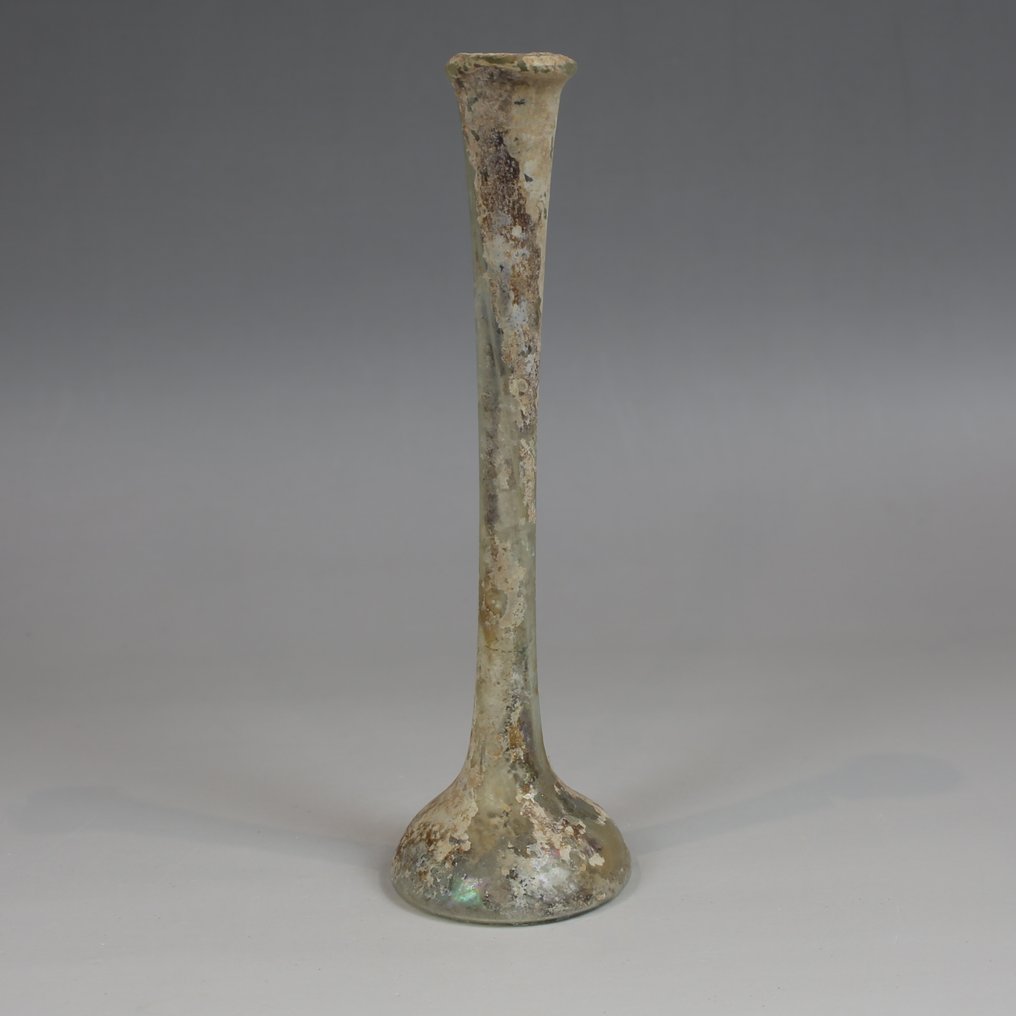
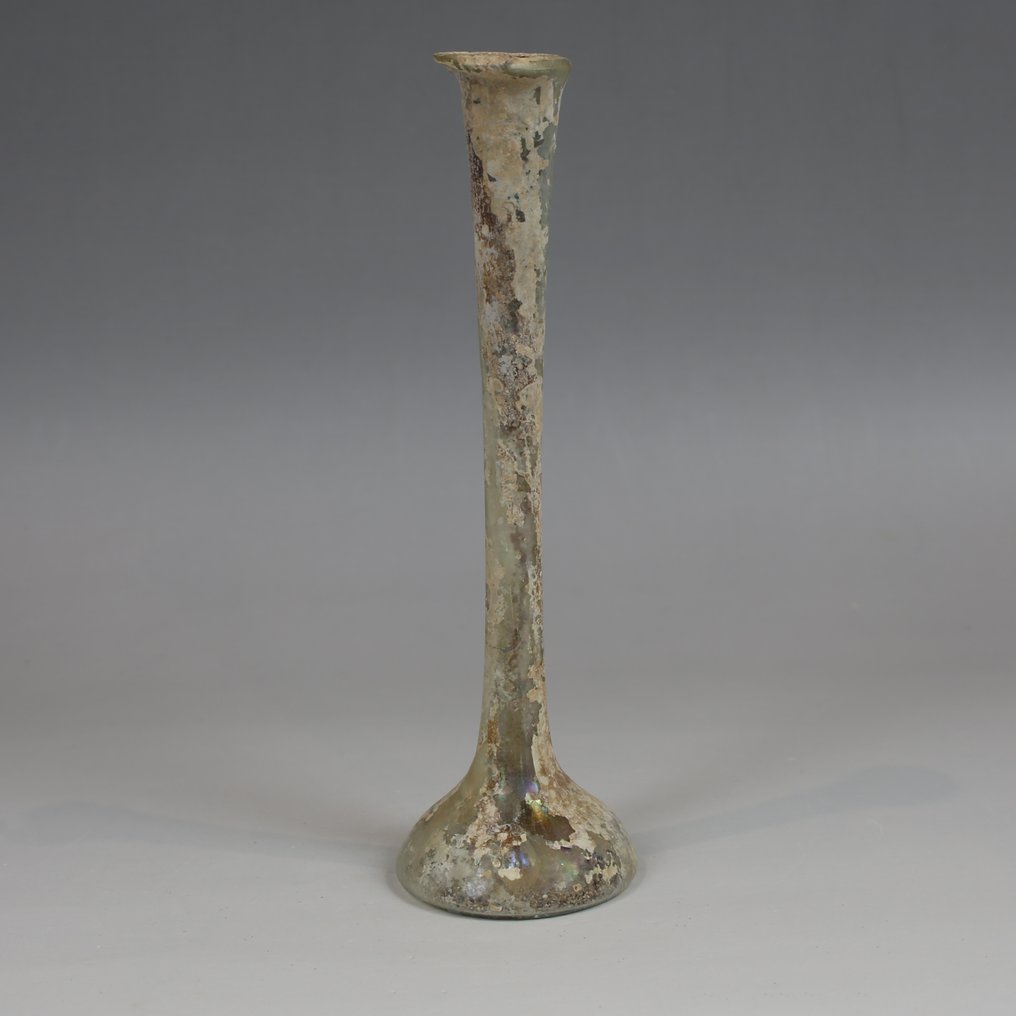
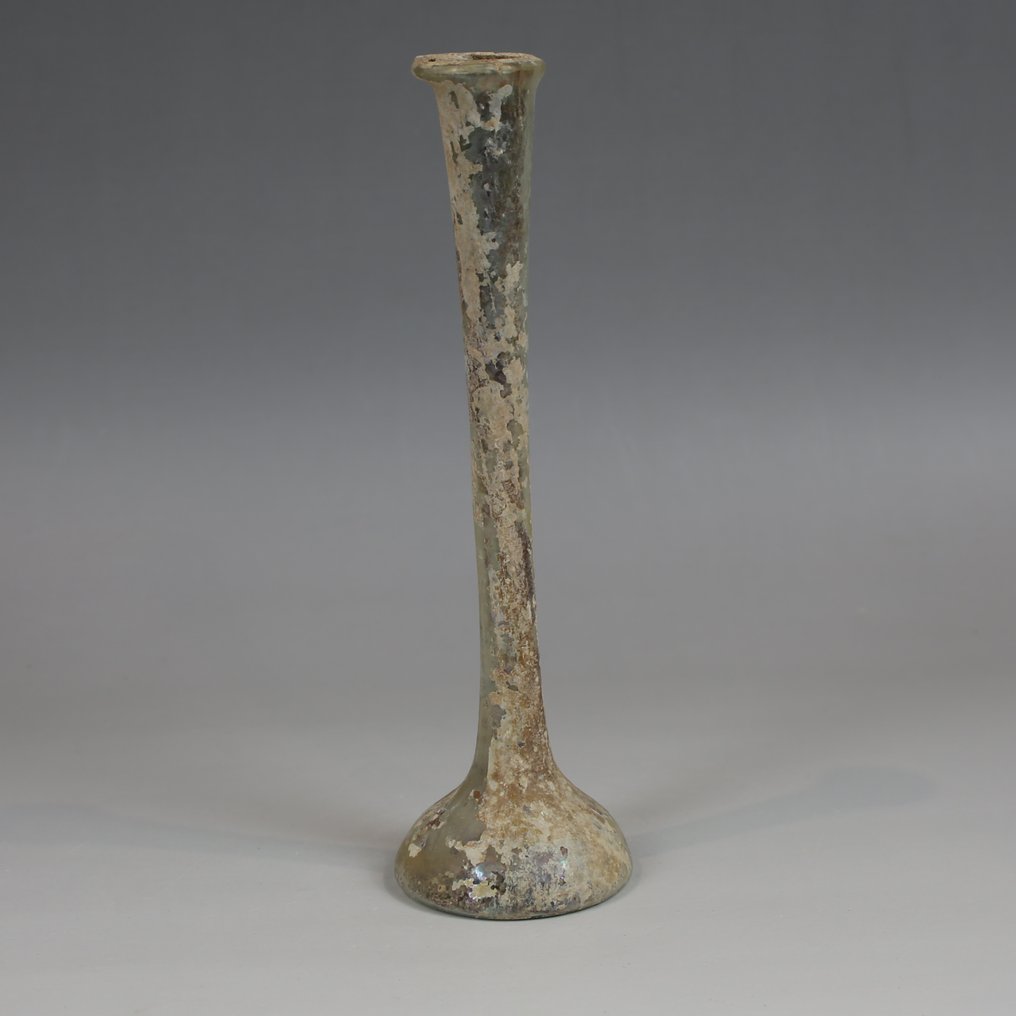
Romain antique Verre Flask.
01
jour
00
heures
37
minutes
06
secondes
Offre actuelle
€ 60
Prix de réserve non atteint

Expert
Sélectionné par Ruth Garrido Vila
A dirigé le musée de la collection Ifergan, spécialisée en archéologie phénicienne.
Estimation € 200 - € 250
13 autres personnes s’intéressent cet objet
 Enchérisseur 9123 Enchérisseur 9123 | 60 € |
|---|
Protection des acheteurs Catawiki
Votre paiement est en sécurité chez nous jusqu’à la réception de votre objet.Voir les informations
Trustpilot 4.4 | 121980 d’avis
Noté Excellent sur Trustpilot.
Flacon romain en verre, 146 mm sur 45 mm, datant du Ier–IIIe siècle après J.-C., en bon état, issu d'une collection privée allemande.
Résumé assisté par IA
Description fournie par le vendeur
ITEM: Flask
MATERIAL: Glass
CULTURE: Roman
PERIOD: 1st - 3rd Century A.D
DIMENSIONS: 146 mm x 45 mm
CONDITION: Good condition
PROVENANCE: Ex German private collection, acquired before 2000s
Roman flasks were versatile and functional vessels used primarily for storing and transporting liquids such as oils, perfumes, and medicinal concoctions. These flasks, which were typically made from glass or ceramic, varied in size and shape, reflecting their diverse uses and the craftsmanship of the period. Glass flasks were particularly valued for their ability to contain and preserve aromatic oils and perfumes, which were essential in daily Roman life for personal grooming and religious rituals. Ceramic flasks, on the other hand, were often used for more practical purposes, such as storing cooking oils or vinegar.
The design of Roman flasks often included features that facilitated their use and storage. Many flasks had narrow necks to minimize spillage and maintain the quality of their contents. Some were equipped with handles or spouts to make pouring easier, while others had stoppers or lids to seal the contents securely. The artistic quality of these vessels varied from simple, utilitarian designs to more elaborate forms decorated with patterns or inscriptions. Inscriptions on flasks sometimes indicated the type of liquid contained or the name of the owner, adding a personalized touch to these everyday objects.
Roman flasks also provide valuable insights into trade and cultural exchanges within the Roman Empire. Glass production techniques, including the use of molds and blowing methods, were advanced during the Roman period, and Roman glassware was widely traded across the empire. The distribution of Roman flasks throughout various provinces reflects the extensive trade networks and the integration of different cultures within the empire. Additionally, the variety in flask designs and materials reveals the adaptability of Roman artisans to different regional tastes and technological innovations.
Comes with Certificate of Authenticity and Export license
If you bid outside the European Union and win the item, we will have to apply for an export licence for your country and shipping will take 3 to 5 weeks.
À propos du vendeur
Votre Antiquaire propose de l'art ancien et des pièces de monnaie anciennes. Notre objectif principal est d'offrir la plus haute qualité au meilleur prix en respectant et en respectant strictement les lois de protection du patrimoine et les normes du patrimoine de l'UNESCO. Ainsi, toutes les pièces publiées proviennent de collections privées dont la provenance peut être vérifiée ou de ventes aux enchères internationales. Toutes nos antiquités et monnaies sont accompagnées de leur Certificat d'Authenticité. Nous avons une politique de retour sans compromis de 90 jours. Chez Your Antiquarian, nous nous engageons à aider les groupes défavorisés et pour cette raison, une partie de chaque achat est reversée à des œuvres caritatives pour aider les personnes dans le besoin.
Traduit par Google TraductionITEM: Flask
MATERIAL: Glass
CULTURE: Roman
PERIOD: 1st - 3rd Century A.D
DIMENSIONS: 146 mm x 45 mm
CONDITION: Good condition
PROVENANCE: Ex German private collection, acquired before 2000s
Roman flasks were versatile and functional vessels used primarily for storing and transporting liquids such as oils, perfumes, and medicinal concoctions. These flasks, which were typically made from glass or ceramic, varied in size and shape, reflecting their diverse uses and the craftsmanship of the period. Glass flasks were particularly valued for their ability to contain and preserve aromatic oils and perfumes, which were essential in daily Roman life for personal grooming and religious rituals. Ceramic flasks, on the other hand, were often used for more practical purposes, such as storing cooking oils or vinegar.
The design of Roman flasks often included features that facilitated their use and storage. Many flasks had narrow necks to minimize spillage and maintain the quality of their contents. Some were equipped with handles or spouts to make pouring easier, while others had stoppers or lids to seal the contents securely. The artistic quality of these vessels varied from simple, utilitarian designs to more elaborate forms decorated with patterns or inscriptions. Inscriptions on flasks sometimes indicated the type of liquid contained or the name of the owner, adding a personalized touch to these everyday objects.
Roman flasks also provide valuable insights into trade and cultural exchanges within the Roman Empire. Glass production techniques, including the use of molds and blowing methods, were advanced during the Roman period, and Roman glassware was widely traded across the empire. The distribution of Roman flasks throughout various provinces reflects the extensive trade networks and the integration of different cultures within the empire. Additionally, the variety in flask designs and materials reveals the adaptability of Roman artisans to different regional tastes and technological innovations.
Comes with Certificate of Authenticity and Export license
If you bid outside the European Union and win the item, we will have to apply for an export licence for your country and shipping will take 3 to 5 weeks.
À propos du vendeur
Votre Antiquaire propose de l'art ancien et des pièces de monnaie anciennes. Notre objectif principal est d'offrir la plus haute qualité au meilleur prix en respectant et en respectant strictement les lois de protection du patrimoine et les normes du patrimoine de l'UNESCO. Ainsi, toutes les pièces publiées proviennent de collections privées dont la provenance peut être vérifiée ou de ventes aux enchères internationales. Toutes nos antiquités et monnaies sont accompagnées de leur Certificat d'Authenticité. Nous avons une politique de retour sans compromis de 90 jours. Chez Your Antiquarian, nous nous engageons à aider les groupes défavorisés et pour cette raison, une partie de chaque achat est reversée à des œuvres caritatives pour aider les personnes dans le besoin.
Traduit par Google TraductionDétails
Culture
Romain antique
Siècle/ Période
1st - 3rd Century A.D
Name of object
Flask.
Acquis auprès de
Collection privée
Année d’acquisition
2025
Matériau
Verre
Pays d’acquisition
Allemagne
Condition
Bon
Ancien propriétaire - acquis auprès de
Salon d’antiquités
Ancien propriétaire – année d’acquisition
2000
Ancien propriétaire – pays d’acquisition
Allemagne
Je confirme avoir acquis cet objet de manière légale et que je suis en droit de le vendre.
Oui
Vendu par
Mentions légales
Le vendeur a été informé par Catawiki des exigences en matière de documentation et garantit les éléments suivants : - l’objet a été obtenu de manière légale, - le vendeur a le droit de vendre et/ou d’exporter l’objet, le cas échéant, - le vendeur fournira toutes les informations nécessaires sur la provenance, et tiendra à disposition les documents, permis ou licences requis, conformément aux lois locales, - le vendeur informera l’acheteur de tout retard dans l’obtention de ces permis ou licences. En enchérissant, vous reconnaissez que des documents d’importation peuvent être requis selon votre pays de résidence, et que l’obtention de permis ou licences est susceptible de retarder la livraison de votre objet.
Le vendeur a été informé par Catawiki des exigences en matière de documentation et garantit les éléments suivants : - l’objet a été obtenu de manière légale, - le vendeur a le droit de vendre et/ou d’exporter l’objet, le cas échéant, - le vendeur fournira toutes les informations nécessaires sur la provenance, et tiendra à disposition les documents, permis ou licences requis, conformément aux lois locales, - le vendeur informera l’acheteur de tout retard dans l’obtention de ces permis ou licences. En enchérissant, vous reconnaissez que des documents d’importation peuvent être requis selon votre pays de résidence, et que l’obtention de permis ou licences est susceptible de retarder la livraison de votre objet.
