
Nr. 99239870

Már nem érhető el.
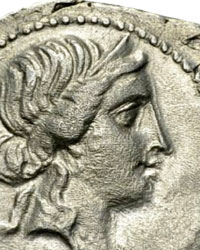
Római Köztársaság (Imperatorial). Marcus Iunius Brutus. Denarius From the E.E. Clain-Stefanelli collection
A licitálás lezárult
2 héttel ezelőtt

Római Köztársaság (Imperatorial). Marcus Iunius Brutus. Denarius From the E.E. Clain-Stefanelli collection

RULER: Brutus DATE: Mint moving, 43-42 B.C DENOMINATION: Denarius MATERIAL: Silver, AR SIZE & WEIGHT: 17 mm, 3,49 gr OBVERSE: LEIBERTAS, head of Libertas right REVERSE: CAEPIO BRVTVS PRO COS, Lyre between a quiver and a laurel branch REFERENCES: Crawford 501/1 PROVENANCE: From the E.E. Clain-Stefanelli collection Comes with Certificate of Authenticity Marcus Junius Brutus (c. 85–42 BC) was a Roman senator and politician whose life remains one of the most polarizing and dramatic chapters in the history of the late Roman Republic. Descended from Lucius Junius Brutus, the semi-legendary founder of the Republic who expelled the last king, Marcus Brutus inherited a deep-seated philosophical commitment to libertas—the traditional concept of liberty and senatorial rule. Despite this staunch Republicanism, he was pardoned and highly favored by Julius Caesar after the Civil War, receiving high honors such as the governorship of Cisalpine Gaul and the urban praetorship. Brutus’s personal integrity, coupled with his close relationship with Caesar—whose mistress was Brutus's mother, Servilia—made his eventual betrayal of his benefactor all the more shocking. The pivotal moment of Brutus’s life was his decision to join and ultimately lead the conspiracy to assassinate Julius Caesar. Driven by the fear that Caesar’s self-declaration as "Dictator for Life" on the Ides of March, 44 BC, signaled the permanent end of the Republic and a return to monarchy, Brutus put his philosophical duty above his personal loyalties. The conspirators, calling themselves the Liberatores (Liberators), struck Caesar down at a Senate meeting, a moment forever immortalized by the dramatic, likely fictional, line "Et tu, Brute?" The immediate aftermath, however, did not bring the expected restoration of the Republic. Instead, a public outcry, fueled by Mark Antony’s rhetoric, forced Brutus and his co-conspirator, Gaius Cassius Longinus, to flee Rome. Brutus and Cassius consolidated their forces and treasuries in the eastern provinces, preparing for a confrontation with the Second Triumvirate, composed of Mark Antony, Octavian (Caesar’s adopted son and heir), and Lepidus. This conflict culminated in the two decisive Battles of Philippi in Macedonia in 42 BC. After his army was utterly defeated in the second engagement, Brutus, refusing to be captured, chose to take his own life. His death marked the final, futile stand for the Roman Republic and ushered in the final stage of the civil wars that would ultimately lead to the rise of Octavian (Augustus) as Rome’s first Emperor. Brutus's legacy remains complex, viewed by some as the "noblest Roman" who fought for freedom, and by others as a treacherous murderer.

Nr. 99239870

Már nem érhető el.
Római Köztársaság (Imperatorial). Marcus Iunius Brutus. Denarius From the E.E. Clain-Stefanelli collection

Római Köztársaság (Imperatorial). Marcus Iunius Brutus. Denarius From the E.E. Clain-Stefanelli collection

RULER: Brutus
DATE: Mint moving, 43-42 B.C
DENOMINATION: Denarius
MATERIAL: Silver, AR
SIZE & WEIGHT: 17 mm, 3,49 gr
OBVERSE: LEIBERTAS, head of Libertas right
REVERSE: CAEPIO BRVTVS PRO COS, Lyre between a quiver and a laurel branch
REFERENCES: Crawford 501/1
PROVENANCE: From the E.E. Clain-Stefanelli collection

Comes with Certificate of Authenticity

Marcus Junius Brutus (c. 85–42 BC) was a Roman senator and politician whose life remains one of the most polarizing and dramatic chapters in the history of the late Roman Republic. Descended from Lucius Junius Brutus, the semi-legendary founder of the Republic who expelled the last king, Marcus Brutus inherited a deep-seated philosophical commitment to libertas—the traditional concept of liberty and senatorial rule. Despite this staunch Republicanism, he was pardoned and highly favored by Julius Caesar after the Civil War, receiving high honors such as the governorship of Cisalpine Gaul and the urban praetorship. Brutus’s personal integrity, coupled with his close relationship with Caesar—whose mistress was Brutus's mother, Servilia—made his eventual betrayal of his benefactor all the more shocking.

The pivotal moment of Brutus’s life was his decision to join and ultimately lead the conspiracy to assassinate Julius Caesar. Driven by the fear that Caesar’s self-declaration as "Dictator for Life" on the Ides of March, 44 BC, signaled the permanent end of the Republic and a return to monarchy, Brutus put his philosophical duty above his personal loyalties. The conspirators, calling themselves the Liberatores (Liberators), struck Caesar down at a Senate meeting, a moment forever immortalized by the dramatic, likely fictional, line "Et tu, Brute?" The immediate aftermath, however, did not bring the expected restoration of the Republic. Instead, a public outcry, fueled by Mark Antony’s rhetoric, forced Brutus and his co-conspirator, Gaius Cassius Longinus, to flee Rome.

Brutus and Cassius consolidated their forces and treasuries in the eastern provinces, preparing for a confrontation with the Second Triumvirate, composed of Mark Antony, Octavian (Caesar’s adopted son and heir), and Lepidus. This conflict culminated in the two decisive Battles of Philippi in Macedonia in 42 BC. After his army was utterly defeated in the second engagement, Brutus, refusing to be captured, chose to take his own life. His death marked the final, futile stand for the Roman Republic and ushered in the final stage of the civil wars that would ultimately lead to the rise of Octavian (Augustus) as Rome’s first Emperor. Brutus's legacy remains complex, viewed by some as the "noblest Roman" who fought for freedom, and by others as a treacherous murderer.

A licitálás lezárult
Carmen Vera Gutiérrez
Szakértő
Becslés  € 550 - € 650

Hasonló tárgyak

Önnek ajánlott:

Ókori érmék

Keresési riasztás beállítása
Állítson be keresési riasztást, hogy értesítést kapjon, ha új találatok válnak elérhetővé.

Ez a tárgy a következőben szerepelt:


Hogyan vásárolhatok a Catawiki-n?

Tudjon meg többet a Vevővédelmünkről

      1. Fedezzen fel valami különlegeset

      Böngésszen a szakértők által kiválasztott több ezer különleges tárgy között. Tekintse meg az egyes különleges tárgyak fényképeit, részleteit és becsült értékét. 

      2. Tegye meg a legmagasabb licitet

      Találjon valamit, ami igazán tetszik, és tegye meg a legmagasabb licitet. Követheti az árverést egészen a végéig, vagy hagyhatja, hogy a rendszerünk végezze el Ön helyett a licitálást. Mindössze annyit kell tennie, hogy beállítja a licitet a maximálisan kifizetni kívánt összegre. 

      3. Fizessen a biztonságos és védett rendszert használva
      Fizessen a különleges tárgyért, és mi védett rendszerben megőrizzük az összeget, amíg a tárgy biztonságosan meg nem érkezik Önhöz. Megbízható fizetési rendszert használunk az összes tranzakció kezelésére. 

Eladna valami hasonlót?

Akár új az online árverések világában, akár professzionálisan értékesít, mi segíthetünk abban, hogy jobb áron adja el különleges tárgyait.

Tárgy eladása