N. 100207080

Venduto
Louis Poulsen - Poul Henningsen - Lampada - Rame, Metallo - PH 4½-3½ muro da esterno
Offerta finale
€ 610
2 giorni fa

Louis Poulsen - Poul Henningsen - Lampada - Rame, Metallo - PH 4½-3½ muro da esterno

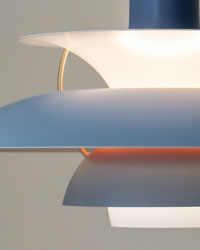
PH 4½-3 outdoor wall lamp designed by Poul Henningsen and produced in 2020 at Louis Poulsen. The fixture is designed based on the principle of a reflective three-shade system, which directs the light downwards. The shades have a matt white painted interior surface, diffusing the light in a comfortable way. Materials Shades: Spun copper. Wall box: Spun copper. Arm: Copper. Finish Copper, brushed. In general well-patinated. Upper shade has a little dent. Size and measurement (mm) Width: 450 Height: 290 Length: 505 Weight 6.8 kg Will be packed carefully and shipped by professional carrier no later than three days after the end of auction. If you have any question don't hesitate to contact me. Poul Henningsen designed the three-shade system back in 1925-1926. The first lights using the system were designed by PH in cooperation with Louis Poulsen for an exhibition in Paris. This partnership continued up until his death in 1967. Throughout his life, PH sought to create glare-free light, direct light where it was most needed, and create soft shadows, using incandescent bulbs as a light source. PH 3/2½ Wall is a member of the three-shade family which numbers 30 lights today, including three for outdoor use. Thus PH did not just design a light, but an entire system – around a thousand different models have been produced over the years. This wide selection consisted of table, floor and wall lamps, as well as a number of different chandeliers, which were very popular in the 30s for lighting private homes from high ceilings. There were countless combination options. The lights were available in different colours, as well as a range of sizes. The first shades were made of metal with a painted undersurface, such as white, gold or silver – depending on whether diffuse, warm or cold light was desired. Glass was later introduced for the three-shade system. In addition to the downward-directed light, glass lamps illuminated the room. PH was the first person to pursue a scientific approach to light and use the logarithmic spiral as a basis. By using a design based on the logarithmic spiral he achieved even distribution of light over the entire curve of the shade. This even light distribution, together with the diffuse reflection through the glass, made it possible to control glare and shadow. Each shade reduces the amount of light equally, due to their distance from the light source. The PH light model numbers refer to the shade size. Each top shade had a corresponding set of middle and lower shades. In the ‘pure’ models, such as the 2/2, the top shade has a size of about 20 cm, with corresponding lower shades. PH 3/2½ Wall consists of an approximately 30 cm top shade, but uses lower shades from the 2½ model. These ‘hybrid’ models were introduced due to the desire to hang pendants at lower heights. The system was also used for wall, floor and table lamps. PH 4½-3 Wall was introduced in 1966.

N. 100207080

Venduto
Louis Poulsen - Poul Henningsen - Lampada - Rame, Metallo - PH 4½-3½ muro da esterno

Louis Poulsen - Poul Henningsen - Lampada - Rame, Metallo - PH 4½-3½ muro da esterno

PH 4½-3 outdoor wall lamp designed by Poul Henningsen and produced in 2020 at Louis Poulsen.

The fixture is designed based on the principle of a reflective three-shade system, which directs the light downwards. The shades have a matt white painted interior surface, diffusing the light in a comfortable way.

Materials
Shades: Spun copper. Wall box: Spun copper. Arm: Copper.
Finish
Copper, brushed.

In general well-patinated. Upper shade has a little dent.

Size and measurement (mm)
Width: 450
Height: 290
Length: 505
Weight 6.8 kg


Will be packed carefully and shipped by professional carrier no later than three days after the end of auction.

If you have any question don't hesitate to contact me.


Poul Henningsen designed the three-shade system back in 1925-1926. The first lights using the system were designed by PH in cooperation with Louis Poulsen for an exhibition in Paris. This partnership continued up until his death in 1967. Throughout his life, PH sought to create glare-free light, direct light where it was most needed, and create soft shadows, using incandescent bulbs as a light source.

PH 3/2½ Wall is a member of the three-shade family which numbers 30 lights today, including three for outdoor use. Thus PH did not just design a light, but an entire system – around a thousand different models have been produced over the years. This wide selection consisted of table, floor and wall lamps, as well as a number of different chandeliers, which were very popular in the 30s for lighting private homes from high ceilings. There were countless combination options. The lights were available in different colours, as well as a range of sizes. The first shades were made of metal with a painted undersurface, such as white, gold or silver – depending on whether diffuse, warm or cold light was desired. Glass was later introduced for the three-shade system. In addition to the downward-directed light, glass lamps illuminated the room.

PH was the first person to pursue a scientific approach to light and use the logarithmic spiral as a basis. By using a design based on the logarithmic spiral he achieved even distribution of light over the entire curve of the shade. This even light distribution, together with the diffuse reflection through the glass, made it possible to control glare and shadow. Each shade reduces the amount of light equally, due to their distance from the light source. The PH light model numbers refer to the shade size. Each top shade had a corresponding set of middle and lower shades. In the ‘pure’ models, such as the 2/2, the top shade has a size of about 20 cm, with corresponding lower shades. PH 3/2½ Wall consists of an approximately 30 cm top shade, but uses lower shades from the 2½ model. These ‘hybrid’ models were introduced due to the desire to hang pendants at lower heights. The system was also used for wall, floor and table lamps.

PH 4½-3 Wall was introduced in 1966.

Offerta finale
€ 610
Henri Daumont
Esperto
Stima  € 700 - € 850

Oggetti simili

Per te in

Illuminazione

Imposta un’allerta di ricerca
Imposta un’allerta di ricerca per ricevere una notifica quando sono disponibili nuove corrispondenze.

Questo oggetto era presente in


Come fare acquisti su Catawiki

Scopri di più sulla nostra Tutela degli acquirenti

      1. Scopri oggetti speciali

      Esplora migliaia di oggetti speciali selezionati da esperti. Osserva le foto, i dettagli e il valore stimato di ogni oggetto speciale. 

      2. Fai l’offerta più alta

      Trova qualcosa che ti interessa e fai l’offerta migliore. Puoi seguire l’asta fino alla fine o lasciare che il nostro sistema faccia le offerte per te. Non devi fare altro che impostare un’offerta per l’importo massimo che desideri pagare. 

      3. Paga in tutta sicurezza

      Effettua il tuo pagamento e noi lo terremo al sicuro finché il tuo oggetto speciale non sarà arrivato a destinazione sano e salvo. Utilizziamo un sistema di pagamento affidabile per gestire tutte le transazioni. 

Hai qualcosa di simile da vendere?

Possiamo aiutarti a guadagnare di più dai tuoi oggetti speciali, che tu venda professionalmente o sia nuovo nel mondo delle aste online.

Vendi il tuo oggetto