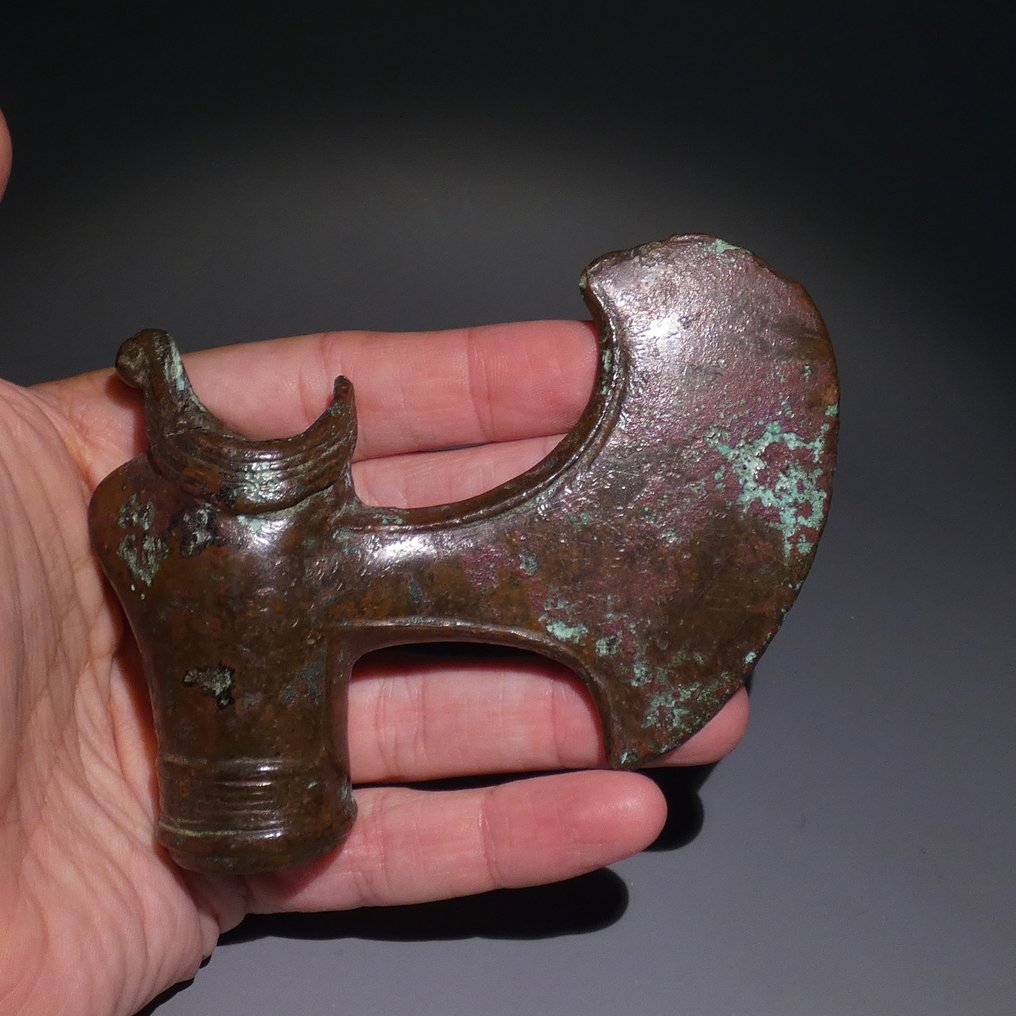
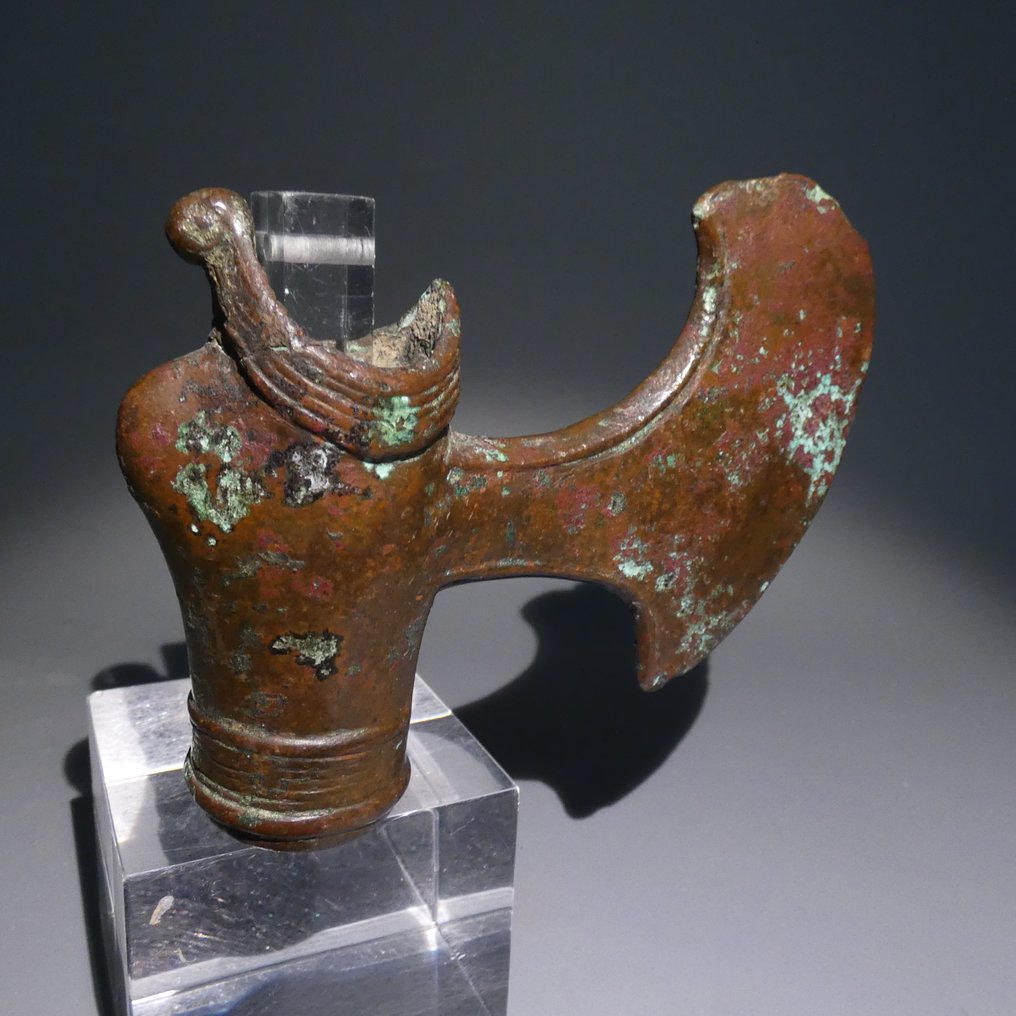
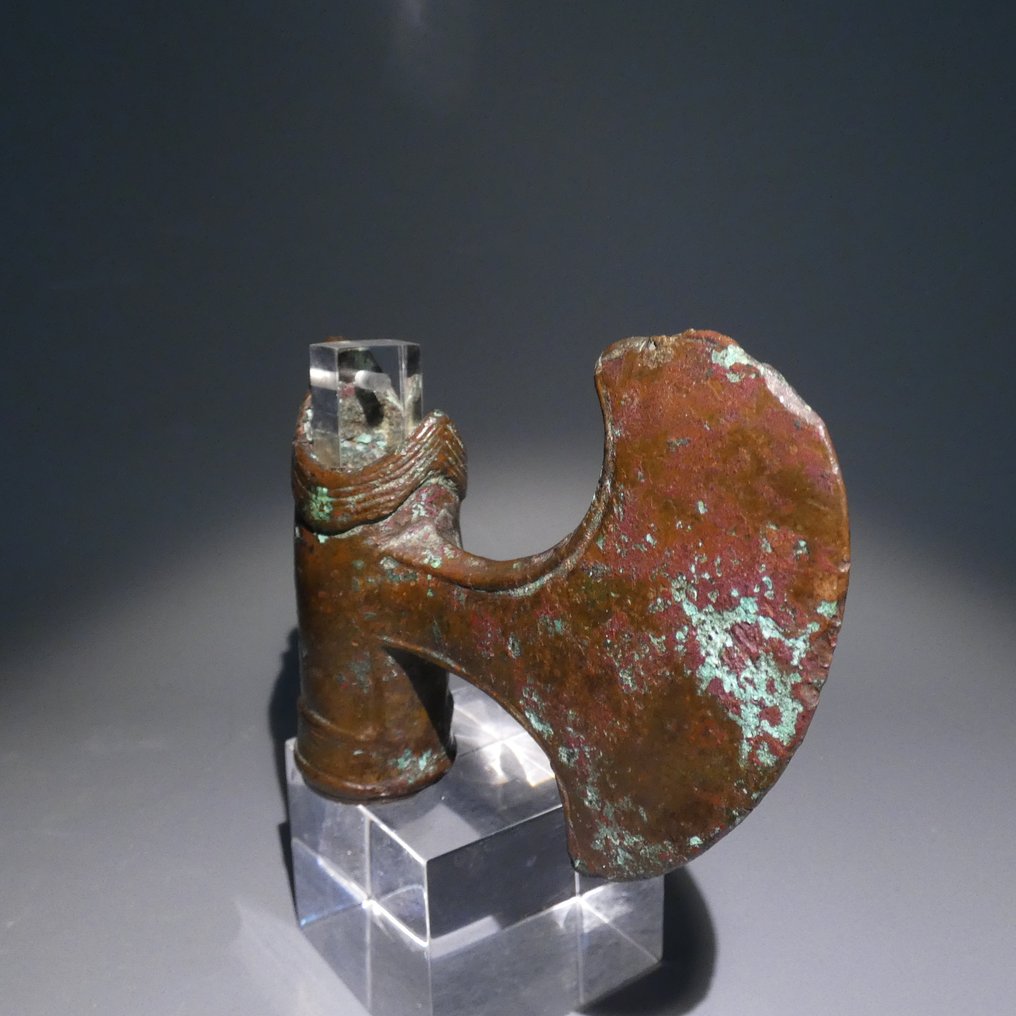
Lorestan Brązowy Głowica topora. Dł. 10,5 cm. 1800–600 p.n.e.

05
dni
20
godziny
33
minuty
32
sekundy
Cena wywoławcza
€ 1
Cena minimalna nie została osiągnięta

Ekspert
Wyselekcjonowany przez Ruth Garrido Vila
Kierowała muzeum kolekcji Ifergan, specjalistka w archeologii fenickiej.
Estymacja € 1.400 - € 1.600
Nie zalicytowano
Ochrona nabywców Catawiki
Twoja płatność jest u nas bezpieczna, dopóki nie otrzymasz przedmiotu.Zobacz szczegóły
Trustpilot: 4.4 | opinie: 137843
Doskonała ocena na Trustpilot.
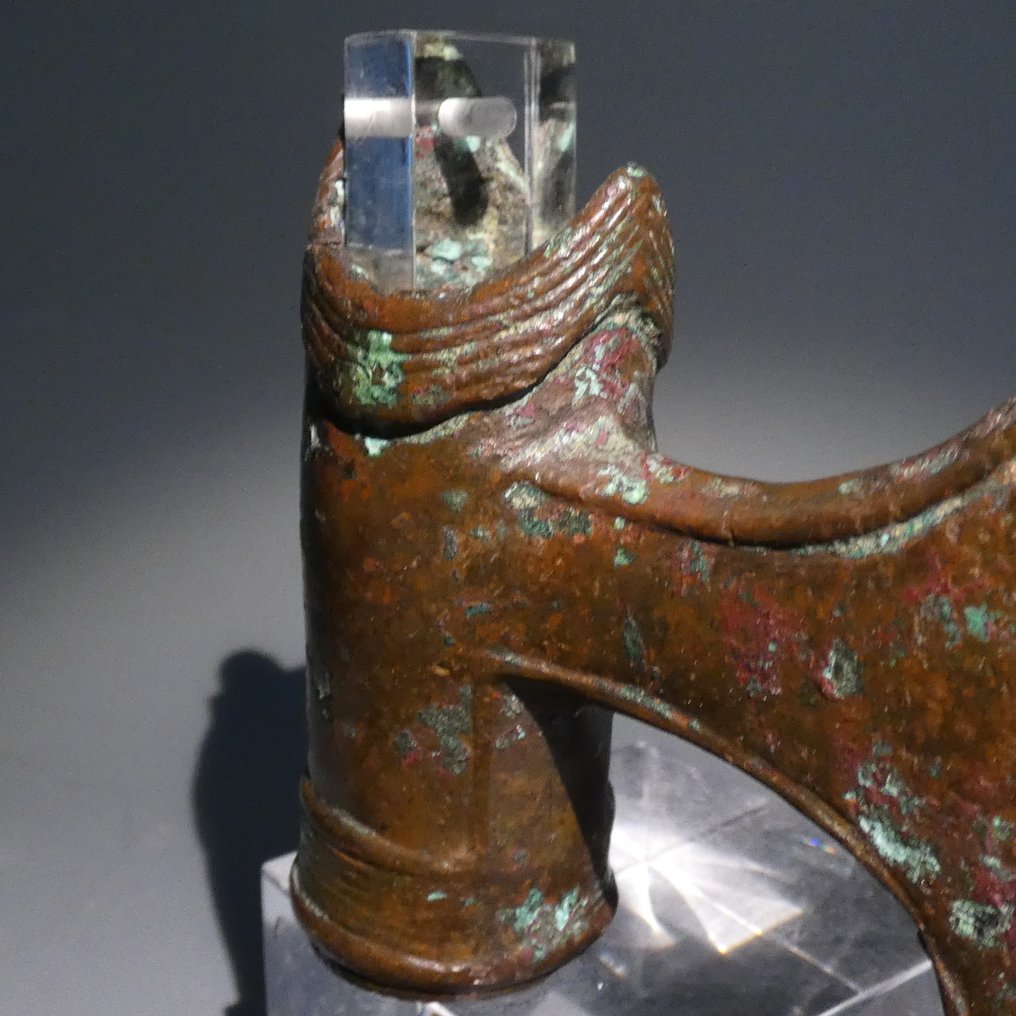
Głowa siekierki z brązu Lurystanu, 10,5 cm długości i 9 cm wysokości, datowana na 1800–600 p.n.e., w dobrym stanie i autentyczna, z prywatnej kolekcji w Montpellier we Francji.
Podsumowanie wspomagane sztuczną inteligencją
Opis od sprzedawcy
Extremely Fine Head Axe.
Luristan, 1800 - 600 BC
Bronze
10,5 cm long and 9 cm height.
CONDITION: Good condition, see photos.
PROVENANCE: Private collection, Montpellier, France, 1970 – 1980. Acquired from the french art market.
Luristan bronze comes from the province of Lorestan, a region situated in the area of modern South-Western Iran. In ancient times a number of nomadic populations, such as the Medes, the Kassites and eventually the Persians, settled in the area. Due to the nomadic nature of the tribes, none of the Luristan bronzes were of great size, since it was required for them to be light and portable. Their artwork mainly comprises ornaments, vessels and weapons. Most of Luristan weapons have been recovered in funerary contexts, suggesting that such weapons would have used not only in everyday life but also with ceremonial purposes.
The swords and axe blades of the Luristan culture, a mountainous region in present-day western Iran, represent a notable example of Iron Age bronze art (c. 1200–600 BC). These weapons were forged with great skill, combining functionality with elaborate ornamental designs. The swords usually had narrow blades with central ribs to reinforce their structure, while the axes had curved or triangular shapes, often decorated with geometric motifs or zoomorphic figures. They were not only instruments of war, but also ritual objects and symbols of status. The quality of the bronze and the complexity of the designs suggest a high level of metallurgical development. These pieces have been found mainly in tombs, indicating their ceremonial value. Today, Luristan weapons are highly prized by archaeologists and collectors for their beauty and historical mystery.
Historie sprzedawców
WAŻNE UWAGI:
-Jesteśmy profesjonalnym sprzedawcą.
-Wszystkie sprzedawane przedmioty będą dostarczane z profesjonalną fakturą.
- Wszystkie sprzedawane przedmioty będą dostarczane z własnym Certyfikatem Autentyczności (dokumentem gwarancyjnym), zawierającym opis, zdjęcie i pochodzenie przedmiotu.
-Wszystkie produkty zostaną wysłane prywatną firmą kurierską z ubezpieczeniem (DHL express, CORREOS z Hiszpanii lub inny podobny z numerem przesyłki).
- Wszystkie przedmioty po wysłaniu (jeśli jest to wymagane) zostaną uznane za antyki mające ponad 100 lat, a ich cena zostanie uwzględniona.
- W przypadku wysyłki poza UE: czas dostawy podlega odprawie celnej. Odpowiedzialność, przepisy celne lub wymagania importowe obowiązujące w kraju docelowym leżą wyłącznie w gestii kupującego. Nie odpowiadamy za opóźnienia spowodowane procedurami celnymi. Podatki importowe i VAT nie są wliczone w koszty wysyłki. Należny podatek importowy lub VAT zależy od kraju przeznaczenia. Zapłata wszelkich podatków lub wszelkie spory z organami celnymi leżą wyłącznie w gestii kupującego.
- W przypadku niektórych oferowanych produktów w celu wysyłki poza Unię Europejską konieczne jest uzyskanie Zezwolenia Eksportowego, które będzie szczegółowo określać uiszczenie przez kupującego Opłat Eksportowych zgodnie z hiszpańskim ustawodawstwem. Jeżeli zajdzie taka potrzeba, zostanie to zaznaczone w opisie artykułu, BO NIE WSZYSTKICH PRZYPADKACH TAK JEST. Opłaty te zostaną doliczone do faktury na koszt kupującego. Te opłaty eksportowe są ustalane na podstawie ostatecznej ceny aukcyjnej, a stawka podatku nie jest nakładana bezpośrednio na całkowitą wartość eksportowanego towaru, ale raczej stosuje się do niej różne wartości procentowe według sekcji: Do 6000 euro: 5%. Od 6 001 do 60 000 euro: 10%.
Proces ubiegania się o pozwolenie na eksport może zająć maksymalnie 1-2 miesiące.
- Gwarantujemy, że nabył ten utwór zgodnie ze wszystkimi krajowymi i międzynarodowymi przepisami dotyczącymi własności dóbr kultury.
Przetłumaczone przez Tłumacz GoogleExtremely Fine Head Axe.
Luristan, 1800 - 600 BC
Bronze
10,5 cm long and 9 cm height.
CONDITION: Good condition, see photos.
PROVENANCE: Private collection, Montpellier, France, 1970 – 1980. Acquired from the french art market.
Luristan bronze comes from the province of Lorestan, a region situated in the area of modern South-Western Iran. In ancient times a number of nomadic populations, such as the Medes, the Kassites and eventually the Persians, settled in the area. Due to the nomadic nature of the tribes, none of the Luristan bronzes were of great size, since it was required for them to be light and portable. Their artwork mainly comprises ornaments, vessels and weapons. Most of Luristan weapons have been recovered in funerary contexts, suggesting that such weapons would have used not only in everyday life but also with ceremonial purposes.
The swords and axe blades of the Luristan culture, a mountainous region in present-day western Iran, represent a notable example of Iron Age bronze art (c. 1200–600 BC). These weapons were forged with great skill, combining functionality with elaborate ornamental designs. The swords usually had narrow blades with central ribs to reinforce their structure, while the axes had curved or triangular shapes, often decorated with geometric motifs or zoomorphic figures. They were not only instruments of war, but also ritual objects and symbols of status. The quality of the bronze and the complexity of the designs suggest a high level of metallurgical development. These pieces have been found mainly in tombs, indicating their ceremonial value. Today, Luristan weapons are highly prized by archaeologists and collectors for their beauty and historical mystery.
Historie sprzedawców
WAŻNE UWAGI:
-Jesteśmy profesjonalnym sprzedawcą.
-Wszystkie sprzedawane przedmioty będą dostarczane z profesjonalną fakturą.
- Wszystkie sprzedawane przedmioty będą dostarczane z własnym Certyfikatem Autentyczności (dokumentem gwarancyjnym), zawierającym opis, zdjęcie i pochodzenie przedmiotu.
-Wszystkie produkty zostaną wysłane prywatną firmą kurierską z ubezpieczeniem (DHL express, CORREOS z Hiszpanii lub inny podobny z numerem przesyłki).
- Wszystkie przedmioty po wysłaniu (jeśli jest to wymagane) zostaną uznane za antyki mające ponad 100 lat, a ich cena zostanie uwzględniona.
- W przypadku wysyłki poza UE: czas dostawy podlega odprawie celnej. Odpowiedzialność, przepisy celne lub wymagania importowe obowiązujące w kraju docelowym leżą wyłącznie w gestii kupującego. Nie odpowiadamy za opóźnienia spowodowane procedurami celnymi. Podatki importowe i VAT nie są wliczone w koszty wysyłki. Należny podatek importowy lub VAT zależy od kraju przeznaczenia. Zapłata wszelkich podatków lub wszelkie spory z organami celnymi leżą wyłącznie w gestii kupującego.
- W przypadku niektórych oferowanych produktów w celu wysyłki poza Unię Europejską konieczne jest uzyskanie Zezwolenia Eksportowego, które będzie szczegółowo określać uiszczenie przez kupującego Opłat Eksportowych zgodnie z hiszpańskim ustawodawstwem. Jeżeli zajdzie taka potrzeba, zostanie to zaznaczone w opisie artykułu, BO NIE WSZYSTKICH PRZYPADKACH TAK JEST. Opłaty te zostaną doliczone do faktury na koszt kupującego. Te opłaty eksportowe są ustalane na podstawie ostatecznej ceny aukcyjnej, a stawka podatku nie jest nakładana bezpośrednio na całkowitą wartość eksportowanego towaru, ale raczej stosuje się do niej różne wartości procentowe według sekcji: Do 6000 euro: 5%. Od 6 001 do 60 000 euro: 10%.
Proces ubiegania się o pozwolenie na eksport może zająć maksymalnie 1-2 miesiące.
- Gwarantujemy, że nabył ten utwór zgodnie ze wszystkimi krajowymi i międzynarodowymi przepisami dotyczącymi własności dóbr kultury.
Przetłumaczone przez Tłumacz GoogleSzczegóły
Kultura
Lorestan
Stulecie/ rama czasowa
1800 - 600 BC
Name of object
Head axe. 10,5 cm L. 1800 - 600 BC
Nabyto od
Prywatna kolekcja
Rok nabycia
2025
Materiał
Brązowy
Kraj nabycia
Francja
Stan
dobry
Poprzedni właściciel - nabyto od
Prywatna kolekcja
Poprzedni właściciel – rok nabycia
1980
Poprzedni właściciel – kraj nabycia
Francja
Potwierdzam, że nabyłem ten przedmiot legalnie i że mam prawo go sprzedać.
Tak
Autentyczność
Oryginał
Klauzula
Sprzedawca został poinformowany przez Catawiki o wymaganiach dotyczących dokumentacji i gwarantuje, że: - przedmiot został legalnie pozyskany, - ma prawo do sprzedaży i/lub eksportu przedmiotu, w zależności od sytuacji, - dostarczy niezbędne informacje dotyczące pochodzenia oraz załatwi wymaganą dokumentację i pozwolenia/licencje (jeśli mają zastosowanie) zgodnie z lokalnymi przepisami, - poinformuje nabywcę o wszelkich opóźnieniach w uzyskaniu pozwoleń/licencji. Biorąc udział w licytacji, potwierdzasz, że w zależności od Twojego kraju zamieszkania mogą być wymagane dokumenty importowe oraz że uzyskanie pozwoleń/licencji może spowodować opóźnienia w dostawie Twojego przedmiotu.
Sprzedawca został poinformowany przez Catawiki o wymaganiach dotyczących dokumentacji i gwarantuje, że: - przedmiot został legalnie pozyskany, - ma prawo do sprzedaży i/lub eksportu przedmiotu, w zależności od sytuacji, - dostarczy niezbędne informacje dotyczące pochodzenia oraz załatwi wymaganą dokumentację i pozwolenia/licencje (jeśli mają zastosowanie) zgodnie z lokalnymi przepisami, - poinformuje nabywcę o wszelkich opóźnieniach w uzyskaniu pozwoleń/licencji. Biorąc udział w licytacji, potwierdzasz, że w zależności od Twojego kraju zamieszkania mogą być wymagane dokumenty importowe oraz że uzyskanie pozwoleń/licencji może spowodować opóźnienia w dostawie Twojego przedmiotu.
