Nr. 105338064

Ikke længere tilgængelig
Thrakien, Ainos half Mnaieion / Tetradrachm
Lukket for budgivning
10 timer siden

Thrakien, Ainos half Mnaieion / Tetradrachm

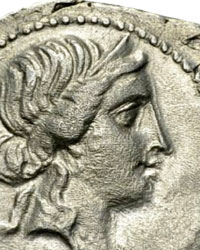
THRACE, Ainos. Circa 415/4-413/2 BC. AR Tetradrachm. Head of Hermes right, wearing petasos / Goat standing right; ivy branch to right; all within incuse square. Ainos came rather late to currency production, striking its first tetradrachms only after the expulsion of the Persians from northern Greece following Xerxes’ defeat at Salamis. Its first period ended with the Athenian coinage decree of 449 BC, but the mint was in operation again by circa 435 BC, tapering off rapidly until disappearing with the conquest of the city by Philip of Macedon in 342 BC. Its uniform types throughout its history were Hermes and the goat, the latter the symbol of the pasture land that provided what prosperity Ainos had. Hermes was the patron deity of Ainos, dating from the time of the Trojan War. According to a poem by Kallimachos, the sculptor Epeios, who constructed the Trojan Horse, also made a wooden statue (ξοανον) of Hermes, which was washed out to sea and recovered by fishermen by the Hebros river. The fishermen, thinking it just a piece of driftwood, tried to burn it in their bonfire. When it failed to burn they took fright and threw it back into the sea, which promptly cast it back again. The natives accepted it as a relic of the gods, and erected the sanctuary of Hermes Perpheraios (the Wanderer) at the future site of Ainos. The later coins of Ainos, with their splendid facing head of Hermes, showcase some of the finest numismatic art of the Greek world. Nevertheless, Ainos never became an important city or trading center. The climate might have had something to do with it; according to Athaneus, Ainos had two seasons, eight months of cold and four months of winter. At least the goats liked it. Weight: 16,55 gr Diameter: 25,2 mm Condition: Very Fine

Nr. 105338064

Ikke længere tilgængelig
Thrakien, Ainos half Mnaieion / Tetradrachm

Thrakien, Ainos half Mnaieion / Tetradrachm

THRACE, Ainos. Circa 415/4-413/2 BC. AR Tetradrachm. Head of Hermes right, wearing petasos / Goat standing right; ivy branch to right; all within incuse square.
Ainos came rather late to currency production, striking its first tetradrachms only after the expulsion of the Persians from northern Greece following Xerxes’ defeat at Salamis. Its first period ended with the Athenian coinage decree of 449 BC, but the mint was in operation again by circa 435 BC, tapering off rapidly until disappearing with the conquest of the city by Philip of Macedon in 342 BC. Its uniform types throughout its history were Hermes and the goat, the latter the symbol of the pasture land that provided what prosperity Ainos had. Hermes was the patron deity of Ainos, dating from the time of the Trojan War. According to a poem by Kallimachos, the sculptor Epeios, who constructed the Trojan Horse, also made a wooden statue (ξοανον) of Hermes, which was washed out to sea and recovered by fishermen by the Hebros river. The fishermen, thinking it just a piece of driftwood, tried to burn it in their bonfire. When it failed to burn they took fright and threw it back into the sea, which promptly cast it back again. The natives accepted it as a relic of the gods, and erected the sanctuary of Hermes Perpheraios (the Wanderer) at the future site of Ainos. The later coins of Ainos, with their splendid facing head of Hermes, showcase some of the finest numismatic art of the Greek world. Nevertheless, Ainos never became an important city or trading center. The climate might have had something to do with it; according to Athaneus, Ainos had two seasons, eight months of cold and four months of winter. At least the goats liked it.

Weight: 16,55 gr
Diameter: 25,2 mm

Condition: Very Fine

Lukket for budgivning
Carmen Vera Gutiérrez
Ekspert
Estimat  € 3.900 - € 4.300

Lignende genstande

Til dig i

Gamle Mønter

Indstil en søgealarm
Indstil en søgealarm for at få besked, når nye matches er tilgængelige.

Denne genstand blev vist i


Sådan køber du hos Catawiki

Få mere at vide om vores Køberbeskyttelse

      1. Opdag noget særligt

      Gennemse tusindvis af specielle genstande udvalgt af eksperter. Se fotos, detaljer og estimeret værdi af hver specielle genstand. 

      2. Afgiv det højeste bud

      Find noget, du er vild med, og afgiv det højeste bud. Du kan følge auktionen til dørs eller lade vores system byde for dig. Alt, du skal gøre, er at indstille et bud på det maksimale beløb, du vil betale. 

      3. Foretag en sikker betaling

      Betal for din specielle genstand, så opbevarer vi din betaling i sikkerhed, indtil den ankommer i god behold. Vi bruger et betroet betalingssystem til håndtering af alle transaktioner. 

Har du noget lignende at sælge?

Uanset om du er nybegynder på onlineauktioner eller sælger professionelt, kan vi hjælpe dig med at tjene mere på dine specielle genstande.

Sælg din genstand