Nr. 108639863

Solgt
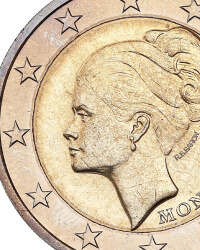
Europa. 2 Euro 2002/2014 (5 coins with cancellation marks)  (Ingen mindstepris)
Endelige bud
€ 37
Ingen mindstepris
3 dage siden

Europa. 2 Euro 2002/2014 (5 coins with cancellation marks) (Ingen mindstepris)

2 Euro Germany (2002) (photo no. 21) Error Obverse: In the center, an eagle in a circle – the German coat of arms; below, the year of issue; along the edge, twelve five-pointed stars – the symbol of the European Union. NOTE: No visible ribs on the outer ring of the coin between the 12 stars. Reverse: To the left of the center, the denomination is 2, to the right: EURO; in the background, a map of Europe; In the background of the map, six vertical parallel lines terminate on both sides with five-pointed stars (the reverse is common to all euro coins). Edge of the coin: with a concave inscription: EINIGKEID UND RECHT UND FREIHEIT (Unity, Justice, and Freedom, and the eagle from the German coat of arms). NOTE: The edge is smooth and lacks any ribs. Mint: Heinz Hoyer, Sneschana Russewa-Hoyer, Luc Luycx (initials LL below the letter O in EURO on the reverse). NOTE: No mintmark. During minting, the dies are subjected to high dynamic loads, which sometimes causes damage in the form of cracks, or even nicks, grooves, or bulges. Friction between the surfaces of the dies and the coin causes gradual wear of the dies. Contrary to appearances, mint defects of this type on the outer rings of euro coins are highly sought after by collectors, as their uniqueness makes them interesting and often very valuable due to their rarity and exceptional nature. Note: The coin core is separated from the outer ring. 2 Euro NETHERLANDS (2013) Abdication of Queen Beatrix (Image no. 22) Error Obverse: In the center of the coin, the head of Queen Beatrix facing left; on the left in the background, the head of Prince Willem-Alexander facing left; at the top, the royal crown divides the inscription along the left edge: WILLEM-ALEXANDER PRINS VAN ORANJE (William Alexander, Prince of Orange) and along the right edge: BEATRIX KONINGIN DER NEDERLANDEN (Beatrice, Queen of the Netherlands); along the bottom edge, in two lines, the date: 28 JANUARI / 2013 (January 28, 2013); a ring of pearls surrounds the inscriptions; along the edge, twelve five-pointed stars - the symbol of the European Union. Reverse: To the left of the center, the face value: 2, to the right: EURO; in the background of the inscription, a map of Europe; In the background of the map, vertically, are six parallel lines terminating on both sides with five-pointed stars (the reverse is common to all euro coins). Edge: serrated with a concave inscription: GOD * ZIJ * MET * ONS * (God Be with Us) Design: Pannos Goutzemisis, Luc Luycx (initials LL below the letter O in EURO on the reverse) Mint: Koninklijke Nederlandse Munt (Royal Dutch Mint), Utrecht (mintmark behind the date 2013 on the obverse, before the date 2013 the symbol of mint director Brouwer – sails) Fun fact: The 2-euro commemorative coin from 2013 commemorates the abdication of Queen Beatrix from the Dutch throne in favor of her eldest son, Willem Alexander. The Queen's address and the formal signing of the documents took place on January 28, 2013, and two days later, Willem Alexander was crowned King of the Netherlands – the first king after 123 years of queens' rule in the Netherlands. Queen Beatrix signs the abdication document alongside Prince Willem Alexander and his wife, Máxima Zorreguieta. (see photo) During minting, the dies are subjected to high dynamic loads, which sometimes causes damage in the form of cracks, or even nicks, grooves, or bulges. Friction between the surfaces of the dies and the coin causes gradual wear of the dies. Contrary to appearances, mint defects of this type on the outer rings of euro coins are highly coveted by collectors, as their uniqueness makes them interesting and often very valuable due to their rarity and exceptional character. Note: The coin core is separated from the outer ring. 2 Euro Luxembourg (2014) (Image no. 23) Error Obverse: In the center, a simplified face of Grand Duke Henri facing right; on the left, vertically in concave letters in two lines: the year of issue and: LËTZEBUERG (Luxembourg); along the edge, a ring of twelve five-pointed stars - the symbol of the European Union. Reverse: To the left of the center, the face value: 2, to the right: EURO; in the background, a map of Europe; In the background of the map, vertically, six parallel lines terminating on both sides in five-pointed stars (the reverse is common to all euro coins). Edge: Reeded with a concave inscription 2 ** 2** 2** Design: Yvette Gastauer-Claire (concave monogram before the lowest star on the obverse), Luc Luycx (initials LL to the right of the globe on the reverse) Mint: Koninklijke Nederlandse Munt (Royal Dutch Mint), Utrecht, Netherlands (2002-2004) (concave mintmark after the year of issue on the obverse, before the year of issue, concave symbol of mint director Erik J. van Schouwenburg – an arc with a star – for the 2002 year (in reality, van Schouwenburg was mint director in 2000) or Maarten Brouwera - sails - for the 2003-2004 years); During minting, the dies are subjected to high dynamic loads, which sometimes causes damage in the form of cracks, or even nicks, grooves, or bulges. Friction between the dies' surfaces and the coin causes gradual wear of the dies. Contrary to appearances, mint damage of this type on the outer rings of euro coins is extremely desirable among collectors, as their uniqueness makes them interesting and often very valuable due to their rarity and exceptional character. Note: The coin core is separated from the outer ring. 2 Euro Malta (2013) (photo no. 24) Error Obverse: in the center, an eight-pointed Maltese cross; on the upper rim, the inscription: MALTA, separated by the arms of the cross; on the lower rim, the year of issue; along the edge, a ring of twelve five-pointed stars - the symbol of the European Union. Reverse: to the left of the center, the face value: 2, to the right: EURO; in the background of the inscription, a map of Europe; In the background of the map, vertically, are six parallel lines terminating on both sides with five-pointed stars (the reverse is common to all euro coins). Edge: Reeded with a concave inscription "2 ** 2** 2**" Design: Noel Galea Bason, Luc Luycx (initials LL below the letter "O" in EURO on the reverse) Mint: La Monnaie de Paris (Paris Mint), Pessac, France (concave letter "F" for "FRANCE" in the lowest star on the obverse in the 2008 year); Koninklijke Nederlandse Munt (Royal Dutch Mint), Utrecht, Netherlands (years 2010-2012) During minting, the dies are subjected to high dynamic loads, which sometimes causes damage in the form of cracks, or even chips, grooves, or bulges. Friction between the die surfaces and the coin causes gradual wear of the die. Contrary to popular belief, this type of mint damage on the outer rings of euro coins is highly coveted by collectors, as their uniqueness makes them interesting and often highly valuable due to their rarity and exceptional nature. Note: The coin core is separated from the outer ring. 2 Euro: A rare bimetallic blank mint blank. (photo no. 25) Error This authentic error coin is characterized by a completely blank obverse and reverse, without national markings. It consists of a distinct core and outer ring, with a smooth, unfinished edge. Ideal for error coin collectors, it features a clear separation between the core and outer ring. See specifications for exact dimensions. Weight: 8.5 grams Diameter: 25.75 mm Thickness: 2.22 mm Alloy: Cu75Ni25/Cu75Zn20Ni5 During minting, the dies are subjected to high dynamic loads, which sometimes causes damage in the form of cracks, or even nicks, grooves, or bulges. Friction between the dies' surfaces and the coin causes gradual wear of the dies. Contrary to appearances, mint defects of this type on €2 coin blanks are highly sought after by collectors, as their uniqueness makes them interesting and often highly valuable due to their rarity and exceptional nature. Note: The core of the blank is separated from the outer ring.

Nr. 108639863

Solgt
Europa. 2 Euro 2002/2014 (5 coins with cancellation marks)  (Ingen mindstepris)

Europa. 2 Euro 2002/2014 (5 coins with cancellation marks) (Ingen mindstepris)

2 Euro Germany (2002) (photo no. 21) Error

Obverse: In the center, an eagle in a circle – the German coat of arms; below, the year of issue; along the edge, twelve five-pointed stars – the symbol of the European Union. NOTE: No visible ribs on the outer ring of the coin between the 12 stars.

Reverse: To the left of the center, the denomination is 2, to the right: EURO; in the background, a map of Europe; In the background of the map, six vertical parallel lines terminate on both sides with five-pointed stars (the reverse is common to all euro coins).

Edge of the coin: with a concave inscription: EINIGKEID UND RECHT UND FREIHEIT (Unity, Justice, and Freedom, and the eagle from the German coat of arms). NOTE: The edge is smooth and lacks any ribs.

Mint: Heinz Hoyer, Sneschana Russewa-Hoyer, Luc Luycx (initials LL below the letter O in EURO on the reverse).
NOTE: No mintmark.

During minting, the dies are subjected to high dynamic loads, which sometimes causes damage in the form of cracks, or even nicks, grooves, or bulges. Friction between the surfaces of the dies and the coin causes gradual wear of the dies. Contrary to appearances, mint defects of this type on the outer rings of euro coins are highly sought after by collectors, as their uniqueness makes them interesting and often very valuable due to their rarity and exceptional nature.

Note: The coin core is separated from the outer ring.

2 Euro NETHERLANDS (2013) Abdication of Queen Beatrix (Image no. 22) Error

Obverse: In the center of the coin, the head of Queen Beatrix facing left; on the left in the background, the head of Prince Willem-Alexander facing left; at the top, the royal crown divides the inscription along the left edge: WILLEM-ALEXANDER PRINS VAN ORANJE (William Alexander, Prince of Orange) and along the right edge: BEATRIX KONINGIN DER NEDERLANDEN (Beatrice, Queen of the Netherlands); along the bottom edge, in two lines, the date: 28 JANUARI / 2013 (January 28, 2013); a ring of pearls surrounds the inscriptions; along the edge, twelve five-pointed stars - the symbol of the European Union.

Reverse: To the left of the center, the face value: 2, to the right: EURO; in the background of the inscription, a map of Europe; In the background of the map, vertically, are six parallel lines terminating on both sides with five-pointed stars (the reverse is common to all euro coins).

Edge: serrated with a concave inscription:
GOD * ZIJ * MET * ONS * (God Be with Us)

Design: Pannos Goutzemisis, Luc Luycx (initials LL below the letter O in EURO on the reverse)

Mint: Koninklijke Nederlandse Munt (Royal Dutch Mint), Utrecht (mintmark behind the date 2013 on the obverse, before the date 2013 the symbol of mint director Brouwer – sails)

Fun fact: The 2-euro commemorative coin from 2013 commemorates the abdication of Queen Beatrix from the Dutch throne in favor of her eldest son, Willem Alexander. The Queen's address and the formal signing of the documents took place on January 28, 2013, and two days later, Willem Alexander was crowned King of the Netherlands – the first king after 123 years of queens' rule in the Netherlands.
Queen Beatrix signs the abdication document alongside Prince Willem Alexander and his wife, Máxima Zorreguieta. (see photo)

During minting, the dies are subjected to high dynamic loads, which sometimes causes damage in the form of cracks, or even nicks, grooves, or bulges. Friction between the surfaces of the dies and the coin causes gradual wear of the dies. Contrary to appearances, mint defects of this type on the outer rings of euro coins are highly coveted by collectors, as their uniqueness makes them interesting and often very valuable due to their rarity and exceptional character.
Note: The coin core is separated from the outer ring.

2 Euro Luxembourg (2014) (Image no. 23) Error

Obverse: In the center, a simplified face of Grand Duke Henri facing right; on the left, vertically in concave letters in two lines: the year of issue and: LËTZEBUERG (Luxembourg); along the edge, a ring of twelve five-pointed stars - the symbol of the European Union.

Reverse: To the left of the center, the face value: 2, to the right: EURO; in the background, a map of Europe; In the background of the map, vertically, six parallel lines terminating on both sides in five-pointed stars (the reverse is common to all euro coins).

Edge: Reeded with a concave inscription 2 ** 2** 2**

Design: Yvette Gastauer-Claire (concave monogram before the lowest star on the obverse), Luc Luycx (initials LL to the right of the globe on the reverse)

Mint: Koninklijke Nederlandse Munt (Royal Dutch Mint), Utrecht, Netherlands (2002-2004) (concave mintmark after the year of issue on the obverse, before the year of issue, concave symbol of mint director Erik J. van Schouwenburg – an arc with a star – for the 2002 year (in reality, van Schouwenburg was mint director in 2000) or Maarten Brouwera - sails - for the 2003-2004 years);

During minting, the dies are subjected to high dynamic loads, which sometimes causes damage in the form of cracks, or even nicks, grooves, or bulges. Friction between the dies' surfaces and the coin causes gradual wear of the dies. Contrary to appearances, mint damage of this type on the outer rings of euro coins is extremely desirable among collectors, as their uniqueness makes them interesting and often very valuable due to their rarity and exceptional character.
Note: The coin core is separated from the outer ring.

2 Euro Malta (2013) (photo no. 24) Error

Obverse: in the center, an eight-pointed Maltese cross; on the upper rim, the inscription: MALTA, separated by the arms of the cross; on the lower rim, the year of issue; along the edge, a ring of twelve five-pointed stars - the symbol of the European Union.

Reverse: to the left of the center, the face value: 2, to the right: EURO; in the background of the inscription, a map of Europe; In the background of the map, vertically, are six parallel lines terminating on both sides with five-pointed stars (the reverse is common to all euro coins).

Edge: Reeded with a concave inscription "2 ** 2** 2**"

Design: Noel Galea Bason, Luc Luycx (initials LL below the letter "O" in EURO on the reverse)

Mint: La Monnaie de Paris (Paris Mint), Pessac, France (concave letter "F" for "FRANCE" in the lowest star on the obverse in the 2008 year);

Koninklijke Nederlandse Munt (Royal Dutch Mint), Utrecht, Netherlands (years 2010-2012)

During minting, the dies are subjected to high dynamic loads, which sometimes causes damage in the form of cracks, or even chips, grooves, or bulges. Friction between the die surfaces and the coin causes gradual wear of the die. Contrary to popular belief, this type of mint damage on the outer rings of euro coins is highly coveted by collectors, as their uniqueness makes them interesting and often highly valuable due to their rarity and exceptional nature.

Note: The coin core is separated from the outer ring.

2 Euro: A rare bimetallic blank mint blank. (photo no. 25) Error
This authentic error coin is characterized by a completely blank obverse and reverse, without national markings. It consists of a distinct core and outer ring, with a smooth, unfinished edge. Ideal for error coin collectors, it features a clear separation between the core and outer ring. See specifications for exact dimensions.

Weight: 8.5 grams
Diameter: 25.75 mm
Thickness: 2.22 mm
Alloy: Cu75Ni25/Cu75Zn20Ni5

During minting, the dies are subjected to high dynamic loads, which sometimes causes damage in the form of cracks, or even nicks, grooves, or bulges. Friction between the dies' surfaces and the coin causes gradual wear of the dies. Contrary to appearances, mint defects of this type on €2 coin blanks are highly sought after by collectors, as their uniqueness makes them interesting and often highly valuable due to their rarity and exceptional nature.

Note: The core of the blank is separated from the outer ring.


Endelige bud
€ 37
Ingen mindstepris

Lignende genstande

  • ​
    ​
    ​
  • ​
    ​
    ​
  • ​
    ​
    ​
  • ​
    ​
    ​
  • ​
    ​
    ​
  • ​
    ​
    ​
  • ​
    ​
    ​
  • ​
    ​
    ​
  • ​
    ​
    ​
  • ​
    ​
    ​

Til dig i

Euromønter

  • ​
    ​
    ​
  • ​
    ​
    ​
  • ​
    ​
    ​
  • ​
    ​
    ​
  • ​
    ​
    ​
  • ​
    ​
    ​
  • ​
    ​
    ​
  • ​
    ​
    ​
  • ​
    ​
    ​
  • ​
    ​
    ​
Indstil en søgealarm
Indstil en søgealarm for at få besked, når nye matches er tilgængelige.

Denne genstand blev vist i


Sådan køber du hos Catawiki

Få mere at vide om vores Køberbeskyttelse

      1. Opdag noget særligt

      Gennemse tusindvis af specielle genstande udvalgt af eksperter. Se fotos, detaljer og estimeret værdi af hver specielle genstand. 

      2. Afgiv det højeste bud

      Find noget, du er vild med, og afgiv det højeste bud. Du kan følge auktionen til dørs eller lade vores system byde for dig. Alt, du skal gøre, er at indstille et bud på det maksimale beløb, du vil betale. 

      3. Foretag en sikker betaling

      Betal for din specielle genstand, så opbevarer vi din betaling i sikkerhed, indtil den ankommer i god behold. Vi bruger et betroet betalingssystem til håndtering af alle transaktioner. 

Har du noget lignende at sælge?

Uanset om du er nybegynder på onlineauktioner eller sælger professionelt, kan vi hjælpe dig med at tjene mere på dine specielle genstande.

Sælg din genstand