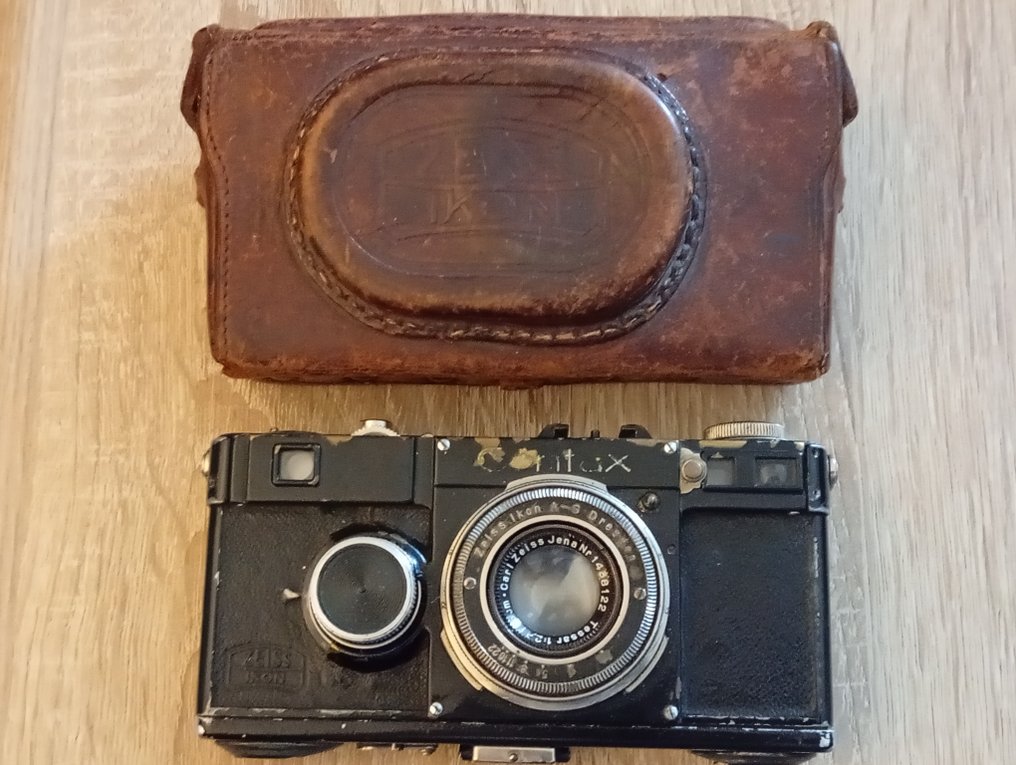
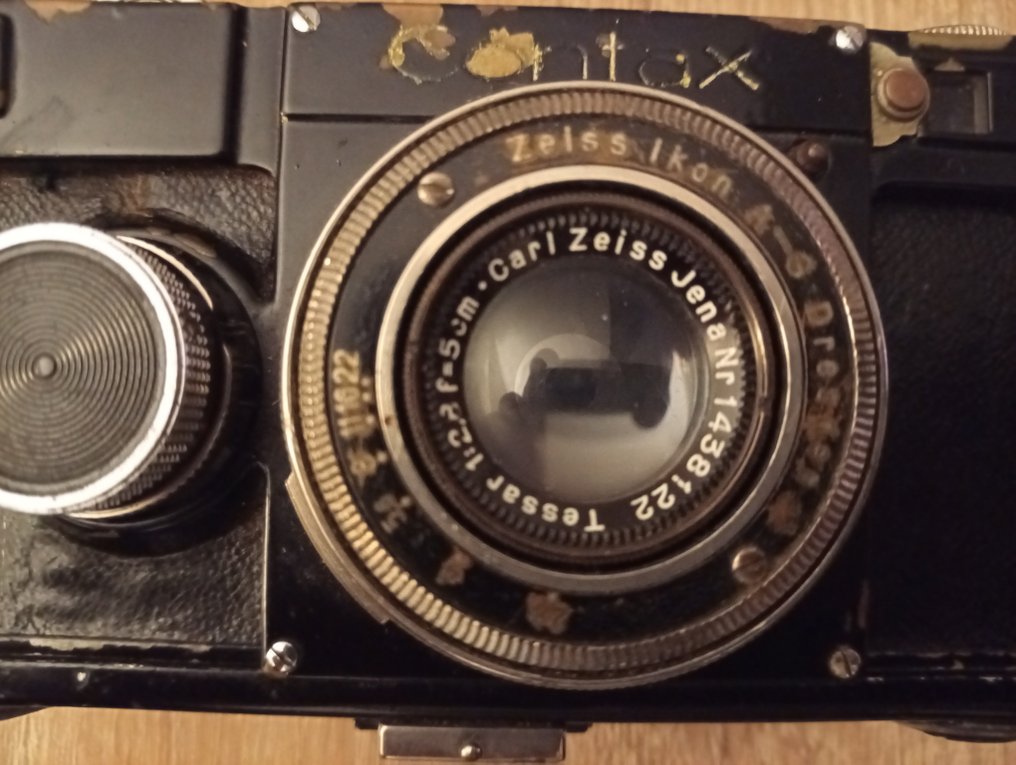
Zeiss Ikon Contax I gebaut 1933 mit CZJ Tessar 2,8/5cm | Rangefinder camera (No reserve price)


08
days
23
hours
17
minutes
26
seconds

6 other people are watching this object
 Bidder 8449 Bidder 8449 | €1 |
|---|
Catawiki Buyer Protection
Your payment’s safe with us until you receive your object.View details
Trustpilot 4.4 | 122713 reviews
Rated Excellent on Trustpilot.
Contax I built in 1933 with CZJ Tessar 2.8/5cm, 35 mm film, Contax bayonet mount, serial no. 64570, tested and functional, in good physical condition.
AI-assisted summary
Description from the seller
In 1932, Zeiss Ikon from Dresden decided to produce a competitor to the Leica II that was superior in every way. The name Contax was chosen after a survey among its employees. Dr. Ing. Heinz Kuppenbender was listed as the inventor of this camera on patents. However, in reality, Dr. Emanuel Goldberg was the designer of the Contax. Goldberg continued to work on this camera design until 1933, when he was forced to leave Dresden for France.
The original Contax (later known as Contax I, after subsequent models were introduced) was manufactured between 1932 and 1936 and differed significantly from the corresponding Leica II. It housed a vertically movable metal shutter in a die-cast alloy body. The shutter resembled the one used in Contessa-Nettel cameras, which consisted of interlocking black-finished brass slats—something like a roll-up garage door.[1]
The interlocking lamellae were aligned using specially made silk bands, which were very strong but subject to wear. The coupled rangefinder had a very long baseline, with its own ocular next to that of the viewfinder.
Other main differences included the focus on the pressure built into the camera body for use with standard lenses, a removable back, and a shutter button that was an integral part of the film wind knob located on the front of the camera body and finished in black.
In contrast, Leica used rubberized fabric for the competitive Leica rolls, which moved horizontally. The Contax design allowed for a slightly higher shutter speed: the maximum speed was 1/1250 seconds, compared to 1/1000 seconds in other cameras with a focal-plane shutter or 1/500 seconds on an intermediate lens shutter.
The camera was used as my grandfather's personal camera on all fronts of World War II until 1944! He handed the camera over in a hospital in Vitebsk to a comrade, who returned it to my grandmother after the end of World War II, with the message that her husband had fallen! Many tragedies were linked to many cameras that soldiers took with them into the war.
Contax rangefinder cameras
Overview
Maker Contax
Type 35 mm rangefinder camera
lens
Lens holder, Kontax bayonet
Focus
Manual focus
Exposition/Measurement
Manual exhibition
Flash
Flash standard accessory shoe
In 1932, Zeiss Ikon from Dresden decided to produce a competitor to the Leica II that was superior in every way. The name Contax was chosen after a survey among its employees. Dr. Ing. Heinz Kuppenbender was listed as the inventor of this camera on patents. However, in reality, Dr. Emanuel Goldberg was the designer of the Contax. Goldberg continued to work on this camera design until 1933, when he was forced to leave Dresden for France.
The original Contax (later known as Contax I, after subsequent models were introduced) was manufactured between 1932 and 1936 and differed significantly from the corresponding Leica II. It housed a vertically movable metal shutter in a die-cast alloy body. The shutter resembled the one used in Contessa-Nettel cameras, which consisted of interlocking black-finished brass slats—something like a roll-up garage door.[1]
The interlocking lamellae were aligned using specially made silk bands, which were very strong but subject to wear. The coupled rangefinder had a very long baseline, with its own ocular next to that of the viewfinder.
Other main differences included the focus on the pressure built into the camera body for use with standard lenses, a removable back, and a shutter button that was an integral part of the film wind knob located on the front of the camera body and finished in black.
In contrast, Leica used rubberized fabric for the competitive Leica rolls, which moved horizontally. The Contax design allowed for a slightly higher shutter speed: the maximum speed was 1/1250 seconds, compared to 1/1000 seconds in other cameras with a focal-plane shutter or 1/500 seconds on an intermediate lens shutter.
The camera was used as my grandfather's personal camera on all fronts of World War II until 1944! He handed the camera over in a hospital in Vitebsk to a comrade, who returned it to my grandmother after the end of World War II, with the message that her husband had fallen! Many tragedies were linked to many cameras that soldiers took with them into the war.
Contax rangefinder cameras
Overview
Maker Contax
Type 35 mm rangefinder camera
lens
Lens holder, Kontax bayonet
Focus
Manual focus
Exposition/Measurement
Manual exhibition
Flash
Flash standard accessory shoe
Details
Era
1900-2000
Brand
Zeiss Ikon
Model/ type nr
Contax I gebaut 1933 mit CZJ Tessar 2,8/5cm |
Physical condition
Good
Functional condition
Tested and working
Lens Mount Type
Contax bayonet
Film type
35mm
Serial number
64570
Estimated Period
1930-1940
Sold by