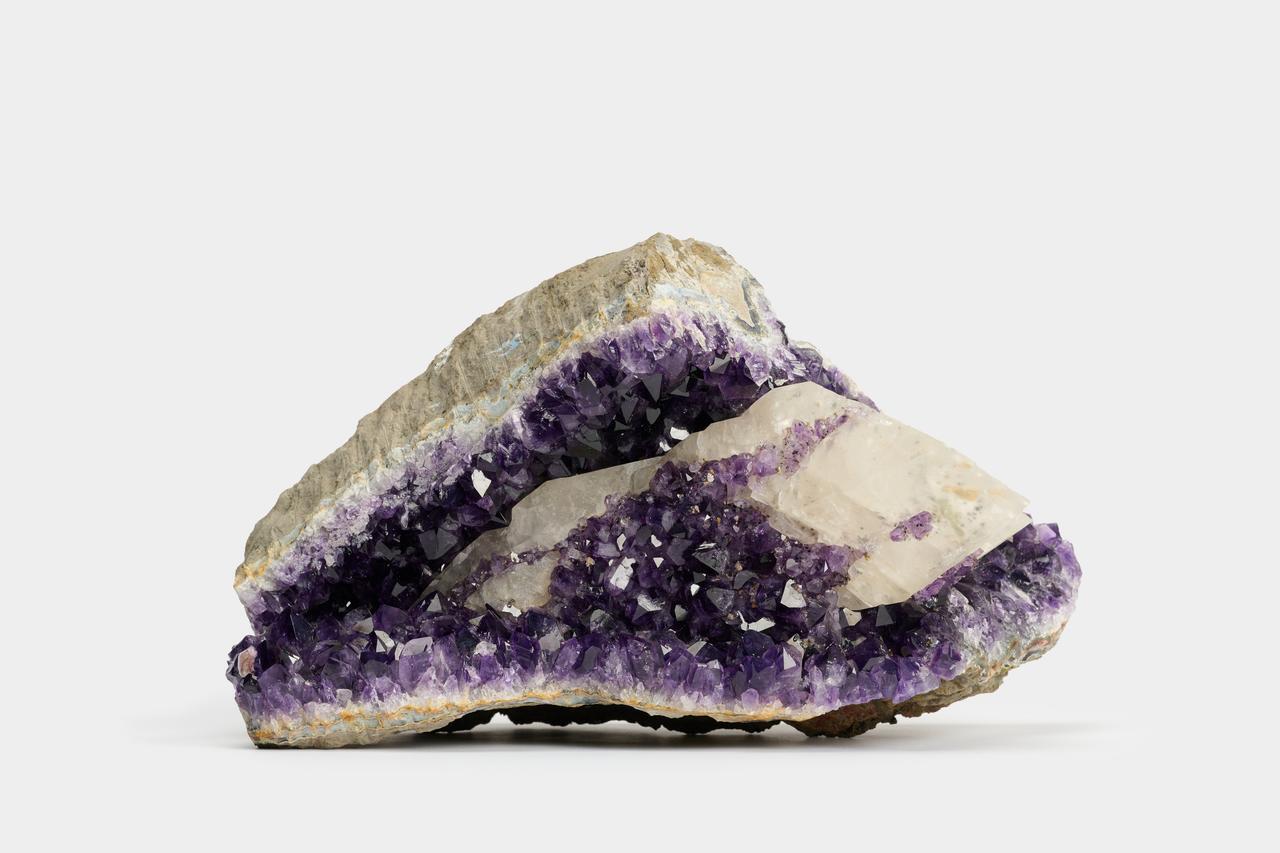
One of the rarest and most fascinating minerals - Charoite from the Ural Mountains Imperial Charoite High Grade - Height: 260 mm - Width: 100 mm- 3094 g


04
days
21
hours
52
minutes
27
seconds
Current bid
€ 60
Reserve price not met

Expert
Selected by Georgia Foteinou
Holds BSc in geology and post-graduate qualifications in geochemistry.
Estimate € 4,000 - € 4,400
8 other people are watching this object
 Bidder 3370 Bidder 3370 | €60 | |
|---|---|---|
 Bidder 1141 Bidder 1141 | €35 | |
| Bidder 1141 | €30 |
Catawiki Buyer Protection
Your payment’s safe with us until you receive your object.View details
Trustpilot 4.4 | 122630 reviews
Rated Excellent on Trustpilot.
Charoite from the Ural Mountains, Russia, Imperial Charoite High Grade specimen, weight 3094 g, dimensions 260 × 100 × 90 mm.
AI-assisted summary
Description from the seller
Charoite is a geological marvel from the remote Ural Mountains in Russia, one of the rarest and most fascinating gems the Earth has ever produced. This extraordinary stone, with its free and natural shape, is a testament to nature's artistry in mineral creation.
Known for its exceptional beauty, Charoite shines with chromatic shades ranging from deep violet to lilac, mysteriously intertwining tones of white, gray, and black. This chromatic composition is the result of complex geological processes that have shaped the stone over millions of years.
Under the microscope, Charoite reveals an intricate and unique crystalline structure. Its crystals, primarily composed of calcium, barium, and strontium silicates, intertwine in a harmonious dance, creating a striped and swirling appearance reminiscent of the fluidity of abstract art. This phenomenon is known as chatoyancy, which gives the stone a seductive luster.
Charoite is not only an aesthetic masterpiece; it is also a gemstone that fascinates scientists. Its origin is linked to a unique geological environment, known for its ultrabasic rocks, and its formation requires particularly rare conditions.
Seller's Story
The Mineral Art Gallery offers minerals, fossils, shells and natural elements.
Born in Italy in 2017, today she collaborates with international galleries and collectors, she is a direct importer of large minerals and naturalistic collectible elements; deals with the processing to insert them inside the living space. A section of the gallery was dedicated to the Wunderkammer, "chamber of wonders or cabinet of curiosities" in which Mirabilia elements are presented: naturalia and italiania, a union between "the present is the past".
All lots are shipped via DHL Express and Fercam couriers, with insured parcel and tracking.
Translated by Google TranslateCharoite is a geological marvel from the remote Ural Mountains in Russia, one of the rarest and most fascinating gems the Earth has ever produced. This extraordinary stone, with its free and natural shape, is a testament to nature's artistry in mineral creation.
Known for its exceptional beauty, Charoite shines with chromatic shades ranging from deep violet to lilac, mysteriously intertwining tones of white, gray, and black. This chromatic composition is the result of complex geological processes that have shaped the stone over millions of years.
Under the microscope, Charoite reveals an intricate and unique crystalline structure. Its crystals, primarily composed of calcium, barium, and strontium silicates, intertwine in a harmonious dance, creating a striped and swirling appearance reminiscent of the fluidity of abstract art. This phenomenon is known as chatoyancy, which gives the stone a seductive luster.
Charoite is not only an aesthetic masterpiece; it is also a gemstone that fascinates scientists. Its origin is linked to a unique geological environment, known for its ultrabasic rocks, and its formation requires particularly rare conditions.
Seller's Story
The Mineral Art Gallery offers minerals, fossils, shells and natural elements.
Born in Italy in 2017, today she collaborates with international galleries and collectors, she is a direct importer of large minerals and naturalistic collectible elements; deals with the processing to insert them inside the living space. A section of the gallery was dedicated to the Wunderkammer, "chamber of wonders or cabinet of curiosities" in which Mirabilia elements are presented: naturalia and italiania, a union between "the present is the past".
All lots are shipped via DHL Express and Fercam couriers, with insured parcel and tracking.
Translated by Google TranslateDetails
Main Mineral
One of the rarest and most fascinating minerals - Charoite from the Ural Mountains
Mineral Form
Imperial Charoite High Grade
Weight
3094 g
Country of Origin
Russia
Height
260 mm
Width
100 mm
Depth
90 mm
Sold by