Ancient Roman Marble Oil lamp, Holy Land (No reserve price)


03
days
17
hours
49
minutes
34
seconds
Current bid
€ 65
No reserve price

Expert
Selected by Peter Reynaers
Has nearly 30 years’ experience and moderated multiple online art research groups.
Estimate € 250 - € 330
43 other people are watching this object
 Bidder 5739 Bidder 5739 | €65 | |
|---|---|---|
 Bidder 6002 Bidder 6002 | €58 | |
 Bidder 9329 Bidder 9329 | €53 | |
Catawiki Buyer Protection
Your payment’s safe with us until you receive your object.View details
Trustpilot 4.4 | 123779 reviews
Rated Excellent on Trustpilot.
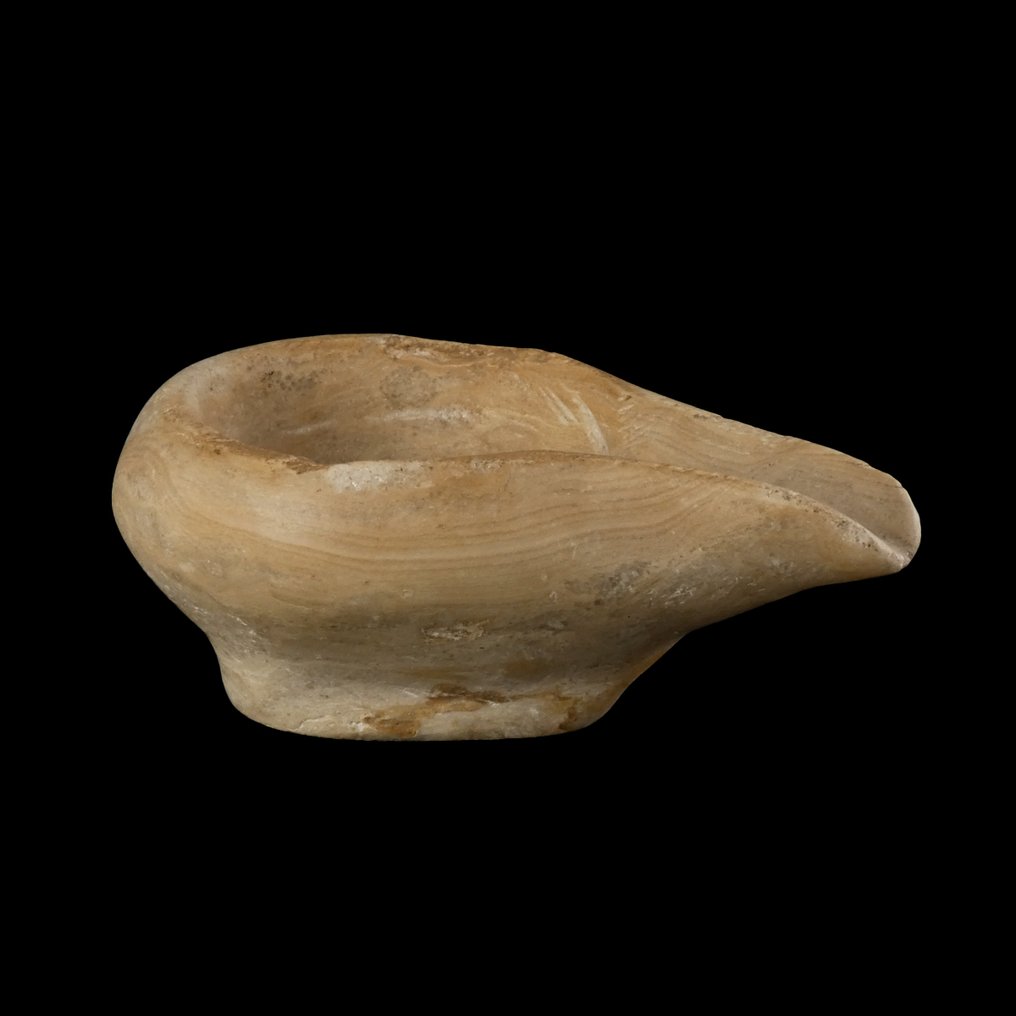
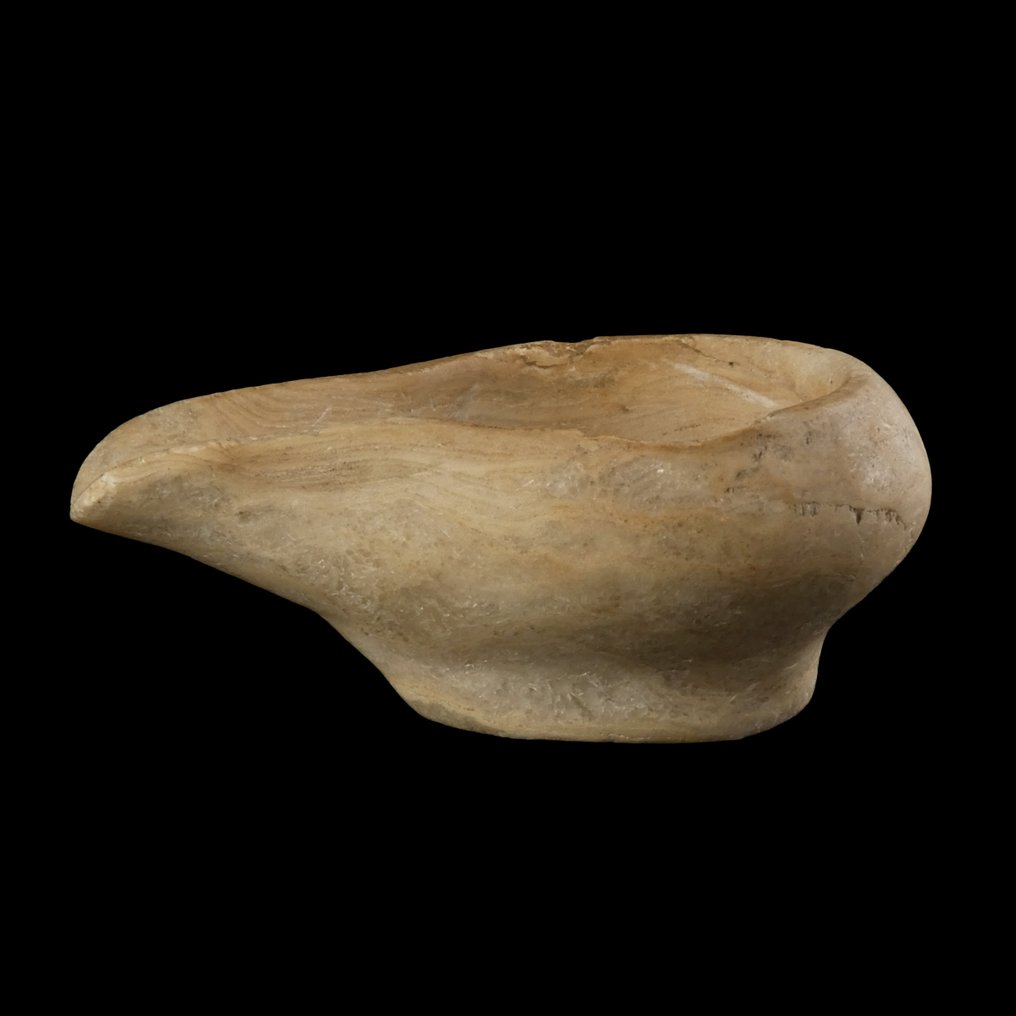
Ancient Roman marble oil lamp from the Holy Land, dating to the 1st–2nd century AD, carved from a single pale beige block with a rounded body and projecting nozzle, in very fine condition, size about 105.6 × 65 × 43 mm, acquired in 2025 from Belgium, with a Certificate of Authenticity available on request for lots with hammer prices of €100 or more, and EU shipping only.
AI-assisted summary
Description from the seller
Attention: due to customs regulations we can only ship inside the European Union. Please ensure you have a valid EU shipping address before placing a bid.
Finely carved ancient Roman marble oil lamp from the Holy Land. The lamp is worked from a single block of pale beige stone. The lamp has a smoothly rounded body with a deep, circular reservoir, gently recessed to hold oil. A short, elongated nozzle projects from the front, tapering to a flattened tip where the wick would have emerged. The underside is subtly shaped to allow the lamp to rest securely, while the overall form is elegant and well balanced.
Size: ± 105,6 x 65 x 43 mm
Condition: very fine condition. Carved from pale stone with natural banding and gentle veining with subtle chalky areas. Softly weathered surface and visible signs of wear, consistent with age and use.
Certificate of Authenticity (PDF) is available upon request for lots with a hammer price of €100 or higher.
STONE AND MARBLE OIL LAMPS
Although most ancient oil lamps were made of clay, stone and marble lamps form a distinct and more exclusive group, particularly during the Roman period. Rather than being mould-made, these lamps were hand-carved from solid blocks of stone such as marble or limestone, a process that required considerable skill and time.
Their shapes generally follow the established Roman lamp form, with a recessed oil reservoir and a projecting nozzle for the wick, but they are typically plain and undecorated, relying on balanced proportions, smooth surfaces and visible tool marks rather than relief ornament. The choice of stone provided durability, heat resistance and stability, making such lamps suitable for long-term use.
Stone and marble oil lamps are most often associated with Roman domestic, religious and funerary contexts. They were likely used in elite households, temples or as votive and burial objects, where the permanence of stone may have symbolised endurance and eternal light.
Seller's Story
Please read our information carefully.
*SHIPPING INFO Due to insurance procedures, combined shipping is only possible with a single payment. (1 payment reference = 1 insured parcel.) If you accept an offer after the auction and pay separately, shipments cannot be manually combined afterward. Please ensure your shipping address is complete and correct before paying. Changes made after payment are not automatically forwarded to us.
* CERTIFICATE OF AUTHENTICITY (COA) For insurance purposes we can provide a digital Certificate of Authenticity (PDF) for every item with a hammer price of Euro 100 or more. The COA is available upon request within 20 days of the auction date. Instructions will be provided when your order is shipped. Certificates are not included in the package.
* INSURANCE & CLAIMS All our parcels are shipped with external insurance. This insurance requires the following:
-> Monitor the online tracking and notify delays to the seller within 14 days after the shipping date.
-> In case of damage: write a reservation on the delivery note and report the damage to the seller via the Catawiki online chat within 24 hours. Keep all packaging and send us photos of the damage.
* IMPORTANT BUYERS OUTSIDE THE EU: We cannot ship to countries outside the European Union. Please ensure you have an EU shipping address before bidding. No exceptions can be made. Switzerland, Norway and the United Kingdom are not part of the EU.
* DOCUMENTATION NOTICE: Previous invoices and import/export documents will not be shared with customers.
----------------------
Thank you for your interest, and best of luck with your bids!
Attention: due to customs regulations we can only ship inside the European Union. Please ensure you have a valid EU shipping address before placing a bid.
Finely carved ancient Roman marble oil lamp from the Holy Land. The lamp is worked from a single block of pale beige stone. The lamp has a smoothly rounded body with a deep, circular reservoir, gently recessed to hold oil. A short, elongated nozzle projects from the front, tapering to a flattened tip where the wick would have emerged. The underside is subtly shaped to allow the lamp to rest securely, while the overall form is elegant and well balanced.
Size: ± 105,6 x 65 x 43 mm
Condition: very fine condition. Carved from pale stone with natural banding and gentle veining with subtle chalky areas. Softly weathered surface and visible signs of wear, consistent with age and use.
Certificate of Authenticity (PDF) is available upon request for lots with a hammer price of €100 or higher.
STONE AND MARBLE OIL LAMPS
Although most ancient oil lamps were made of clay, stone and marble lamps form a distinct and more exclusive group, particularly during the Roman period. Rather than being mould-made, these lamps were hand-carved from solid blocks of stone such as marble or limestone, a process that required considerable skill and time.
Their shapes generally follow the established Roman lamp form, with a recessed oil reservoir and a projecting nozzle for the wick, but they are typically plain and undecorated, relying on balanced proportions, smooth surfaces and visible tool marks rather than relief ornament. The choice of stone provided durability, heat resistance and stability, making such lamps suitable for long-term use.
Stone and marble oil lamps are most often associated with Roman domestic, religious and funerary contexts. They were likely used in elite households, temples or as votive and burial objects, where the permanence of stone may have symbolised endurance and eternal light.
Seller's Story
Please read our information carefully.
*SHIPPING INFO Due to insurance procedures, combined shipping is only possible with a single payment. (1 payment reference = 1 insured parcel.) If you accept an offer after the auction and pay separately, shipments cannot be manually combined afterward. Please ensure your shipping address is complete and correct before paying. Changes made after payment are not automatically forwarded to us.
* CERTIFICATE OF AUTHENTICITY (COA) For insurance purposes we can provide a digital Certificate of Authenticity (PDF) for every item with a hammer price of Euro 100 or more. The COA is available upon request within 20 days of the auction date. Instructions will be provided when your order is shipped. Certificates are not included in the package.
* INSURANCE & CLAIMS All our parcels are shipped with external insurance. This insurance requires the following:
-> Monitor the online tracking and notify delays to the seller within 14 days after the shipping date.
-> In case of damage: write a reservation on the delivery note and report the damage to the seller via the Catawiki online chat within 24 hours. Keep all packaging and send us photos of the damage.
* IMPORTANT BUYERS OUTSIDE THE EU: We cannot ship to countries outside the European Union. Please ensure you have an EU shipping address before bidding. No exceptions can be made. Switzerland, Norway and the United Kingdom are not part of the EU.
* DOCUMENTATION NOTICE: Previous invoices and import/export documents will not be shared with customers.
----------------------
Thank you for your interest, and best of luck with your bids!
Details
Culture
Ancient Roman
Century/ Timeframe
1st-2nd century AD
Name of object
Oil lamp, Holy Land
Acquired from
Dealer at a fair
Year acquired
2025
Material
Marble
Country acquired from
Belgium
Condition
Good
Previous owner acquired from
Dealer at a fair
Previous owner - year acquired
2025
Previous owner - country acquired from
Belgium
I verify that I have obtained this object legally and that I am allowed to sell it
Yes
Sold by
Disclaimer
The seller was informed by Catawiki about documentation requirements and guarantees the following: - the object was legally obtained, - the seller has the right to sell and/or export the object, as relevant, - the seller will provide the necessary provenance information and arrange required documentation and permits/licenses, as applicable and as per local laws, - the seller will notify the buyer of any delays in obtaining permits/licenses. By bidding, you acknowledge that import documentation may be required depending on your country of residence and that obtaining permits/licenses may cause delays in the delivery of your object.
The seller was informed by Catawiki about documentation requirements and guarantees the following: - the object was legally obtained, - the seller has the right to sell and/or export the object, as relevant, - the seller will provide the necessary provenance information and arrange required documentation and permits/licenses, as applicable and as per local laws, - the seller will notify the buyer of any delays in obtaining permits/licenses. By bidding, you acknowledge that import documentation may be required depending on your country of residence and that obtaining permits/licenses may cause delays in the delivery of your object.
