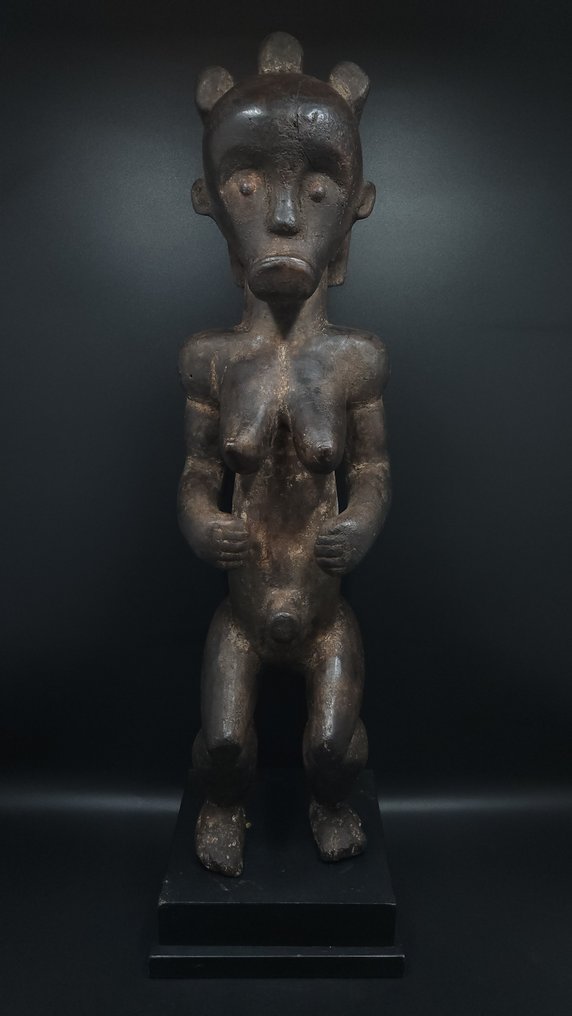
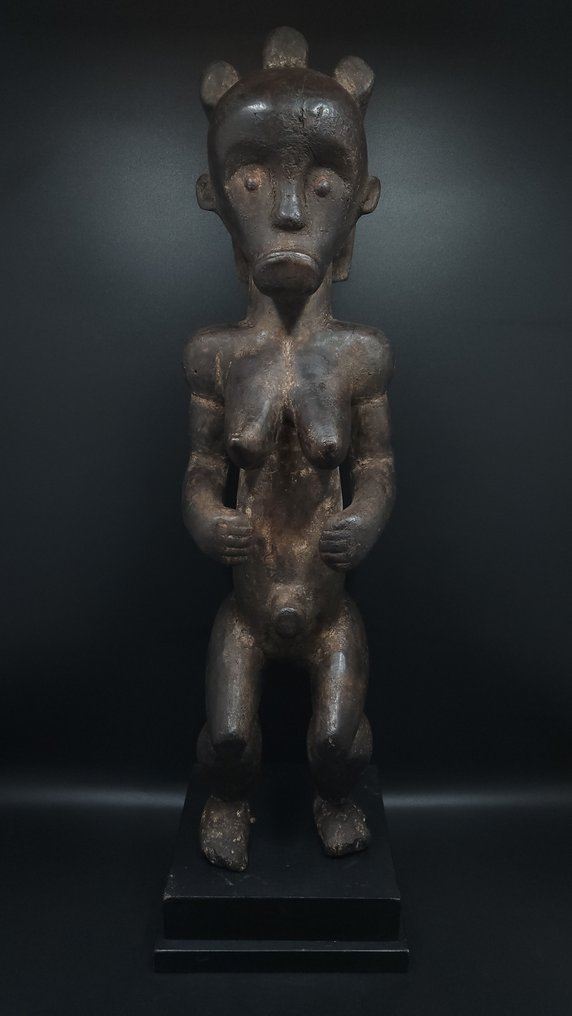
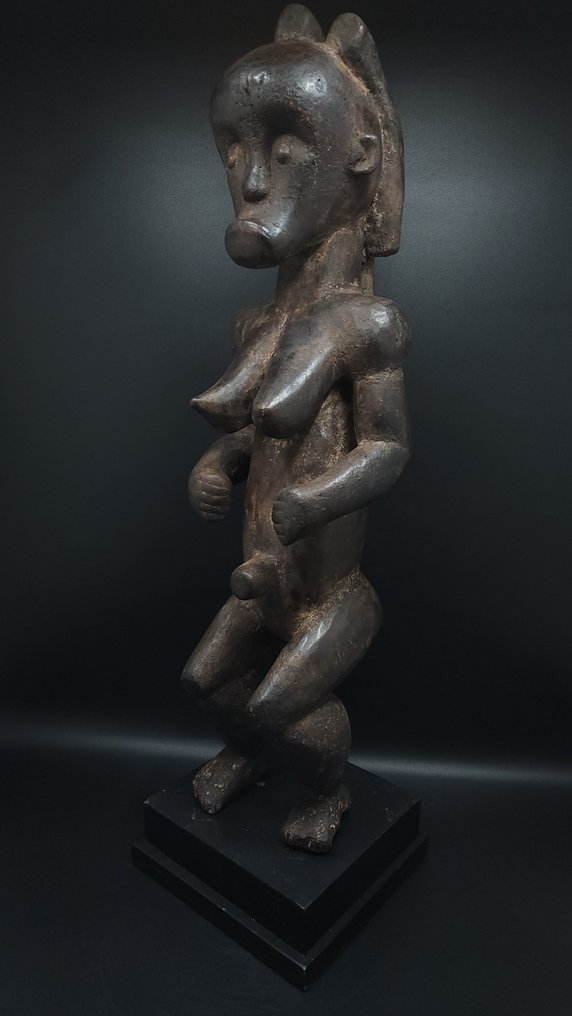
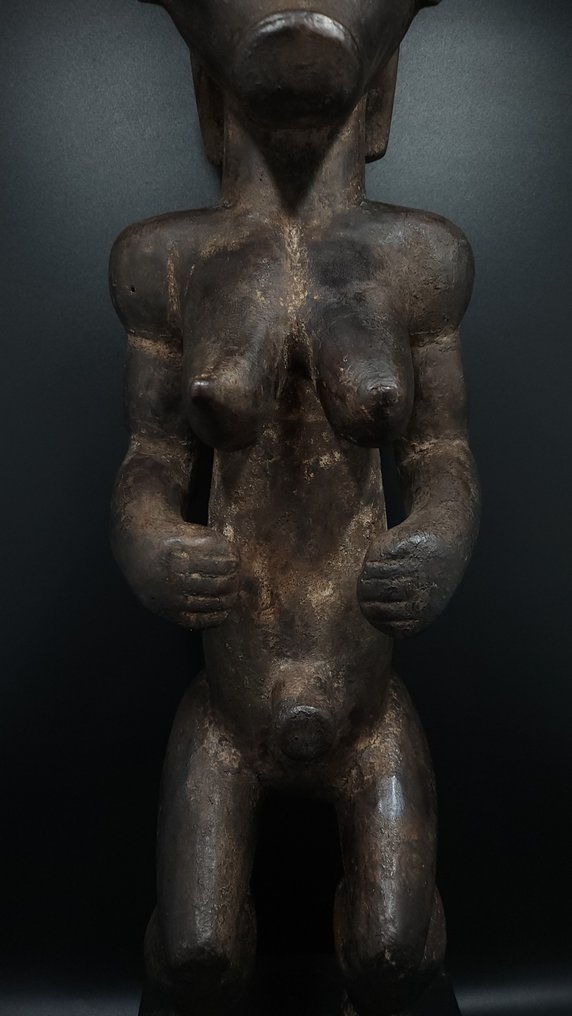
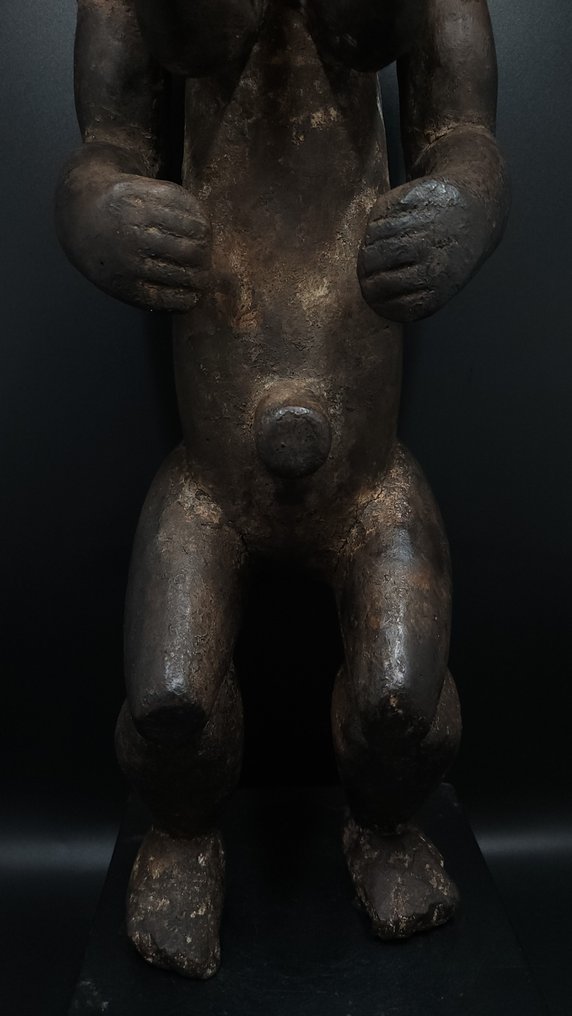
Superb keeper of the reliquary - Fang - Gabon (No reserve price)
02
days
12
hours
15
minutes
13
seconds

21 other people are watching this object
 Bidder 8261 Bidder 8261 | €6 | |
|---|---|---|
 Bidder 0751 Bidder 0751 | €5 | |
 Bidder 7222 Bidder 7222 | €4 | |
Catawiki Buyer Protection
Your payment’s safe with us until you receive your object.View details
Trustpilot 4.4 | 122910 reviews
Rated Excellent on Trustpilot.
Description from the seller
Reliquary Guardian Biery - Fang - Gabon
The Byeri reliquary figures are certainly the most mysterious and emblematic of African art.
The worship of Byeri (ancestor worship) was practiced in all Fang villages, both in southern Cameroon and in Gabon and Rio Muni.
Among the Fang, the Byeri is linked to ancestor worship and more specifically to the reliquaries dedicated to them. Byeri also refers to both the worship itself and the objects associated with it.
According to Perrois, it was behind the head of the family's bed that the reliquaries, wooden effigies and personal relics were discreetly placed.
He also points out that important ancestors of the lineage could also be buried in the very chamber of the head of the family, in order to protect the remains!
These reliquaries are made up of two parts:
- the bark chest box which will contain bone relics, which the Fang call nsekh o byeri, the belly,
- and the perpendicular figure which surmounts the box: eyema o byeri which means the head.
Regarding the contents of the boxes, Perrois told us that the Fang relics consisted of skulls, long bones, or even simple bone fragments, and teeth.
Family relics were carefully identified and collected a few months after the death of the notable, cleaned, dried, and sometimes adorned with metallic inlays—copper, for example.
Thereafter they were periodically extracted from the bark chests and honored by the application of red paste (padouk wood powder mixed with oil).
The father of the family would then call upon the ancestors to grant wishes for luck, wealth and fertility.
Byeri statuettes could still be used as puppets during Melan rites.
On the stitched bark chest, we found the wooden effigies that we know.
Either heads alone with the stem inserted into the lid, or full statuettes placed in a seated position on the edges.
Less frequently, some statuettes could sometimes contain discreet inclusions with magical powers, hidden behind copper or mirror inlays, behind the ears, or at the top of the forehead.
And also added were bone fragments, most often human molars.
Reliquary Guardian Biery - Fang - Gabon
The Byeri reliquary figures are certainly the most mysterious and emblematic of African art.
The worship of Byeri (ancestor worship) was practiced in all Fang villages, both in southern Cameroon and in Gabon and Rio Muni.
Among the Fang, the Byeri is linked to ancestor worship and more specifically to the reliquaries dedicated to them. Byeri also refers to both the worship itself and the objects associated with it.
According to Perrois, it was behind the head of the family's bed that the reliquaries, wooden effigies and personal relics were discreetly placed.
He also points out that important ancestors of the lineage could also be buried in the very chamber of the head of the family, in order to protect the remains!
These reliquaries are made up of two parts:
- the bark chest box which will contain bone relics, which the Fang call nsekh o byeri, the belly,
- and the perpendicular figure which surmounts the box: eyema o byeri which means the head.
Regarding the contents of the boxes, Perrois told us that the Fang relics consisted of skulls, long bones, or even simple bone fragments, and teeth.
Family relics were carefully identified and collected a few months after the death of the notable, cleaned, dried, and sometimes adorned with metallic inlays—copper, for example.
Thereafter they were periodically extracted from the bark chests and honored by the application of red paste (padouk wood powder mixed with oil).
The father of the family would then call upon the ancestors to grant wishes for luck, wealth and fertility.
Byeri statuettes could still be used as puppets during Melan rites.
On the stitched bark chest, we found the wooden effigies that we know.
Either heads alone with the stem inserted into the lid, or full statuettes placed in a seated position on the edges.
Less frequently, some statuettes could sometimes contain discreet inclusions with magical powers, hidden behind copper or mirror inlays, behind the ears, or at the top of the forehead.
And also added were bone fragments, most often human molars.
Details
Indigenous object name
Superb keeper of the reliquary
No. of items
1
Ethnic group/ culture
Fang
Country of Origin
Gabon
Period
2000-2010
Material
Wood
Sold with stand
No
Condition
Good condition
Height
57 cm
Width
15 cm
Depth
14 cm
