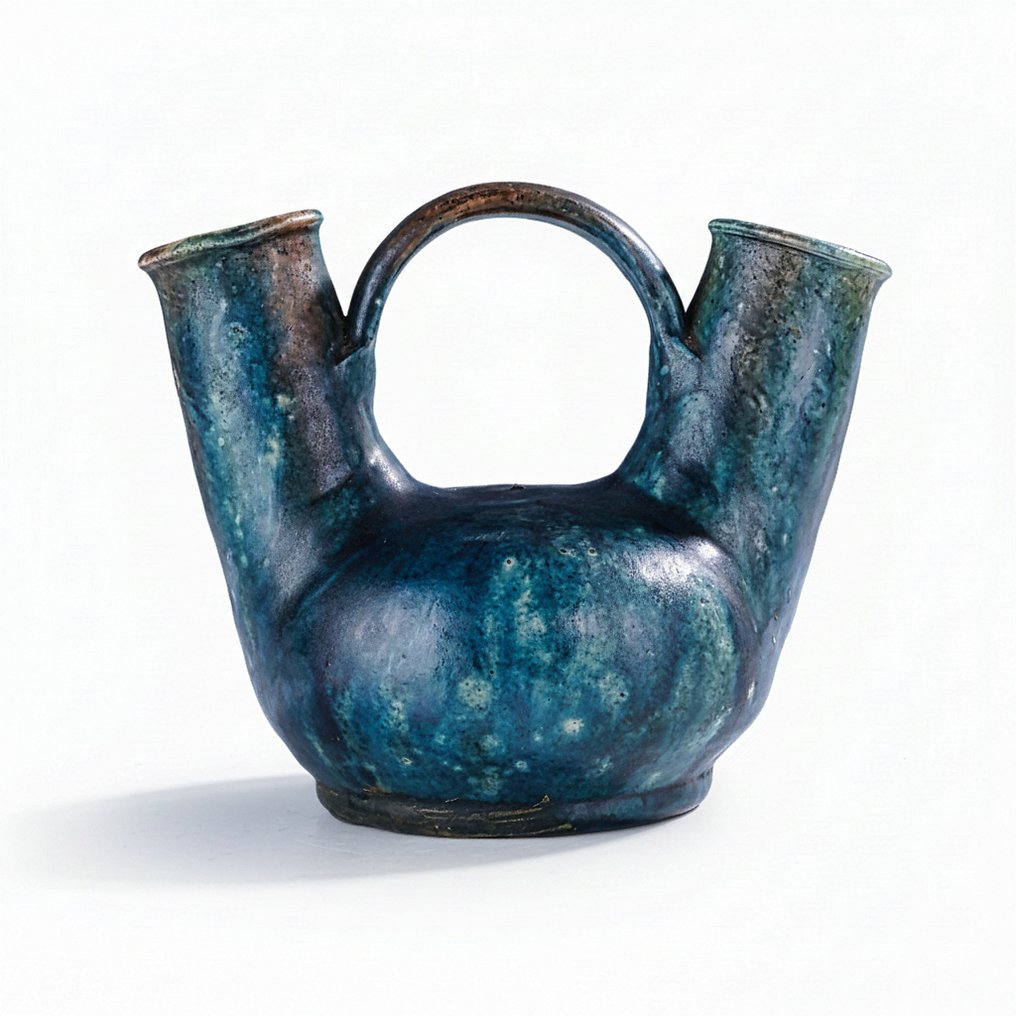
Vase - Double spout cup with flambé reduction glaze in blue and brown, Art Nouveau early Art Deco • Marked - Ceramic


05
days
14
hours
10
minutes
20
seconds
Current bid
€ 1
No reserve price

Expert
Selected by Michel Karis
Art historian with extensive experience working at various auction houses in antiques.
Estimate € 150 - € 200
9 other people are watching this object
 Bidder 8022 Bidder 8022 | €1 |
|---|
Catawiki Buyer Protection
Your payment’s safe with us until you receive your object.View details
Trustpilot 4.4 | 122986 reviews
Rated Excellent on Trustpilot.
Keramic double spouted jug with flambé reduction glaze in blue and brown, in Art Nouveau / early Art Deco style, circa 1900–1925, with dimensions 13 cm high, 15 cm wide and 10 cm deep, weighing 540 g, origin Europe and marked with a stylised ‘f’ on the base; condition is good with minor signs of aging and spotting.
AI-assisted summary
Description from the seller
Double spout jug with flambé reduction glaze in blue and brown, Art Nouveau / early Art Deco (ca. 1900–1925).
Specifications
Period: Art Nouveau / early Art Deco
Year: circa 1900–1925
Maker: Probably atelier ceramics from France or Belgium (unknown, marked with a stylized 'f').
Technique: Flambé reduction glaze (oxblood / sang-de-bœuf type)
Dimensions: Height 13 cm, width 15 cm, depth 10 cm
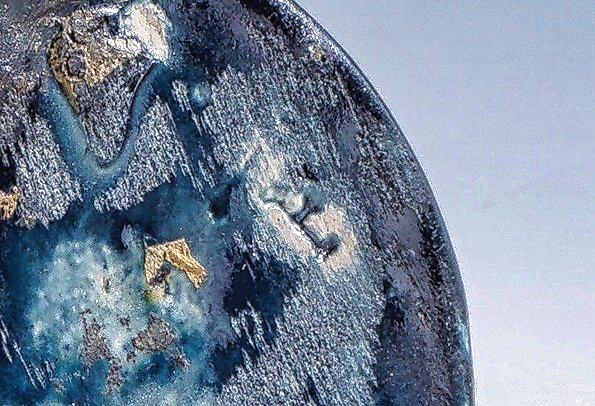
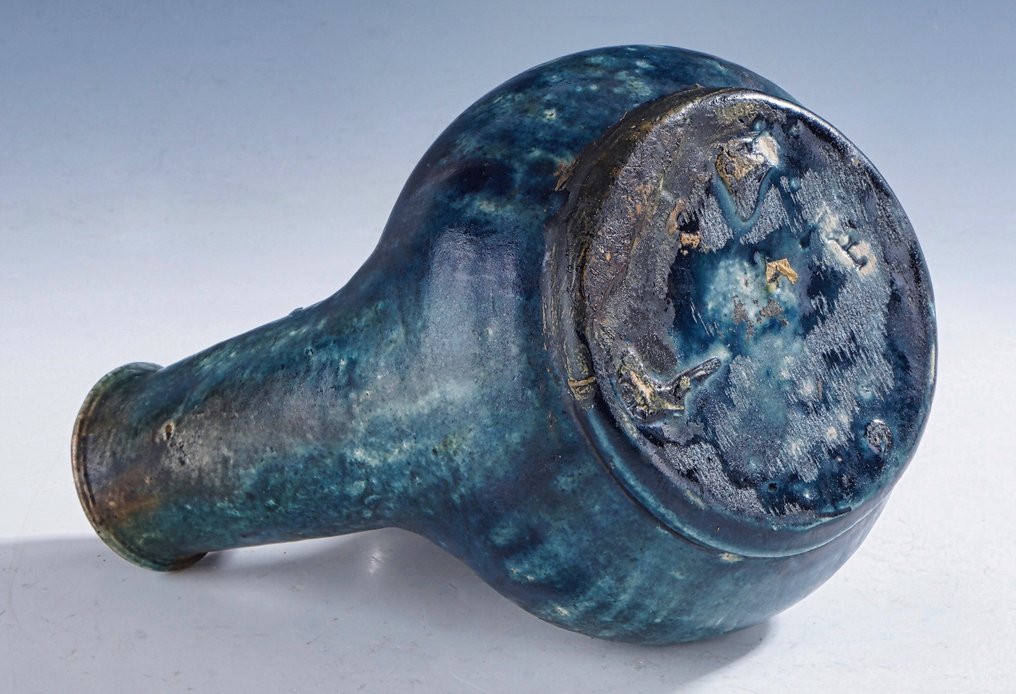
Brand: Stylized letter 'f' in the clay, traces of white clay paste on the base.
Description
This double spout jug, sometimes referred to as a marriage or friendship bottle, is a sculptural ceramic object from the early twentieth century. The symmetrical shape consists of a spherical body with two upright necks, connected by an arch-shaped handle, giving the object a pronounced architectural character.
The object features a rich flambé reduction glaze with deep blue hues, ranging from cobalt blue to turquoise and petroleum blue, combined with warm brown and copper-red accents. The mottled and partially crystallized effects are the result of a complex reduction firing process, typical of experimental ceramic art from this period.
Context & condition
Around 1900–1925, European ceramists experimented intensively with oriental flambé glazes, inspired by Chinese sang-de-bœuf. This piece fits well within that tradition of expressive, largely non-functional studio ceramics. Purchased in Belgium. In very good condition, with light firing cracks and a rough base, consistent with the technique.
Expert note
A technically sophisticated and collectible object, whose value primarily lies in its rare form and high-quality flambé reduction glaze.
Seller's Story
Decaders Gallery – Eindhoven Region, Netherlands
Our passion lies in 20th century applied arts and design, with a particular focus on the Art Nouveau, Art Deco and Mid-Century Modern periods. But styles from the sixties, seventies and later also attract our attention. Each decade has made a unique contribution to the art world, which our name – *Decaders Gallery* – perfectly reflects.
Thanks to our love for art and design, we present new, special decorative objects every week. In addition, we have a broad interest in Asian art, antiques and collectibles. Our searches throughout Europe have led to a valuable network of like-minded enthusiasts, who help us track down unique finds.
This network has paid off: we are proud to have supplied artworks to renowned museums, including:
**The Netherlands:**
- CODA Museum, Apeldoorn
- Drents Museum, Assen
- National Textile Museum, Tilburg
- National Glass Museum, Leerdam
- Museum 'Amsterdam School' (*'t Schip*), Amsterdam
- PSV Football Museum, Eindhoven
- National War Museum, Overloon
**Belgium:**
- Musée de la Famenne, Marche-en-Famenne
- Museum of Natural Sciences, Belgium
**Spain:**
- Maritime Museum, Barcelona
We warmly invite you to visit our auctions with surprising artworks and follow us on Instagram. Discover your favorite decade at *Decaders Gallery*!
**Marc van der Heijden**
*Decaders Gallery, Netherlands*
Translated by Google TranslateDouble spout jug with flambé reduction glaze in blue and brown, Art Nouveau / early Art Deco (ca. 1900–1925).
Specifications
Period: Art Nouveau / early Art Deco
Year: circa 1900–1925
Maker: Probably atelier ceramics from France or Belgium (unknown, marked with a stylized 'f').
Technique: Flambé reduction glaze (oxblood / sang-de-bœuf type)
Dimensions: Height 13 cm, width 15 cm, depth 10 cm
Brand: Stylized letter 'f' in the clay, traces of white clay paste on the base.
Description
This double spout jug, sometimes referred to as a marriage or friendship bottle, is a sculptural ceramic object from the early twentieth century. The symmetrical shape consists of a spherical body with two upright necks, connected by an arch-shaped handle, giving the object a pronounced architectural character.
The object features a rich flambé reduction glaze with deep blue hues, ranging from cobalt blue to turquoise and petroleum blue, combined with warm brown and copper-red accents. The mottled and partially crystallized effects are the result of a complex reduction firing process, typical of experimental ceramic art from this period.
Context & condition
Around 1900–1925, European ceramists experimented intensively with oriental flambé glazes, inspired by Chinese sang-de-bœuf. This piece fits well within that tradition of expressive, largely non-functional studio ceramics. Purchased in Belgium. In very good condition, with light firing cracks and a rough base, consistent with the technique.
Expert note
A technically sophisticated and collectible object, whose value primarily lies in its rare form and high-quality flambé reduction glaze.
Seller's Story
Decaders Gallery – Eindhoven Region, Netherlands
Our passion lies in 20th century applied arts and design, with a particular focus on the Art Nouveau, Art Deco and Mid-Century Modern periods. But styles from the sixties, seventies and later also attract our attention. Each decade has made a unique contribution to the art world, which our name – *Decaders Gallery* – perfectly reflects.
Thanks to our love for art and design, we present new, special decorative objects every week. In addition, we have a broad interest in Asian art, antiques and collectibles. Our searches throughout Europe have led to a valuable network of like-minded enthusiasts, who help us track down unique finds.
This network has paid off: we are proud to have supplied artworks to renowned museums, including:
**The Netherlands:**
- CODA Museum, Apeldoorn
- Drents Museum, Assen
- National Textile Museum, Tilburg
- National Glass Museum, Leerdam
- Museum 'Amsterdam School' (*'t Schip*), Amsterdam
- PSV Football Museum, Eindhoven
- National War Museum, Overloon
**Belgium:**
- Musée de la Famenne, Marche-en-Famenne
- Museum of Natural Sciences, Belgium
**Spain:**
- Maritime Museum, Barcelona
We warmly invite you to visit our auctions with surprising artworks and follow us on Instagram. Discover your favorite decade at *Decaders Gallery*!
**Marc van der Heijden**
*Decaders Gallery, Netherlands*
Translated by Google TranslateDetails
Era
1900-2000
Weight
540 g
Country of Origin
Europe
Model
Double spout cup with flambé reduction glaze in blue and brown, Art Nouveau early Art Deco • Marked
Material
Ceramic
Style
Art Nouveau
Colour
Blue
Condition
Good condition - used with small signs of aging & blemishes
Height
13 cm
Width
15 cm
Depth
10 cm
Estimated Period
1900-1910, 1910-1920
Sold by