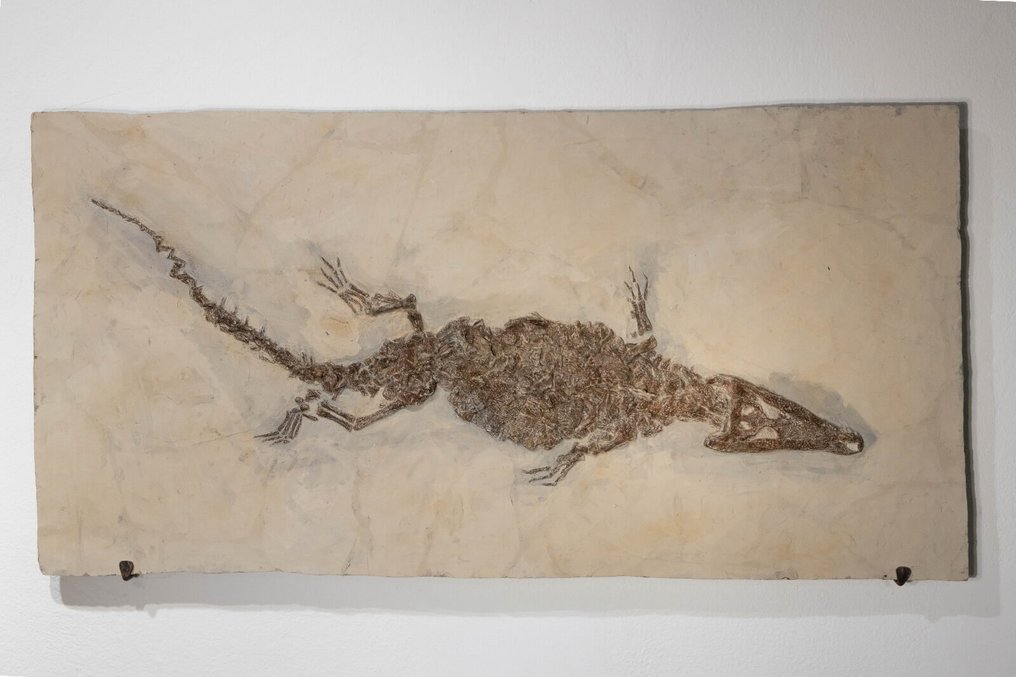
Crocodile - Fossil skeleton - Diplocynodon sp. - 59 cm - 115.5 cm
04
days
07
hours
44
minutes
08
seconds
Current bid
€ 3,333
Reserve price not met

11 other people are watching this object
 Bidder 4517 Bidder 4517 | €3,333 |
|---|
Catawiki Buyer Protection
Your payment’s safe with us until you receive your object.View details
Trustpilot 4.4 | 122713 reviews
Rated Excellent on Trustpilot.
Diplocynodon sp. fossil crocodile specimen from the Neogene Miozän period, originating in Gračanica, Bosnia and Herzegovina, measuring 115.5 × 59 cm and restored.
AI-assisted summary
Description from the seller
Diplocynodon sp. crocodile fossils
Location: Gracanica, Bosnia and Herzegovina
Era: Miocene
Age: 14 to 16 million years
Size: 115.5 x 59 cm
Crocodile: 100cm
Diplocynodon sp. – Miocene crocodile fossils
Diplocynodon sp. is a fossil crocodile from the Miocene, living approximately 14 to 16 million years ago. The genus belongs to the early alligator-like reptiles and was widespread in freshwater habitats such as rivers, lakes, and marshy floodplains. With an estimated body length of around 100 cm, it is a rather small crocodile, yet it was an efficient predator of its time.
Find location and preservation.
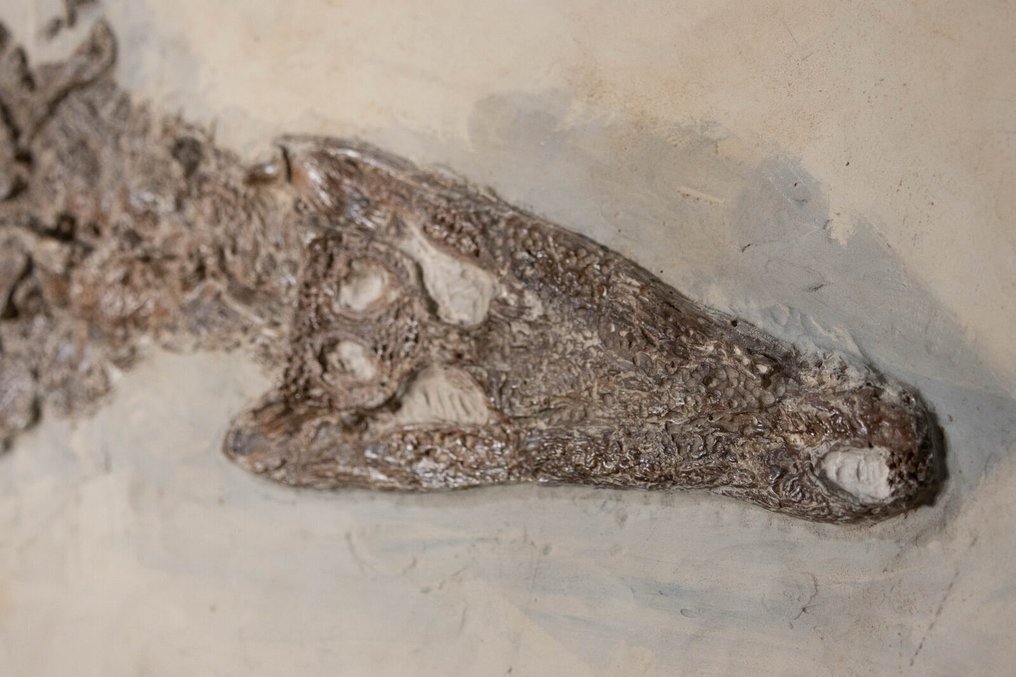
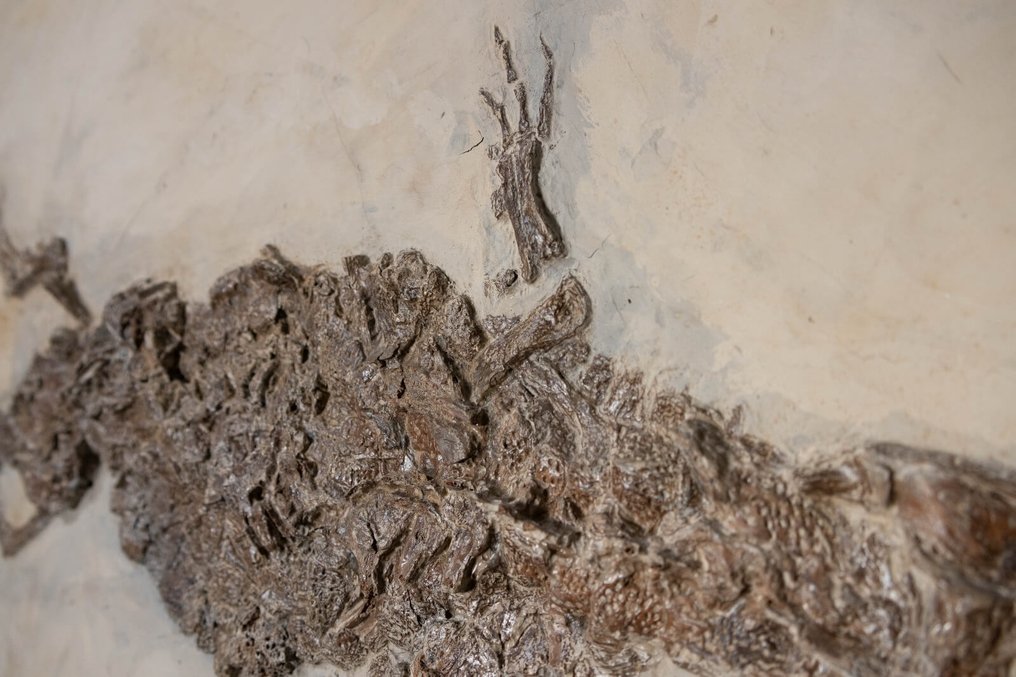
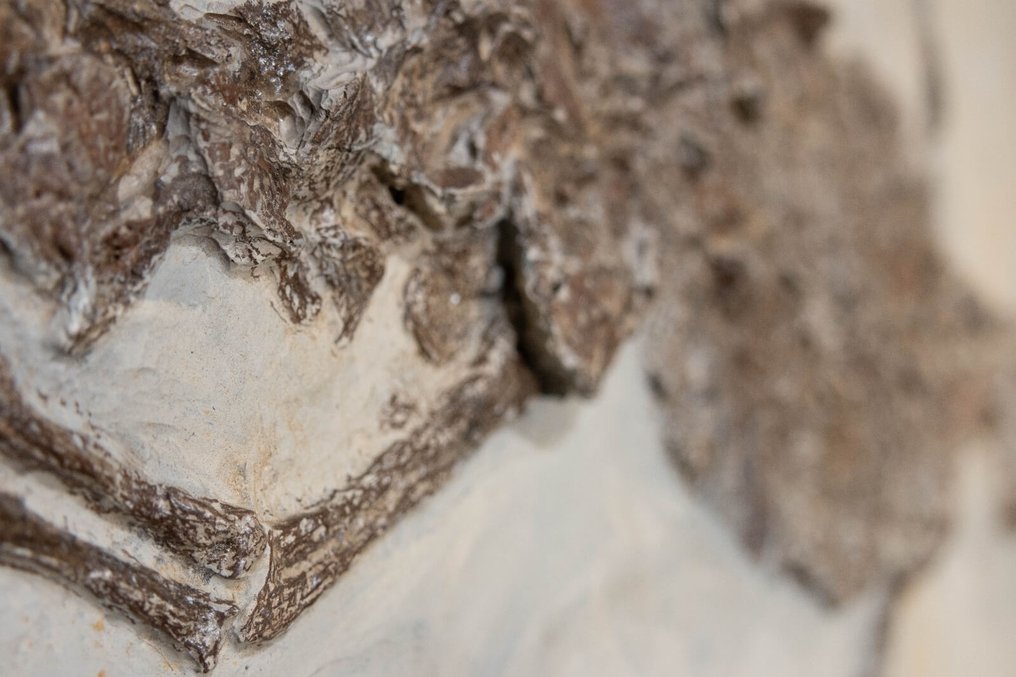
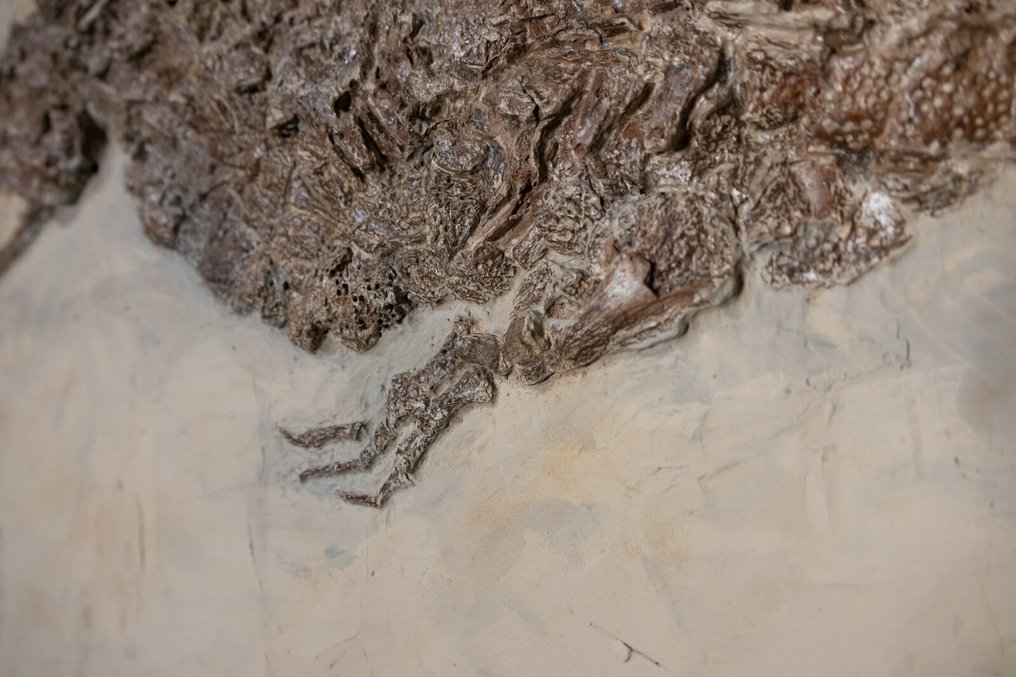
The find originates from Gračanica in Bosnia and Herzegovina, a region with significant Miocene fossil deposits. The fossil is preserved on a slab measuring 115.5 × 59 cm and displays important anatomical features, particularly of the skull and vertebral column, in good detail.
scientific significance
This specimen has high paleontological significance, as Diplocynodon is considered a characteristic representative of the European crocodile fauna of the Miocene. The fossil provides valuable insights into the climatic conditions and ecological diversity of Europe during a warm phase of Earth's history.
Diplocynodon sp. crocodile fossils
Location: Gracanica, Bosnia and Herzegovina
Era: Miocene
Age: 14 to 16 million years
Size: 115.5 x 59 cm
Crocodile: 100cm
Diplocynodon sp. – Miocene crocodile fossils
Diplocynodon sp. is a fossil crocodile from the Miocene, living approximately 14 to 16 million years ago. The genus belongs to the early alligator-like reptiles and was widespread in freshwater habitats such as rivers, lakes, and marshy floodplains. With an estimated body length of around 100 cm, it is a rather small crocodile, yet it was an efficient predator of its time.
Find location and preservation.
The find originates from Gračanica in Bosnia and Herzegovina, a region with significant Miocene fossil deposits. The fossil is preserved on a slab measuring 115.5 × 59 cm and displays important anatomical features, particularly of the skull and vertebral column, in good detail.
scientific significance
This specimen has high paleontological significance, as Diplocynodon is considered a characteristic representative of the European crocodile fauna of the Miocene. The fossil provides valuable insights into the climatic conditions and ecological diversity of Europe during a warm phase of Earth's history.
Details
Number of items
1
Specimen
Crocodile
Scientific name
Diplocynodon sp.
Country of Origin
Bosnia and Herzegovina
Geological Period
Neogene, Miocene (23.03 - 5.33 million years)
Condition
Restored
Height
59 cm
Width
115.5 cm
Sold by
Disclaimer
The seller was informed by Catawiki about documentation requirements and guarantees the following: - the object was legally obtained, - the seller has the right to sell and/or export the object, as relevant, - the seller will provide the necessary provenance information and arrange required documentation and permits/licenses, as applicable and as per local laws, - the seller will notify the buyer of any delays in obtaining permits/licenses. By bidding, you acknowledge that import documentation may be required depending on your country of residence and that obtaining permits/licenses may cause delays in the delivery of your object.
The seller was informed by Catawiki about documentation requirements and guarantees the following: - the object was legally obtained, - the seller has the right to sell and/or export the object, as relevant, - the seller will provide the necessary provenance information and arrange required documentation and permits/licenses, as applicable and as per local laws, - the seller will notify the buyer of any delays in obtaining permits/licenses. By bidding, you acknowledge that import documentation may be required depending on your country of residence and that obtaining permits/licenses may cause delays in the delivery of your object.