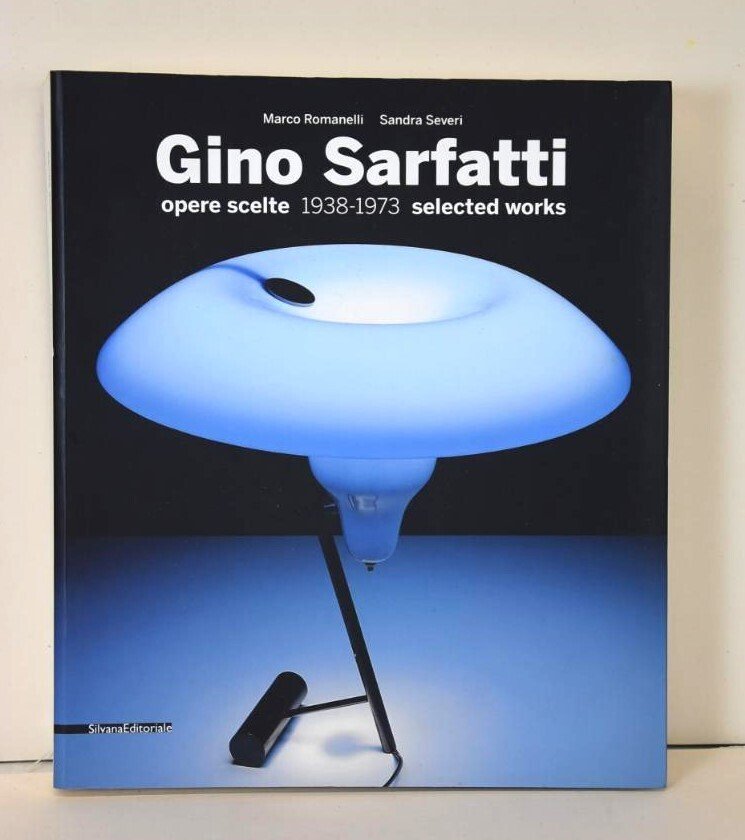
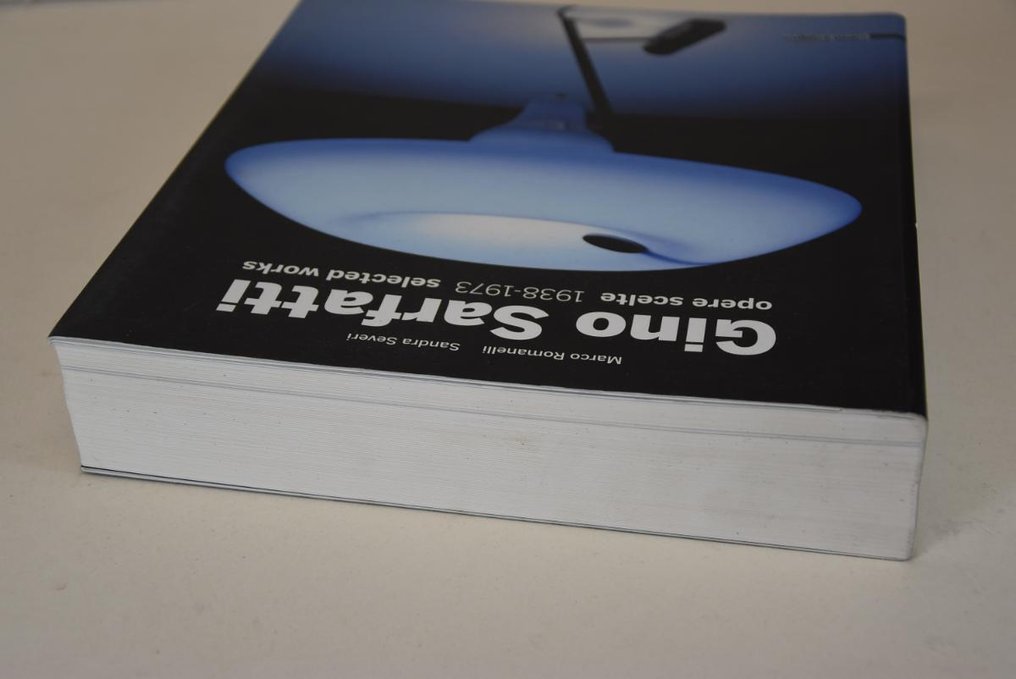
Gino Sarfatti - Opere Scelte 1938-1973. Selected works. - 2002

Opens 11:00
Starting bid
€ 1
Add to your favourites to get an alert when the auction starts.

Catawiki Buyer Protection
Your payment’s safe with us until you receive your object.View details
Trustpilot 4.4 | 123113 reviews
Rated Excellent on Trustpilot.
Description from the seller
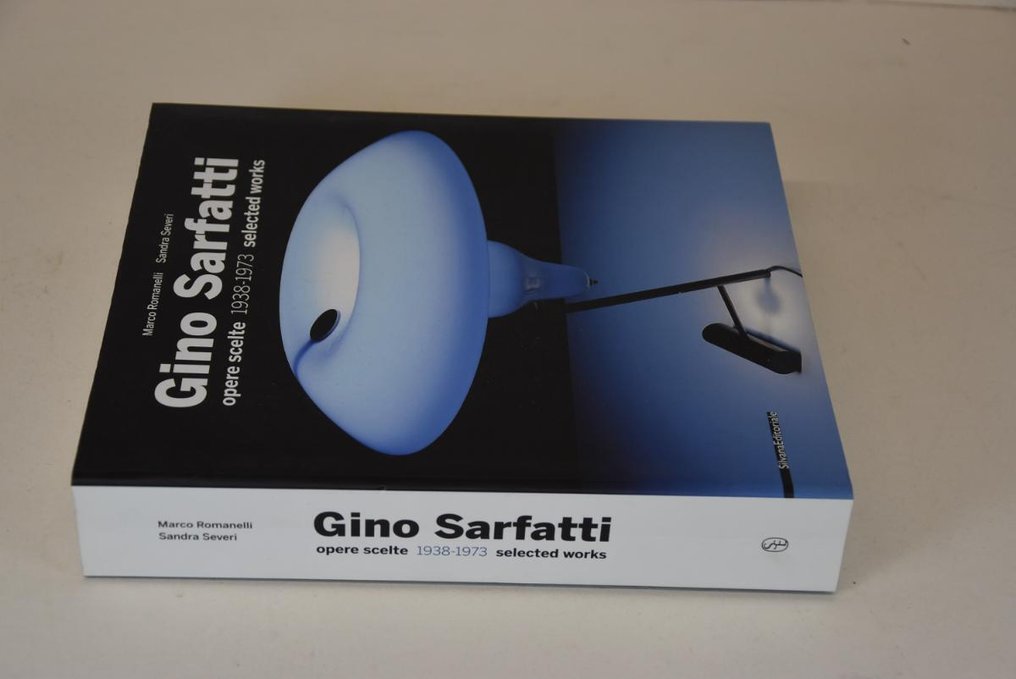
Gino Sarfatti. Selected works 1938-1973. A cura di Marco Romanelli and Sandra Severi. Milan, Silvana Editoriale, 2002. 28 x 24 cm. Softcover, 495 pages. Black and white and color photographs. In excellent condition – slight opening crease on the spine. Auction without reserve – see our other auctions!
Gino Sarfatti (Venice, September 16, 1912 – Griante, March 6, 1985) was an Italian designer and entrepreneur.
Biography
Eldest of three brothers, born to a Jewish father and a Catholic mother, in a family of the wealthy commercial bourgeoisie. After studying classical subjects, he attended the University of Aeronautical and Naval Engineering in Genoa.
In 1935, the family moved to Milan, where, after an experience selling art glass, they operated both with their own small company and with the Lumen company: on their letterhead, they define their commitment as rational lighting.
He attended Franco Albini, Lucio Fontana, Lica, and Albe Steiner. In February 1939, he founded Arteluce Società Anonima A.L. with some members of Milanese society and became its General Director. The company's corporate purpose includes lighting fixtures, luminous applications, furniture components, as well as the study and realization of furnishings.
From the beginning, the lamps do not have a name but are identified by a number that is sequential within the category:
From number 0 and wall-mounted spotlights and special fixtures (much later, it will include the launch of the 50 mirrors with lights and lamps for bathroom decor).
from no. 100 wall-mounted devices
from number 500, the table devices
From no. 1000, the ground devices (stems and torches).
From number 2000, the suspended lamps.
from nº 3000 ceiling light.
In 1939, he rented the shop on Corso Littorio, later Corso Matteotti, where he remained until 1962.
After the first bombings on Milan, the family and the production activity were relocated near Lecco, so, to escape racial persecutions, he had to emigrate to Switzerland, where he lived in a convent of nuns in Neggio, near Lugano. Arteluce, during the years of war, remained active within the limits allowed by the period, entrusted to a procurator.
In 1946, upon returning, he opened a small workshop on Via Cesena, in an apartment converted beneath his temporary residence and in the adjacent space, covered by a shed, and the activity was immediately significant: the first naval supply was in 1949. In the same year, he moved into the new facility at Via Bellinzona, 48, acquired with funds from his wife's family, which would remain the company's sole production site.
In 1950, he founded in Rome, with a brother of his wife, the company ArCon - Contemporary Furniture, which markets brands of excellence in furniture and immediately achieved success, including in the press, until he sold his stake due to family reasons.
In 1962, the property asked him to leave the store at Corso Matteotti, 12, for his commercial needs, and therefore he opened a new large retail outlet at via della Spiga, 23, designed by architect Vittoriano Viganò.
In parallel, the factory at Via Bellinzona, 48 was restructured and partially elevated, reaching its maximum size in 1968—just under 800 square meters—and its maximum capacity of about 35 employees.
Vince received many international awards, including the Compasso d'oro in 1954 and 1955 for models 559 and 1055.
In December 1973, the year he won the gold medal at the 15th Triennale, he sold the company, which is no longer operational today. From 1974, he retired to live in Griante di Cadenabbia (CO), where he received visits from scholars: the last meeting was just a few days before his death, in preparation for the great exhibition at the Centre Georges Pompidou, lumières je pense à vous; the guest was Jean François Grunfeld, who wrote about him as the greatest lamp designer of the 20th century. During the interview and in subsequent correspondence, Gino Sarfatti retraced the entire course of his career.
He died on March 6, 1985, after being struck by a cerebral stroke.
Arteluce
In addition to producing lamps by Gino Sarfatti, which are estimated to number around 600, Arteluce has designed and marketed lighting fixtures created by some of the leading architects and designers of the period, such as Albini-Helg, Sergio Asti, the BBPR, Cini Boeri, Pieter De Bruyne, Gianfranco Frattini, Gregotti-Meneghetti-Stoppino, Edoardo Gellner, Vito Latis, Ico Parisi, Santi and Boracchia, Vittoriano Viganò, Massimo Vignelli, as well as Antonio Macchi Cassia and Paolo Rizzatto.
Among the major contributions are the Palazzo Bianco Museum in Genoa, the Castle Museum in Milan, the Milan Piccolo Teatro, the ships Conte Biancamano, Saturnia, Vulcania, Andrea Doria, Michelangelo, Raffaello, the Eni Village in Corte di Cadore, and the Kairouan mosque in Tunisia. The most significant work is his latest: the lighting of the entire Teatro Regio di Torino, for which he designs and implements, in particular, the lighting of the main hall with a luminous installation called the Cloud.
Gino Sarfatti. Selected works 1938-1973. A cura di Marco Romanelli and Sandra Severi. Milan, Silvana Editoriale, 2002. 28 x 24 cm. Softcover, 495 pages. Black and white and color photographs. In excellent condition – slight opening crease on the spine. Auction without reserve – see our other auctions!
Gino Sarfatti (Venice, September 16, 1912 – Griante, March 6, 1985) was an Italian designer and entrepreneur.
Biography
Eldest of three brothers, born to a Jewish father and a Catholic mother, in a family of the wealthy commercial bourgeoisie. After studying classical subjects, he attended the University of Aeronautical and Naval Engineering in Genoa.
In 1935, the family moved to Milan, where, after an experience selling art glass, they operated both with their own small company and with the Lumen company: on their letterhead, they define their commitment as rational lighting.
He attended Franco Albini, Lucio Fontana, Lica, and Albe Steiner. In February 1939, he founded Arteluce Società Anonima A.L. with some members of Milanese society and became its General Director. The company's corporate purpose includes lighting fixtures, luminous applications, furniture components, as well as the study and realization of furnishings.
From the beginning, the lamps do not have a name but are identified by a number that is sequential within the category:
From number 0 and wall-mounted spotlights and special fixtures (much later, it will include the launch of the 50 mirrors with lights and lamps for bathroom decor).
from no. 100 wall-mounted devices
from number 500, the table devices
From no. 1000, the ground devices (stems and torches).
From number 2000, the suspended lamps.
from nº 3000 ceiling light.
In 1939, he rented the shop on Corso Littorio, later Corso Matteotti, where he remained until 1962.
After the first bombings on Milan, the family and the production activity were relocated near Lecco, so, to escape racial persecutions, he had to emigrate to Switzerland, where he lived in a convent of nuns in Neggio, near Lugano. Arteluce, during the years of war, remained active within the limits allowed by the period, entrusted to a procurator.
In 1946, upon returning, he opened a small workshop on Via Cesena, in an apartment converted beneath his temporary residence and in the adjacent space, covered by a shed, and the activity was immediately significant: the first naval supply was in 1949. In the same year, he moved into the new facility at Via Bellinzona, 48, acquired with funds from his wife's family, which would remain the company's sole production site.
In 1950, he founded in Rome, with a brother of his wife, the company ArCon - Contemporary Furniture, which markets brands of excellence in furniture and immediately achieved success, including in the press, until he sold his stake due to family reasons.
In 1962, the property asked him to leave the store at Corso Matteotti, 12, for his commercial needs, and therefore he opened a new large retail outlet at via della Spiga, 23, designed by architect Vittoriano Viganò.
In parallel, the factory at Via Bellinzona, 48 was restructured and partially elevated, reaching its maximum size in 1968—just under 800 square meters—and its maximum capacity of about 35 employees.
Vince received many international awards, including the Compasso d'oro in 1954 and 1955 for models 559 and 1055.
In December 1973, the year he won the gold medal at the 15th Triennale, he sold the company, which is no longer operational today. From 1974, he retired to live in Griante di Cadenabbia (CO), where he received visits from scholars: the last meeting was just a few days before his death, in preparation for the great exhibition at the Centre Georges Pompidou, lumières je pense à vous; the guest was Jean François Grunfeld, who wrote about him as the greatest lamp designer of the 20th century. During the interview and in subsequent correspondence, Gino Sarfatti retraced the entire course of his career.
He died on March 6, 1985, after being struck by a cerebral stroke.
Arteluce
In addition to producing lamps by Gino Sarfatti, which are estimated to number around 600, Arteluce has designed and marketed lighting fixtures created by some of the leading architects and designers of the period, such as Albini-Helg, Sergio Asti, the BBPR, Cini Boeri, Pieter De Bruyne, Gianfranco Frattini, Gregotti-Meneghetti-Stoppino, Edoardo Gellner, Vito Latis, Ico Parisi, Santi and Boracchia, Vittoriano Viganò, Massimo Vignelli, as well as Antonio Macchi Cassia and Paolo Rizzatto.
Among the major contributions are the Palazzo Bianco Museum in Genoa, the Castle Museum in Milan, the Milan Piccolo Teatro, the ships Conte Biancamano, Saturnia, Vulcania, Andrea Doria, Michelangelo, Raffaello, the Eni Village in Corte di Cadore, and the Kairouan mosque in Tunisia. The most significant work is his latest: the lighting of the entire Teatro Regio di Torino, for which he designs and implements, in particular, the lighting of the main hall with a luminous installation called the Cloud.
Details
Number of Books
1
Subject
Interior design
Book Title
Opere Scelte 1938-1973. Selected works.
Author/ Illustrator
Gino Sarfatti
Condition
Fine
Publication year oldest item
2002
Height
28 cm
Edition
1st Edition
Width
24 cm
Language
English, Italian
Original language
Yes
Binding/ Material
Softback
Number of pages
495
Sold by