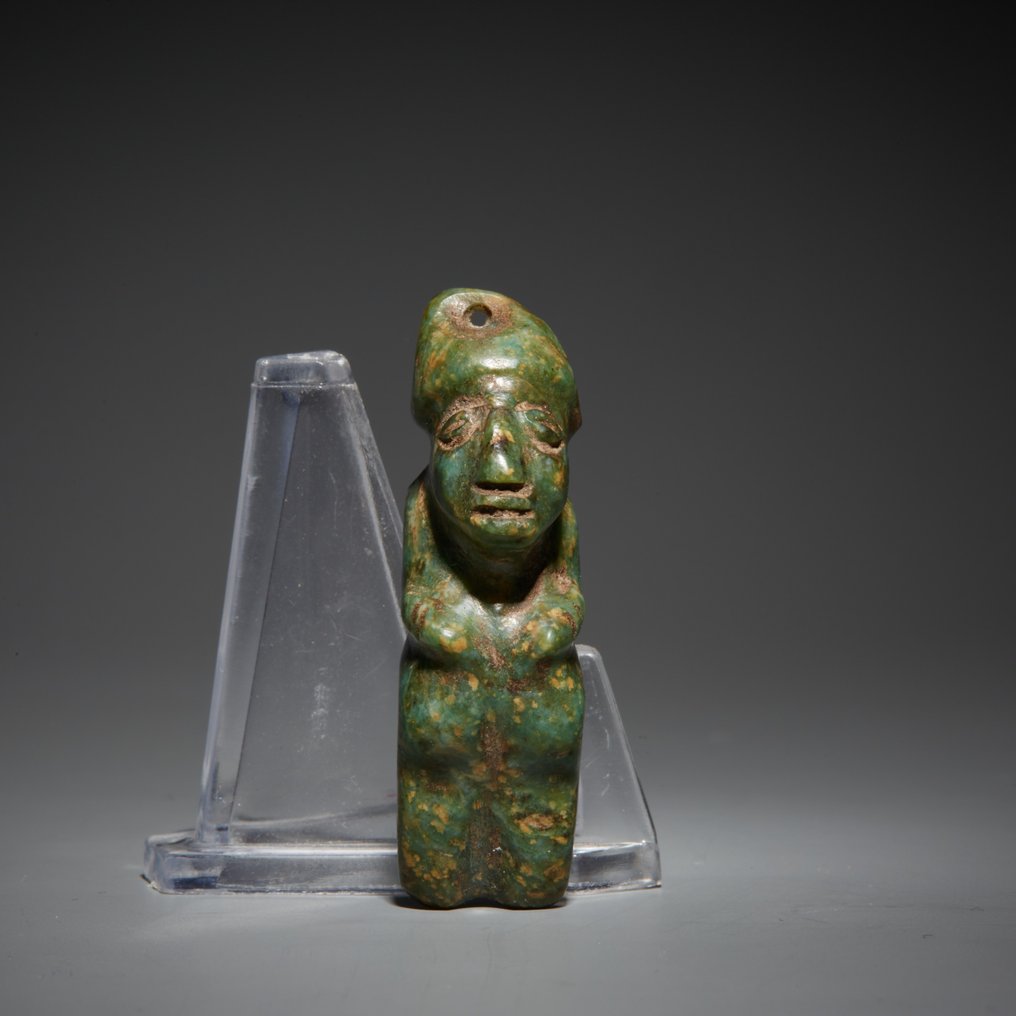
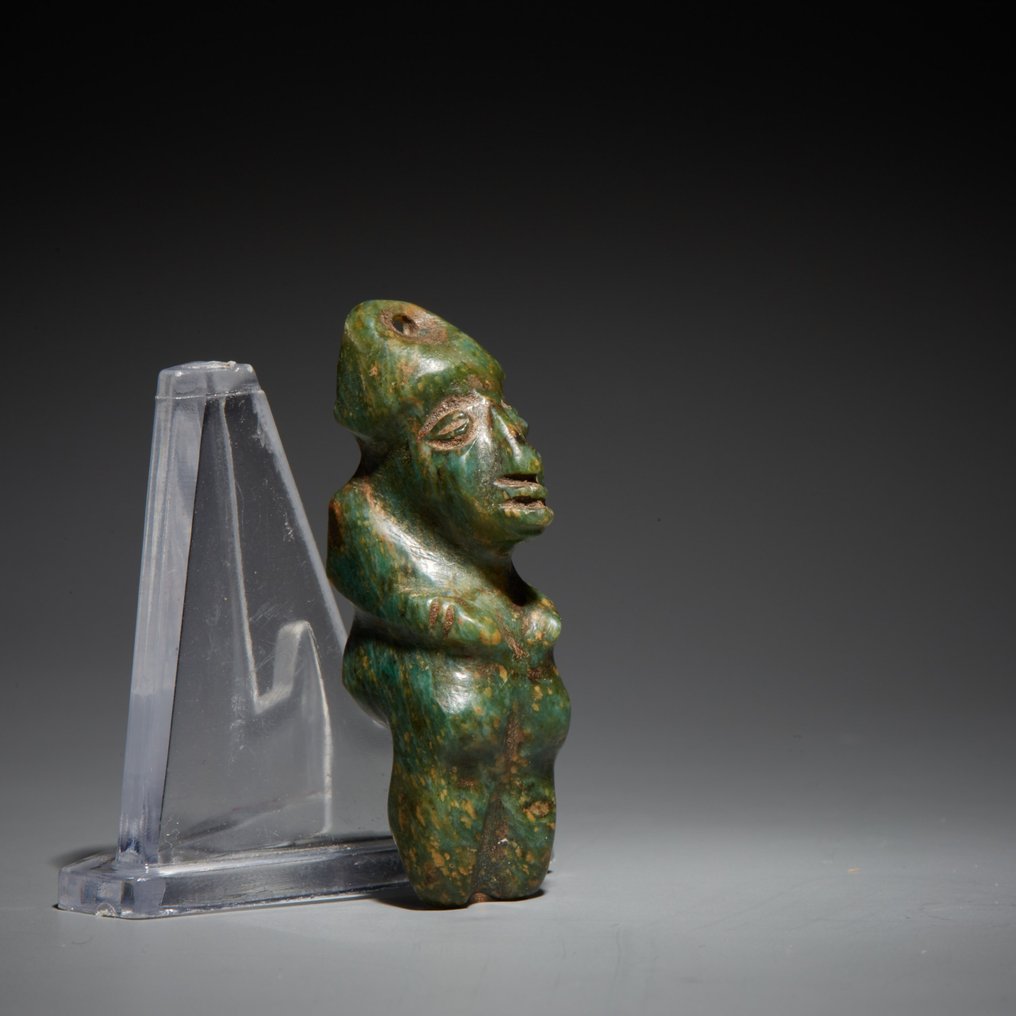
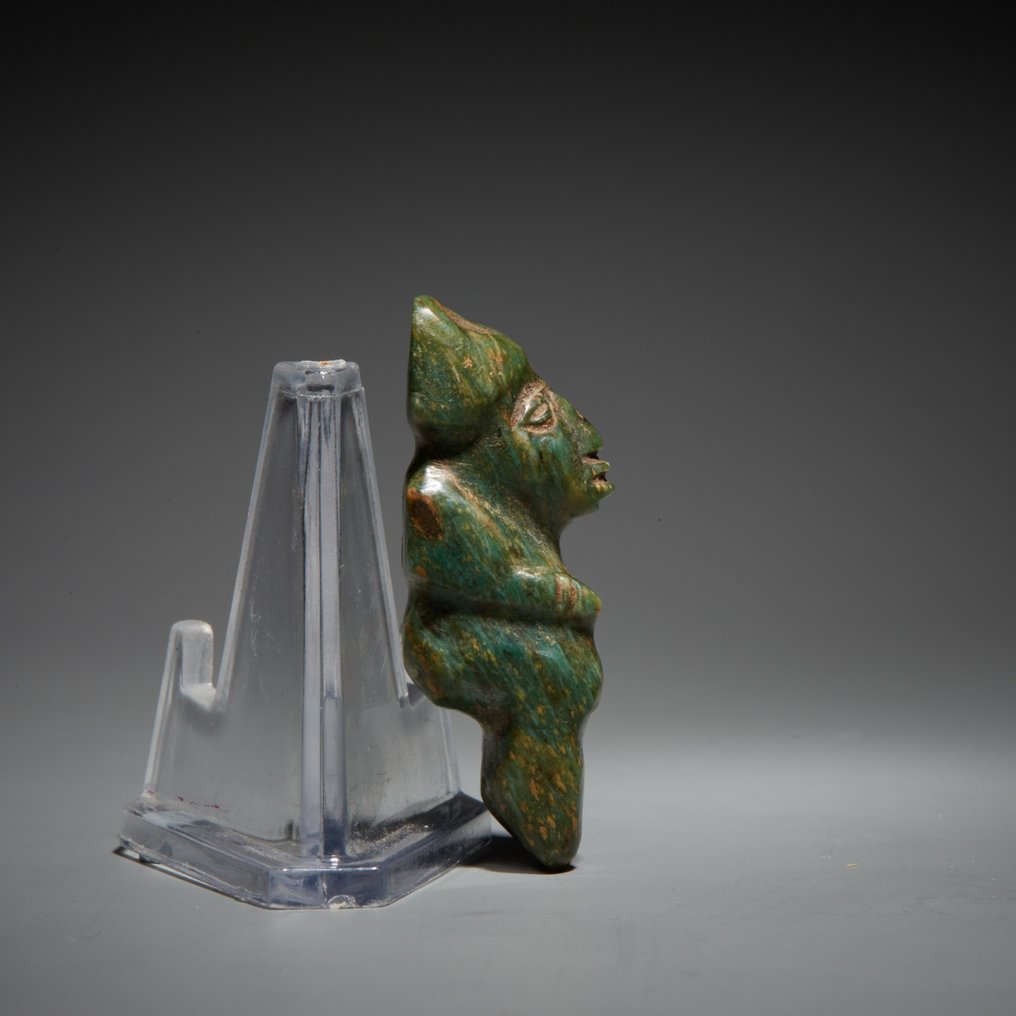
Mixteca, Mexico Stone Pendant Figure. 12th-15th century AD. 4.2 cm height. Spanish Import License


06
days
01
hour
29
minutes
35
seconds
Current bid
€ 1
Reserve price not met

Expert
Selected by Ruth Garrido Vila
Directed the Ifergan Collection Museum, specialising in Phoenician and Mediterranean archaeology.
Estimate € 800 - € 950
2 other people are watching this object
 Bidder 4851 Bidder 4851 | €1 |
|---|
Catawiki Buyer Protection
Your payment’s safe with us until you receive your object.View details
Trustpilot 4.4 | 123878 reviews
Rated Excellent on Trustpilot.
Pendant Figure, a Mixteca stone pendant dating to the 12th–15th century AD, 4.2 cm high and in very good, intact condition, with a Spanish Import License.
AI-assisted summary
Description from the seller
Pendant Figure.
Mixteca, Mexico 12th-15th century AD.
Stone
4.2 cm height.
PROVENANCE:
- Private collection, Romy Rey, London. 1970.
- Acquired by inheritance from the previous owner.
- Art market, United Kingdom.
CONDITION: Intact.
DESCRIPTION:
The Mixtec culture flourished in the present-day State of Oaxaca, Mexico, a tropical zone with a hot temperate climate, summer rainy season and winter dry season. The geography varies from coastal to sierra, and includes forests and arable lands. The Mixtec people lived mainly in the highlands of the cloud-covered Oaxacan sierra, earning them the nickname of “Cloud People”.
The Mixtec culture originated from the same groups as the Zapotecs, and the two cultures developed in parallel under the influence of the Toltecs until 1200, when they became independent. At that time they were highly active, expanding their reach towards the coast and to the north in a desire to conquer new territories. Eventually they were invaded by the Aztecs and Mexicas. Some of their artifacts display influences from cultures as far away as present-day Costa Rica and Panama.
The Mixtecs were highly skilled in different forms of artistic expression. They made outstanding pieces with semiprecious stones such as jade, rock crystal, opal and obsidian. These included decorative items and small figurines in the form of deities, ancestors and animals, mostly rabbits and turtles. They also created mosaics out of turquoise. They worked gold into a variety of adornments such as brooches, rings, necklaces, nose ornaments and squash-shaped plates. In wood, they made ceremonial artifacts such as masks and knives. Their pottery was primarily polychromatic and consisted mainly of three-legged vessels decorated with animals, mythological figures, or flowers and multicolored borders. Other ceramic pieces include cups and bowls with long bases finished with a serpent head painted red and white, similar in style to their murals. The most common Mixtec iconographic motifs are deities and their insignias, animal emblems (serpent, jaguar, deer, rabbit, spider, etc.), sun and moon discs, bands of stars, skulls, skeletons and figures representing natural elements such as water and fire. These types of images are frequently found in Mixtec pictographic manuscripts or codices that narrated historic events and religious themes.
Notes:
- The piece includes authenticity certificate.
- The piece includes Spanish Export License (Passport for European Union) - If the piece is destined outside the European Union a substitution of the export permit should be requested, can take between 1-2 weeks maximum.
- The seller guarantees that he acquired this piece according to all national and international laws related to the ownership of cultural property. Provenance statement seen by Catawiki.
Seller's Story
Gallery of Ancient Art - Archeology based in Barcelona with more than fifteen years of experience. Specialized in classical art, Egyptian art, Asian art and pre-Columbian art. It guarantees the authenticity of all its pieces. It participates in the most important art fairs in Spain, such as Feriarte, as well as in fairs abroad, BRAFA, Parcours des Mondes, Cultures Brussels.
All the pieces are sent with an Export Permit issued by the Spanish Ministry of Culture.
We are quick to ship via DHL Express or Direct Art Transport.
Translated by Google TranslatePendant Figure.
Mixteca, Mexico 12th-15th century AD.
Stone
4.2 cm height.
PROVENANCE:
- Private collection, Romy Rey, London. 1970.
- Acquired by inheritance from the previous owner.
- Art market, United Kingdom.
CONDITION: Intact.
DESCRIPTION:
The Mixtec culture flourished in the present-day State of Oaxaca, Mexico, a tropical zone with a hot temperate climate, summer rainy season and winter dry season. The geography varies from coastal to sierra, and includes forests and arable lands. The Mixtec people lived mainly in the highlands of the cloud-covered Oaxacan sierra, earning them the nickname of “Cloud People”.
The Mixtec culture originated from the same groups as the Zapotecs, and the two cultures developed in parallel under the influence of the Toltecs until 1200, when they became independent. At that time they were highly active, expanding their reach towards the coast and to the north in a desire to conquer new territories. Eventually they were invaded by the Aztecs and Mexicas. Some of their artifacts display influences from cultures as far away as present-day Costa Rica and Panama.
The Mixtecs were highly skilled in different forms of artistic expression. They made outstanding pieces with semiprecious stones such as jade, rock crystal, opal and obsidian. These included decorative items and small figurines in the form of deities, ancestors and animals, mostly rabbits and turtles. They also created mosaics out of turquoise. They worked gold into a variety of adornments such as brooches, rings, necklaces, nose ornaments and squash-shaped plates. In wood, they made ceremonial artifacts such as masks and knives. Their pottery was primarily polychromatic and consisted mainly of three-legged vessels decorated with animals, mythological figures, or flowers and multicolored borders. Other ceramic pieces include cups and bowls with long bases finished with a serpent head painted red and white, similar in style to their murals. The most common Mixtec iconographic motifs are deities and their insignias, animal emblems (serpent, jaguar, deer, rabbit, spider, etc.), sun and moon discs, bands of stars, skulls, skeletons and figures representing natural elements such as water and fire. These types of images are frequently found in Mixtec pictographic manuscripts or codices that narrated historic events and religious themes.
Notes:
- The piece includes authenticity certificate.
- The piece includes Spanish Export License (Passport for European Union) - If the piece is destined outside the European Union a substitution of the export permit should be requested, can take between 1-2 weeks maximum.
- The seller guarantees that he acquired this piece according to all national and international laws related to the ownership of cultural property. Provenance statement seen by Catawiki.
Seller's Story
Gallery of Ancient Art - Archeology based in Barcelona with more than fifteen years of experience. Specialized in classical art, Egyptian art, Asian art and pre-Columbian art. It guarantees the authenticity of all its pieces. It participates in the most important art fairs in Spain, such as Feriarte, as well as in fairs abroad, BRAFA, Parcours des Mondes, Cultures Brussels.
All the pieces are sent with an Export Permit issued by the Spanish Ministry of Culture.
We are quick to ship via DHL Express or Direct Art Transport.
Translated by Google TranslateDetails
Culture
Mixteca, Mexico
Century/ Timeframe
12th-15th century AD
Name of object
Pendant Figure. 12th-15th century AD. 4.2 cm height. Spanish Import License
Acquired from
Private collection
Material
Stone
Condition
Very good
Disclaimer
The seller was informed by Catawiki about documentation requirements and guarantees the following: - the object was legally obtained, - the seller has the right to sell and/or export the object, as relevant, - the seller will provide the necessary provenance information and arrange required documentation and permits/licenses, as applicable and as per local laws, - the seller will notify the buyer of any delays in obtaining permits/licenses. By bidding, you acknowledge that import documentation may be required depending on your country of residence and that obtaining permits/licenses may cause delays in the delivery of your object.
The seller was informed by Catawiki about documentation requirements and guarantees the following: - the object was legally obtained, - the seller has the right to sell and/or export the object, as relevant, - the seller will provide the necessary provenance information and arrange required documentation and permits/licenses, as applicable and as per local laws, - the seller will notify the buyer of any delays in obtaining permits/licenses. By bidding, you acknowledge that import documentation may be required depending on your country of residence and that obtaining permits/licenses may cause delays in the delivery of your object.
