Superstudio - Migrazioni - 2021


Opens 11:00
Starting bid
€ 1
Add to your favourites to get an alert when the auction starts.

Expert
Selected by Tom Hopman
Studied history and managed a large online book catalogue with 13 years' antiquarian bookshop experience.
Estimate € 150 - € 200
Catawiki Buyer Protection
Your payment’s safe with us until you receive your object.View details
Trustpilot 4.4 | 123113 reviews
Rated Excellent on Trustpilot.
Description from the seller
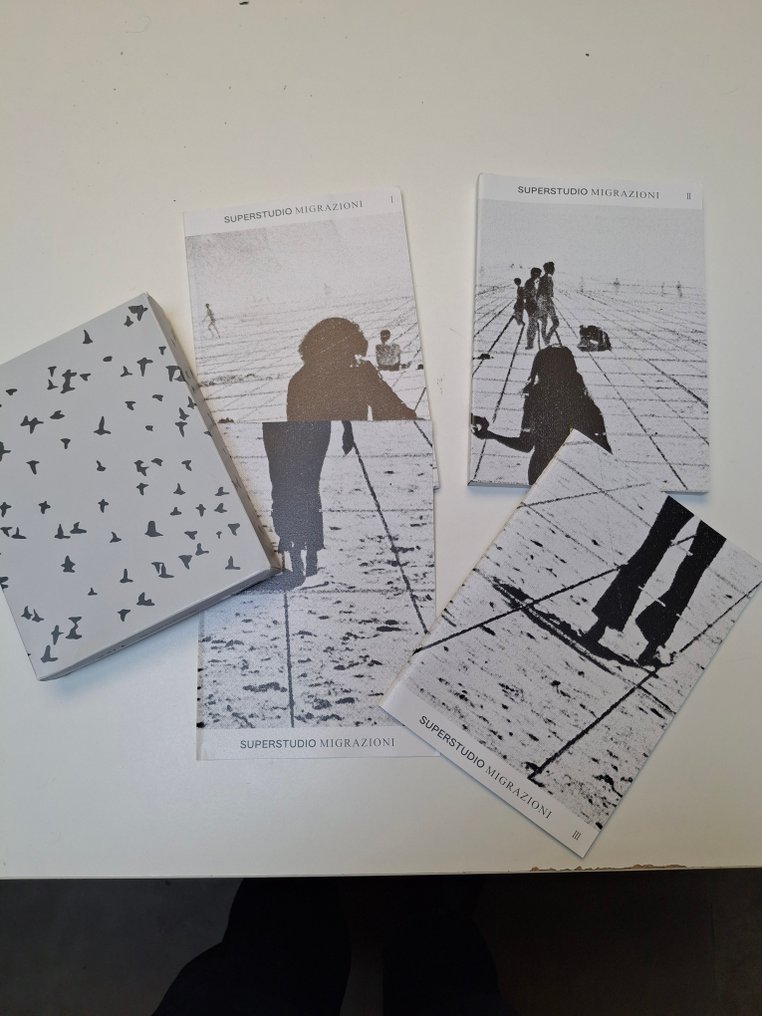
Beginning in 1966, the adventure of Superstudio led its members to reflect on how to live in this 'round and rolling' world. Superstudio Migrazioni offers a new perspective on the group's work, described as 'radical' by Germano Celant. Going beyond a simple catalog, Superstudio Migrazioni presents three parallel yet complementary explorations—through texts, images, and archives—of this collective journey that pushed architecture to its limits. Initially 'super' and fundamentally realistic, adopting mechanisms of consumption and production in an ironic and critical way, Superstudio's architecture evolved towards 'things, the body, the earth,' until it dissolved all materiality, retaining only a symbolic dimension and merging with life itself.
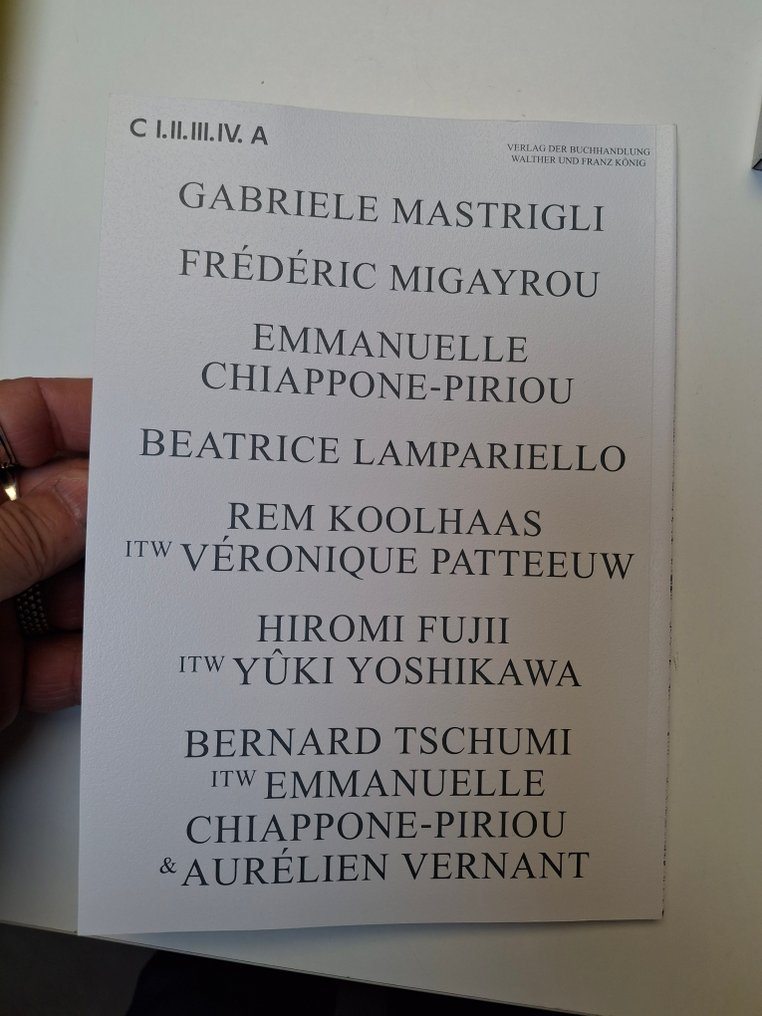
By proposing a rich selection of images, works, and documents, Superstudio Migrations allows for multiple intersections and interpretations of the group's intellectual, architectural, and poetic migrations. The first book gathers essays and interviews with three fundamental figures of architecture from the last fifty years who have been involved with Superstudio; returning to their personal and theoretical paths, these diverse voices provide a measure of the impact of this marginal group and give rise to other 'journeys into the regions of reason.' The second book offers a thematic exploration of the work, following a series of notions drawn from the Superstudio vocabulary. Beyond the unified history embodied by some iconic photomontages, the richness and plurality of images and projects produced during Superstudio's active period are revealed. The last book presents unpublished letters from the archive of Adolfo Natalini. The exchanges between Superstudio members and correspondence with key figures of architecture in the second half of the 20th century outline a collective autobiography in which, progressing through fragments, we see architecture and life increasingly coinciding.
Beginning in 1966, the adventure of Superstudio led its members to reflect on how to live in this 'round and rolling' world. Superstudio Migrazioni offers a new perspective on the group's work, described as 'radical' by Germano Celant. Going beyond a simple catalog, Superstudio Migrazioni presents three parallel yet complementary explorations—through texts, images, and archives—of this collective journey that pushed architecture to its limits. Initially 'super' and fundamentally realistic, adopting mechanisms of consumption and production in an ironic and critical way, Superstudio's architecture evolved towards 'things, the body, the earth,' until it dissolved all materiality, retaining only a symbolic dimension and merging with life itself.
By proposing a rich selection of images, works, and documents, Superstudio Migrations allows for multiple intersections and interpretations of the group's intellectual, architectural, and poetic migrations. The first book gathers essays and interviews with three fundamental figures of architecture from the last fifty years who have been involved with Superstudio; returning to their personal and theoretical paths, these diverse voices provide a measure of the impact of this marginal group and give rise to other 'journeys into the regions of reason.' The second book offers a thematic exploration of the work, following a series of notions drawn from the Superstudio vocabulary. Beyond the unified history embodied by some iconic photomontages, the richness and plurality of images and projects produced during Superstudio's active period are revealed. The last book presents unpublished letters from the archive of Adolfo Natalini. The exchanges between Superstudio members and correspondence with key figures of architecture in the second half of the 20th century outline a collective autobiography in which, progressing through fragments, we see architecture and life increasingly coinciding.
Details
Number of Books
3
Subject
Architecture
Book Title
Migrazioni
Author/ Illustrator
Superstudio
Condition
Good
Publication year oldest item
2021
Height
24 cm
Edition
1st Edition
Width
16 cm
Language
Italian
Original language
Yes
Binding/ Material
Softback
Extras
Slipcase
Number of pages
400
Sold by