Fascinating specimen of Volutidae shell Sea shell - Melo umbilicatus – Shell on Decorative Base


05
days
09
hours
40
minutes
47
seconds
Starting bid
€ 1
Reserve price not met

Expert
Selected by Jonas Rathaj
Has worked with taxidermy since childhood and gained retailer experience.
Estimate € 210 - € 240
No bids placed
Catawiki Buyer Protection
Your payment’s safe with us until you receive your object.View details
Trustpilot 4.4 | 122813 reviews
Rated Excellent on Trustpilot.
Description from the seller
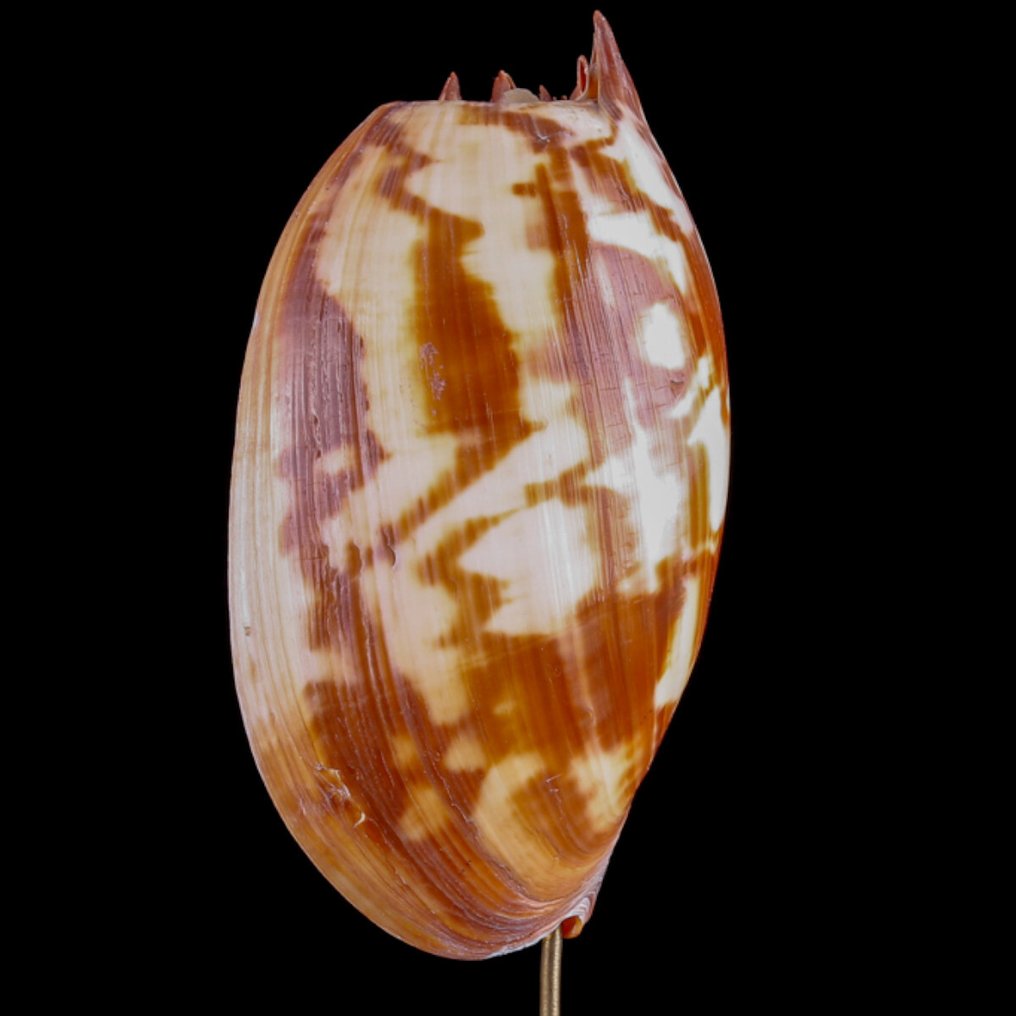
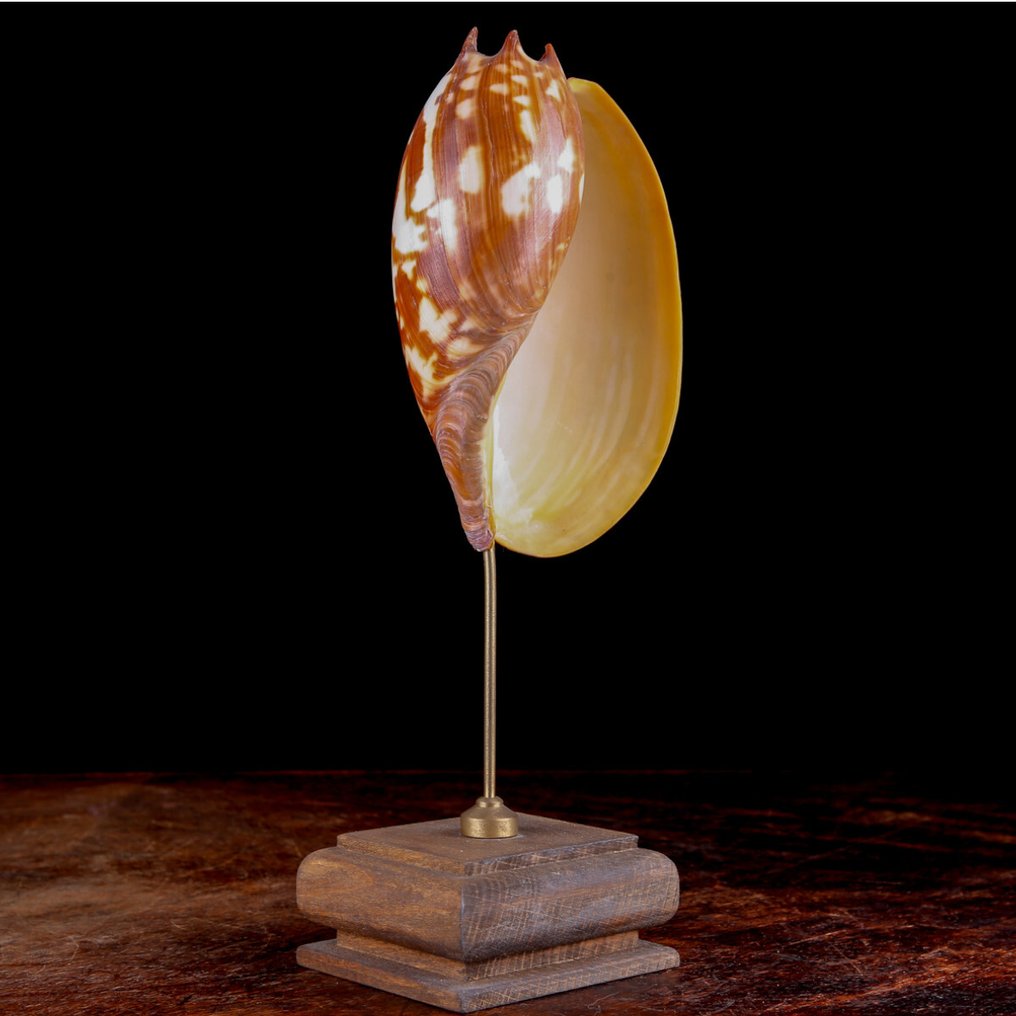
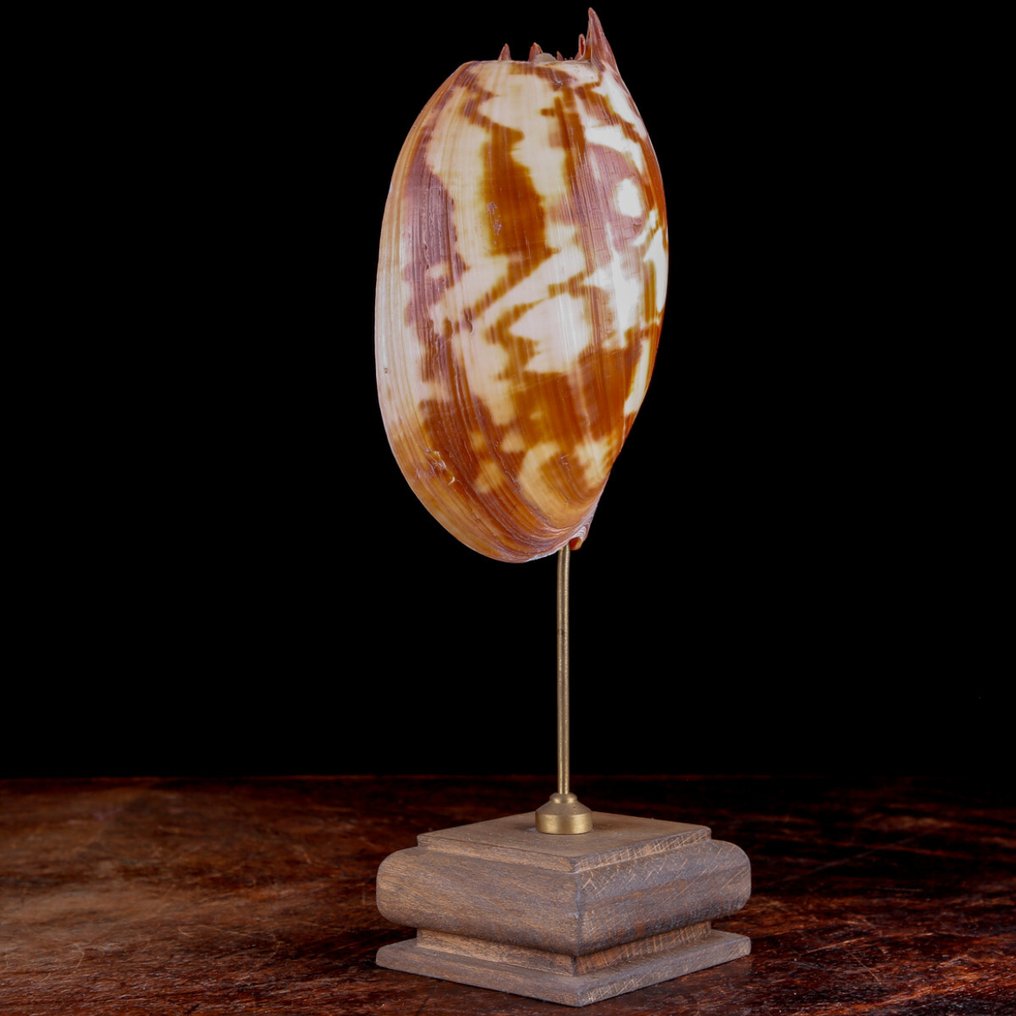
A fascinating specimen of Melo Umbilicatus, a species in the Volutidae family. This shell, with its sinuous lines and deep central umbilicus, is distinguished by its polished surface, warm tones of honey, amber, and cream, and highly elegant marble-like designs. The apex displays the characteristic crown-like dorsal ridges, which lend the object a monumental character.
Mounted on a wooden base with a brass support, this shell becomes a refined display object: perfect for design environments, galleries, nature collections or studies of ancient curiosities.
The Melo Umbilicatus is one of the largest marine shells and can exceed 30 cm in length.
It lives on the sandy bottoms of Southeast Asia, between Indonesia, Papua New Guinea and the Philippines, where it feeds on other molluscs and benthic organisms.
The name "Umbilicatus" comes from the Latin and indicates the navel present at the base of the shell, a distinctive detail of the Melo genus.
This shell is a perfect example of how nature can create works of art capable of inspiring wonder, contemplation, and a desire for knowledge.
Shell size: 186 x 105 x 76 mm
Height with Base: 327 mm
Seller's Story
The Mineral Art Gallery offers minerals, fossils, shells and natural elements.
Born in Italy in 2017, today she collaborates with international galleries and collectors, she is a direct importer of large minerals and naturalistic collectible elements; deals with the processing to insert them inside the living space. A section of the gallery was dedicated to the Wunderkammer, "chamber of wonders or cabinet of curiosities" in which Mirabilia elements are presented: naturalia and italiania, a union between "the present is the past".
All lots are shipped via DHL Express and Fercam couriers, with insured parcel and tracking.
Translated by Google TranslateA fascinating specimen of Melo Umbilicatus, a species in the Volutidae family. This shell, with its sinuous lines and deep central umbilicus, is distinguished by its polished surface, warm tones of honey, amber, and cream, and highly elegant marble-like designs. The apex displays the characteristic crown-like dorsal ridges, which lend the object a monumental character.
Mounted on a wooden base with a brass support, this shell becomes a refined display object: perfect for design environments, galleries, nature collections or studies of ancient curiosities.
The Melo Umbilicatus is one of the largest marine shells and can exceed 30 cm in length.
It lives on the sandy bottoms of Southeast Asia, between Indonesia, Papua New Guinea and the Philippines, where it feeds on other molluscs and benthic organisms.
The name "Umbilicatus" comes from the Latin and indicates the navel present at the base of the shell, a distinctive detail of the Melo genus.
This shell is a perfect example of how nature can create works of art capable of inspiring wonder, contemplation, and a desire for knowledge.
Shell size: 186 x 105 x 76 mm
Height with Base: 327 mm
Seller's Story
The Mineral Art Gallery offers minerals, fossils, shells and natural elements.
Born in Italy in 2017, today she collaborates with international galleries and collectors, she is a direct importer of large minerals and naturalistic collectible elements; deals with the processing to insert them inside the living space. A section of the gallery was dedicated to the Wunderkammer, "chamber of wonders or cabinet of curiosities" in which Mirabilia elements are presented: naturalia and italiania, a union between "the present is the past".
All lots are shipped via DHL Express and Fercam couriers, with insured parcel and tracking.
Translated by Google TranslateDetails
Era
After 2000
Specimen
Fascinating specimen of Volutidae shell
Scientific name
Melo umbilicatus – Shell on Decorative Base
Number of items
1
Country of origin
Indonesia
Condition
Good condition
Year
2024
Weight
399 g
Sold by