Fran Gonzalez 1959 (Contemporary Gilding) - El Laberinto de Minos

10
days
20
hours
37
minutes
12
seconds
Current bid
€ 73
Reserve price not met

Expert
Selected by Annick van Itallie
Graduated in art history with over 25 years' experience in antiques and applied arts appraisal.
Estimate € 500 - € 600
4 other people are watching this object
 Bidder 3120 Bidder 3120 | €73 |
|---|
Catawiki Buyer Protection
Your payment’s safe with us until you receive your object.View details
Trustpilot 4.4 | 122910 reviews
Rated Excellent on Trustpilot.
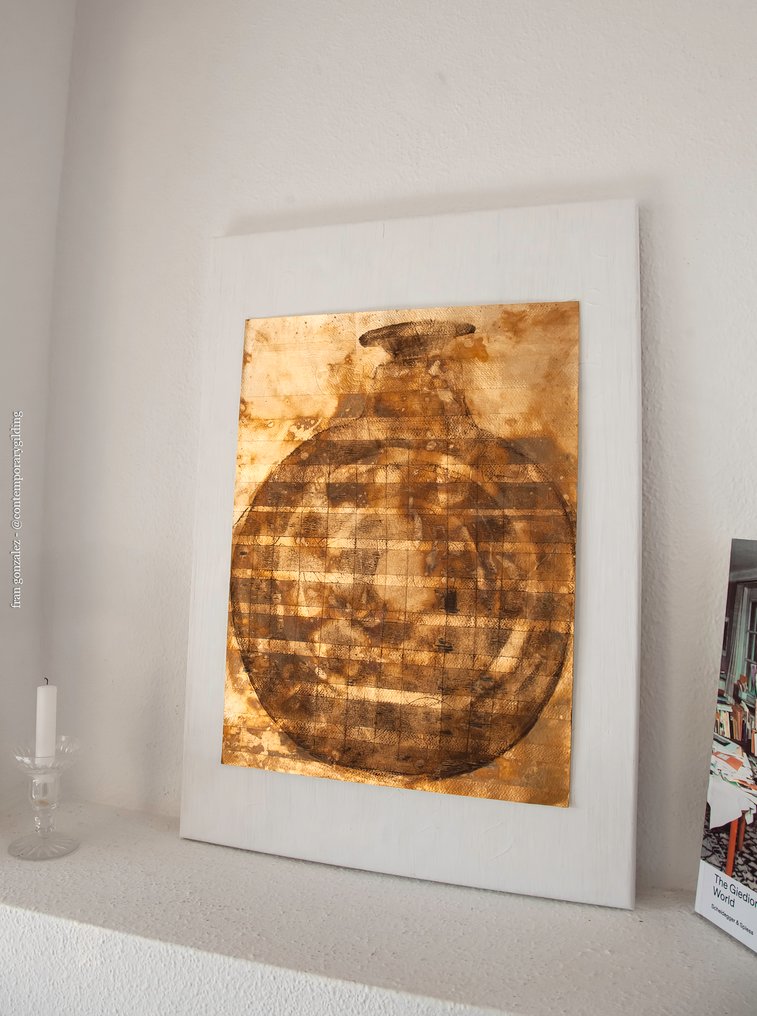
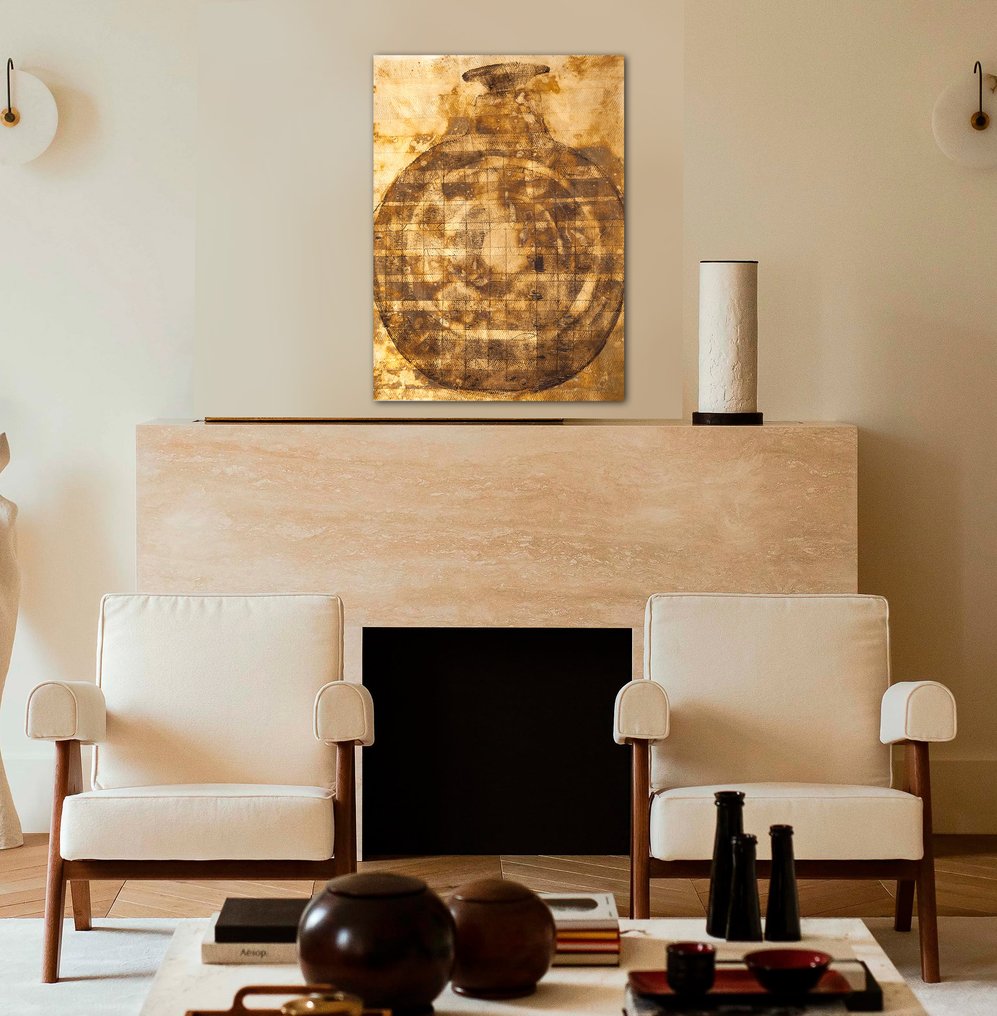
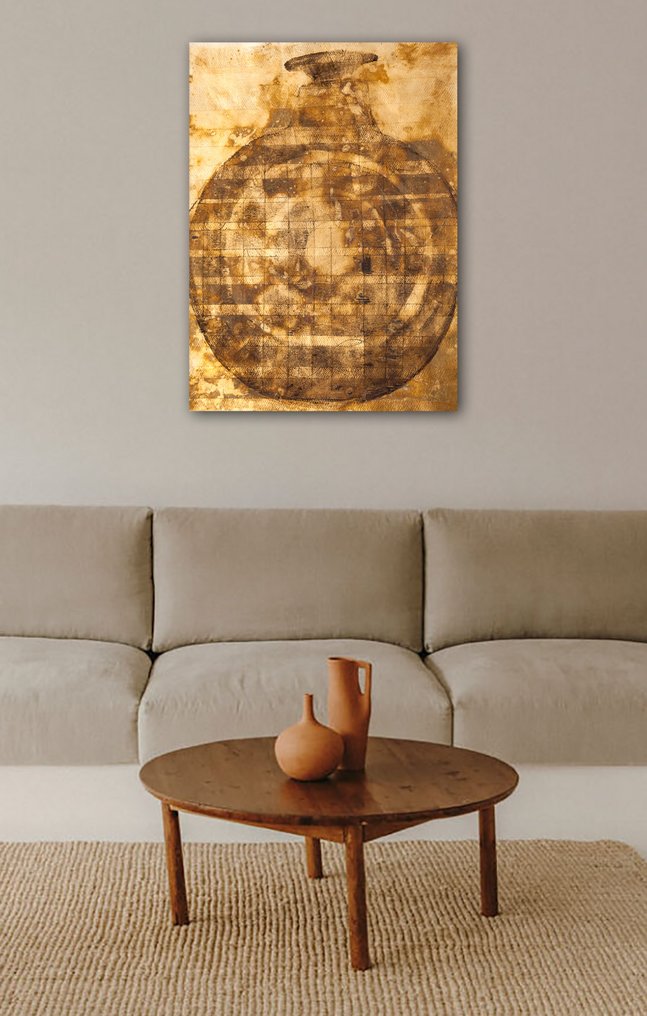
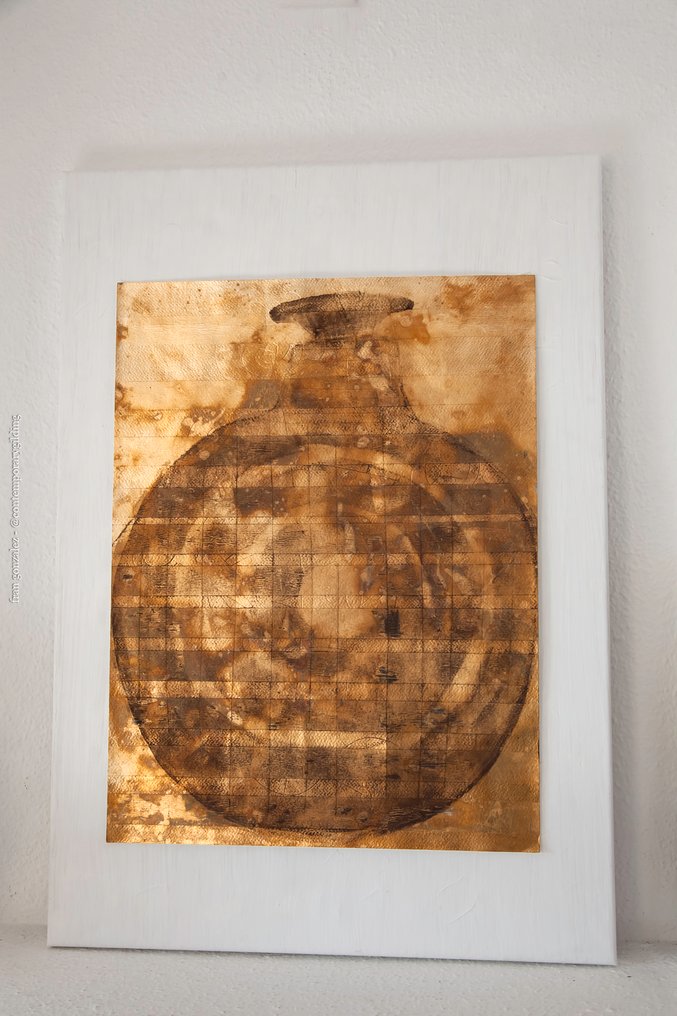
Original post-2020 gilding on canvas by Spanish artist Fran González (Contemporary Gilding), titled “El Laberinto de Minos” (2023), a landscape in abstract style, 36 × 48 cm, signed by hand on the reverse, weight 1 kg, produced in Spain, sold directly from the artist, original edition.
AI-assisted summary
Description from the seller
The Labyrinth of Minos
The Labyrinth of Minos is a decorative and spiritual work, a tribute to Mediterranean Culture and its contribution to Art Deco through European archaeological collections.
Regarding gilding techniques: The traditional gilding method involves applying very thin sheets of metal (gold, silver, imitation gold (i.e., bronze), aluminum, copper, etc.) onto any artistic surface (paper, wood, metal, ceramics, textiles, etc.).
------
Contemporary Gilding: The techniques of contemporary gilding are unique and exclusive to Fran González, stemming from the experimental philosophy of 20th-century contemporary art. Developed over more than 40 years of professional experience, these techniques give the works qualities that produce a magical light, permeating the space in which they are displayed.
Gilding on Canvas: application of multiple layers of textured imitation gold leaf with acids, applied on high-weight paper.
Shipping: protected rolled packaging
Measurements: 36x48 cm.
Hand-signed on the reverse by Fran González, @contemporarygilding.
Year 2023
About Fran González (summary):
Fran González is a Spanish artist born in Almería in 1959. His career began in 1982 when, after studying Engineering at the Polytechnic University of Madrid, he decided to dedicate himself full-time to Sculpture and Ceramics.
He studied Art at the School of Fine Arts of Madrid, the Official School of Ceramics of Madrid, and various Contemporary Art Workshops at the Circulo de Bellas Artes of Madrid with prominent contemporary artists such as Julian Schnabel, Eva Lootz, Juan Hidalgo, and Valcárcel Medina.
Although his development has been mainly self-taught, Fran González has achieved various awards and recognitions since the beginning of his career, both nationally and internationally. Having resided in several European countries, his works are found in numerous private collections in France, the Netherlands, Germany, Belgium, Italy, Sweden, the United Kingdom, Ireland, and the USA.
More extensive information about his work and career can be found by using Google with the tags 'Fran Gonzalez' and 'Contemporary Gilding'.
In the Media
Article about FG on the European Crafts Portal 'Mad'in Europe'.
Francisco González Calleja is a ceramist and contemporary gilder whose practice bridges traditional craftsmanship and innovative technique. With over four decades of experience, his work reflects an ongoing dialogue between material, process, and inspiration. His primary gilding method, used around 80% of the time, is water gilding, which he chooses for its lower toxicity and sustainability, especially when working indoors.
In the winter, you can't always open windows for proper ventilation, he explains. Water-based mixtion is safer to use and more comfortable over long periods.
Mixtion, the adhesive used in gilding, can be either oil or water-based. While both offer similar technical results, Francisco notes that the drying time and finish vary, and ultimately, the choice depends on the intended outcome. Water gilding, in particular, works better on shiny surfaces such as ceramics, glass, plastics, or soft enamel. However, the process is rarely linear. He often finds himself repeating steps multiple times, especially when working with textured surfaces.
Sometimes I redo a surface seven times. Sometimes I have to leave it for months and come back to it. That’s part of the process.
A maker by nature
Francisco describes himself as someone who constantly needs to work with his hands, not just in the studio but in all aspects of life. He cooks, grows vegetables, bakes bread, and surrounds himself with tactile experiences. His creative process is exploratory and nonlinear. He rarely begins with a single idea; instead, he describes it as a 'cloud of ideas' that evolve through experimentation. 'I find 10 different ways to approach a problem. I test them all. Most of the time, they work, I’ve been lucky that way.'
When he finds himself limited by the cost of materials like gold or silver, he turns to alternatives such as aluminum, and approaches each new medium by first investigating its technical compatibility. For structural needs, he uses epoxy to combine aluminum with glass or ceramics. His work often takes shape through trial and error, a process he links to planting seeds in a garden and waiting patiently for them to bear fruit.
Historical roots and cultural layers
Much of Francisco’s work draws inspiration from archaeological artifacts and ancient cultures. Whether it’s the Greeks, Etruscans, Phoenicians, Romans, or the rich hybrid culture of the Moors in Spain, his fascination lies not just in the forms and techniques of the past, but in the emotional resonance they carry. This emotional depth informs not only his ceramics and gilded objects but also his evolving work in jewelry design.
The transition into jewellery came from a simple question he and Lula would often ask: How did people first begin to wear decorative objects?
This curiosity led him to prehistoric origins, and gradually, toward experimenting with new materials and forms.
The Labyrinth of Minos
The Labyrinth of Minos is a decorative and spiritual work, a tribute to Mediterranean Culture and its contribution to Art Deco through European archaeological collections.
Regarding gilding techniques: The traditional gilding method involves applying very thin sheets of metal (gold, silver, imitation gold (i.e., bronze), aluminum, copper, etc.) onto any artistic surface (paper, wood, metal, ceramics, textiles, etc.).
------
Contemporary Gilding: The techniques of contemporary gilding are unique and exclusive to Fran González, stemming from the experimental philosophy of 20th-century contemporary art. Developed over more than 40 years of professional experience, these techniques give the works qualities that produce a magical light, permeating the space in which they are displayed.
Gilding on Canvas: application of multiple layers of textured imitation gold leaf with acids, applied on high-weight paper.
Shipping: protected rolled packaging
Measurements: 36x48 cm.
Hand-signed on the reverse by Fran González, @contemporarygilding.
Year 2023
About Fran González (summary):
Fran González is a Spanish artist born in Almería in 1959. His career began in 1982 when, after studying Engineering at the Polytechnic University of Madrid, he decided to dedicate himself full-time to Sculpture and Ceramics.
He studied Art at the School of Fine Arts of Madrid, the Official School of Ceramics of Madrid, and various Contemporary Art Workshops at the Circulo de Bellas Artes of Madrid with prominent contemporary artists such as Julian Schnabel, Eva Lootz, Juan Hidalgo, and Valcárcel Medina.
Although his development has been mainly self-taught, Fran González has achieved various awards and recognitions since the beginning of his career, both nationally and internationally. Having resided in several European countries, his works are found in numerous private collections in France, the Netherlands, Germany, Belgium, Italy, Sweden, the United Kingdom, Ireland, and the USA.
More extensive information about his work and career can be found by using Google with the tags 'Fran Gonzalez' and 'Contemporary Gilding'.
In the Media
Article about FG on the European Crafts Portal 'Mad'in Europe'.
Francisco González Calleja is a ceramist and contemporary gilder whose practice bridges traditional craftsmanship and innovative technique. With over four decades of experience, his work reflects an ongoing dialogue between material, process, and inspiration. His primary gilding method, used around 80% of the time, is water gilding, which he chooses for its lower toxicity and sustainability, especially when working indoors.
In the winter, you can't always open windows for proper ventilation, he explains. Water-based mixtion is safer to use and more comfortable over long periods.
Mixtion, the adhesive used in gilding, can be either oil or water-based. While both offer similar technical results, Francisco notes that the drying time and finish vary, and ultimately, the choice depends on the intended outcome. Water gilding, in particular, works better on shiny surfaces such as ceramics, glass, plastics, or soft enamel. However, the process is rarely linear. He often finds himself repeating steps multiple times, especially when working with textured surfaces.
Sometimes I redo a surface seven times. Sometimes I have to leave it for months and come back to it. That’s part of the process.
A maker by nature
Francisco describes himself as someone who constantly needs to work with his hands, not just in the studio but in all aspects of life. He cooks, grows vegetables, bakes bread, and surrounds himself with tactile experiences. His creative process is exploratory and nonlinear. He rarely begins with a single idea; instead, he describes it as a 'cloud of ideas' that evolve through experimentation. 'I find 10 different ways to approach a problem. I test them all. Most of the time, they work, I’ve been lucky that way.'
When he finds himself limited by the cost of materials like gold or silver, he turns to alternatives such as aluminum, and approaches each new medium by first investigating its technical compatibility. For structural needs, he uses epoxy to combine aluminum with glass or ceramics. His work often takes shape through trial and error, a process he links to planting seeds in a garden and waiting patiently for them to bear fruit.
Historical roots and cultural layers
Much of Francisco’s work draws inspiration from archaeological artifacts and ancient cultures. Whether it’s the Greeks, Etruscans, Phoenicians, Romans, or the rich hybrid culture of the Moors in Spain, his fascination lies not just in the forms and techniques of the past, but in the emotional resonance they carry. This emotional depth informs not only his ceramics and gilded objects but also his evolving work in jewelry design.
The transition into jewellery came from a simple question he and Lula would often ask: How did people first begin to wear decorative objects?
This curiosity led him to prehistoric origins, and gradually, toward experimenting with new materials and forms.
Details
Artist
Fran Gonzalez 1959 (Contemporary Gilding)
Sold with frame
No
Sold by
Direct from the artist
Edition
Original
Title of artwork
El Laberinto de Minos
Technique
Mixed media
Signature
Hand signed
Country of Origin
Spain
Year
2023
Condition
Excellent condition
Height
48 cm
Width
36 cm
Weight
1 kg
Depiction/Theme
Landscape
Style
Abstract
Period
2020+
Sold by