Ichthyosaur - Fossilised animal - Placa fósil con esqueleto de ictiosaurio



04
days
17
hours
51
minutes
52
seconds

No bids placed
Catawiki Buyer Protection
Your payment’s safe with us until you receive your object.View details
Trustpilot 4.4 | 122813 reviews
Rated Excellent on Trustpilot.
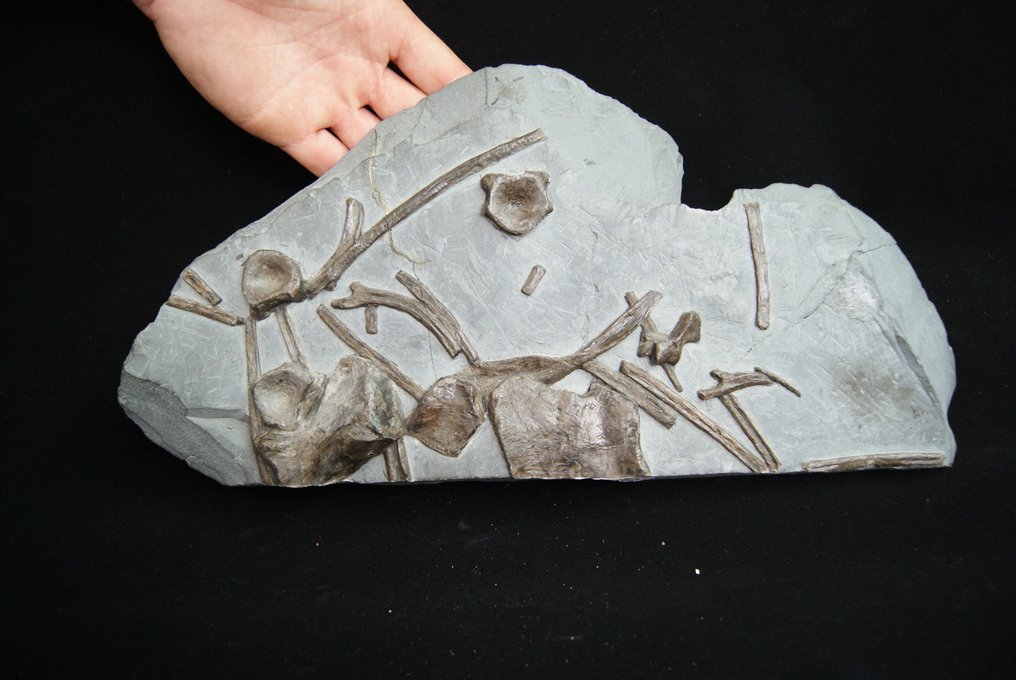
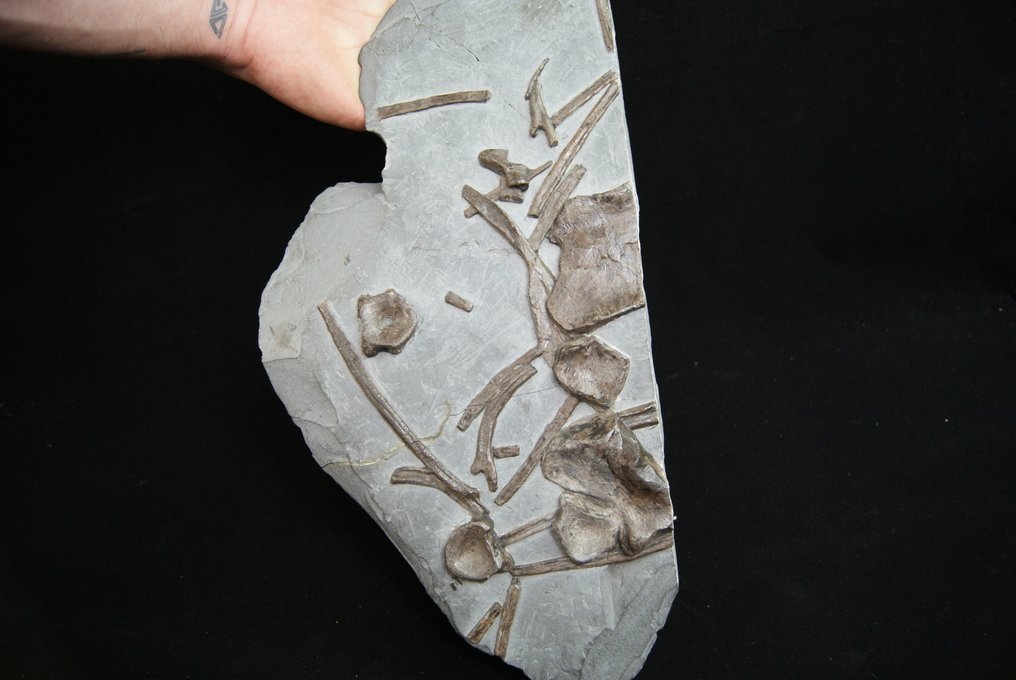
Specimen: Ictiosaurios; Scientific name: Placa fósil con esqueleto de ictiosaurio; Geological period: Jurassic; Treatment: fossil completely natural with no signs of restoration; Condition: Natural.
AI-assisted summary
Description from the seller
Scientific Name: Stenopterygius sp. (probable identification)
Location: Holzmaden, Germany
Stage: Lower Jurassic – Posidonia Shale (approximately 183 million years)
Size: Large-format plaque
Fossil description
An exceptional fossil plate with an ichthyosaur skeleton, originating from Holzmaden, Germany, one of the most prestigious localities in the world for Jurassic marine fossils. This specimen retains a large number of articulated bones, including vertebrae, ribs, limbs, and possibly part of the skull, all in natural condition and without visible restorations.
Ichthyosaurs were marine reptiles with hydrodynamic bodies, similar to modern dolphins, that dominated the oceans during the Mesozoic. This specimen, due to its size and preservation state, represents a museum-quality piece of the highest caliber, ideal for scientific exhibitions or top-tier paleontological collections.
Restoration: Completely natural fossil, with no signs of restoration.
Seller's Story
Travel in Time, Your Collection of Unique Fossils
Welcome to our fossil shop! Explore our fascinating catalogue of prehistoric remains and discover the history encapsulated in each piece. From majestic dinosaurs to ancient marine invertebrates, our collection will transport you to forgotten times. Find the perfect piece for your collection or gift a piece of natural history. Start your journey back in time today!
Translated by Google TranslateScientific Name: Stenopterygius sp. (probable identification)
Location: Holzmaden, Germany
Stage: Lower Jurassic – Posidonia Shale (approximately 183 million years)
Size: Large-format plaque
Fossil description
An exceptional fossil plate with an ichthyosaur skeleton, originating from Holzmaden, Germany, one of the most prestigious localities in the world for Jurassic marine fossils. This specimen retains a large number of articulated bones, including vertebrae, ribs, limbs, and possibly part of the skull, all in natural condition and without visible restorations.
Ichthyosaurs were marine reptiles with hydrodynamic bodies, similar to modern dolphins, that dominated the oceans during the Mesozoic. This specimen, due to its size and preservation state, represents a museum-quality piece of the highest caliber, ideal for scientific exhibitions or top-tier paleontological collections.
Restoration: Completely natural fossil, with no signs of restoration.
Seller's Story
Travel in Time, Your Collection of Unique Fossils
Welcome to our fossil shop! Explore our fascinating catalogue of prehistoric remains and discover the history encapsulated in each piece. From majestic dinosaurs to ancient marine invertebrates, our collection will transport you to forgotten times. Find the perfect piece for your collection or gift a piece of natural history. Start your journey back in time today!
Translated by Google TranslateDetails
Specimen
Ichthyosaur
Scientific name
Placa fósil con esqueleto de ictiosaurio
Country of Origin
Germany
Geological Period
Jurassic (201.3 - 145 million years)
Condition
Natural
Sold by