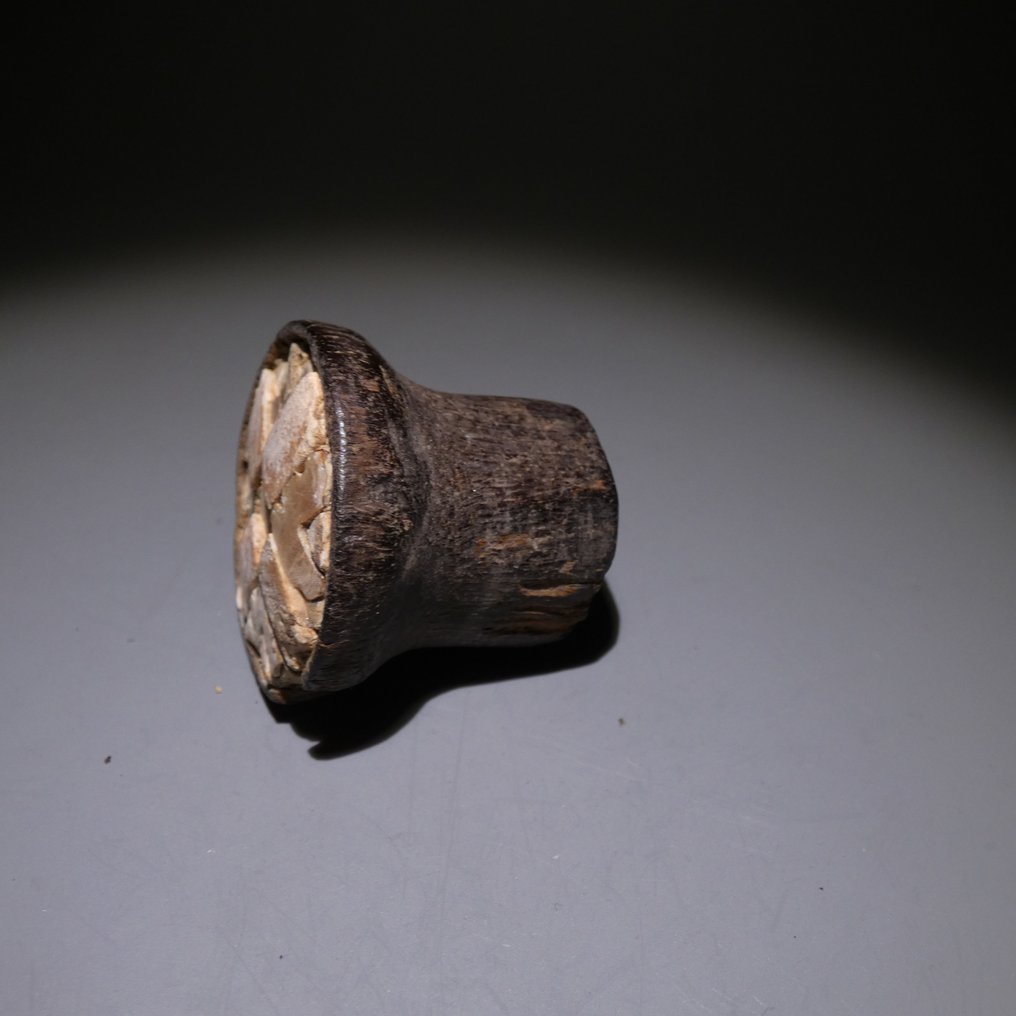
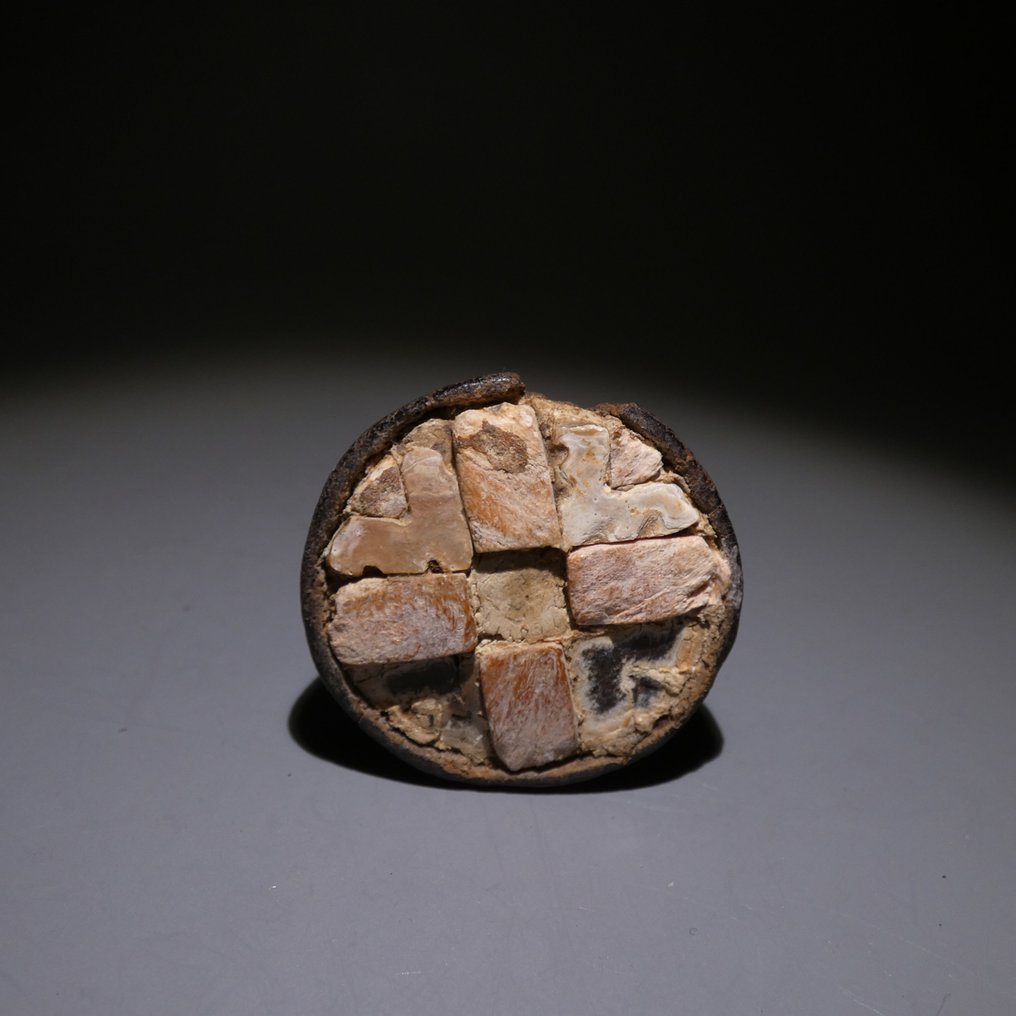
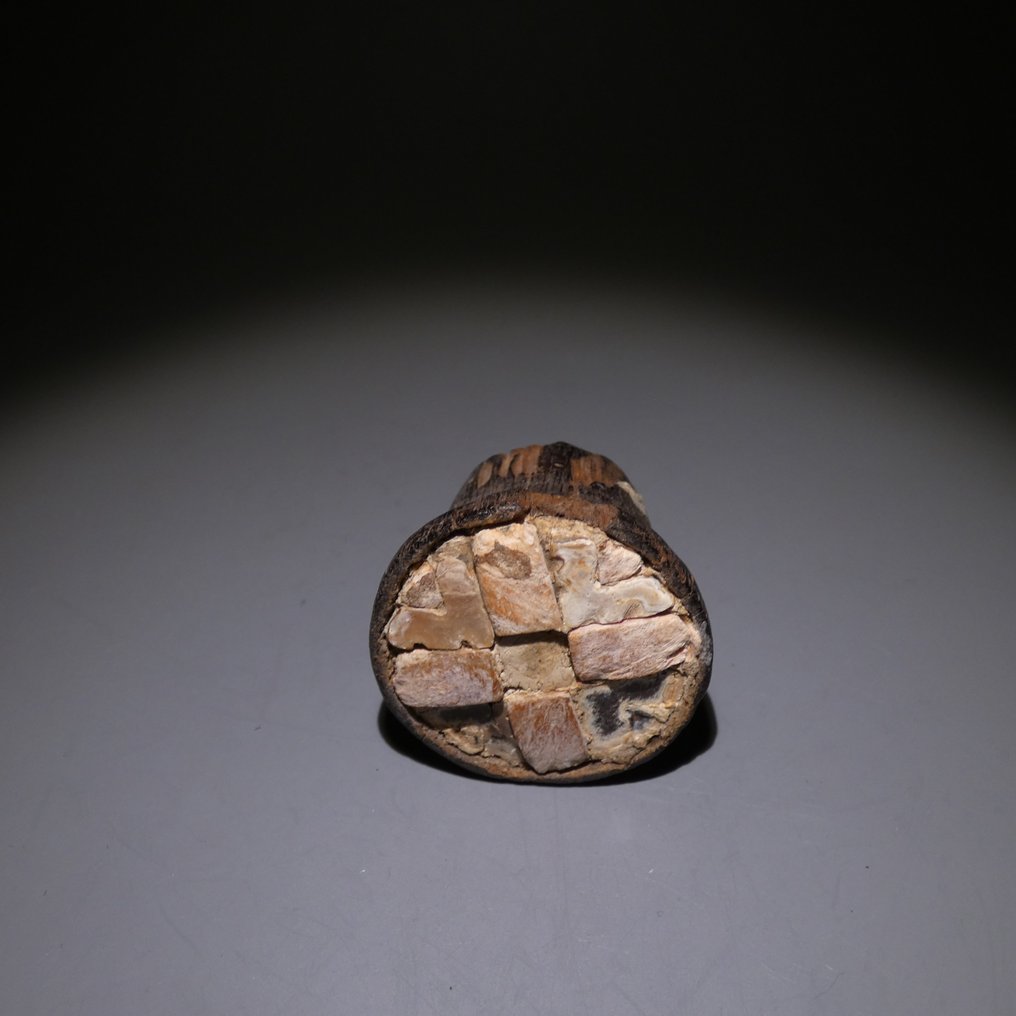
Huari, Peru Wood, mother-of-pearl, Tamba - Earring. 3.2 cm D. 700 - 1200 AD. Spanish Import license.


06
days
10
hours
05
minutes
19
seconds
Current bid
€ 1
Reserve price not met

Expert
Selected by Ruth Garrido Vila
Directed the Ifergan Collection Museum, specialising in Phoenician and Mediterranean archaeology.
Estimate € 530 - € 650
1 other person has their eye on this
 Bidder 3197 Bidder 3197 | €1 |
|---|
Catawiki Buyer Protection
Your payment’s safe with us until you receive your object.View details
Trustpilot 4.4 | 123779 reviews
Rated Excellent on Trustpilot.
Huari, Peru – Tamba - Earring, wooden and mother-of-pearl, dating to 700–1200 AD, 3.2 cm diameter, in good condition; provenance: Private collection, Paris since 1970, with a Spanish import/export license.
AI-assisted summary
Description from the seller
Tamba - Earring
- nice color -
Huari, Perú, 700 - 1200 AD
Wood and mother-of-pearl.
DIMENSIONS: 3.2 x 2.6 cm
PROVENANCE:
- Private collection, Paris, France, since 1970.
- Thence by descdent, until 2024 to public auction.
-Spanish import/export license.
CONDITION: Good condition, see photos.
The capital of the Huari / Wari Empire was located in the highlands of Southern Peru, near the modern-day city of Ayacucho. At its height, the empire stretched from the territory between Cajamarca in the north and Arequipa in the south, and from the Andean highlands to the Pacific coast, incorporating a variety of different landscapes and making it one of the largest Andean states in history.
Wari ceramic crafts display influences from three different styles. Many of their designs are similar to those of Tiwanaku and Pukara, such as the figure of the winged shaman or the Sceptered Figure, while what is perhaps their most notable ceramic vessel—the twin-necked bottle—is evocative of the Nazca culture. Wari ceramics are polychrome, with a highly polished surface. Some large, elaborately decorated polychrome pieces were probably used for ceremonial purposes and display the high technical expertise achieved by Wari craftsmen in terms of large-scale production. The culture also produced high quality textiles that featured the use of polychromatic yarns, brocade and double weave, as well as in the use of feathers for ornamentation.
It is believed that the Wari state was a secular society with highly developed warrior castes, rather than a theocratic state in which priests held political power. However, the culture did maintain a religious structure that it imposed on the peoples it conquered, along with its economic and political customs. The Wari probably worshipped gods similar to those of the Tiwanaku people, as the same general array of iconography is found in the arts of these two cultures.
The seller guarantees that he acquired this piece according to all national and international laws related to the ownership of cultural property. Provenance statement seen by Catawiki. The piece includes authenticity certificate. The seller will take care that any necessary permits will be arranged.
Seller's Story
IMPORTANT NOTES:
-We are a professional seller.
- All items sold will come with their professional invoice.
- All items sold will come with their own Certificate of Authenticity (warranty document), including the description, image and provenance of the item.
- All items will be shipped via private courier with insurance (DHL express, CORREOS of Spain, or other similar with tracking number).
- All items when shipped (if required) will be declared as antiques over 100 years old and their price valued.
- For shipping outside of EU: Delivery time subject to customs clearance. Liability and Customs Regulations or Import Requirements applicable in the destination country are the sole responsibility of the buyer. We are not responsible for delays caused by customs procedures. Import taxes and vat are not included in the shipping costs. The import tax or VAT payable depends on the country of destination. Payments of any taxes or any disputes with the Customs Authorities are the sole responsibility of the buyer.
- For some of the items offered, for shipment outside the European Union it is necessary to obtain an Export Permit which will detail the payment by the buyer of Export Fees according to Spanish legislation. If it is necessary it will be mentioned in the description of the article, BECAUSE NOT IN ALL THE CASES IT IS LIKE THAT. These fees will be added to the invoice, at the buyer's expense. These export fees are fixed on the final auction price and the tax rate is not applied directly on the total value of the item to be exported, but rather the different percentages by sections are applied to it: Up to 6,000 euros: 5%. From 6,001 to 60,000 euros: 10%.
This export permit application process can take between 1-2 months maximum.
- We guarantee that he acquired this piece according to all national and international laws related to the ownership of cultural property.
Translated by Google TranslateTamba - Earring
- nice color -
Huari, Perú, 700 - 1200 AD
Wood and mother-of-pearl.
DIMENSIONS: 3.2 x 2.6 cm
PROVENANCE:
- Private collection, Paris, France, since 1970.
- Thence by descdent, until 2024 to public auction.
-Spanish import/export license.
CONDITION: Good condition, see photos.
The capital of the Huari / Wari Empire was located in the highlands of Southern Peru, near the modern-day city of Ayacucho. At its height, the empire stretched from the territory between Cajamarca in the north and Arequipa in the south, and from the Andean highlands to the Pacific coast, incorporating a variety of different landscapes and making it one of the largest Andean states in history.
Wari ceramic crafts display influences from three different styles. Many of their designs are similar to those of Tiwanaku and Pukara, such as the figure of the winged shaman or the Sceptered Figure, while what is perhaps their most notable ceramic vessel—the twin-necked bottle—is evocative of the Nazca culture. Wari ceramics are polychrome, with a highly polished surface. Some large, elaborately decorated polychrome pieces were probably used for ceremonial purposes and display the high technical expertise achieved by Wari craftsmen in terms of large-scale production. The culture also produced high quality textiles that featured the use of polychromatic yarns, brocade and double weave, as well as in the use of feathers for ornamentation.
It is believed that the Wari state was a secular society with highly developed warrior castes, rather than a theocratic state in which priests held political power. However, the culture did maintain a religious structure that it imposed on the peoples it conquered, along with its economic and political customs. The Wari probably worshipped gods similar to those of the Tiwanaku people, as the same general array of iconography is found in the arts of these two cultures.
The seller guarantees that he acquired this piece according to all national and international laws related to the ownership of cultural property. Provenance statement seen by Catawiki. The piece includes authenticity certificate. The seller will take care that any necessary permits will be arranged.
Seller's Story
IMPORTANT NOTES:
-We are a professional seller.
- All items sold will come with their professional invoice.
- All items sold will come with their own Certificate of Authenticity (warranty document), including the description, image and provenance of the item.
- All items will be shipped via private courier with insurance (DHL express, CORREOS of Spain, or other similar with tracking number).
- All items when shipped (if required) will be declared as antiques over 100 years old and their price valued.
- For shipping outside of EU: Delivery time subject to customs clearance. Liability and Customs Regulations or Import Requirements applicable in the destination country are the sole responsibility of the buyer. We are not responsible for delays caused by customs procedures. Import taxes and vat are not included in the shipping costs. The import tax or VAT payable depends on the country of destination. Payments of any taxes or any disputes with the Customs Authorities are the sole responsibility of the buyer.
- For some of the items offered, for shipment outside the European Union it is necessary to obtain an Export Permit which will detail the payment by the buyer of Export Fees according to Spanish legislation. If it is necessary it will be mentioned in the description of the article, BECAUSE NOT IN ALL THE CASES IT IS LIKE THAT. These fees will be added to the invoice, at the buyer's expense. These export fees are fixed on the final auction price and the tax rate is not applied directly on the total value of the item to be exported, but rather the different percentages by sections are applied to it: Up to 6,000 euros: 5%. From 6,001 to 60,000 euros: 10%.
This export permit application process can take between 1-2 months maximum.
- We guarantee that he acquired this piece according to all national and international laws related to the ownership of cultural property.
Translated by Google TranslateDetails
Culture
Huari, Peru
Century/ Timeframe
700 - 1200 AD
Name of object
Tamba - Earring. 3.2 cm D. 700 - 1200 AD. Spanish Import license.
Acquired from
Private collection
Year acquired
2024
Material
mother-of-pearl,, Wood
Country acquired from
France
Condition
Good
Previous owner acquired from
Private collection
Previous owner - year acquired
1970
Previous owner - country acquired from
France
I verify that I have obtained this object legally and that I am allowed to sell it
Yes
Disclaimer
The seller was informed by Catawiki about documentation requirements and guarantees the following: - the object was legally obtained, - the seller has the right to sell and/or export the object, as relevant, - the seller will provide the necessary provenance information and arrange required documentation and permits/licenses, as applicable and as per local laws, - the seller will notify the buyer of any delays in obtaining permits/licenses. By bidding, you acknowledge that import documentation may be required depending on your country of residence and that obtaining permits/licenses may cause delays in the delivery of your object.
The seller was informed by Catawiki about documentation requirements and guarantees the following: - the object was legally obtained, - the seller has the right to sell and/or export the object, as relevant, - the seller will provide the necessary provenance information and arrange required documentation and permits/licenses, as applicable and as per local laws, - the seller will notify the buyer of any delays in obtaining permits/licenses. By bidding, you acknowledge that import documentation may be required depending on your country of residence and that obtaining permits/licenses may cause delays in the delivery of your object.
