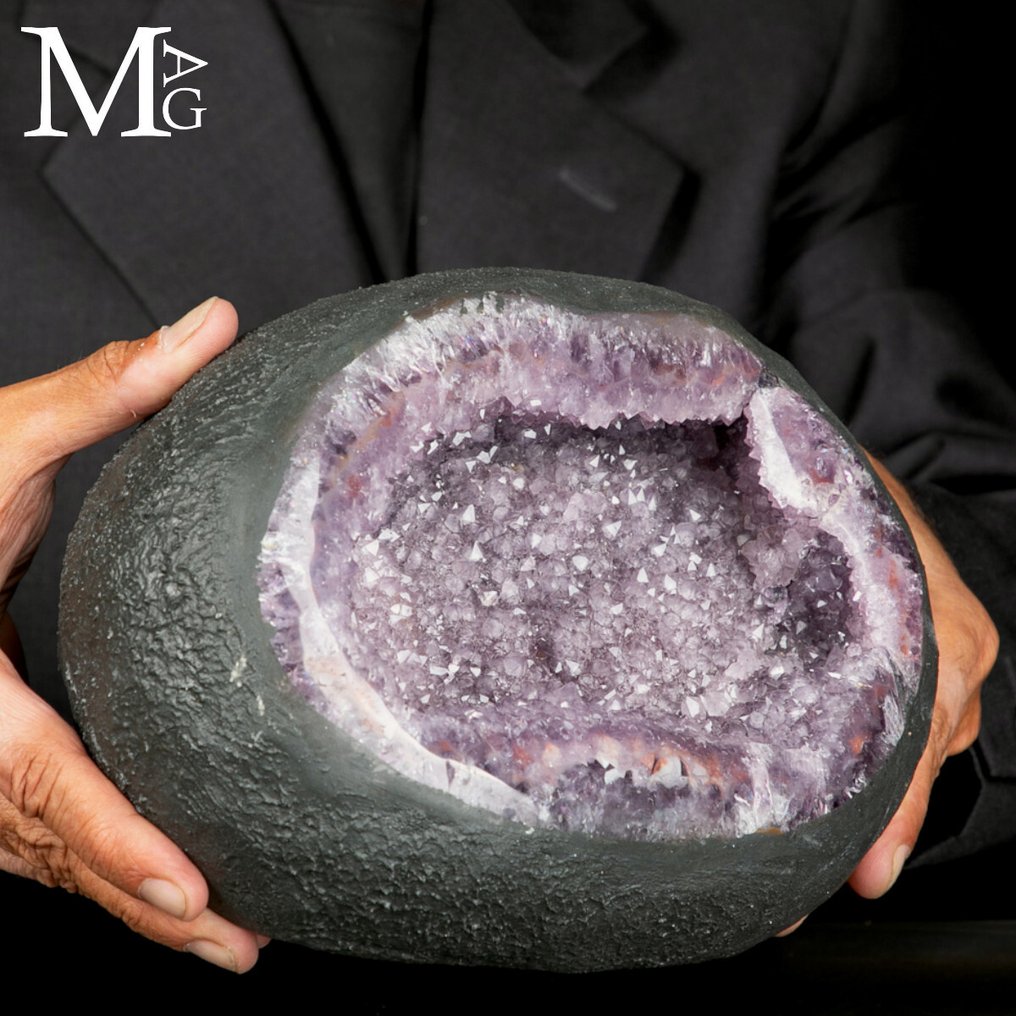
Amethyst Geode – Silent Chamber - Height: 220 mm - Width: 170 mm- 6146 g



05
days
20
hours
44
minutes
59
seconds
Current bid
€ 1
Reserve price not met

Expert
Selected by Jonas Rathaj
Has worked with taxidermy since childhood and gained retailer experience.
Estimate € 550 - € 650
3 other people are watching this object
 Bidder 9908 Bidder 9908 | €1 |
|---|
Catawiki Buyer Protection
Your payment’s safe with us until you receive your object.View details
Trustpilot 4.4 | 123053 reviews
Rated Excellent on Trustpilot.
Specimen: Amethyst Geode – Silent Chamber; Scientific name: Amethyst; Weight: 6146 g; Origin: Uruguay; Size: 220 × 170 × 160 mm.
AI-assisted summary
Description from the seller
An air bubble trapped in basalt.
An ancient breath, suspended under pressure as the lava cooled slowly in the darkness.
This is how this cavity was born, a secret chamber of the Earth, where time has created crystals, amethyst, the memory of fire.
Violet and shining tips, the echo of what was movement, heat, explosion… and then silence.
This geode is the shape of an event, from the Arapey Formation dating back to the Lower Cretaceous.
A small geological universe, enclosed in stone, a vibration in impossible balance, between force and quiet, between magma and silence.
During the volcanic activity of that era, basalt flows solidified trapping gas bubbles that formed empty cavities. Over time, silica- and iron-rich hydrothermal solutions penetrated these cavities and began to crystallize slowly, forming amethyst crystals. The purple color results from the presence of iron ions and natural exposure to radiation over millions of years.
Seller's Story
The Mineral Art Gallery offers minerals, fossils, shells and natural elements.
Born in Italy in 2017, today she collaborates with international galleries and collectors, she is a direct importer of large minerals and naturalistic collectible elements; deals with the processing to insert them inside the living space. A section of the gallery was dedicated to the Wunderkammer, "chamber of wonders or cabinet of curiosities" in which Mirabilia elements are presented: naturalia and italiania, a union between "the present is the past".
All lots are shipped via DHL Express and Fercam couriers, with insured parcel and tracking.
Translated by Google TranslateAn air bubble trapped in basalt.
An ancient breath, suspended under pressure as the lava cooled slowly in the darkness.
This is how this cavity was born, a secret chamber of the Earth, where time has created crystals, amethyst, the memory of fire.
Violet and shining tips, the echo of what was movement, heat, explosion… and then silence.
This geode is the shape of an event, from the Arapey Formation dating back to the Lower Cretaceous.
A small geological universe, enclosed in stone, a vibration in impossible balance, between force and quiet, between magma and silence.
During the volcanic activity of that era, basalt flows solidified trapping gas bubbles that formed empty cavities. Over time, silica- and iron-rich hydrothermal solutions penetrated these cavities and began to crystallize slowly, forming amethyst crystals. The purple color results from the presence of iron ions and natural exposure to radiation over millions of years.
Seller's Story
The Mineral Art Gallery offers minerals, fossils, shells and natural elements.
Born in Italy in 2017, today she collaborates with international galleries and collectors, she is a direct importer of large minerals and naturalistic collectible elements; deals with the processing to insert them inside the living space. A section of the gallery was dedicated to the Wunderkammer, "chamber of wonders or cabinet of curiosities" in which Mirabilia elements are presented: naturalia and italiania, a union between "the present is the past".
All lots are shipped via DHL Express and Fercam couriers, with insured parcel and tracking.
Translated by Google TranslateDetails
Mineral Form
Amethyst Geode – Silent Chamber
Weight
6146 g
Country of Origin
Uruguay
Height
220 mm
Width
170 mm
Depth
160 mm
Sold by