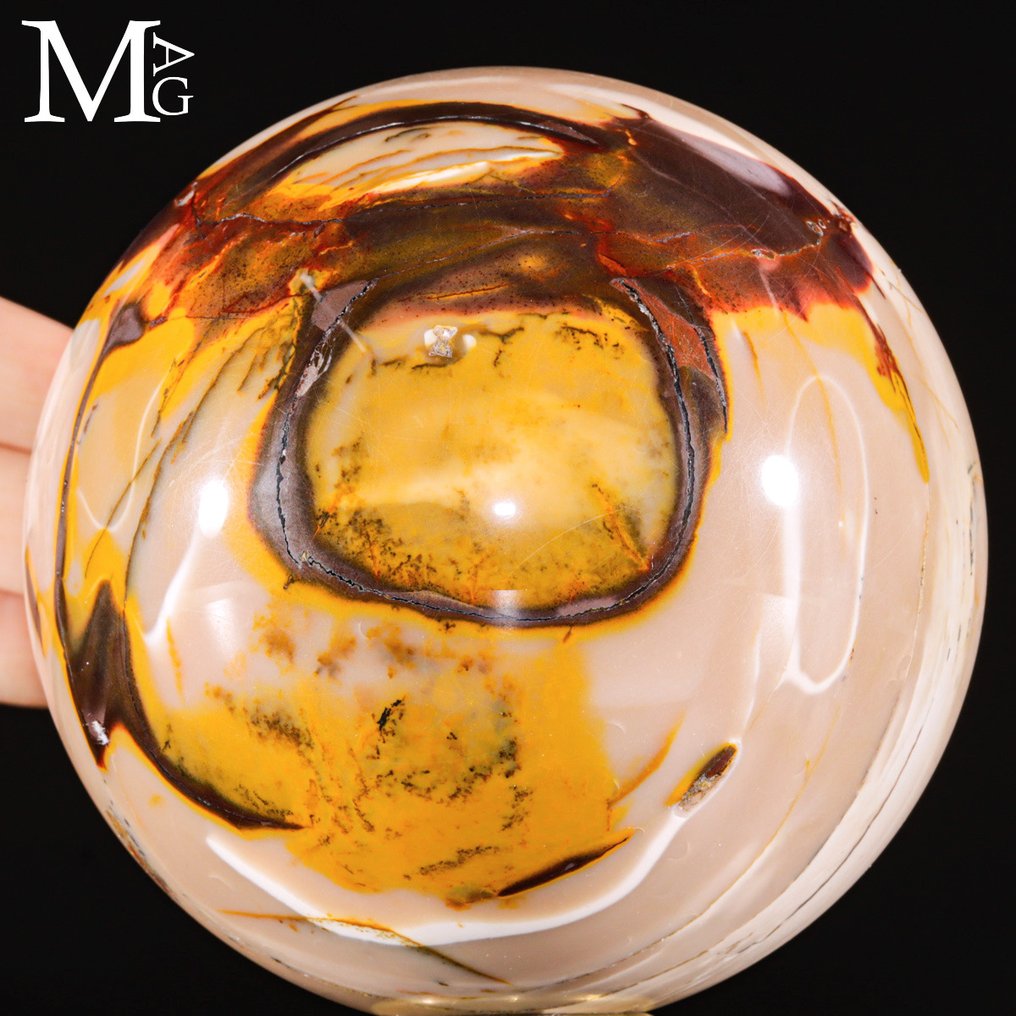
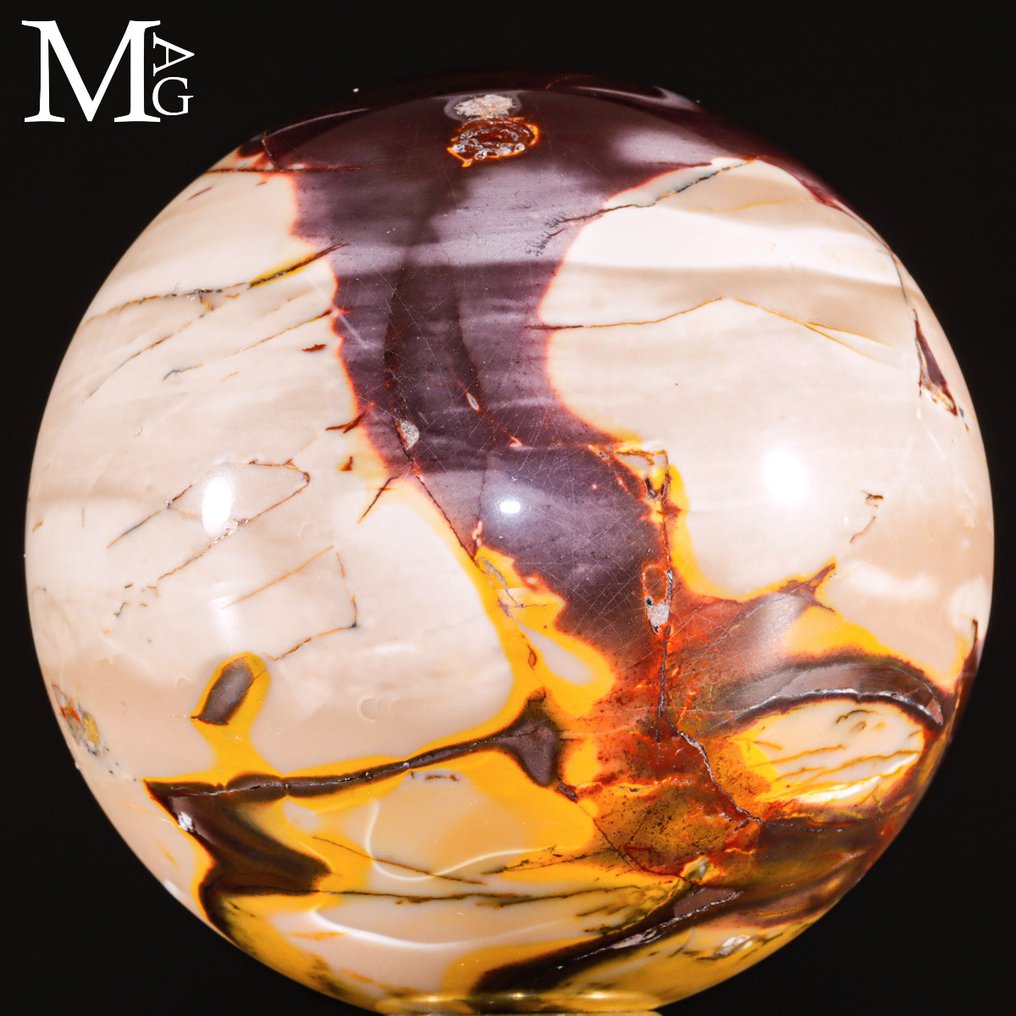
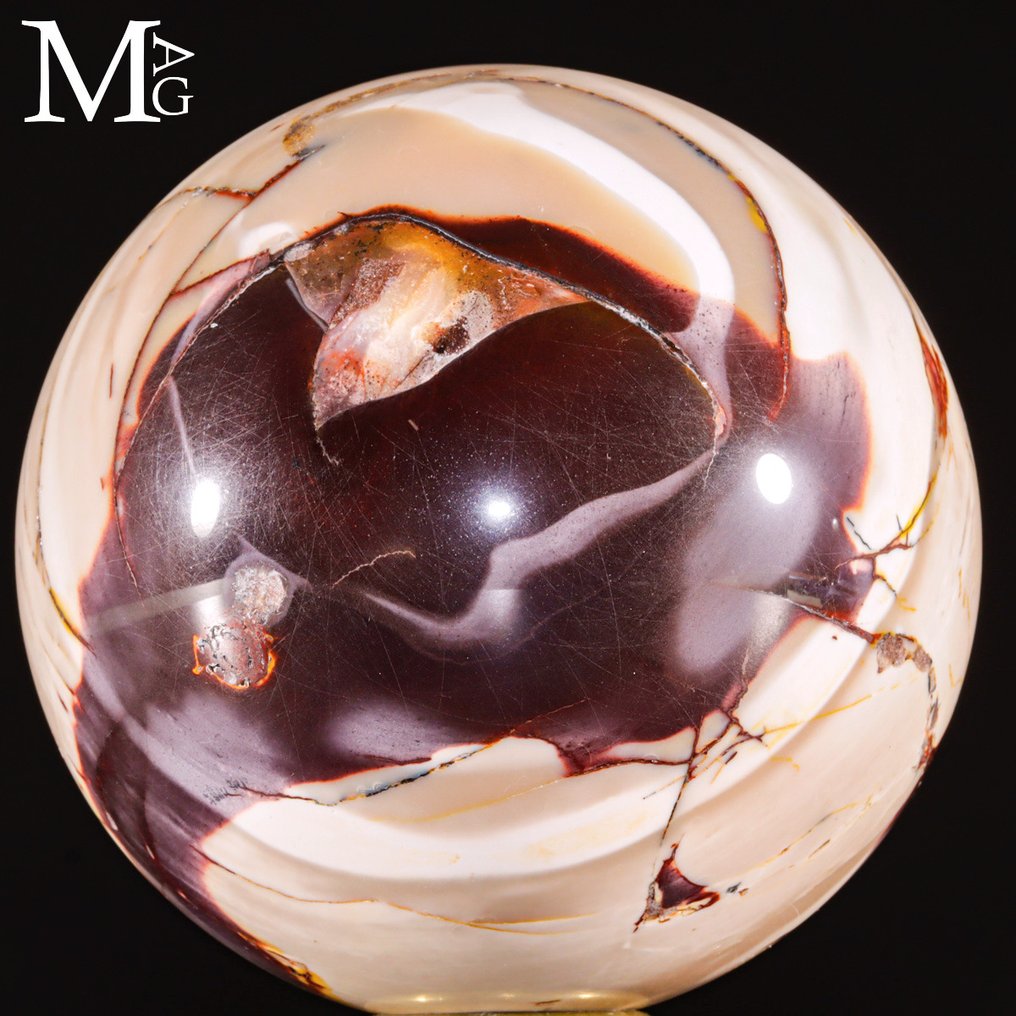
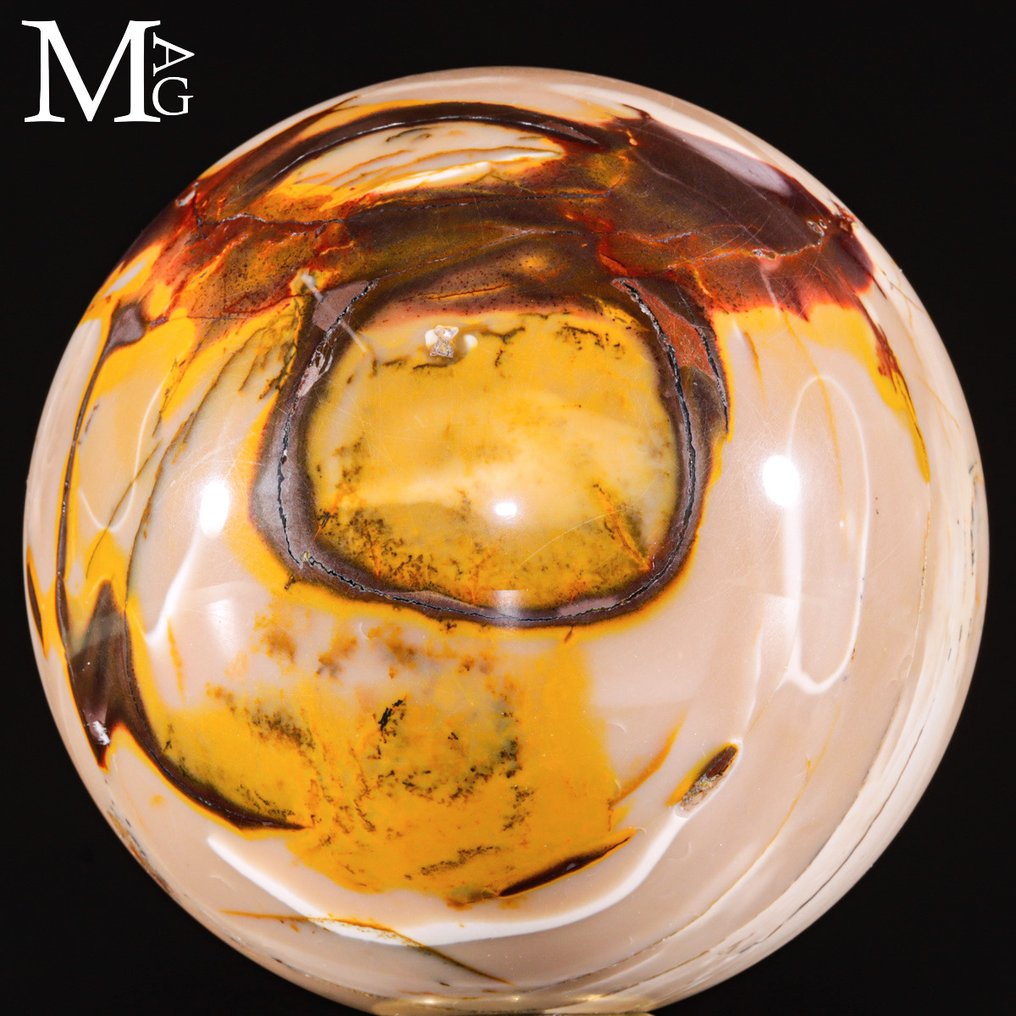
Wonderful Mookaite Sphere High Quality Mookaite > Jasper - Collector's Sphere - Height: 116 mm - Width: 116 mm- 2084 g

Opens tomorrow
Starting bid
€ 1
Add to your favourites to get an alert when the auction starts.

Catawiki Buyer Protection
Your payment’s safe with us until you receive your object.View details
Trustpilot 4.4 | 122986 reviews
Rated Excellent on Trustpilot.
Description from the seller
Stunning mookaite jasper sphere, carefully hand-polished to enhance its vibrant kaleidoscope of colors.
Mookaite is a silicate mineral from the same vein as quartz, defined as a form of chalcedony, but geologists argue that technically it is a silicified (rich in silicates) form of porcelanite rock.
Mookaite is made from fossil remains of microscopic aquatic creatures, and some rare pieces can even contain fossil traces from the era of the dinosaurs.
This stone is found only in Australia and is named after Mooka Creek, where it is located in Western Australia.
Over one hundred million years ago, during the Early Cretaceous period, microscopic marine creatures called Radiolarians died and sank to the seabed in an area of Western Australia called Mooka Creek.
Their hard silica shells and mineral-rich skeletons decomposed on the seabed, forming sediments.
When the sea level receded and underground waters rich in silica and other minerals penetrated the sediments, these fossilized remains were buried in increasingly deeper layers of sedimentary rock, forming Mookaite.
The vibrant colors and patterns of Mookaite are caused by these other minerals that filter through underground waters, such as manganese and iron.
Consequently, this type of rock is called Radiolarite, named after the creatures it is formed from, and more specifically, the rocks from which Mookaite is extracted are called Windalia Radiolarite, after the Australian area where the geological formation is located.
The Mookaite gemstone from this formation often contains opaline and chalcedonic elements and tends to form in nodules, from which it is extracted, cut, and polished into colored gems.
This rock is quite fragile and breaks easily, which means that specimens often show defects, cavities, and holes, which only serve to increase the earthiness and character of the stone.
Seller's Story
The Mineral Art Gallery offers minerals, fossils, shells and natural elements.
Born in Italy in 2017, today she collaborates with international galleries and collectors, she is a direct importer of large minerals and naturalistic collectible elements; deals with the processing to insert them inside the living space. A section of the gallery was dedicated to the Wunderkammer, "chamber of wonders or cabinet of curiosities" in which Mirabilia elements are presented: naturalia and italiania, a union between "the present is the past".
All lots are shipped via DHL Express and Fercam couriers, with insured parcel and tracking.
Translated by Google TranslateStunning mookaite jasper sphere, carefully hand-polished to enhance its vibrant kaleidoscope of colors.
Mookaite is a silicate mineral from the same vein as quartz, defined as a form of chalcedony, but geologists argue that technically it is a silicified (rich in silicates) form of porcelanite rock.
Mookaite is made from fossil remains of microscopic aquatic creatures, and some rare pieces can even contain fossil traces from the era of the dinosaurs.
This stone is found only in Australia and is named after Mooka Creek, where it is located in Western Australia.
Over one hundred million years ago, during the Early Cretaceous period, microscopic marine creatures called Radiolarians died and sank to the seabed in an area of Western Australia called Mooka Creek.
Their hard silica shells and mineral-rich skeletons decomposed on the seabed, forming sediments.
When the sea level receded and underground waters rich in silica and other minerals penetrated the sediments, these fossilized remains were buried in increasingly deeper layers of sedimentary rock, forming Mookaite.
The vibrant colors and patterns of Mookaite are caused by these other minerals that filter through underground waters, such as manganese and iron.
Consequently, this type of rock is called Radiolarite, named after the creatures it is formed from, and more specifically, the rocks from which Mookaite is extracted are called Windalia Radiolarite, after the Australian area where the geological formation is located.
The Mookaite gemstone from this formation often contains opaline and chalcedonic elements and tends to form in nodules, from which it is extracted, cut, and polished into colored gems.
This rock is quite fragile and breaks easily, which means that specimens often show defects, cavities, and holes, which only serve to increase the earthiness and character of the stone.
Seller's Story
The Mineral Art Gallery offers minerals, fossils, shells and natural elements.
Born in Italy in 2017, today she collaborates with international galleries and collectors, she is a direct importer of large minerals and naturalistic collectible elements; deals with the processing to insert them inside the living space. A section of the gallery was dedicated to the Wunderkammer, "chamber of wonders or cabinet of curiosities" in which Mirabilia elements are presented: naturalia and italiania, a union between "the present is the past".
All lots are shipped via DHL Express and Fercam couriers, with insured parcel and tracking.
Translated by Google TranslateDetails
Main Mineral
Wonderful Mookaite Sphere
Mineral Form
High Quality Mookaite > Jasper - Collector's Sphere
Weight
2084 g
Country of Origin
Australia
Height
116 mm
Width
116 mm
Depth
116 mm
Sold by