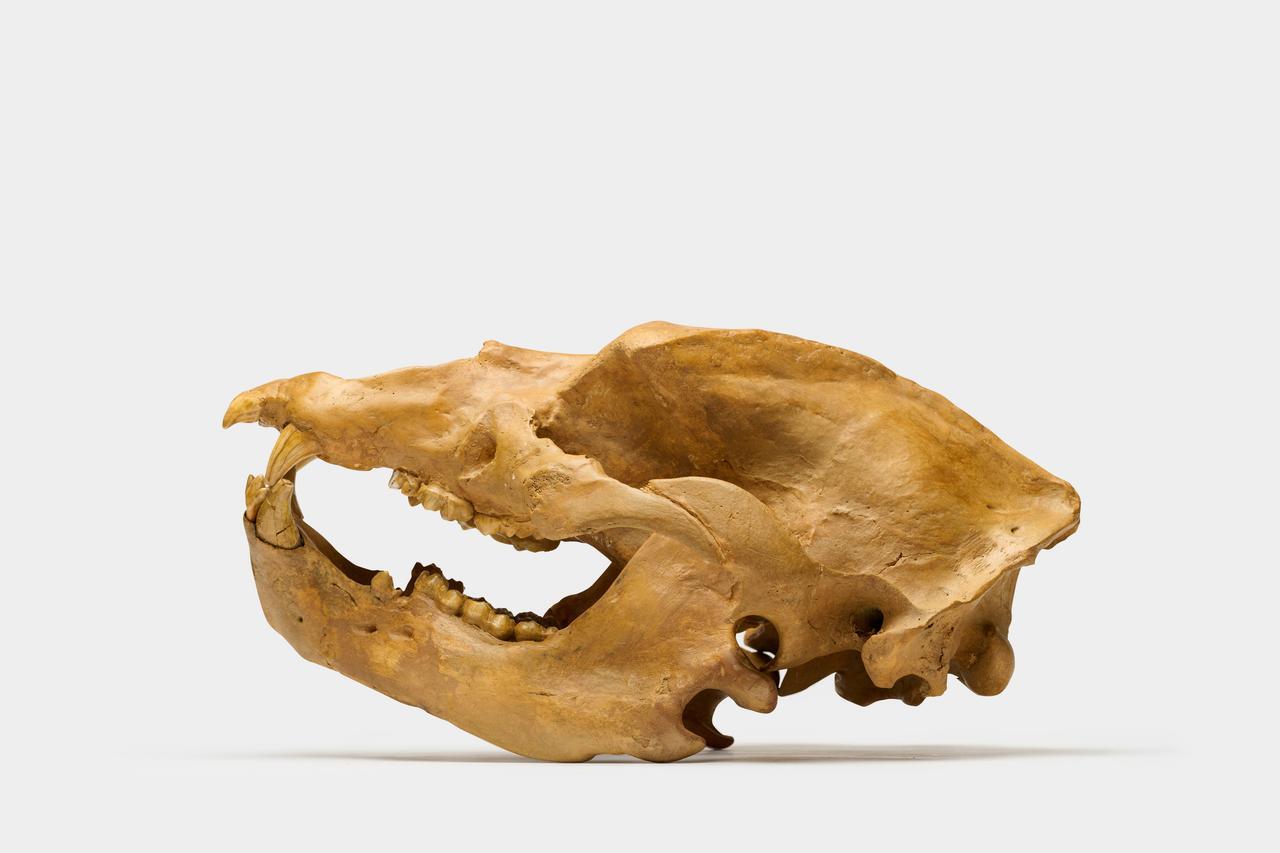
Fossil - Fossil matrix - Enantiornithes - 24 cm - 20.5 cm (No reserve price)


07
days
21
hours
40
minutes
20
seconds

No bids placed
Catawiki Buyer Protection
Your payment’s safe with us until you receive your object.View details
Trustpilot 4.4 | 122910 reviews
Rated Excellent on Trustpilot.
Description from the seller
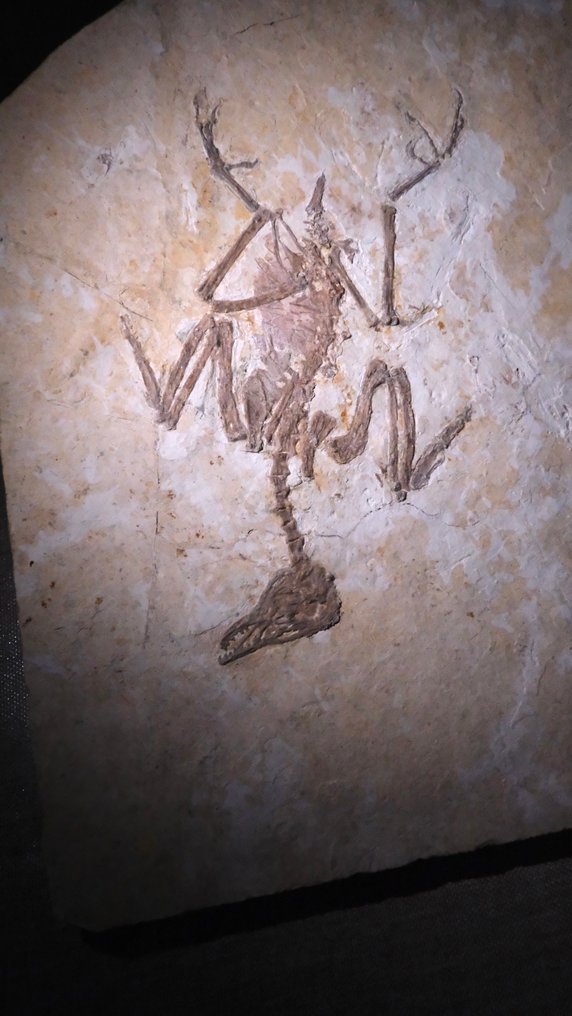
Enantiornithes | A Rare Early Cretaceous Avian Fossil
Enantiornithes are an extinct clade of primitive birds that lived during the Cretaceous period, approximately 130 million to 66 million years ago. Their name means “opposite birds,” derived from the reversed articulation of the shoulder girdle compared with that of modern birds, representing a unique and highly successful branch in avian evolutionary history.
Enantiornithes were widely distributed across all major continents of the time and were among the most diverse groups of birds in terrestrial and lacustrine ecosystems of the Cretaceous. Their forms ranged from small perching types to fully volant species, and some specimens even preserve feather impressions. These fossils provide crucial evidence for the study of the origin of flight, the evolution of feathers, and the ecological behavior of early birds.
Because Enantiornithes became extinct alongside the dinosaurs at the end of the Cretaceous, their fossils can only be found in specific stratigraphic layers and regions. Well-preserved and scientifically identifiable specimens are extremely rare, making them highly prized by museums, academic institutions, and elite private collectors.
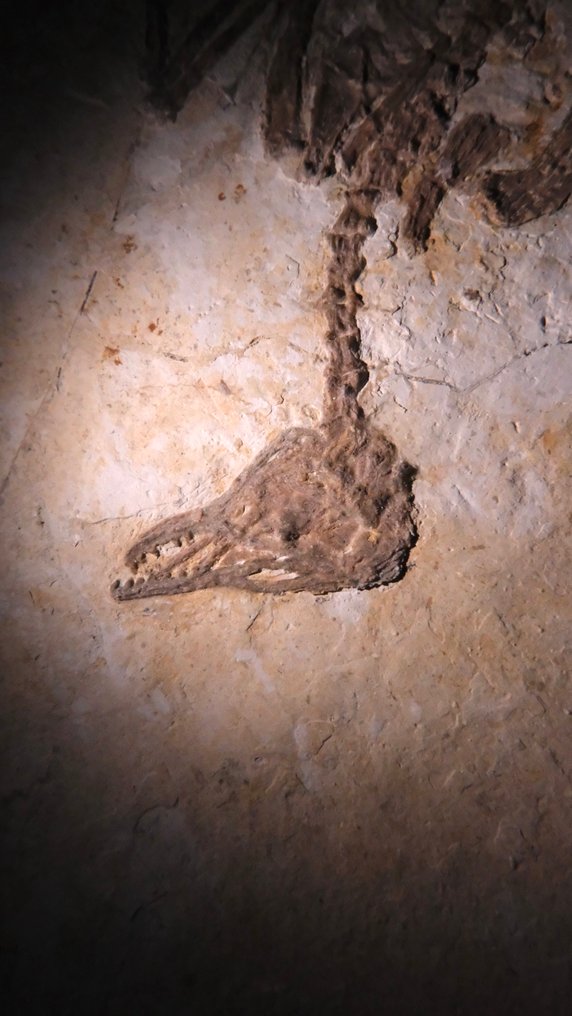
This specimen measures approximately 15 cm from head to claw tip. The skeleton is articulated, with soft tissue preserved in the abdominal cavity, and both teeth and claw tips are present, indicating a high degree of completeness.
No reserve price is set for this fossil. Wishing everyone a Merry Christmas and a Happy New Year.
Enantiornithes | A Rare Early Cretaceous Avian Fossil
Enantiornithes are an extinct clade of primitive birds that lived during the Cretaceous period, approximately 130 million to 66 million years ago. Their name means “opposite birds,” derived from the reversed articulation of the shoulder girdle compared with that of modern birds, representing a unique and highly successful branch in avian evolutionary history.
Enantiornithes were widely distributed across all major continents of the time and were among the most diverse groups of birds in terrestrial and lacustrine ecosystems of the Cretaceous. Their forms ranged from small perching types to fully volant species, and some specimens even preserve feather impressions. These fossils provide crucial evidence for the study of the origin of flight, the evolution of feathers, and the ecological behavior of early birds.
Because Enantiornithes became extinct alongside the dinosaurs at the end of the Cretaceous, their fossils can only be found in specific stratigraphic layers and regions. Well-preserved and scientifically identifiable specimens are extremely rare, making them highly prized by museums, academic institutions, and elite private collectors.
This specimen measures approximately 15 cm from head to claw tip. The skeleton is articulated, with soft tissue preserved in the abdominal cavity, and both teeth and claw tips are present, indicating a high degree of completeness.
No reserve price is set for this fossil. Wishing everyone a Merry Christmas and a Happy New Year.
Details
Specimen
Fossil
Scientific name
Enantiornithes
Country of Origin
Asia
Geological Period
Cretaceous (145 - 66 million years)
Condition
Natural
Weight
0.7 kg
Height
24 cm
Width
20.5 cm
Depth
1.3 cm
Sold by