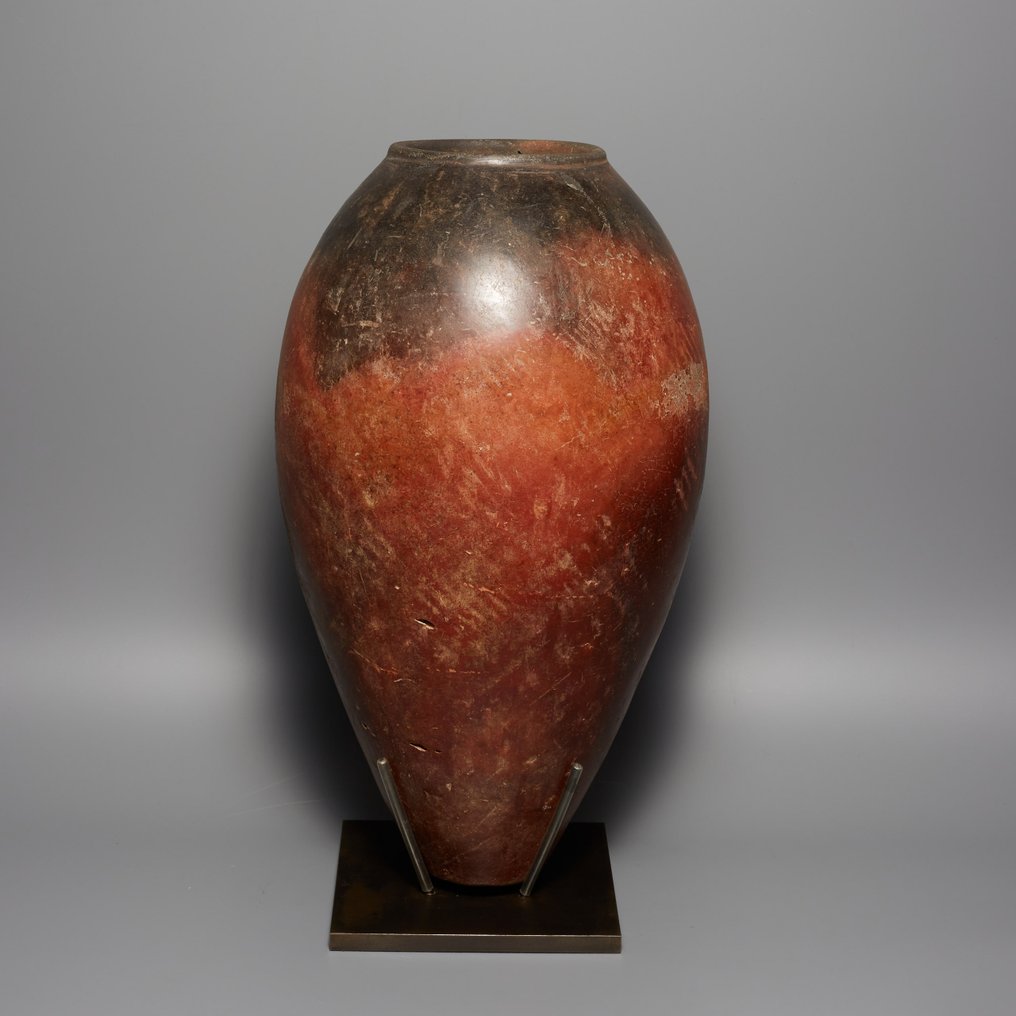
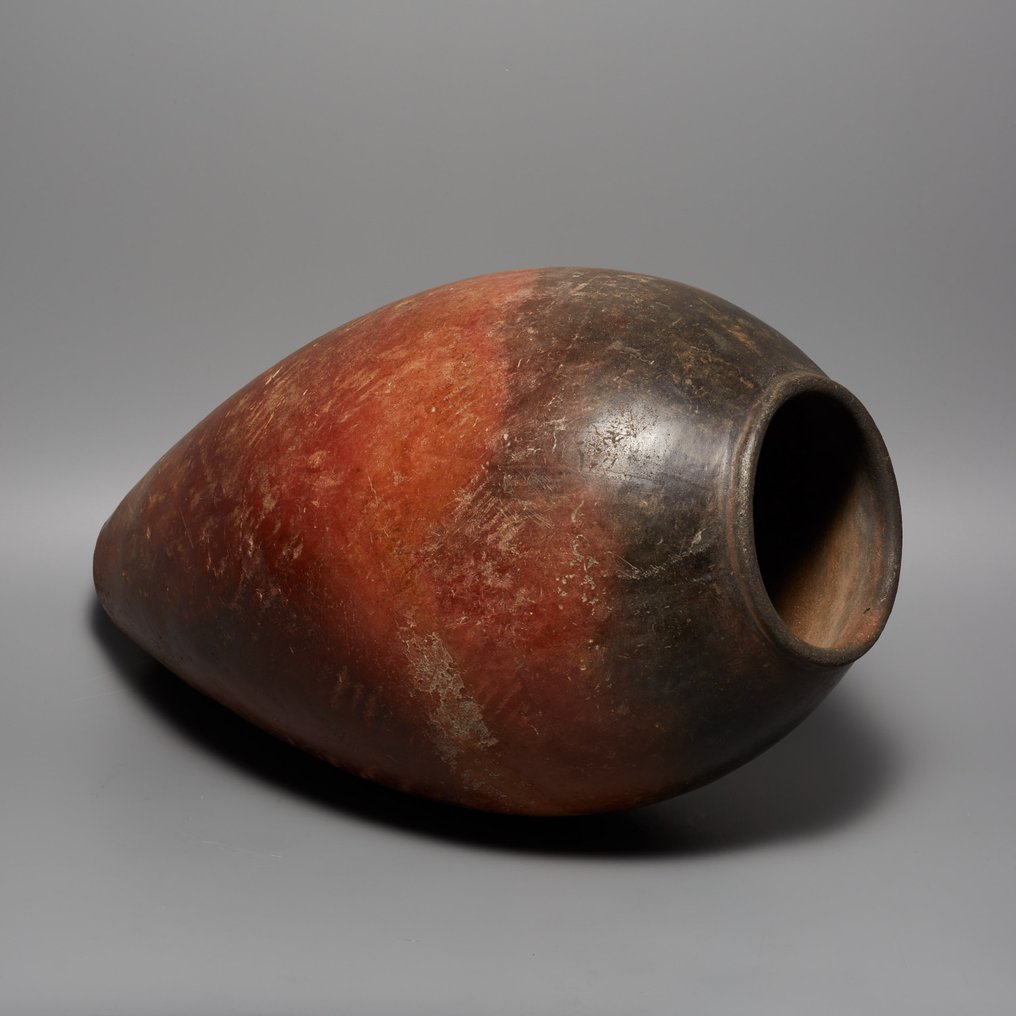
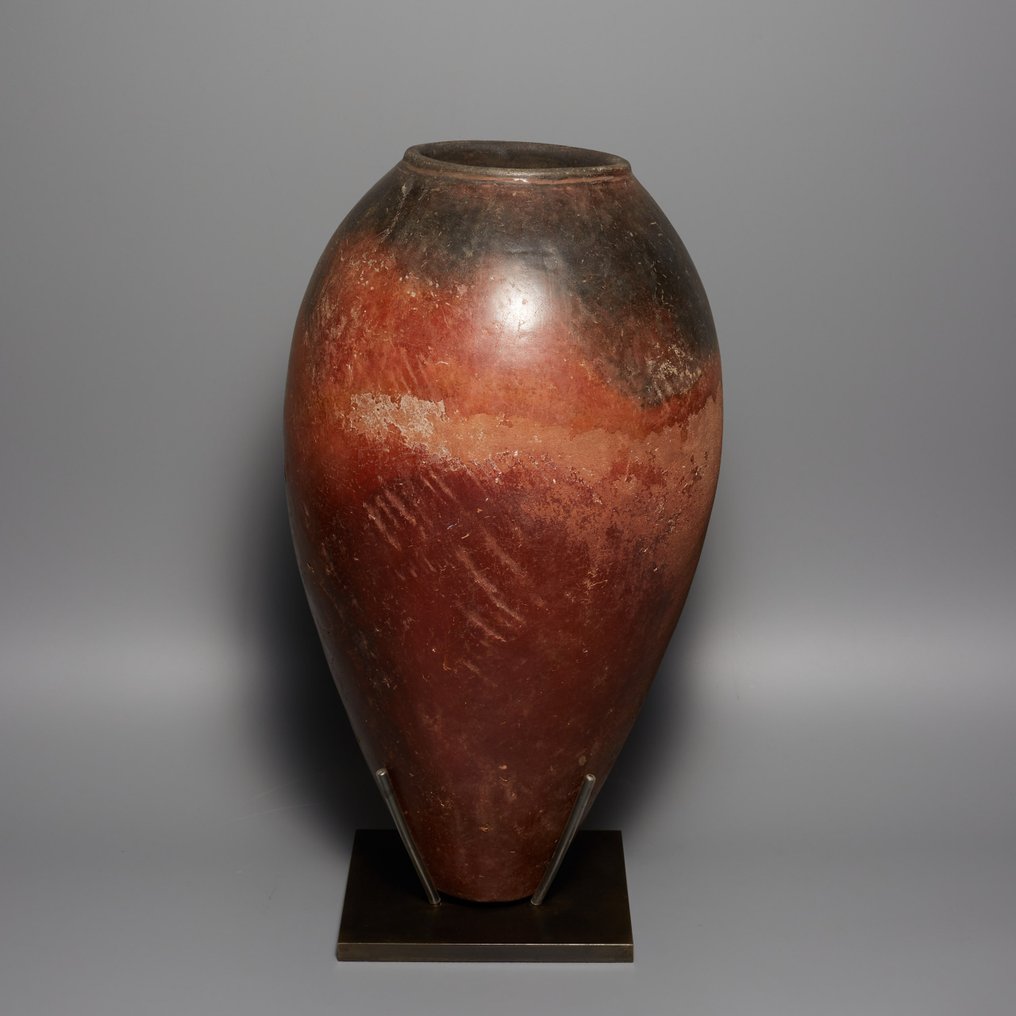
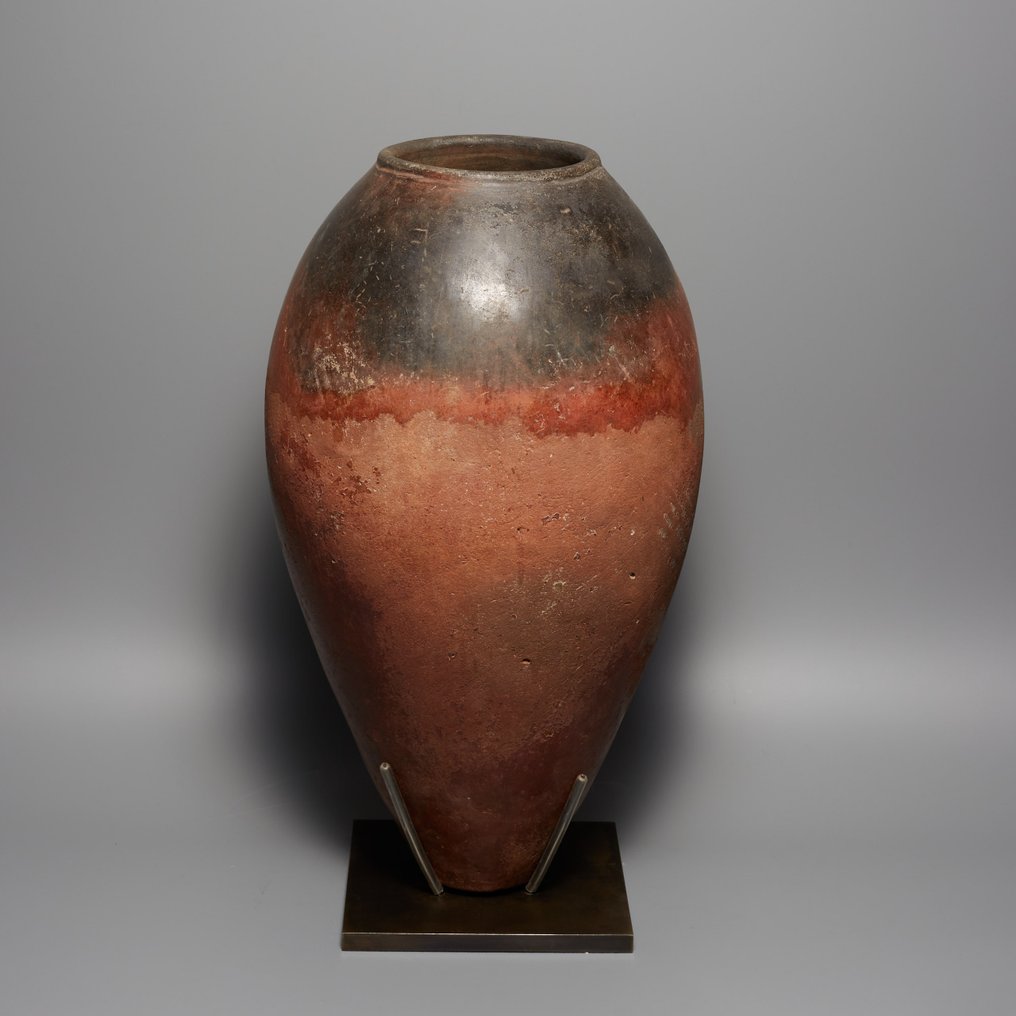
Ancient Egyptian Terracotta Black Top Vase. Predynastic Period, Naqada I - II, 4000 - 3200 BC. 40 cm height.

05
days
05
hours
52
minutes
57
seconds
Current bid
€ 3,000
Reserve price not met

Expert
Selected by Ruth Garrido Vila
Directed the Ifergan Collection Museum, specialising in Phoenician and Mediterranean archaeology.
Estimate € 9,400 - € 11,000
20 other people are watching this object
 Bidder 2148 Bidder 2148 | €3,000 | |
|---|---|---|
 Bidder 8903 Bidder 8903 | €10 | |
| Bidder 5260 | €2 | |
Catawiki Buyer Protection
Your payment’s safe with us until you receive your object.View details
Trustpilot 4.4 | 123878 reviews
Rated Excellent on Trustpilot.
Black Top Vase, a very large Predynastic Naqada I–II terracotta vessel from Ancient Egypt (c. 4000–3200 BC), 40 cm high and 22 cm long, in very good condition, acquired from a private collection in Spain in 2025, with authenticity certificate and Spanish export license.
AI-assisted summary
Description from the seller
Black Top Vase.
- very rare -
Ancient Egypt, Predynastic Period, Naqada I - II, 4000 - 3200 BC.
Terracotta.
40 cm height and 22 cm length.
PROVENANCE: Private Collection, Spain.
CONDITION: In good condition in general. Intact.
DESCRIPTION:
A pottery vessel belonging to the type known as “black-topped” as the upper area of the jar is black in colour. This example is quite a large jar for Predynastic productions. The body is ovoid, with a stable, but very small base to allow it to stand upright. The rim is slightly everted. It presents the mark of what could be the hieroglyph representing "water", and possibly a half figure of a fish can be seen underneath.
The red colour of the black-topped jars was achieved through the use of engobe. The exterior surface was covered with liquid clay mixed with water and red ochre (from earth with ferrous minerals) after the first drying and before the firing. The black was obtained when, after the firing, the vessel was placed head down in the embers. The carbonization of the part submerged produced the black colour.
More than 5000 years ago, around 3150 BC, Narmer, the king of Upper Egypt, conquered the area of the Nile Delta and united the fertile valley of the river into one kingdom, founding in this manner what would be one of the most splendid empire in antiquity, and becoming himself its first pharaoh. With this act, the Dynastic Period of Egyptian history began, which would last for more than 3000 years until the conquest of Egypt by Octavio and its assimilation as a Roman province.
But before the arrival of Narmer, and over a period of almost a millennium, the social, cultural and religious foundations of the future splendour of Egyptian civilization had already been laid in what is known as the Predynastic Period. This corresponds to the Chalcolithic, the Age of Copper, and must be considered to be divided into three stages. In Upper Egypt, the village of El-Badari became the nucleus of the groups known as the Badari culture (4400-3800 BC). The Amratian culture or Naqada I (4000–3500 BC) developed in parallel and then replaced the former. This was followed by the Gerzean or Naqada II (3500-3200 BC) and the Protodynastic or Naqada III (3200-3000 BC). Both the names Amratia and Gerzeh derive from sites where the oldest vestiges from these phases were found: El-Amrah, in Upper Egypt and el-Gerzeh, in Middle Egypt. The name Naqada, was given to these periods by Werner Kaiser, and was from the name of the city of Naqada, situated on the Banks of the Nile, 25 km north of Luxor.
This chronological division, in periods and cultures, derives from the study of the cultural material found in different burials, found both by Flinders Petrie, and later, by Kaiser. These burials had similar characteristics: a hole dug in the desert in which the deceased was buried in a foetal position. The dryness of the desert ensured the mummification of the body, thus conserving it for eternity. Grave goods were placed around the body, and these were principally: pieces of jewellery, vases in both terracotta and stone, cosmetic palettes, and knives and other flint tools. Although this was a formative period, objects of considerable artistic quality were made, and it was the moment of splendour for pottery vases, as well as for stone vases in a multitude of forms and typologies. One of these burial sites can be seen today in the British Museum.
Thanks to the volume and varied typology of pottery vases, Petrie established a classification of the types found at Naqada and called this Sequence Dating (SD). The result was a table with 50 SD numbers from 30 onward, so as to be able to incorporate ancient cultures and knives that were not known. The Badarian was established between SD 21-29; Naqada I between 30-38; Naqada II between 36-60 and Naqada III between SD 61-80. Later, Kaiser refined Petrie’s system, which is still valid today.
During the Naqada I Period tombs were individual or multiple, in the case of tombs of a woman and a child. The deceased were placed with the head towards the south, looking towards the west, and were placed with rush matting both above and below the corpse. The most ancient pottery pieces were shiny red recipients with black edges, known as “black-topped” pieces. These were mainly in the form of plates or ovoid vases with wide open mouths. In the Naqada II epoch the culture expanded to the north and the south. Black topped vases were still produced but the typologies became more varied and the forms refined. Moreover, two types of pottery have been documented: that made from coarse clay and that from a marly one. The latter exhibited geometric and decorative drawings in ochre over a cream under-colour. The predominant motif is a boat, showing the importance of the river as a means of communication to the north and the south. This is accompanied by human figures, standards and animals such as flamingos and goats, among others. In the Naqada III Period the typological novelties are the vessels called “wavy handled”. These are long with characteristic motifs of ochre lines that cross over each other along the body and which seem to have been copied from basket weaving.
The red colour of the black-topped jars was achieved through the use of engobe. The exterior surface was covered with liquid clay mixed with water and red ochre (from earth with ferrous minerals) after the first drying and before the firing. The black was obtained when, after the firing, the vessel was placed head down in the embers. The carbonization of the part submerged produced the black colour.
BIBLIOGRAPHY:
- DERRICKS, Claire. Antiquités égyptiennes au Musée Royal de Mariemont. Morlanwelz, - Belgique. 2010.
- GUIDOTTI, Maria Cristina. Materiale Predinastico del Museo Egizio di Firenze. MAAT - Materiali del Museo Egizio di FIrenze 4. Firenze. 2006.
- PETRIE, Flinders. Corpus of Prehistoric Pottery and Palettes. British School of Archaeology in Egypt. London. 1921
- TEETER, Emily (ed). Before the Pyramids. The Origins of Egyptian Civilization. Oriental Institue Museum Publications 33. The Oriental Institue of the University of Chicago. Chicago. 2011.
- V. AMAT, Paulino. La cerámica Black Top. Estudio de cerámica predinástica egipcia. Barcelona. 2010.
- WODZINSKA, Anna. A manual of Egyptian Pottery. Volume 1: Fayum A - Lower Egyptian Culture. Ancient Egypt Research Associates. Boston. 2009.
Notes:
- The piece includes authenticity certificate.
- The piece includes Spanish Export License (Passport for European Union).
- The seller guarantees that he acquired this piece according to all national and international laws related to the ownership of cultural property. Provenance statement seen by Catawiki.
Seller's Story
Gallery of Ancient Art - Archeology based in Barcelona with more than fifteen years of experience. Specialized in classical art, Egyptian art, Asian art and pre-Columbian art. It guarantees the authenticity of all its pieces. It participates in the most important art fairs in Spain, such as Feriarte, as well as in fairs abroad, BRAFA, Parcours des Mondes, Cultures Brussels.
All the pieces are sent with an Export Permit issued by the Spanish Ministry of Culture.
We are quick to ship via DHL Express or Direct Art Transport.
Translated by Google TranslateBlack Top Vase.
- very rare -
Ancient Egypt, Predynastic Period, Naqada I - II, 4000 - 3200 BC.
Terracotta.
40 cm height and 22 cm length.
PROVENANCE: Private Collection, Spain.
CONDITION: In good condition in general. Intact.
DESCRIPTION:
A pottery vessel belonging to the type known as “black-topped” as the upper area of the jar is black in colour. This example is quite a large jar for Predynastic productions. The body is ovoid, with a stable, but very small base to allow it to stand upright. The rim is slightly everted. It presents the mark of what could be the hieroglyph representing "water", and possibly a half figure of a fish can be seen underneath.
The red colour of the black-topped jars was achieved through the use of engobe. The exterior surface was covered with liquid clay mixed with water and red ochre (from earth with ferrous minerals) after the first drying and before the firing. The black was obtained when, after the firing, the vessel was placed head down in the embers. The carbonization of the part submerged produced the black colour.
More than 5000 years ago, around 3150 BC, Narmer, the king of Upper Egypt, conquered the area of the Nile Delta and united the fertile valley of the river into one kingdom, founding in this manner what would be one of the most splendid empire in antiquity, and becoming himself its first pharaoh. With this act, the Dynastic Period of Egyptian history began, which would last for more than 3000 years until the conquest of Egypt by Octavio and its assimilation as a Roman province.
But before the arrival of Narmer, and over a period of almost a millennium, the social, cultural and religious foundations of the future splendour of Egyptian civilization had already been laid in what is known as the Predynastic Period. This corresponds to the Chalcolithic, the Age of Copper, and must be considered to be divided into three stages. In Upper Egypt, the village of El-Badari became the nucleus of the groups known as the Badari culture (4400-3800 BC). The Amratian culture or Naqada I (4000–3500 BC) developed in parallel and then replaced the former. This was followed by the Gerzean or Naqada II (3500-3200 BC) and the Protodynastic or Naqada III (3200-3000 BC). Both the names Amratia and Gerzeh derive from sites where the oldest vestiges from these phases were found: El-Amrah, in Upper Egypt and el-Gerzeh, in Middle Egypt. The name Naqada, was given to these periods by Werner Kaiser, and was from the name of the city of Naqada, situated on the Banks of the Nile, 25 km north of Luxor.
This chronological division, in periods and cultures, derives from the study of the cultural material found in different burials, found both by Flinders Petrie, and later, by Kaiser. These burials had similar characteristics: a hole dug in the desert in which the deceased was buried in a foetal position. The dryness of the desert ensured the mummification of the body, thus conserving it for eternity. Grave goods were placed around the body, and these were principally: pieces of jewellery, vases in both terracotta and stone, cosmetic palettes, and knives and other flint tools. Although this was a formative period, objects of considerable artistic quality were made, and it was the moment of splendour for pottery vases, as well as for stone vases in a multitude of forms and typologies. One of these burial sites can be seen today in the British Museum.
Thanks to the volume and varied typology of pottery vases, Petrie established a classification of the types found at Naqada and called this Sequence Dating (SD). The result was a table with 50 SD numbers from 30 onward, so as to be able to incorporate ancient cultures and knives that were not known. The Badarian was established between SD 21-29; Naqada I between 30-38; Naqada II between 36-60 and Naqada III between SD 61-80. Later, Kaiser refined Petrie’s system, which is still valid today.
During the Naqada I Period tombs were individual or multiple, in the case of tombs of a woman and a child. The deceased were placed with the head towards the south, looking towards the west, and were placed with rush matting both above and below the corpse. The most ancient pottery pieces were shiny red recipients with black edges, known as “black-topped” pieces. These were mainly in the form of plates or ovoid vases with wide open mouths. In the Naqada II epoch the culture expanded to the north and the south. Black topped vases were still produced but the typologies became more varied and the forms refined. Moreover, two types of pottery have been documented: that made from coarse clay and that from a marly one. The latter exhibited geometric and decorative drawings in ochre over a cream under-colour. The predominant motif is a boat, showing the importance of the river as a means of communication to the north and the south. This is accompanied by human figures, standards and animals such as flamingos and goats, among others. In the Naqada III Period the typological novelties are the vessels called “wavy handled”. These are long with characteristic motifs of ochre lines that cross over each other along the body and which seem to have been copied from basket weaving.
The red colour of the black-topped jars was achieved through the use of engobe. The exterior surface was covered with liquid clay mixed with water and red ochre (from earth with ferrous minerals) after the first drying and before the firing. The black was obtained when, after the firing, the vessel was placed head down in the embers. The carbonization of the part submerged produced the black colour.
BIBLIOGRAPHY:
- DERRICKS, Claire. Antiquités égyptiennes au Musée Royal de Mariemont. Morlanwelz, - Belgique. 2010.
- GUIDOTTI, Maria Cristina. Materiale Predinastico del Museo Egizio di Firenze. MAAT - Materiali del Museo Egizio di FIrenze 4. Firenze. 2006.
- PETRIE, Flinders. Corpus of Prehistoric Pottery and Palettes. British School of Archaeology in Egypt. London. 1921
- TEETER, Emily (ed). Before the Pyramids. The Origins of Egyptian Civilization. Oriental Institue Museum Publications 33. The Oriental Institue of the University of Chicago. Chicago. 2011.
- V. AMAT, Paulino. La cerámica Black Top. Estudio de cerámica predinástica egipcia. Barcelona. 2010.
- WODZINSKA, Anna. A manual of Egyptian Pottery. Volume 1: Fayum A - Lower Egyptian Culture. Ancient Egypt Research Associates. Boston. 2009.
Notes:
- The piece includes authenticity certificate.
- The piece includes Spanish Export License (Passport for European Union).
- The seller guarantees that he acquired this piece according to all national and international laws related to the ownership of cultural property. Provenance statement seen by Catawiki.
Seller's Story
Gallery of Ancient Art - Archeology based in Barcelona with more than fifteen years of experience. Specialized in classical art, Egyptian art, Asian art and pre-Columbian art. It guarantees the authenticity of all its pieces. It participates in the most important art fairs in Spain, such as Feriarte, as well as in fairs abroad, BRAFA, Parcours des Mondes, Cultures Brussels.
All the pieces are sent with an Export Permit issued by the Spanish Ministry of Culture.
We are quick to ship via DHL Express or Direct Art Transport.
Translated by Google TranslateDetails
Culture
Ancient Egyptian
Century/ Timeframe
Predynastic Period, Naqada I - II, 4000 - 3200 BC
Name of object
Black Top Vase. Predynastic Period, Naqada I - II, 4000 - 3200 BC. 40 cm height.
Acquired from
Private collection
Year acquired
2025
Material
Terracotta
Country acquired from
Spain
Condition
Very good
Previous owner acquired from
Auction house
Previous owner - year acquired
1990
Previous owner - country acquired from
Spain
I verify that I have obtained this object legally and that I am allowed to sell it
Yes
Disclaimer
The seller was informed by Catawiki about documentation requirements and guarantees the following: - the object was legally obtained, - the seller has the right to sell and/or export the object, as relevant, - the seller will provide the necessary provenance information and arrange required documentation and permits/licenses, as applicable and as per local laws, - the seller will notify the buyer of any delays in obtaining permits/licenses. By bidding, you acknowledge that import documentation may be required depending on your country of residence and that obtaining permits/licenses may cause delays in the delivery of your object.
The seller was informed by Catawiki about documentation requirements and guarantees the following: - the object was legally obtained, - the seller has the right to sell and/or export the object, as relevant, - the seller will provide the necessary provenance information and arrange required documentation and permits/licenses, as applicable and as per local laws, - the seller will notify the buyer of any delays in obtaining permits/licenses. By bidding, you acknowledge that import documentation may be required depending on your country of residence and that obtaining permits/licenses may cause delays in the delivery of your object.
