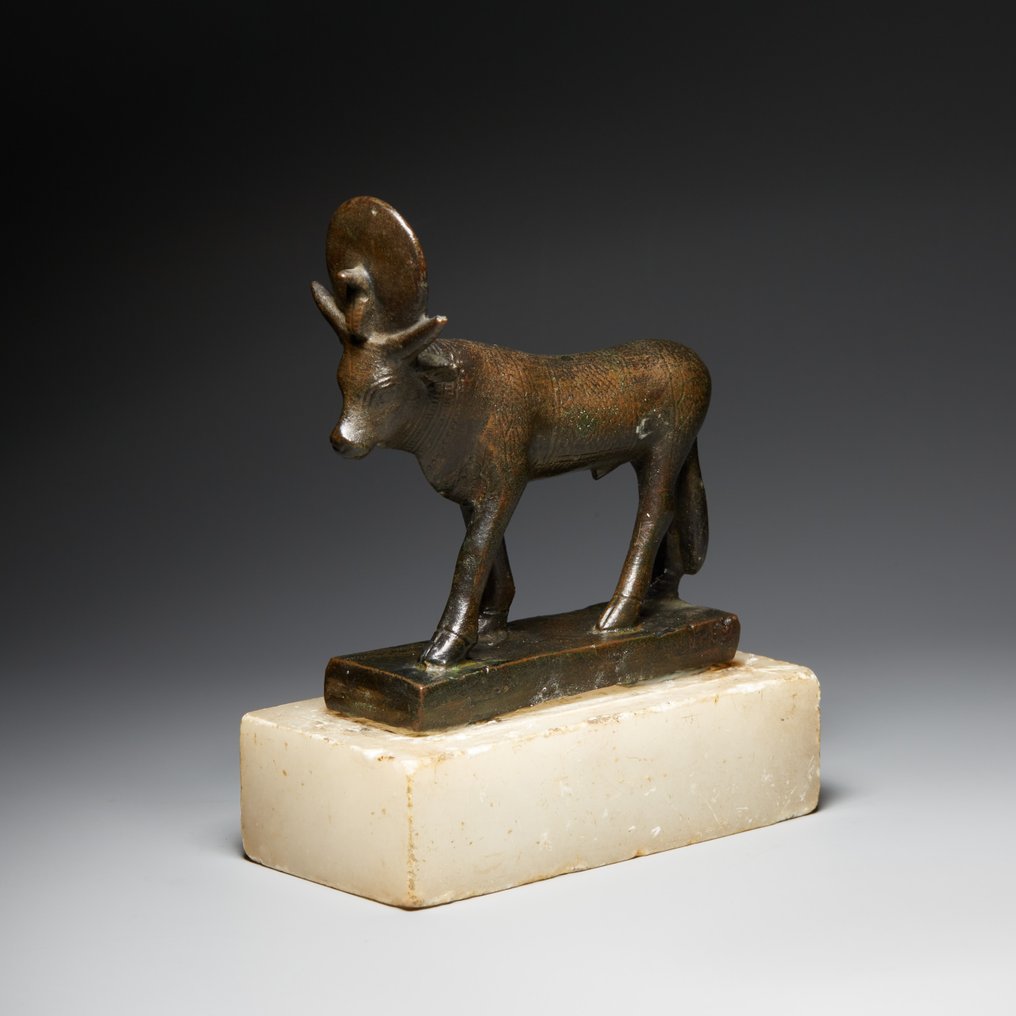
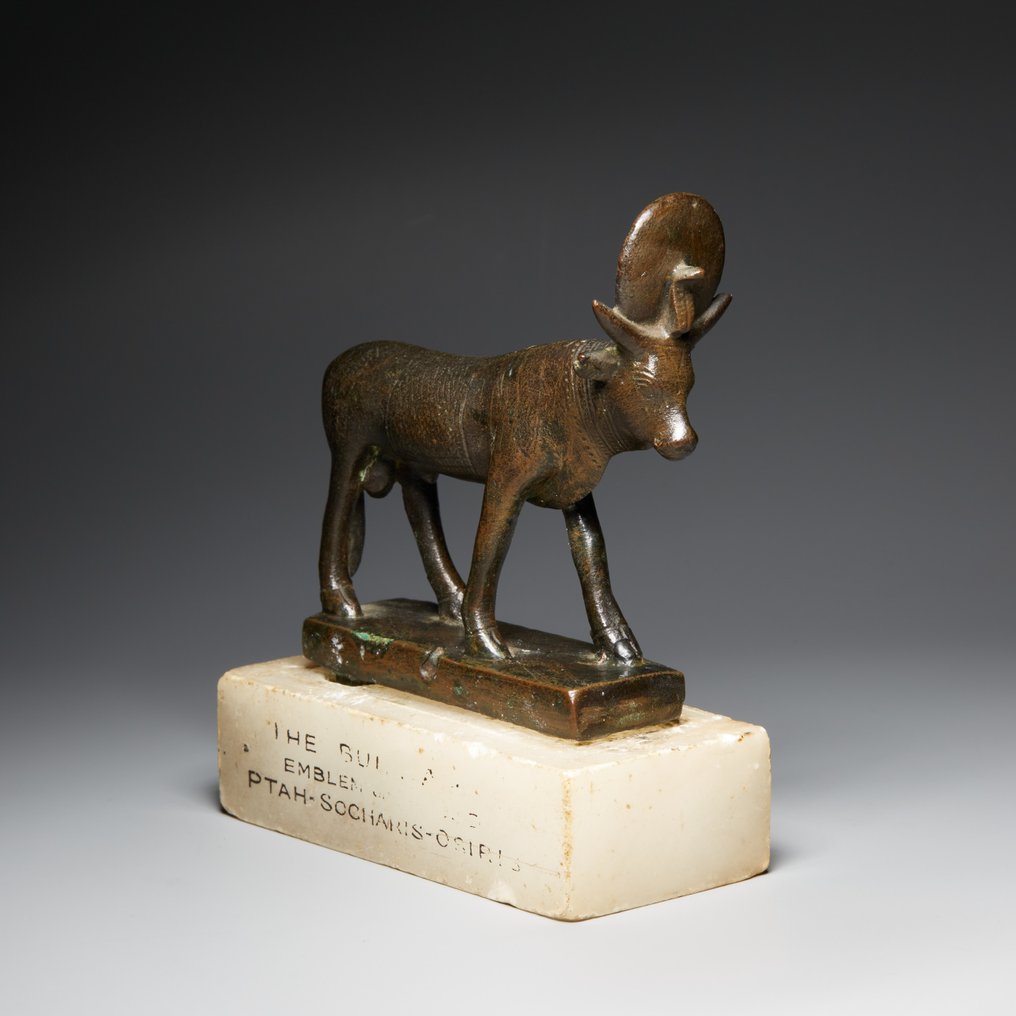
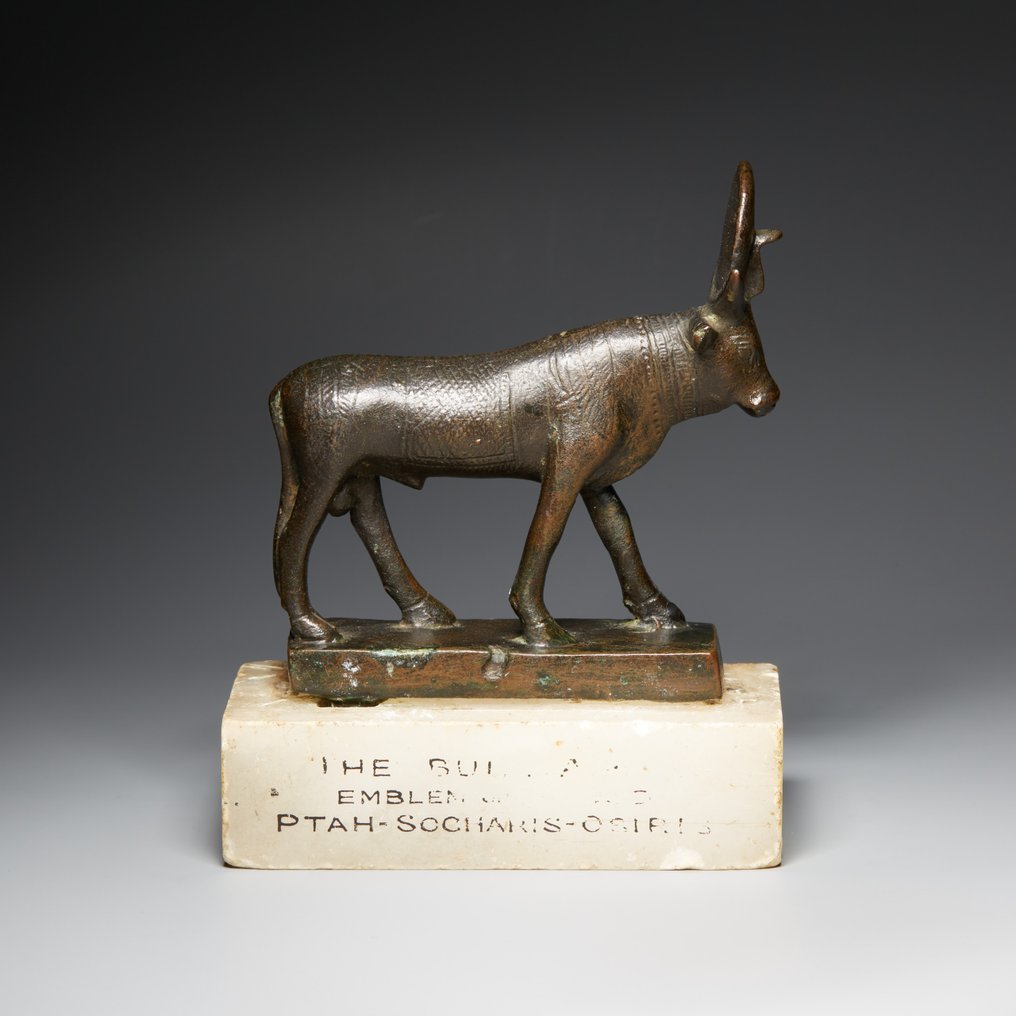
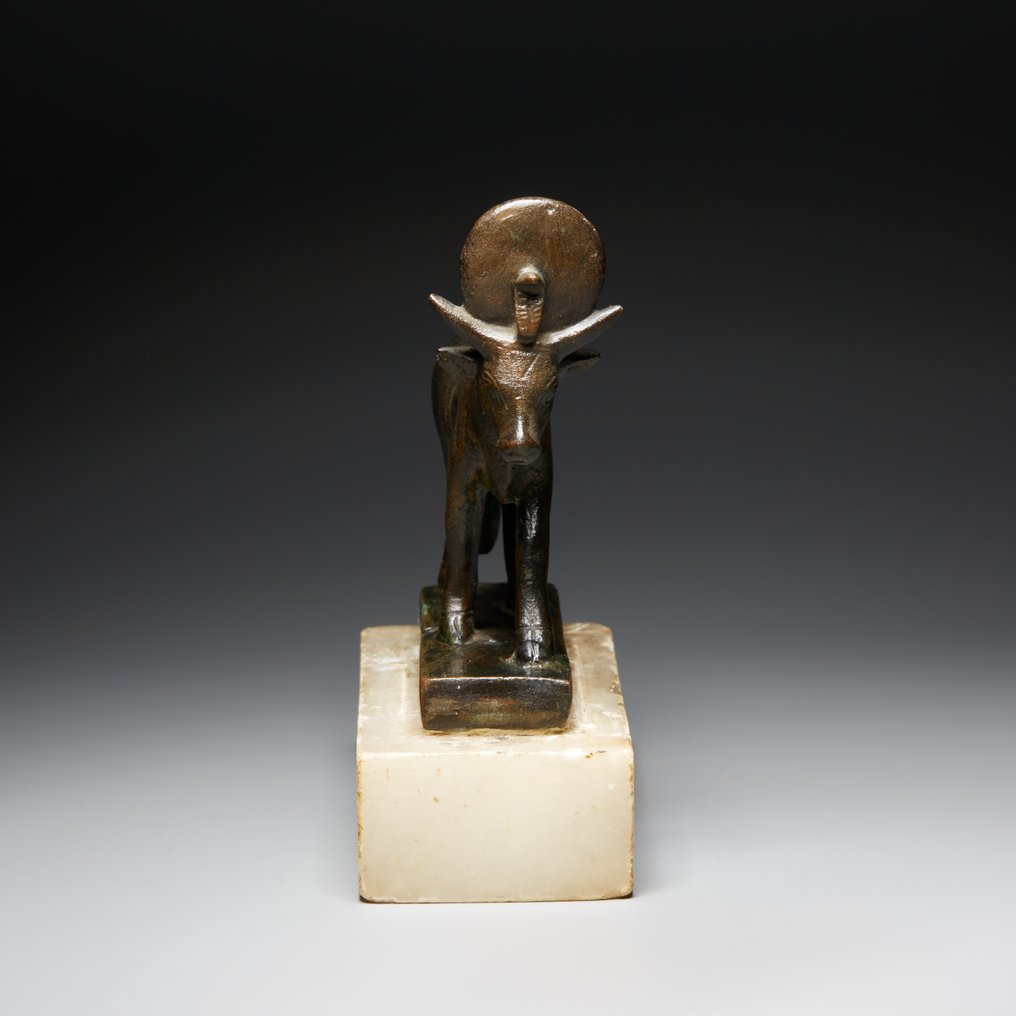
Ancient Egyptian Bronze God Apis. Late Period, 664 - 332 BC. 9.5 cm length.

10
days
01
hour
47
minutes
23
seconds
Starting bid
€ 1
Reserve price not met

Expert
Selected by Ruth Garrido Vila
Directed the Ifergan Collection Museum, specialising in Phoenician and Mediterranean archaeology.
Estimate € 10,500 - € 11,600
No bids placed
Catawiki Buyer Protection
Your payment’s safe with us until you receive your object.View details
Trustpilot 4.4 | 122986 reviews
Rated Excellent on Trustpilot.
Bronze votive statuette of the God Apis from Ancient Egypt, Late Period (664–332 BC), about 9.5 cm long and 9.5 cm high (12 cm with stand), in very good condition, from a private United Kingdom collection and acquired in 2024, with authenticity certificate and Spanish export license.
AI-assisted summary
Description from the seller
God Apis.
- nice patina -
Ancient Egypt, Late Period, 664 - 332 BC.
Bronze.
9.5 cm lenth, 9.5 cm height and 12 cm with the stand.
CONDITION: Good Condition, intact.
PROVENANCE: Private collection, United Kingdom. Acquired around 1970.
DESCRIPTION:
Many animals play a part in the religious life of ancient Egypt. The sacred bull of Apis is one of the best known. The Apis bull had a cult centre at Memphis and was seen by the Egyptians as one of the manifestations on earth of the god Ptah. When an Apis bull died, it was embalmed. The large tables used for embalming the bulls have survived near the modern centre of Memphis. The mummified bull was buried at Saqqara. From the New Kingdom (1550-1070 BC) onwards, burials took place at the Serapeum, a maze of large underground caverns in the desert. Each bull had its own huge sarcophagus, which was placed in one of these underground chambers. The dates of each bull's birth and death were recorded, and the information has often survived, carved on stone stelae set into the walls of the burial place. A prospective new Apis bull was required to have a white crescent on one side of its body or a white triangle on its forehead, signifying its unique character and its acceptance by the gods. Once the Apis bull was chosen, its mother was also honoured, and buried in catacombs at Saqqara set aside for the purpose. This bronze statuette is a votive offering, presented to the god as an expression of devotion, with the hope that the god would look kindly on the donor. The statuette might have been deposited in the Serapeum and the sun disc and uraeus on the bull's head show the divinity of the animal.
Notes:
- The piece includes authenticity certificate.
- The piece includes Spanish Export License (Passport for European Union) - If the piece is destined outside the European Union a substitution of the export permit should be requested, can take between 1-2 weeks maximum.
- The seller guarantees that he acquired this piece according to all national and international laws related to the ownership of cultural property. Provenance statement seen by Catawiki.
Seller's Story
Gallery of Ancient Art - Archeology based in Barcelona with more than fifteen years of experience. Specialized in classical art, Egyptian art, Asian art and pre-Columbian art. It guarantees the authenticity of all its pieces. It participates in the most important art fairs in Spain, such as Feriarte, as well as in fairs abroad, BRAFA, Parcours des Mondes, Cultures Brussels.
All the pieces are sent with an Export Permit issued by the Spanish Ministry of Culture.
We are quick to ship via DHL Express or Direct Art Transport.
Translated by Google TranslateGod Apis.
- nice patina -
Ancient Egypt, Late Period, 664 - 332 BC.
Bronze.
9.5 cm lenth, 9.5 cm height and 12 cm with the stand.
CONDITION: Good Condition, intact.
PROVENANCE: Private collection, United Kingdom. Acquired around 1970.
DESCRIPTION:
Many animals play a part in the religious life of ancient Egypt. The sacred bull of Apis is one of the best known. The Apis bull had a cult centre at Memphis and was seen by the Egyptians as one of the manifestations on earth of the god Ptah. When an Apis bull died, it was embalmed. The large tables used for embalming the bulls have survived near the modern centre of Memphis. The mummified bull was buried at Saqqara. From the New Kingdom (1550-1070 BC) onwards, burials took place at the Serapeum, a maze of large underground caverns in the desert. Each bull had its own huge sarcophagus, which was placed in one of these underground chambers. The dates of each bull's birth and death were recorded, and the information has often survived, carved on stone stelae set into the walls of the burial place. A prospective new Apis bull was required to have a white crescent on one side of its body or a white triangle on its forehead, signifying its unique character and its acceptance by the gods. Once the Apis bull was chosen, its mother was also honoured, and buried in catacombs at Saqqara set aside for the purpose. This bronze statuette is a votive offering, presented to the god as an expression of devotion, with the hope that the god would look kindly on the donor. The statuette might have been deposited in the Serapeum and the sun disc and uraeus on the bull's head show the divinity of the animal.
Notes:
- The piece includes authenticity certificate.
- The piece includes Spanish Export License (Passport for European Union) - If the piece is destined outside the European Union a substitution of the export permit should be requested, can take between 1-2 weeks maximum.
- The seller guarantees that he acquired this piece according to all national and international laws related to the ownership of cultural property. Provenance statement seen by Catawiki.
Seller's Story
Gallery of Ancient Art - Archeology based in Barcelona with more than fifteen years of experience. Specialized in classical art, Egyptian art, Asian art and pre-Columbian art. It guarantees the authenticity of all its pieces. It participates in the most important art fairs in Spain, such as Feriarte, as well as in fairs abroad, BRAFA, Parcours des Mondes, Cultures Brussels.
All the pieces are sent with an Export Permit issued by the Spanish Ministry of Culture.
We are quick to ship via DHL Express or Direct Art Transport.
Translated by Google TranslateDetails
Culture
Ancient Egyptian
Century/ Timeframe
Late Period, 664 - 332 B.C.
Name of object
God Apis. Late Period, 664 - 332 BC. 9.5 cm length.
Acquired from
Auction house
Year acquired
2024
Material
Bronze
Country acquired from
United Kingdom
Condition
Very good
Previous owner acquired from
Private collection
Previous owner - year acquired
1970
Previous owner - country acquired from
United Kingdom
I verify that I have obtained this object legally and that I am allowed to sell it
Yes
Disclaimer
The seller was informed by Catawiki about documentation requirements and guarantees the following: - the object was legally obtained, - the seller has the right to sell and/or export the object, as relevant, - the seller will provide the necessary provenance information and arrange required documentation and permits/licenses, as applicable and as per local laws, - the seller will notify the buyer of any delays in obtaining permits/licenses. By bidding, you acknowledge that import documentation may be required depending on your country of residence and that obtaining permits/licenses may cause delays in the delivery of your object.
The seller was informed by Catawiki about documentation requirements and guarantees the following: - the object was legally obtained, - the seller has the right to sell and/or export the object, as relevant, - the seller will provide the necessary provenance information and arrange required documentation and permits/licenses, as applicable and as per local laws, - the seller will notify the buyer of any delays in obtaining permits/licenses. By bidding, you acknowledge that import documentation may be required depending on your country of residence and that obtaining permits/licenses may cause delays in the delivery of your object.
