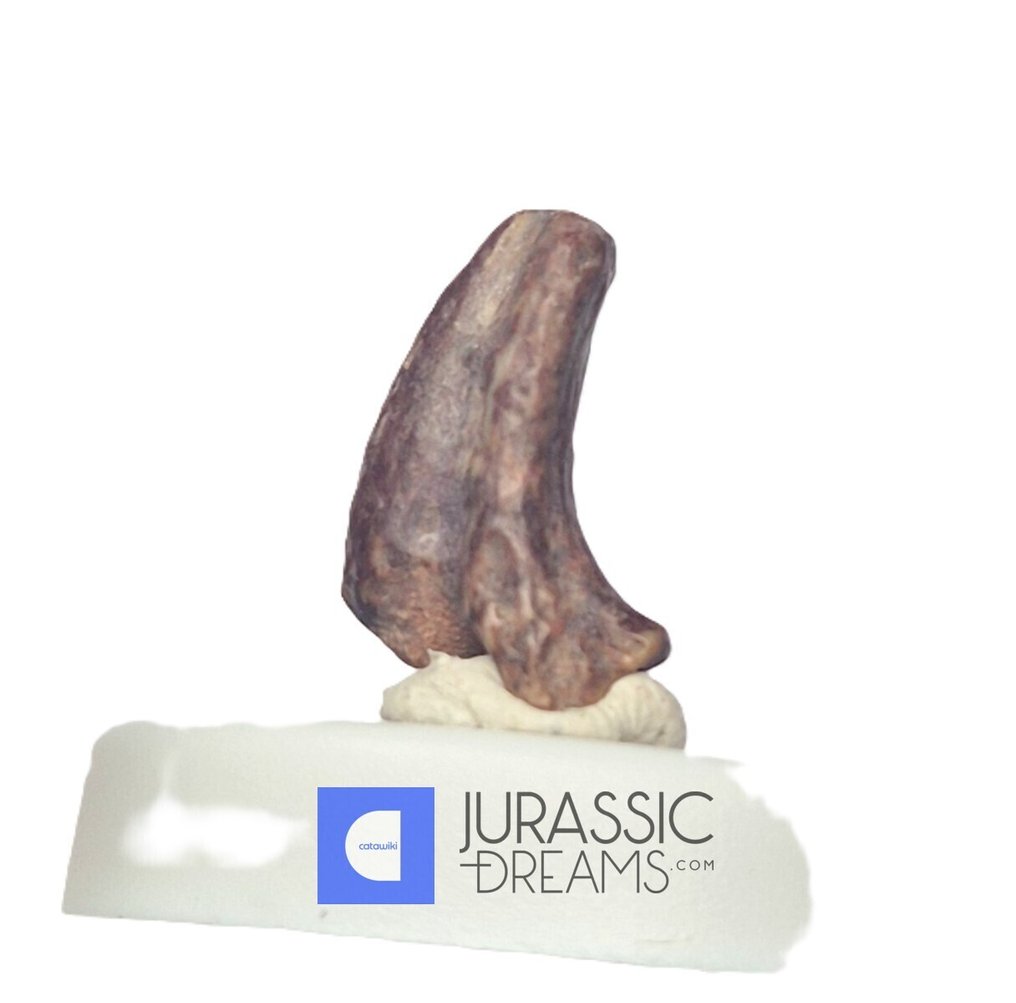
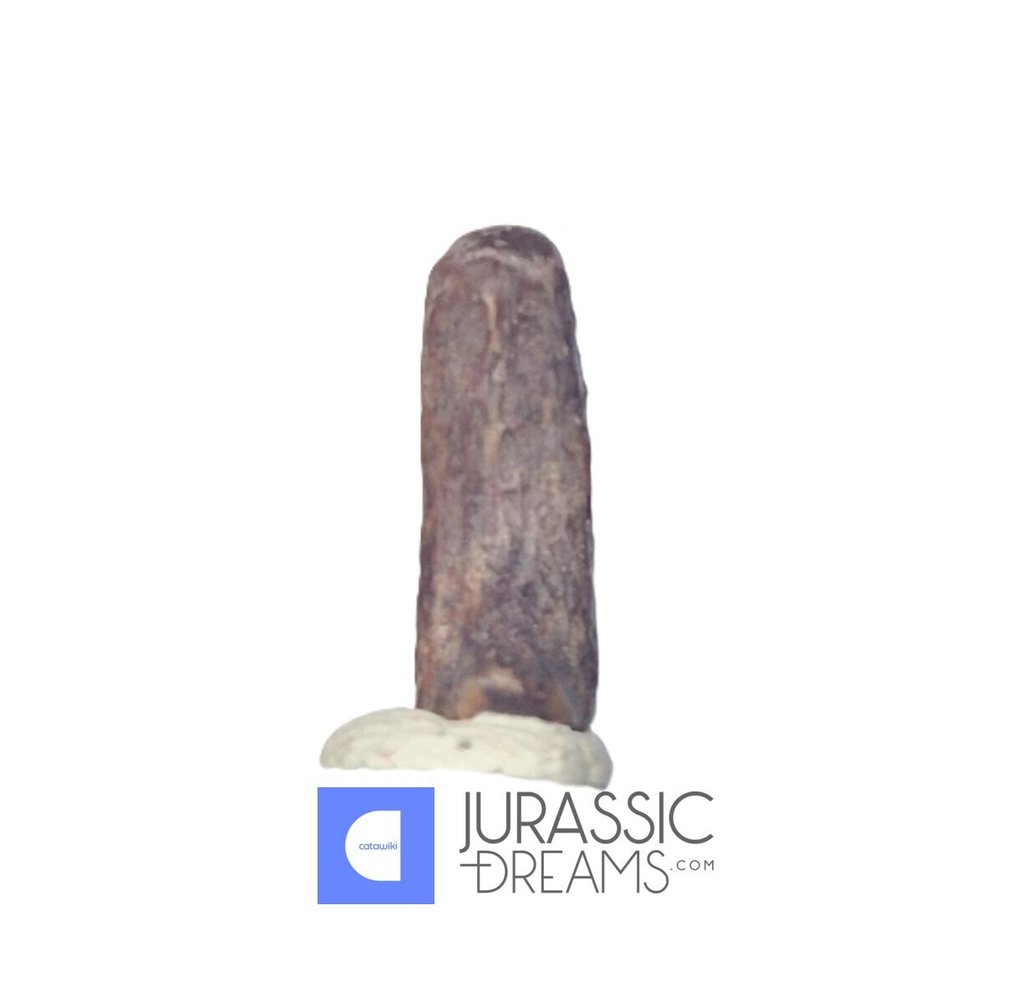
Fossilised claw - Top Rare Potencial Ornithocheirid Pterosaur Claw - Lower Cretaceous Elrhaz Fm (No reserve price)



02
days
20
hours
06
minutes
39
seconds

No bids placed
Catawiki Buyer Protection
Your payment’s safe with us until you receive your object.View details
Trustpilot 4.4 | 123113 reviews
Rated Excellent on Trustpilot.
Scientific name Potencial Ornithocheirid Pterosaur Claw; Specimen: pterosaur claw; Geological Period: Lower Cretaceous; Treatment: natural; Condition: natural.
AI-assisted summary
Description from the seller
Scientific name: Potencial Ornithocheirid Pterosaur ( likely belonging to cf Ornithocheirus simus, (Owen, 1861) - likely Pterosaur claw
Location: Gadoufaoua, Téneré Desert, Niger.
Geological Formation: Erlhaz Fm
Age: Lower Cretaceous, Aptian/Albian stage ( 113 million years)
Size: 1,31cm
REF.: #J330
DESCRIPTION:
Ornithocheirus simus, is only known from fragmentary jaw tips. It bore a distinctive convex "keeled" crest on its snout similar to its relatives. Ornithocheirus had relatively narrow jaw tips compared to the related Coloborhynchus and Tropeognathus, which had prominently-expanded rosettes of teeth, as well as a more developed "keeled" crest compared to Ornithocheirus. Another feature that made Ornithocheirus unique and unlike its relatives, was that its teeth of were mostly vertical, rather than set at an outward-pointing angle.
It was believed in the past that Ornithocheirus was one of the largest pterosaurs to have existed, with a wingspan possibly measuring 40 feet (12.2 m) wide.
Diagnostic characteristics of pterosaur claws:
-Symmetrical vein grooves
-The bottom of the digit claw is flat.
-The bend at the end of the tip is a specific trait of Pterosaur claws: The tip shows a thin flange or ridge of bone on the very tip on the ventral edge. It could be considered an adaptation for the best grip when perching on steep surfaces. That flange aids in hooking on cliffs.
Observations about this specimen:
Not restored or glued. Just the tip and the distal part is missing. Unsual top rare specimen. We assign this claw to the family Ornithocheiridae, since a precise taxonomic classification is very difficult to arrive at with only one isolated claw. However, it must belong to a pterosaur of this family, which has been described from the Early Cretaceous of Niger.
All of our fossils come with a Certificate of Authenticity. Every week, the issued Certificates of Authenticity are updated in our database verification system on our website. If you find that your certificate has not yet been updated, please contact us and we will update it immediately. Display box included.
IMPORTANT SHIPPING INFORMATION: All shipments to the USA are sent via UPS Express. We are not responsible for any additional tariff charges that US Customs may add as import fees on the declared commercial value.
Seller's Story
Jurassic Dreams is the world's largest online dinosaur fossils store, unrivaled as the most reputable source for authentic fossil specimens. We are the only leading online fossils store owned by an accredited paleontology expert. In addition, we have extraordinary authentic meteorite specimens from all over the universe.
With dozens of different species in stock from dinosaurs, reptiles, sharks... our customers come back time and again. Because, simply put, our lifetime guarantee is unbeatable.
Translated by Google TranslateScientific name: Potencial Ornithocheirid Pterosaur ( likely belonging to cf Ornithocheirus simus, (Owen, 1861) - likely Pterosaur claw
Location: Gadoufaoua, Téneré Desert, Niger.
Geological Formation: Erlhaz Fm
Age: Lower Cretaceous, Aptian/Albian stage ( 113 million years)
Size: 1,31cm
REF.: #J330
DESCRIPTION:
Ornithocheirus simus, is only known from fragmentary jaw tips. It bore a distinctive convex "keeled" crest on its snout similar to its relatives. Ornithocheirus had relatively narrow jaw tips compared to the related Coloborhynchus and Tropeognathus, which had prominently-expanded rosettes of teeth, as well as a more developed "keeled" crest compared to Ornithocheirus. Another feature that made Ornithocheirus unique and unlike its relatives, was that its teeth of were mostly vertical, rather than set at an outward-pointing angle.
It was believed in the past that Ornithocheirus was one of the largest pterosaurs to have existed, with a wingspan possibly measuring 40 feet (12.2 m) wide.
Diagnostic characteristics of pterosaur claws:
-Symmetrical vein grooves
-The bottom of the digit claw is flat.
-The bend at the end of the tip is a specific trait of Pterosaur claws: The tip shows a thin flange or ridge of bone on the very tip on the ventral edge. It could be considered an adaptation for the best grip when perching on steep surfaces. That flange aids in hooking on cliffs.
Observations about this specimen:
Not restored or glued. Just the tip and the distal part is missing. Unsual top rare specimen. We assign this claw to the family Ornithocheiridae, since a precise taxonomic classification is very difficult to arrive at with only one isolated claw. However, it must belong to a pterosaur of this family, which has been described from the Early Cretaceous of Niger.
All of our fossils come with a Certificate of Authenticity. Every week, the issued Certificates of Authenticity are updated in our database verification system on our website. If you find that your certificate has not yet been updated, please contact us and we will update it immediately. Display box included.
IMPORTANT SHIPPING INFORMATION: All shipments to the USA are sent via UPS Express. We are not responsible for any additional tariff charges that US Customs may add as import fees on the declared commercial value.
Seller's Story
Jurassic Dreams is the world's largest online dinosaur fossils store, unrivaled as the most reputable source for authentic fossil specimens. We are the only leading online fossils store owned by an accredited paleontology expert. In addition, we have extraordinary authentic meteorite specimens from all over the universe.
With dozens of different species in stock from dinosaurs, reptiles, sharks... our customers come back time and again. Because, simply put, our lifetime guarantee is unbeatable.
Translated by Google TranslateDetails
Scientific name
Top Rare Potencial Ornithocheirid Pterosaur Claw - Lower Cretaceous Elrhaz Fm
Geological Period
Cretaceous, Lower (145 - 100.5 million years)
Condition
Natural
Sold by